🧵🪡 1/10:
v2.2 update, on the public v2.2 branches.
Some of this was nasty. Bugs in liquidation, payouts, prices, and the ticket. Engine finds we reported, a find from @0xSquid_Sol, ports of Toly's work, and some real speed wins.
I was auditing our protocol yesterday on my way home from BP and turned up a critical bug in Toly's underlying percolator program where permissionless payouts let the caller pick the payout token, so a market creator pays everyone in a worthless mint and keeps the real collateral
Looks like Toly already made the fix
https://t.co/svJ1WesWcG
https://t.co/D75CXMG6Ak
I've been pretty quiet about everything that's happened. I've wanted to say something for a while now, but I genuinely haven't known where to start.
The last few days have been difficult to process. There's been a lot going on, and I've had a lot on my mind.
Percolator has been such a big part of my life this year. When I first got involved, it was a risk engine. I saw the potential to build something much bigger around it, something that could allow anyone to create a perpetual market for any token, even the smaller assets that would otherwise never have that opportunity.
I got really attached to that idea. What started as something I wanted to help build became something I spent most of my days thinking about. Countless nights working on the product, trying to figure things out, getting things wrong, learning and slowly seeing it all come together.
And somewhere along the way, people started believing in it too.
We built a community of people who supported what we were trying to do. Some contributed their own time, some encouraged us when things weren't going well, and others were simply there from the beginning. I don't think I've ever properly expressed how much that meant to me.
We wanted to take Percolator further. We genuinely believed the direction we were taking would give us the best chance of turning it into something sustainable.
But things didn't work out that way.
I've thought a lot about the decisions we made and how everything unfolded. There are things I wish we'd handled differently, especially when it comes to the people who supported us. I know that for many of you, this wasn't just another project you came across. You believed in what we were building, and I understand why what's happened has left people disappointed and hurt.
That's been one of the hardest parts of all this.
I also know that the time I've put into Percolator doesn't take away from anyone else's experience. I can be proud of what we've built while still recognising that things could have been handled better.
I don't have all the answers right now, and I'm not going to pretend that I do.
What I do know is that I still care about Percolator just as much as I did before any of this happened.
The raise isn't happening, and we're moving forward without a token. But the work we've done is still there, the vision is still there, and I still want to see what we can make of it.
I don't know exactly what the next few months will look like. There's a lot we need to figure out, and I know things won't just go back to how they were.
But I want to keep building. Not to prove anyone wrong or change anyone's opinion, but because I genuinely believe there's something worth building here.
To everyone who supported us, contributed, or believed in what we were trying to create, thank you. I know things haven't turned out how any of us wanted, but your support has meant more to me than you probably realise.
I'm still here, and I'm still building Percolator.
One bad candle?
Here's what Percolator's liquidation code actually does next.
Equity is your collateral plus PnL, marked at the engine's price, which follows the oracle in capped steps. Profit only counts as far as the engine can prove it's backed.
The maintenance requirement is a margin rate on the position's notional. If the oracle has already moved further against you than the engine price has, that gap is added on top.
Once equity is strictly below the requirement, the account can be liquidated.
Anyone can do it. Liquidation runs inside a permissionless crank: no keeper whitelist, and the caller doesn't need an account or collateral on Percolator.
The caller doesn't choose the size either. The engine settles losses against collateral, then binary searches for the smallest close it projects will put the account back above maintenance, after the liquidation fee. If no partial close gets there, or the account is already underwater, that position closes in full.
The video shows the partial case.
Every liquidation has to leave the account measurably less risky. If it doesn't, the whole instruction reverts.
There's no ADL queue.
The closed size isn't dumped into a book. Open interest on the other side shrinks to match, and every position on that side is cut by the same ratio.
Nobody gets singled out.
If losses run past the account's collateral, that market's insurance budget covers what it can.
Anything left is shared pro rata across the other side of the same market, by position size.
https://t.co/4cXqRGlpPq
Your cold wallet @multisig setup
* iOS in lockdown mode
* pixel in advanced protection mode
* ledger/trezor/grid/keystone (yes even them) etc…
Assume that supply chain attacks are inevitable and rotate as needed.
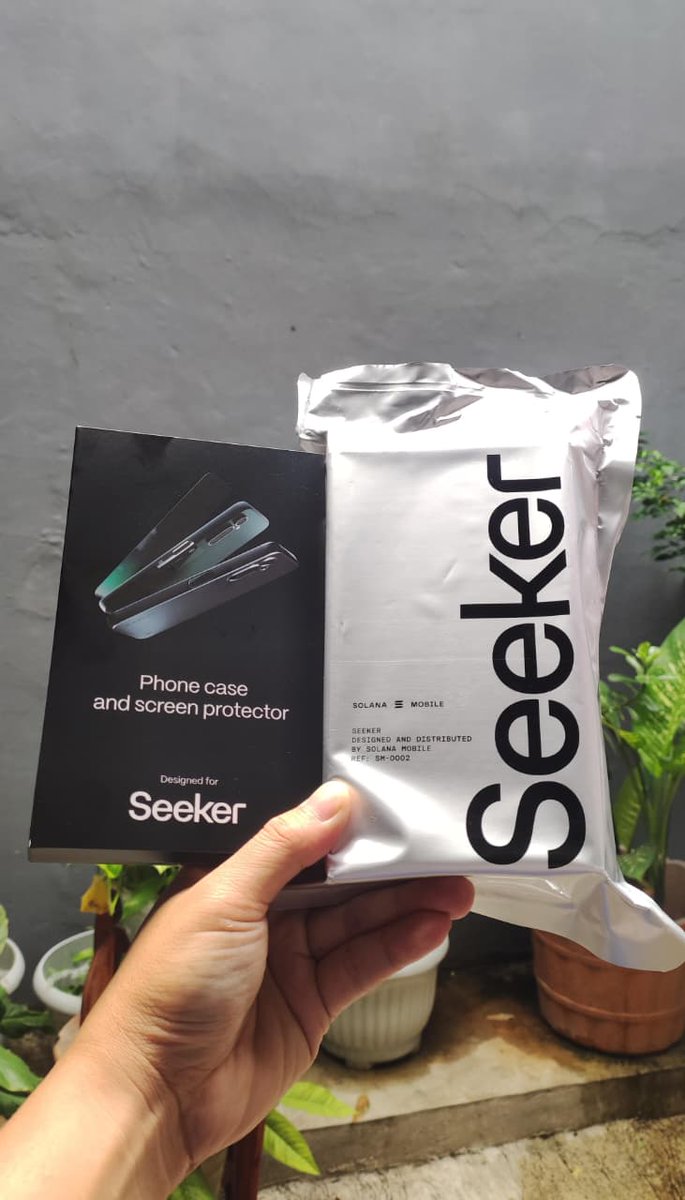
It finally arrived! 📦
My solana seeker + accessory bundle is here! @solanamobile
Huge thanks to the entire @PercolatorTrade team, especially @0xSquid_Sol and @dcc_crypto , for this amazing gift! Truly grateful for this opportunity and proud to be part of this community.
Excited for what's ahead! Let's keep building!