Giga Berlin just built 7,000 Model Ys in one week.
That's one finished car every 86 seconds, averaged across all 168 hours.
The record in March 2023 was 5,000. Same plant, 40% more cars.
At this pace it's 364,000 a year, close to the 375,000+ capacity Tesla has listed for Berlin.
The factory is running out of headroom.
@Tesla App 4.62 hides 2 features that aren't live yet.
FSD referrals that earn you free FSD time on a car you pick.
X Money as a way to pay for Supercharging, FSD and Shop orders.
If you’re still seeing the stretched phone layout, Tesla says rollout can take a week or two.
Tesla now has 420 Cybercabs registered in Texas.
At the start of October it was 158.
That's 262 more in about three weeks, roughly 12 a day.
Today's batch alone was 69, more than double the 30 to 32 car batches earlier this month.
Here's the part I find most interesting.
On Oct 18 the same DMV registry showed 454 Model Ys in Tesla's Texas Robotaxi fleet.
Cybercabs are now just 34 behind that.
At this pace, the car with no steering wheel and no pedals could outnumber the Model Y in its own fleet within days, if the Model Y count stays flat.
The timing fits. Tesla just stretched its Austin service area toward COTA right as Grand Prix weekend starts.
One caveat: registered is not the same as on the road every hour. Tesla hasn't published a live count.
Still, a purpose built robotaxi passing a regular car in Tesla's own fleet would be a real milestone.
@Tesla 4 days only.
The new Roadster goes on public display tomorrow in the Petersen Automotive Museum lobby in LA, Sat Oct 24 through Tue Oct 27.
First chance for anyone outside Tesla to get close enough to judge that cockpit in person.
NASA showed the first photos of Cabin 1, the crew cabin SpaceX is building for Starship.
The catch: no astronaut will enter Starship on Artemis III.
That 2027 flight is a docking test in Earth orbit.
Cabin 1 is for the 2028 landing, and NASA hasn't picked that lander yet.
@cb_doge The payout bar: 500 verified followers and 500K verified impressions in 90 days.
The part most people miss: views on your replies don't count toward the 500K.
Replies grow the audience.
Posts get paid.
NHTSA's Cybercab-friendly rule change is a proposal, not a green light.
It rewrites one standard, FMVSS 108, the federal lighting rules.
NHTSA proposed the same kind of fix for the brake rules back in June.
Meanwhile it opened an audit query into Cybercab last month over its missing mirrors, pedals and steering wheel.
The rulebook is moving. It just isn't finished.
NHTSA announced today that they are proposing new rules aimed at removing U.S. federal regulatory barriers for autonomous vehicles without steering wheels or pedals, such as @Tesla's Cybercab.
The proposed changes include:
• Eliminating requirements for manually operated turn signal controls in vehicles without steering wheels or pedals: "NHTSA has concluded that the self-canceling and manually operated control requirements in the current standard are unnecessary for turn signal operating units that are installed on vehicles without manually operated driving controls."
• Allowing autonomous driving systems to control turn signals, hazard lights, and high/low beams without traditional driver-operated switches.
• Removing certain dashboard indicator requirements for turn signals and high beams in vehicles without manual driving controls.
• Allowing optional cyan-colored exterior lights to indicate when a vehicle is operating autonomously, with standardized requirements for their placement, brightness, and operation.
• Eliminating outdated restrictions on vertical headlight arrangements, giving automakers greater design flexibility.
• Allowing modern integrated headlights to be tested at manufacturer-specified voltages rather than requiring 12.8 volts.
NHTSA says the changes are intended to eliminate unnecessary regulatory barriers, reduce costs, and enable innovation without compromising vehicle safety.
Tesla's Model Y rate hike sounds bigger than it is.
On $40,000 financed for 72 months, 1.99% is $589.84 a month.
At 2.49% it's $598.66.
That's $8.82 a month, about $635 over the whole loan.
The real signal: you don't trim financing deals when demand is soft, and Tesla says its passenger car order backlog is the biggest in four years.
@SawyerMerritt The free year is worth A$1,788 in Australia (A$149 a month) and NZ$1,908 in New Zealand (NZ$159).
Tesla's email says it stacks with current offers, and deposits come back within 30 days.
Decent consolation for a truck some waited on since 2019.
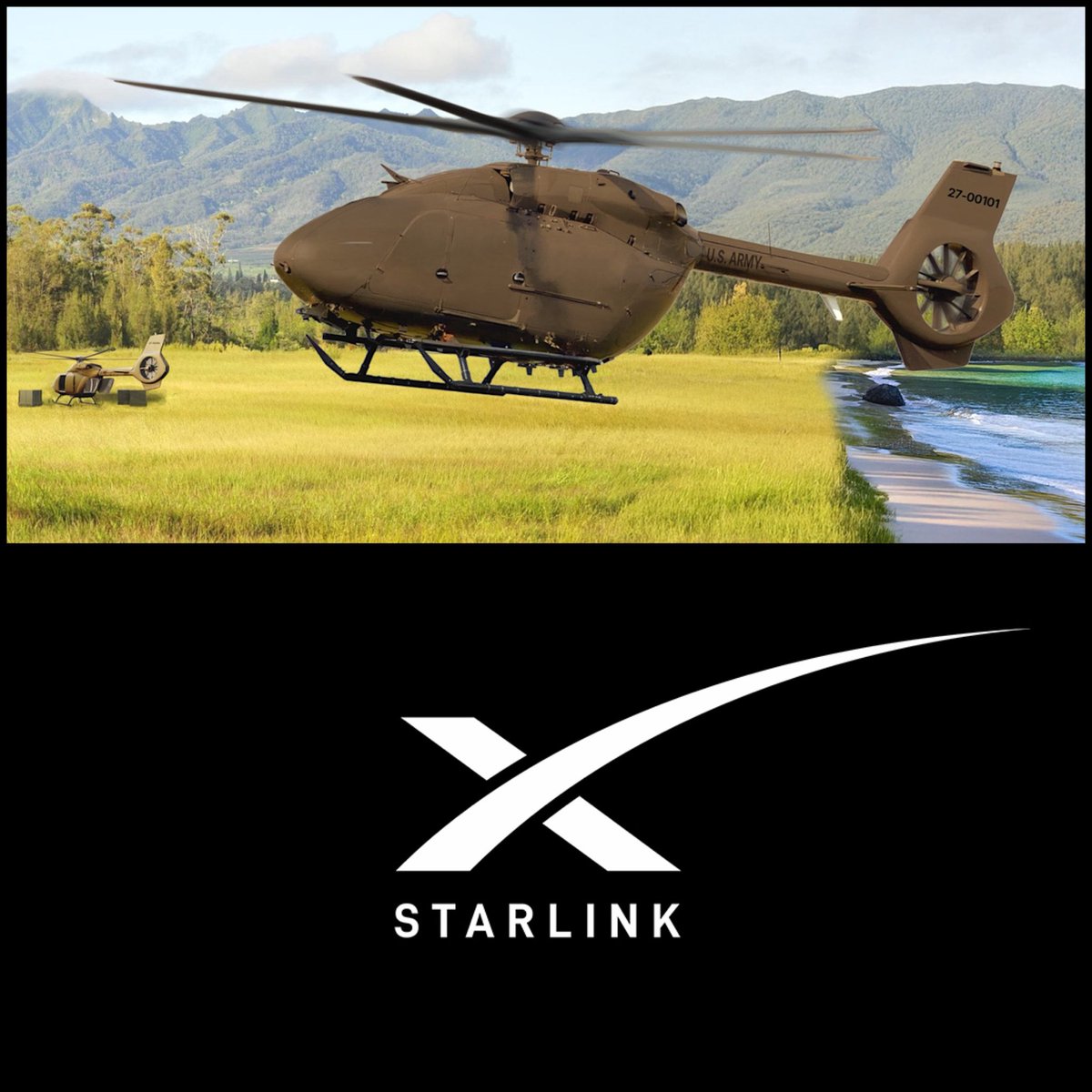
A cargo helicopter flew itself while controllers sent commands over Starlink from up to 70 miles away.
It is Airbus's MQ-72C, built to fly supplies to troops with no crew.
In an Army demo, it dodged a surprise no-fly zone and picked a new landing spot when a truck blocked its way.
The safety crew on board never had to take over.
Starlink is becoming the remote control for robot aircraft.
BREAKING: Airbus is using @Starlink to command its autonomous cargo helicopter and has demonstrated it for the U.S. Army.
The helicopter is designed for unmanned resupply missions, delivering essential cargo to remote and dangerous locations without risking pilots’ lives.
A tree trunk fell on a parked Cybertruck in Texas.
The owner says the only marks wiped right off.
Sentry Mode caught the whole thing on camera.
The body is bare stainless steel with no paint, so there is no paint to chip.
On most trucks that is a body shop visit.
Here it was a shrug.
Tesla's maps come from Google today.
Tesla plans the route, but the map tiles, places and traffic data are Google's.
On the earnings call, Ashok Elluswamy said Tesla is building its own AI maps, fed by the whole fleet.
They start with trip starts and ends in FSD V15, then take over parking and routing.
Bad navigation is one of the most common FSD complaints.
This goes straight at it.
6 military missions built for one rocket flew on SpaceX instead this year.
The Space Force confirmed it on October 21.
All six were supposed to launch on Vulcan, the new rocket from United Launch Alliance, the Boeing and Lockheed Martin joint venture.
On February 12, one of the solid boosters strapped to Vulcan had its nozzle fail shortly after liftoff.
The rocket still reached orbit.
But it was the second nozzle problem in four flights, so the military stopped putting its satellites on Vulcan.
The fix was a trade.
Starting in April with a GPS satellite, those missions moved to Falcon 9 and Falcon Heavy, and ULA gets later missions in return.
The other backup had its own bad year.
Blue Origin's New Glenn exploded in May on the company's only Florida launch pad.
So right now, Falcon is the rocket the military counts on.
Here is the twist.
SpaceX is phasing out Falcon 9 to focus on Starship, Politico reports.
When the Space Force recently asked for rides on three future missions, SpaceX did not bid, and neither did anyone else.
Many military satellites are not designed to fit inside Starship.
A Space Force general says he is not worried about any mission going without a ride.
Still, the rocket keeping America's satellites on schedule is the one SpaceX is retiring.
$10.1 billion. That's the price tag on a Tesla solar factory proposed for Fort Bend County, Texas.
It would make the full chain: ingots, wafers, cells.
Nearly 10,000 permanent jobs, construction this year, production in Q1 2029.
Over 95% of the world's solar wafers come from China today.
This is a bet that the US can make its own.
Fort Bend County, Texas commissioners are set to consider several tax incentive and economic development agreements today that could help bring a massive $10.1 billion @Tesla manufacturing facility to the county.
The proposed project, known as “Project Crystal Sun,” could eventually create nearly 10,000 permanent, full-time jobs.
Tesla is aiming to start construction this year and finish in 2028, with commercial operations starting in Q1 2029:
• Site covers part of roughly 3,000 acres
• Total of $10.1B in capital investment
• Total direct and indirect economic impact of the project would generate an estimated ~$6.4B in state and local taxes.
• It is estimated that the State of Texas would increase its GDP by ~$107 billion as a result of the project.
The project will include:
• Wafer Manufacturing
• Ingot Manufacturing
• Coating
• Metallization and Printing Lines
• Cell Testing and QC
• Automation and Material Handling
• Cleanroom and Production Support
• Site Infrastructure
• Chemical Storage and Delivery
• Utility Infrastructure
• Environmental and Safety Systems
https://t.co/bLCdZL7PGJ
Oct 20: the Air Force packed survival gear into a SpaceX Starfall capsule and sent it to orbit.
Inside: medical kits, batteries, a water desalinator and a satellite tracker, plus sensors.
The goal is supplies delivered anywhere on Earth by rocket, no runway needed.
212 to 6.
That was the vote in May 2025 that turned a SpaceX rocket site on the Texas coast into a real city called Starbase.
12 years ago, there was almost nothing there.
In September 2014, SpaceX broke ground at Boca Chica, a tiny beach village a few miles from the Mexico border.
The dirt work did not even start until October 2015.
The first big propellant tank showed up in July 2018.
Then came Starhopper, a stubby steel test rocket that looked more like a water tower.
It made its first hop in July 2019 and became the first vehicle to fly SpaceX's new Raptor engine.
On April 20, 2023, the first full Starship launched from the site.
It spun out of control and was destroyed.
By late 2023, more than 2,100 people worked there full time.
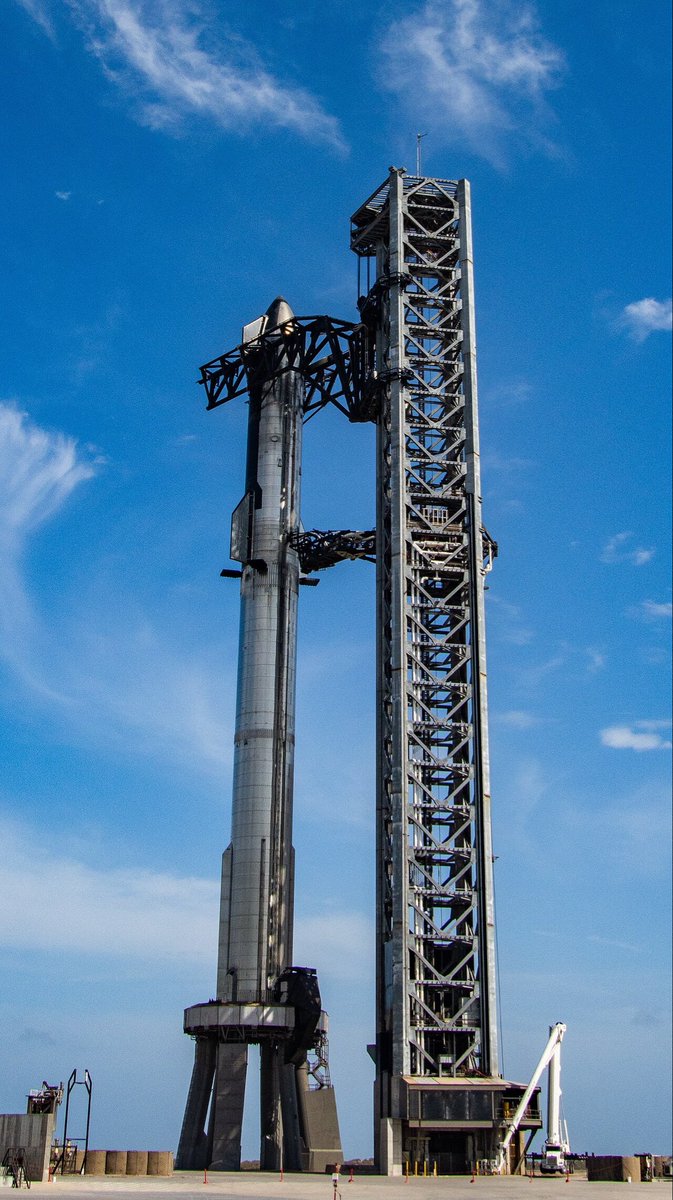
On October 13, 2024, the launch tower caught a falling Super Heavy booster with its giant mechanical arms.
Nobody had ever caught a rocket that way before.
When the city vote finally came, only 283 people were eligible.
212 of them said yes.
Next, SpaceX wants that same tower to catch both halves of Starship on Flight 15.
A beach with a few houses became the place that catches rockets.