We’ve received notice that the Department of Commerce has lifted export controls on Claude Fable 5 and Mythos 5.
We'll begin restoring access tomorrow, and will share an update soon.
We’re grateful to our users for their patience, and to everyone who worked with us on redeploying the models.
Vai passar trabalho pra outra pessoa?
* descreva o que é pra fazer;
* descreva os lugares onde a pessoa provavelmente vai mexer;
* defina possíveis soluções pra como a coisa deve ser feita;
* defina os casos de erro;
* defina onde encontrar os erros se alguma coisa não funcionar
Kubernetes has completed its largest code cleanup to date, removing over 1 million lines of Cloud Provider code! 🎉 The new PR is part of KEP-2395 which has been in-the-works since 2017. Congratulations to everyone who worked on this important project! https://t.co/V3Y1QSTlLX
𝗧𝗼𝗽 𝟮𝟬 𝗦𝗤𝗟 𝗾𝘂𝗲𝗿𝘆 𝗼𝗽𝘁𝗶𝗺𝗶𝘇𝗮𝘁𝗶𝗼𝗻 𝘁𝗲𝗰𝗵𝗻𝗶𝗾𝘂𝗲𝘀
Here is the list of the top 20 SQL query optimization techniques I found noteworthy:
1. Create an index on huge tables (>1.000.000) rows
2. Use EXIST() instead of COUNT() to find an element in the table
3. SELECT fields instead of using SELECT *
4. Avoid Subqueries in WHERE Clause
5. Avoid SELECT DISTINCT where possible
6. Use WHERE Clause instead of HAVING
7. Create joins with INNER JOIN (not WHERE)
8. Use LIMIT to sample query results
9. Use UNION ALL instead of UNION wherever possible
10. Use UNION where instead of WHERE ... or ... query.
11. Run your query during off-peak hours
12. Avoid using OR in join queries
14. Choose GROUP BY over window functions
15. Use derived and temporary tables
16. Drop the index before loading bulk data
16. Use materialized views instead of views
17. Avoid != or <> (not equal) operator
18. Minimize the number of subqueries
19. Use INNER join as little as possible when you can get the same output using LEFT/RIGHT join.
20. For retrieving the same dataset, frequently try to use temporary sources.
Do you know what is 𝗤𝘂𝗲𝗿𝘆 𝗢𝗽𝘁𝗶𝗺𝗶𝘇𝗲𝗿? Its primary function is to determine 𝘁𝗵𝗲 𝗺𝗼𝘀𝘁 𝗲𝗳𝗳𝗶𝗰𝗶𝗲𝗻𝘁 𝘄𝗮𝘆 to execute a given SQL query by finding the best execution plan. The query optimizer works by taking the SQL query as input and analyzing it to determine how best to execute it. The first step is to parse the SQL query and create a syntax tree. The optimizer then analyzes the syntax tree to determine how to run the query.
Next, the optimizer generates 𝗮𝗹𝘁𝗲𝗿𝗻𝗮𝘁𝗶𝘃𝗲 𝗲𝘅𝗲𝗰𝘂𝘁𝗶𝗼𝗻 𝗽𝗹𝗮𝗻𝘀, which are different ways of executing the same query. Each execution plan specifies the order in which the tables should be accessed, the join methods, and any filtering or sorting operations. The optimizer then assigns a 𝗰𝗼𝘀𝘁 to each execution plan based on the number of disk reads and the CPU time required to execute the query.
Finally, the optimizer 𝗰𝗵𝗼𝗼𝘀𝗲𝘀 𝘁𝗵𝗲 𝗲𝘅𝗲𝗰𝘂𝘁𝗶𝗼𝗻 𝗽𝗹𝗮𝗻 with the lowest cost as the optimal execution plan for the query. This plan is then used to execute the query.
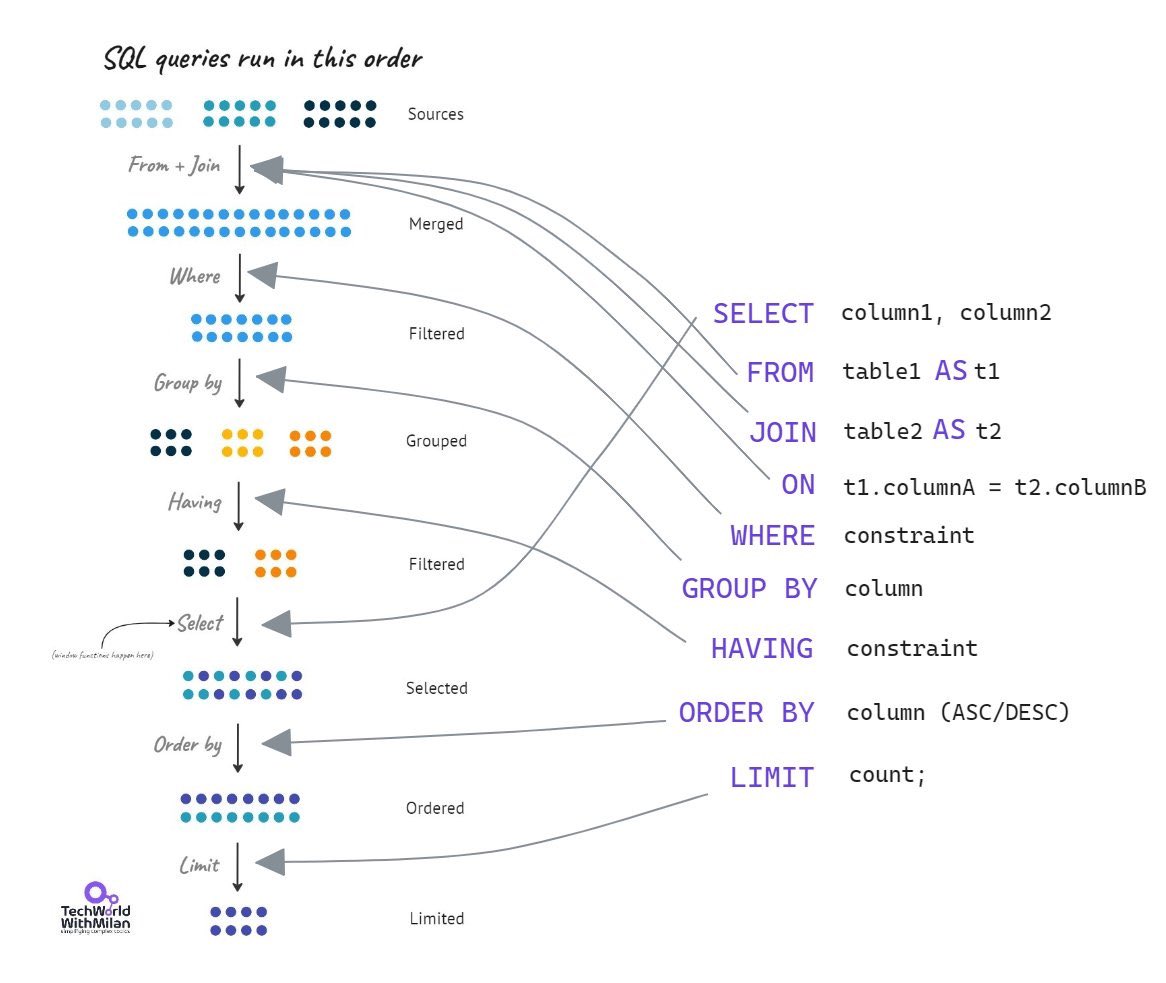
Check in the image the 𝗼𝗿𝗱𝗲𝗿 𝗶𝗻 𝘄𝗵𝗶𝗰𝗵 𝗦𝗤𝗟 𝗾𝘂𝗲𝗿𝗶𝗲𝘀 𝗿𝘂𝗻.
#technology #softwareengineering #programming #techworldwithmilan #sql
Less than 31 hours since OpenAI started dropping the ChatGPT vision feature on pro users...
People are scratching their heads in disbelief.
10 wild examples:
Aprendi agora e vou começar a usar `--force-with-lease` no `git push`. Eu usava `--force`, mas vou parar. Ele verifica se você não vai sobrescrever o trabalho de outra pessoa. Baita opção útil.
Eu conheço git de trás pra frente e toda hora eu aprendo algo novo. Que ferramenta!
What is k8s (Kubernetes)?
k8s is a container orchestration system. It is used for container deployment and management. Its design is greatly impacted by Google’s internal system Borg.
A k8s cluster consists of a set of worker machines, called nodes, that run containerized applications. Every cluster has at least one worker node.
The worker node(s) host the Pods that are the components of the application workload. The control plane manages the worker nodes and the Pods in the cluster. In production environments, the control plane usually runs across multiple computers and a cluster usually runs multiple nodes, providing fault tolerance and high availability.
Control Plane Components
- API ServerThe API server talks to all the components in the k8s cluster. All the operations on pods are executed by talking to the API server.
- SchedulerThe scheduler watches the workloads on pods and assigns loads on newly created pods.
- Controller ManagerThe controller manager runs the controllers, including Node Controller, Job Controller, EndpointSlice Controller, and ServiceAccount Controller.
- etcd etcd is a key-value store used as Kubernetes' backing store for all cluster data.
Nodes
- PodsA pod is a group of containers and is the smallest unit that k8s administers. Pods have a single IP address applied to every container within the pod.
- KubeletAn agent that runs on each node in the cluster. It ensures containers are running in a Pod.
- Kube Proxykube-proxy is a network proxy that runs on each node in your cluster. It routes traffic coming into a node from the service. It forwards requests for work to the correct containers.
Over to you: Do you know why Kubernetes is called “k8s”?
--
Subscribe to our weekly newsletter to get a Free System Design PDF (158 pages): https://t.co/RibM5u7UxP
#systemdesign #coding #interviewtips
Founders and brothers @paulo_caelum & @guilhermecaelum built an online edtech platform and then...bought a university? The brothers join the pod to discuss their Portuguese-language coding site @AluraOnline and how AI may change the software world.
https://t.co/jixLiM0j7L
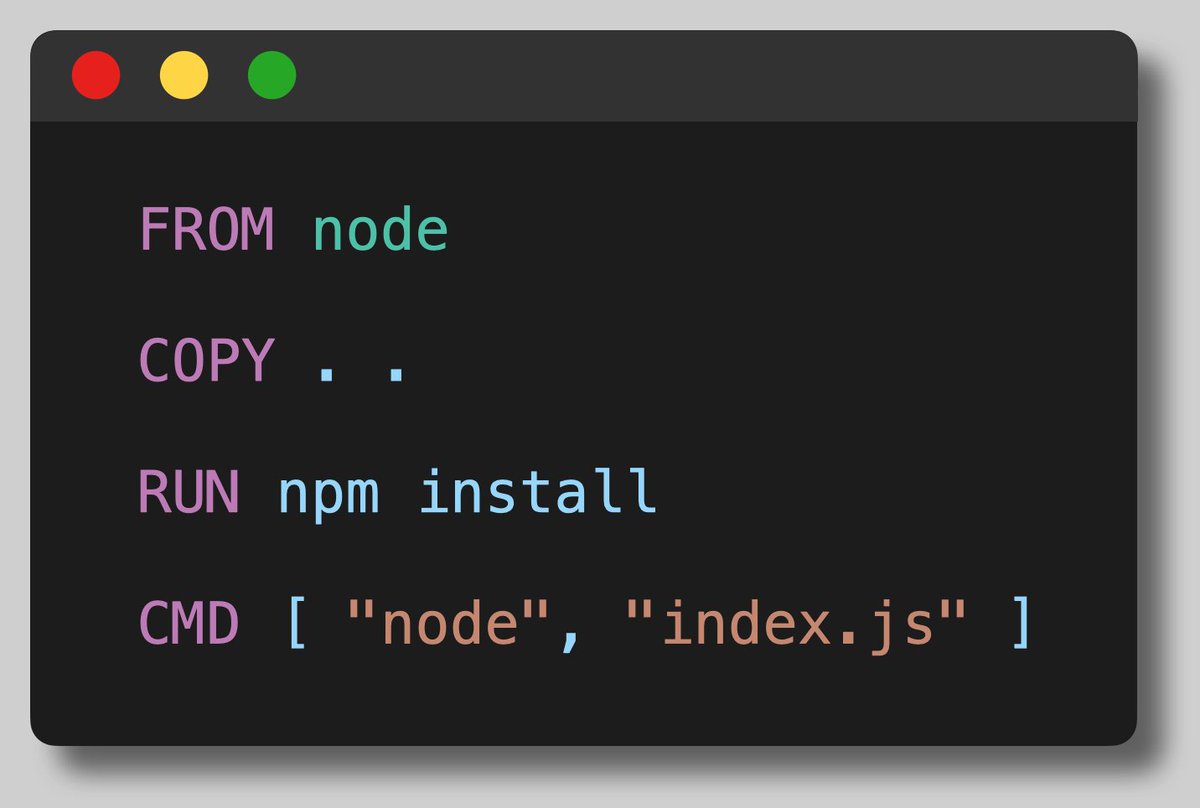
This is a valid Dockerfile for a NodeJS application. It is also a pile of 💩!
We can improve:
- 🔒 Security
- 🏎️ Build speed
- 👁️ Clarity
Follow along as we go from 💩 to 🥇!
(code in alt text)
Quantidade de dev que a única experiência é fazer crud de intranet pra 2 usuários dizendo que “da pra refazer o Twitter rápido/o problema é simples/não precisa dessa gente toda” é incrível. E ainda tem gente que acha que pra programar precisa de algum talento especial 🤣
1/ How to store passwords safely in the database and how to validate a password? Let’s take a look.
𝐓𝐡𝐢𝐧𝐠𝐬 𝐍𝐎𝐓 𝐭𝐨 𝐝𝐨
🔹 Storing passwords in plain text is not a good idea because anyone with internal access can see them.