You must believe that you were on the right path, distracted by nobody. What you desire is great and supreme, and close to God; not to be shaken.
—Seneca
The lightest form of nervousness is the inability to hold a thought.
You sit down to think...
And within seconds:
One idea replaces another.
Then another.
Then something completely unrelated.
Nothing is followed through.
Nothing is completed.
Your inner life becomes a flickering stream.
Dr Steiner describes this as a kind of wandering of the soul-
a state where thoughts no longer move with direction but drift without form.
Most people never notice it.
Because it has become normal.
But it reveals something deeper:
A loss of inner continuity.
In Steiner’s terms; a weakened etheric body—
the part of us responsible for rhythm, structure, and stability.
When it is strong:
A thought can be held, shaped, completed.
When it is weak:
Thinking breaks into fragments.
And this has consequences.
If you cannot hold a thought,
you cannot form clear judgments.
If you cannot form clear judgments,
you cannot truly act out of yourself.
You are then moved by impressions, impulses, and whatever enters you from outside.
This is why disciplined thinking is not optional.
It is a form of inner training.
To take a simple thought
and remain with it,
even when it does not excite you,
even when it resists you;
is already a strengthening of your inner structure.
Over time, something changes:
Thinking becomes less reactive,
more deliberate,
more yours.
And with that,
your soul stops wandering.
It begins to stand.
Man cannot help identifying and considering inwardly and he cannot help expressing his unpleasant emotions, simply because he is weak.
—Master Gurdjieff
If a man understands that he is asleep and if he wishes to awake, then everything that helps him to awake will be good and everything that hinders him, everything that prolongs his sleep, will be evil.
—Gurdjieff
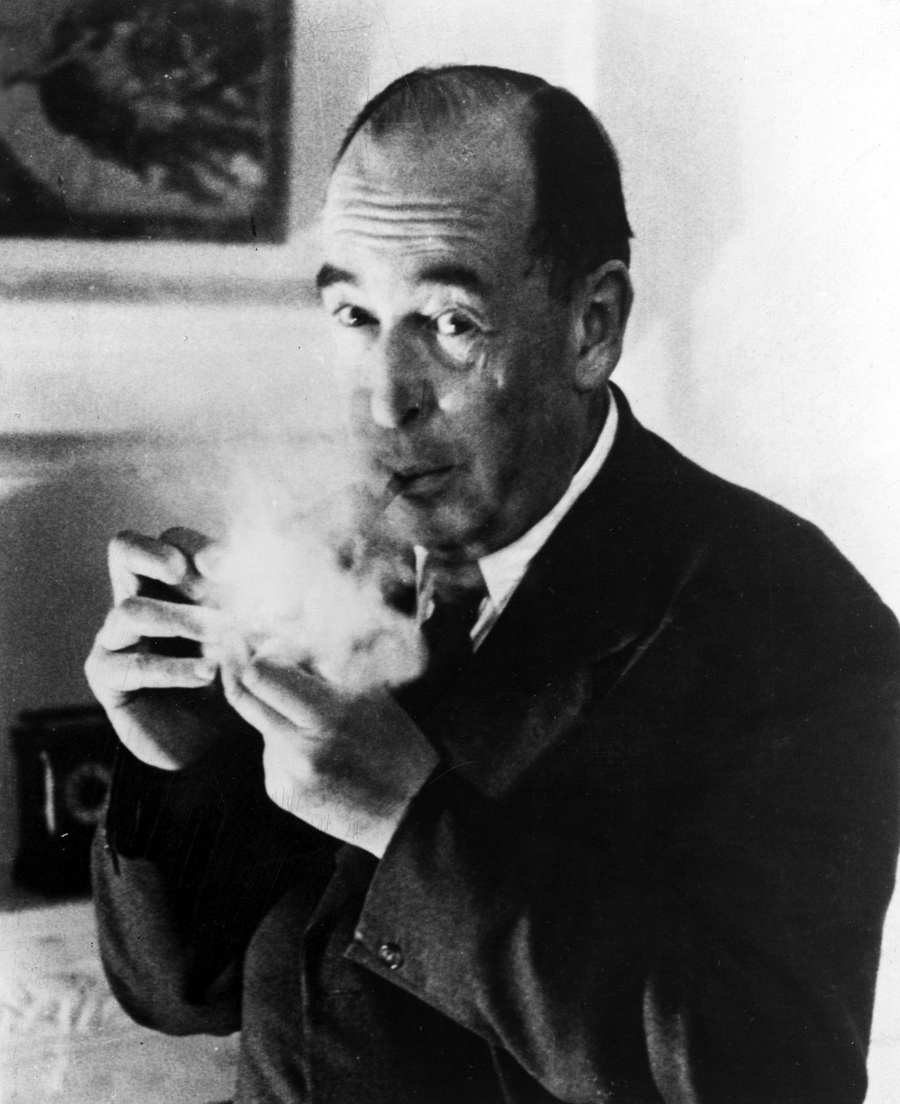
Did you know C.S. Lewis predicted the modern obsession with “being nice” would destroy the soul?
In The Abolition of Man, Lewis argues that when a society stops believing in objective virtue, it doesn’t become tolerant… it becomes manipulable.
He calls the result “men without chests.”
People with appetites and intellects, but no courage, no honor, no trained moral instincts. They can calculate everything and defend nothing.
Lewis saw that once we reject inherited moral law, we don’t become free. We become raw material… easily shaped by propaganda, pleasure, and fear.
Modern man prides himself on compassion while quietly surrendering every standard that once gave compassion meaning.
Lewis’s insight is brutal: a civilization that educates clever cowards will eventually be ruled by tyrants or technicians.
Because when nothing is worth dying for, everything becomes negotiable… including human dignity.