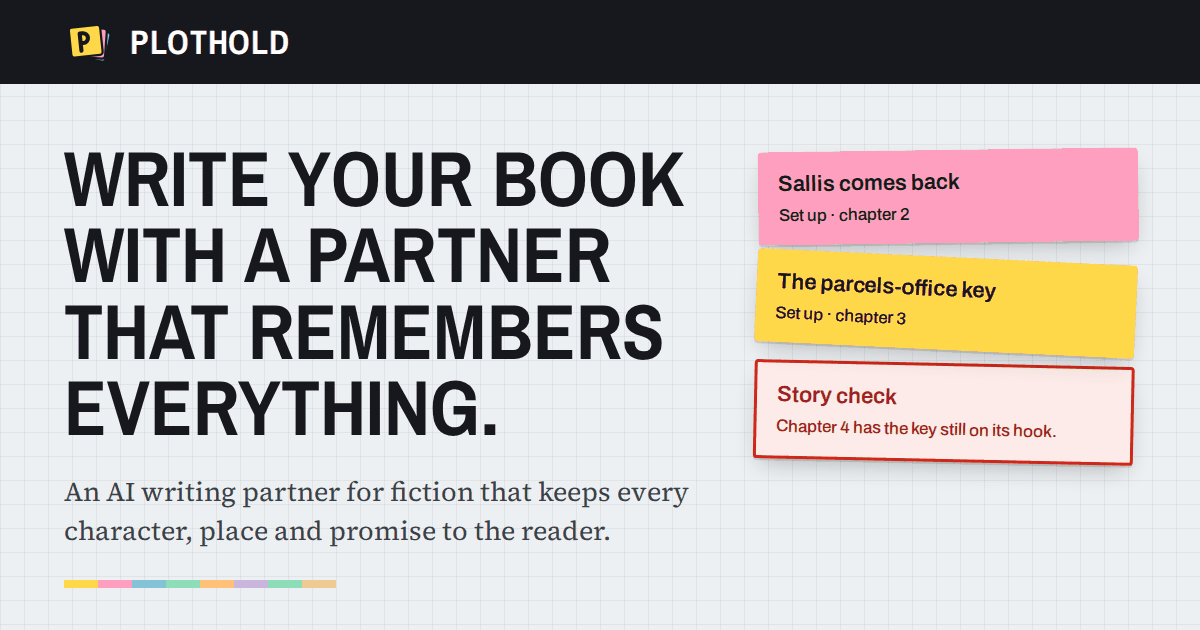
I turned my open-source Story Skills into a web app: https://t.co/L8IR9pzauh
It's an AI writing partner for fiction. It plans and drafts with you, keeps a story bible of every character, place and clue, and runs a story check that catches things like a key that's handed over in chapter 3 but still on its hook in chapter 4.
Free for 14 days or 50 messages, no card.
@thorstenball Agree. What slows me down now isn't ideas or typing. It's being specific enough about what I want that an agent can go off and do it. You only get better at that by shipping.
@theo The title changing while it works is the real cost. With five agent threads going, anything that reflows makes it harder to find your place. Stable beats pretty.
@rough__sea Same here. Writing the code got cheap, checking it didn't. Most of my time with agents now goes on spelling out what 'done' looks like and reading the diff afterwards.
@simonw Same problem from the other end. I've started telling the agent to write the top of the PR for the reviewer: what changed, why, how to check it. Everything else goes in the <details>.
@0xileri Same shape as desktop apps quietly writing Claude Code / Codex hooks. If the agent can rewrite instructions or sign anything, the prompt isn't a boundary. Rules have to live somewhere it can't talk past.
@theo The Claude Code status-line change (Haiku from short notes, ~99% cheaper updates) is the kind of free win I'll take. Forcing people through worse UX for 6% is the bit that deserves the roast.
@poteto Agreed. I ended up with ~13 narrow Grok Bots rather than one mega-agent. The token win was skills and routines for the boring recurring bits, not more autonomy.
Postman's desktop app reportedly added plugins and a startup hook to Claude Code and Codex without asking.
If you install dev tools, take two minutes to check:
- ~/.claude/settings.json for hooks you didn't add
- ~/.codex/config.toml for MCP servers you don't recognise
Anything that runs before your agent does should be something you put there yourself.
@JackEllis I read every diff, but how closely depends on the blast radius. Copy changes and tests get a skim. Auth, payments, migrations and anything that touches data get read line by line, with an AI review pass first so I'm not the one catching typos.
@zeeg Agree on role-play agents. What I've kept is splitting by context, not by persona. I run about a dozen personal bots, each with its own memory and one job (bills, travel, news). One model could do it all, but this way none of them drag the wrong history into a task.
@GergelyOrosz The number I'd watch isn't revenue. It's what each team ships per engineer and how much of it gets reverted. Unlimited spend without good review habits just buys you more diffs to read.
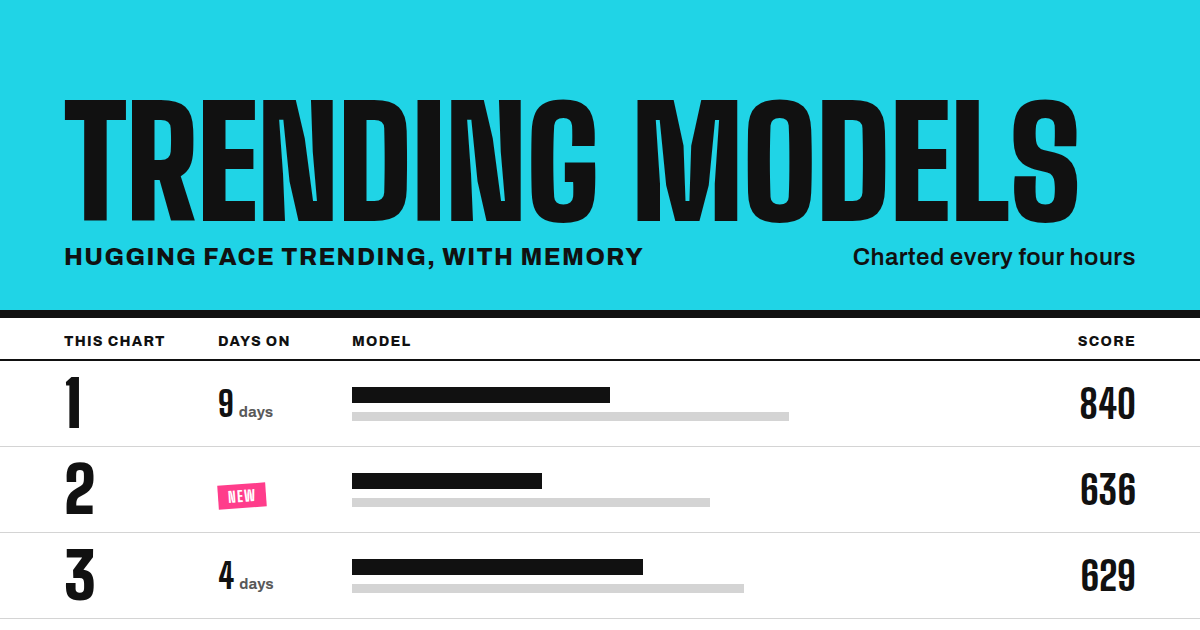
I built two small sites that show what's trending in AI, and remember it:
https://t.co/VsTfXURzSK for trending models on Hugging Face
https://t.co/5vAuHKMZHQ for trending repos on GitHub
Both update every four hours and count how many days each one has been on the list, so you can tell a one-day spike from something that's sticking around.
@kentcdodds Agree, and this is how I split it: if a step has to happen the same way every time, it's a script the agent calls. Skills are for the judgement around it, like when to run it and what to do with the output. Looking forward to the video.
@addyosmani Thanks for explaining it rather than quietly reverting it. It shows how much one short line in a system prompt can affect. I'd love a changelog for prompt-level rules like this, the same as we get for model versions.
@manthanguptaa The fix I'd like is boring: agents should flag any plugin or hook added since your last session and ask before loading it. For now, `claude plugin list` and a grep of your Codex config is a good habit after any app update.
@tobi As a web dev, this is the first agent standard that feels like my job and not the agent's. Expose the actions properly and the agent stops guessing at your DOM.