Back in late 2020, I spoke with Michael Saylor and asked him why Bitcoin destroys every other store of value.
His answer will change how you think about money forever:
There is $250 trillion in global assets and every single one of them has the same fundamental problem when you look closely enough.
Your real estate is immobile, illiquid, and taxed annually without exception and half of all commercial real estate is structurally impaired from COVID with at least a decade of uncertainty still ahead.
Your bonds only work when interest rates keep falling and that game has a mathematical floor because the moment rates go negative everyone pulls their money out simultaneously and the entire mechanism that made bonds attractive for four decades inverts overnight.
Your equities get taxed at every single layer of existence:
> revenue gets taxed as sales tax
> cash flows get taxed as income tax
> expenses get taxed as payroll tax
> trade gets taxed as tariffs
(plus regulatory risk sits on top of all of it)
And when the price rises by a factor of ten it does not become safer, it becomes more dangerous because it is delaminating from its fundamentals and any disappointment from that point causes catastrophic volatility.
Here is what most people never understand about money:
Every traditional store of value you own is a vertebrate and if you are a vertebrate you can be killed with a needle because there is a headquarters, a jurisdiction, a regulator, a court that can reach in and end it.
Bitcoin is a swarm of hornets with no headquarters to raid, no jurisdiction to exploit, no CEO to arrest, and no regulatory throat to cut because there is no throat.
Your money should be a single celled organism, the base layer of the ecosystem, not a vertebrate with a backbone that can be decapitated the moment it becomes inconvenient to the wrong government.
Bitcoin is the only asset that structurally solves the problem every other asset you own creates:
If you believe in gold, you already understand the flaws of fractional reserve banking and the value of fully backed systems.
Bitcoin is simply the digital evolution of that idea arguably superior, since its reserves are transparently verifiable in real time, unlike gold.
Whether you like it or not, structures like Strategy (MSTR)’s STRC reflect what a 100% reserve system can look like in the digital age.
This isn’t a rejection of sound money principles, it’s their upgrade.
STRC is not designed for Bitcoin maxis. Many who hold STRC probably don’t even know how to buy bitcoin. That’s the whole point. Onboarding new capital that is not willing to stomach the volatility of MSTR or BTC. MSTR shareholders win, Bitcoin wins, STRC buyer win. Which category you want to be part of depends on your timeframe as Saylor has tirelessly said.
His book has been banned by the Us governement in 2023.
A US Space Force officer wrote a thesis at MIT arguing Bitcoin is a weapons system.
The Pentagon ordered him to take it down.
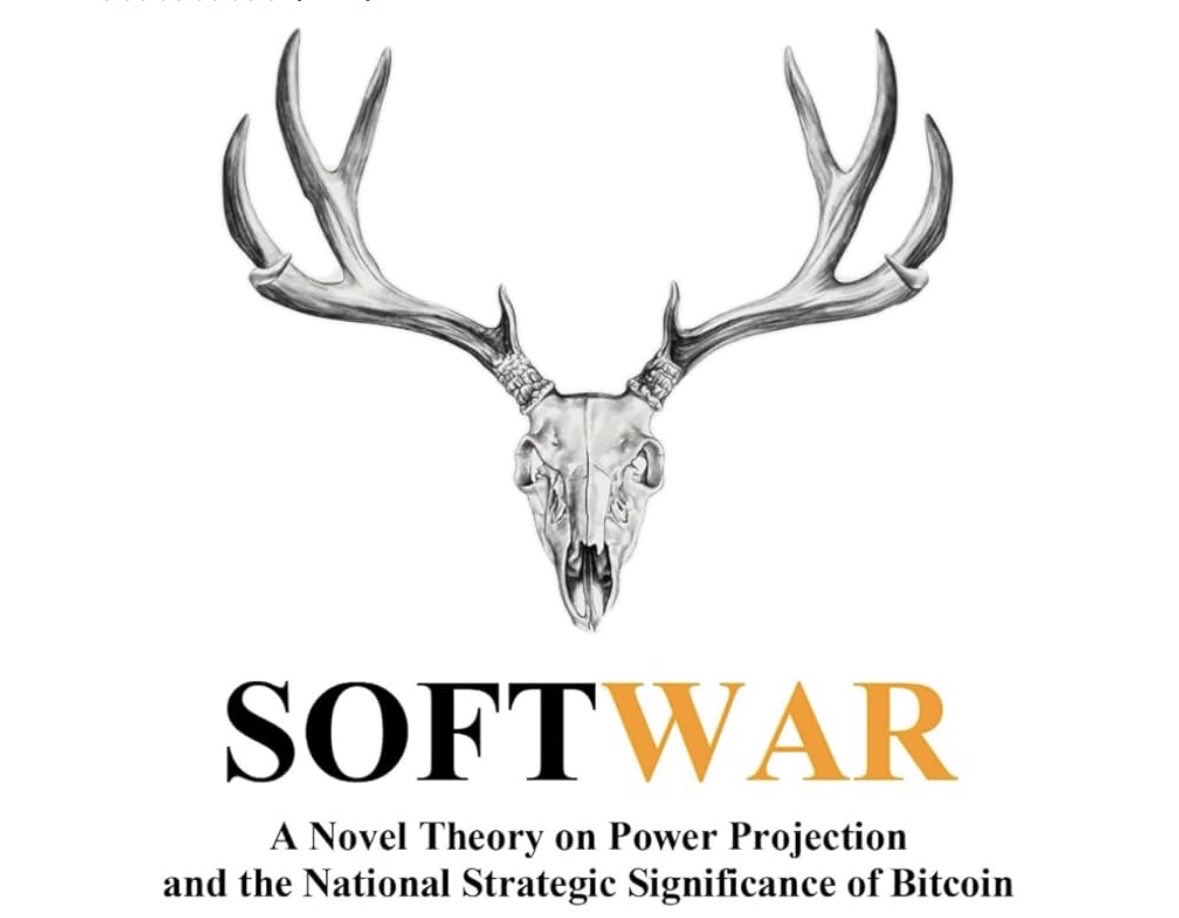
The book is called SOFTWAR, written by Major Jason Lowery.
I managed to get my hands on an original, pre-takedown version.
Here are the ideas that apparently made the DoD nervous:
→ Bitcoin is not a financial technology, it's a weapons system.
It is an electro-cyber power projection system, in the same category as armies, navies, and air forces, but for the domain of cyberspace.
→ The "Power Projection Theory" framework
Every military branch exists to secure a domain by imposing severe physical costs on anyone who threatens it. Armies secure land, navies secure sea, air forces secure the sky. Bitcoin, Lowery argues, does this for cyberspace. It imposes real physical cost (energy/watts) on attackers, which no prior cybersecurity system could do.
→ Every military branch secures a domain by making attacks physically costly. Bitcoin does exactly this for cyberspace, imposing real energy costs on attackers for the first time in history.
→ Lowery draws on 5,000 years of history to argue that any system based purely on trust and rules eventually gets captured by bad actors. Physical cost is the only reliable constraint.
→ He calls this new paradigm "softwar": non-lethal, machine-vs-machine energy competition in cyberspace. Tesla predicted something like it in 1900.
→ His most striking claim: a soft, electro-cyber WW III war may have already started.
World leaders do not recognise it because they are expecting the next war to look like the last one.
Five concrete policy recommendations for the US government:
1. Stop letting economists set Bitcoin policy.
2. Treat Bitcoin as a cybersecurity asset first.
3. Consider strategic Bitcoin reserves.
4. Protect proof-of-work under the Second Amendment.
5. Recognise that proof-of-stake is a centralised fraud, not a viable alternative.
Because the nations that figure this out first will have an asymmetric advantage over those that do not.
The book was pulled in July 2023 by DoD.
Physical copies now sell for over $300.
@JasonPLowery
JUST IN: Paraguay has just followed the lead of Bhutan, using wasted hydro energy to mine Bitcoin, for a likely National Bitcoin Reserve.
"Reports indicate mined Bitcoin will likely be held as a state asset or the national treasury, potentially used to fund infrastructure"
Money is information. Information is power.
Money represents your time and effort. When governments debase money, they debase you.
Printing, censoring, and confiscating money are affronts to human dignity. Bitcoin fixes this.
My latest keynote: Fix the money, fix the world.
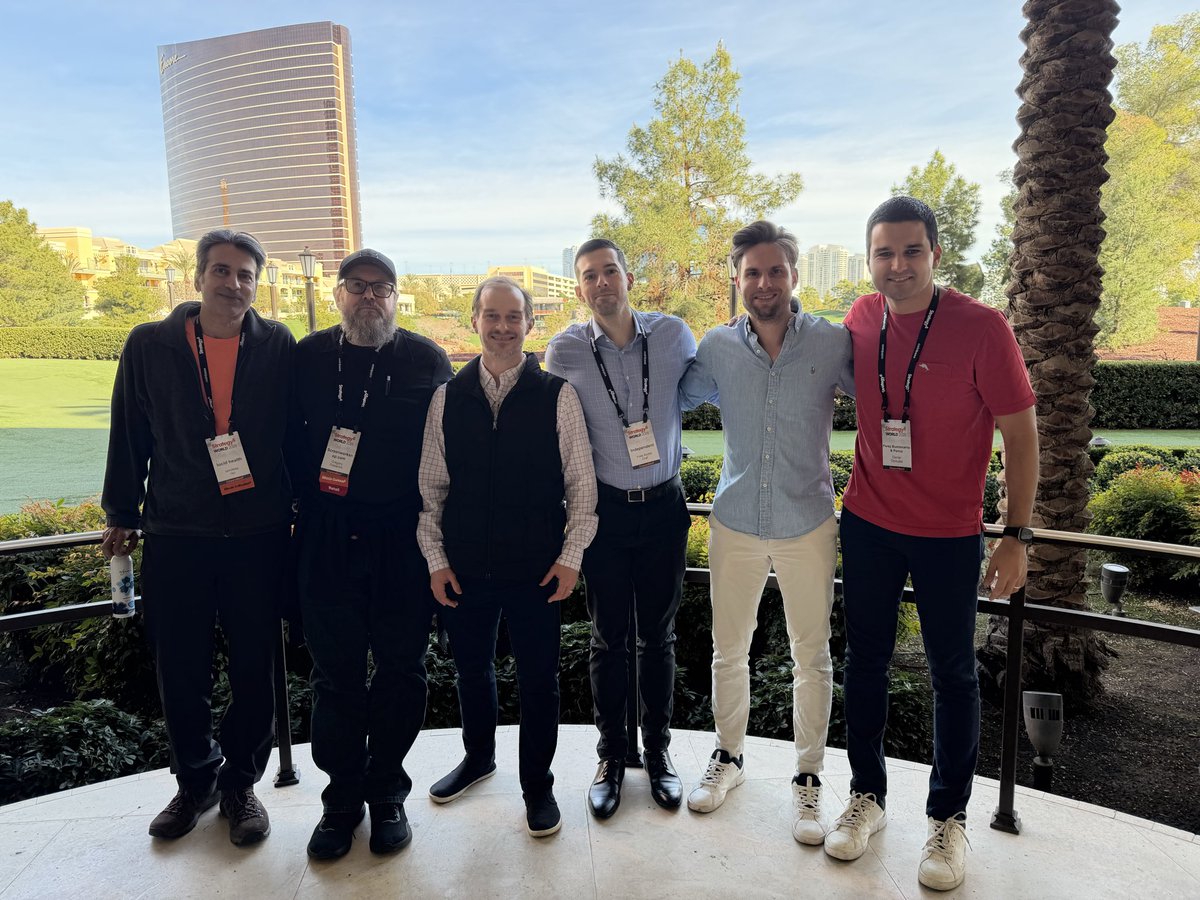
Fantastic meet up with these new friends. @nithusezni@quentinisonx@GrafYves
Special thanks to @saylor for an exceptional Strategy World. What stood out wasn’t just the scale it was the clarity: Bitcoin as engineered monetary energy, corporate treasury as a strategic weapon, volatility as opportunity. Few people teach capital formation at this level. Respect.
NEW: Wall street giant Citi bank announces "later this year, Citi will be launching our infrastructure that integrates Bitcoin into tradition finance." 🚀
"Making Bitcoin Bankable"