Still looking for that perfect present? Enjoy 30% off our books until December 24 plus free shipping. Simply use the code DGBHOLIDAY at the checkout. Details here: https://t.co/2jwDzKST5E
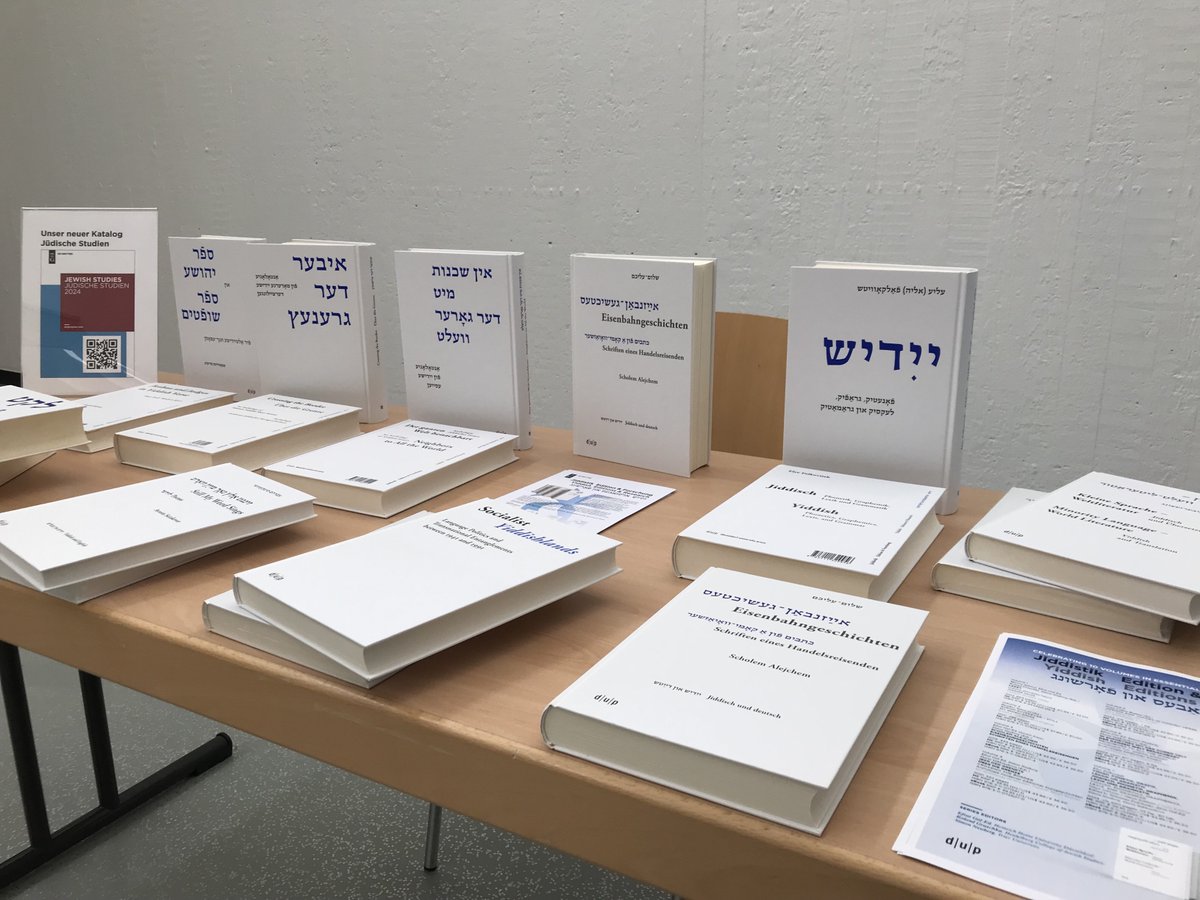
Heute Abend geht es an der @LMU_Muenchen ums #Jiddisch
👉Schaut um 19 Uhr im Historicum vorbei, hört Efrat Gal-Ed und Daria Vakhrushova mit jiddischen Stücken und erfahrt, weshalb Jiddisch "der ganzen Welt benachbart" ist
🔗https://t.co/53wH7HNEMp
🔗https://t.co/xTHLduBpd8
How do cognitive approaches transform and enrich research in the Humanities – #Classics in particular?
Read @AnnaNovokhatko, author of “A Guide to Classics and Cognitive Studies”, #HotOffthePress
✍️Blog post: https://t.co/ZIiC1Z7CQ9
📗 More on the book: https://t.co/0teLyZOUxa
❄ Get a head start on your holiday shopping! Treat yourself or impress the brainiac in your life with some choice titles from De Gruyter, Brill and Vandenhoeck & Ruprecht – all while saving 30% until Christmas.
Find out more and browse here: https://t.co/0oJU6U1jay
Early Christian prose writers from the West have long been studied primarily from a theological and historical perspective. This new volume, edited by Sophia Papaioannou & Thomas Tsartsidis, examines their texts from a stylistic and literary perspective.
👉https://t.co/eoeKda7T1P
Ever wanted to lose yourself in the mystical drama of a late medieval rood screen?
Michael Calder guides you from Berry Pomeroy through the 42-ft-wide masterpiece's iconography into the multimedia performance culture on the eve of the Reformation 🎭
https://t.co/0KSETRaTaj
Wir gratulieren 🥂 - und empfehlen die tolle Jubiläums-Website! Insbesondere die Chronik und die Seite zur Forschung (mit Wissenswertem zur Edition @pmj_documents) hat es uns angetan:
🔗https://t.co/kCwOGEDmqV
🔗https://t.co/gMBYmmEYAU
🥂Gestern ist unse Grundlegung der "Hamburger Schule der (post-)kolonialen Provenienzforschung" erschienen. Eine gewisse Summe unserer Projekte der letzten Jahre @coloniallegacy@unihh & auch eine theoretische Fundierung.
Danke an alle 🙏
Open access 👇
https://t.co/LcJowQvxRw
Carlo Gentili’s article “Quid est veritas? Skeptical Implications of Ueber Wahrheit und Lüge im aussermoralischen Sinne” asks how the question with which Pilate responds to Jesus in the Gospels offers a background to Nietzsche’s conception of language. https://t.co/GBNSoNxt3Z
Taking Stock - https://t.co/xvenMJIdWc @degruyter_brill Happy to have an essay on Goethe's collections in this new volume on inventorying practices in the nineteenth century.
Following the announcement of drastic budget cuts to higher education and research in the #Netherlands, our staff will join protests in Utrecht on Thursday to make their voices heard. 🧵
Intrigue and betrayal define the life of Bohdan Stashynsky, a former KGB assassin who risked everything to escape his past. His memoirs reveal the dark secrets of his espionage career and what led him to break free from the Soviet regime. Read on our blog: https://t.co/gmdgLHU4ew
Heute spricht Dr. Charlotte Knobloch @Cha_Knobloch an der @HHU_de über Erinnerungskultur, Toleranz und das jüdische Leben in Deutschland.
Unsere Reihe "Jiddistik: Edition und Forschung" ist dabei.
👉https://t.co/ZtNdCOLNZm
👉https://t.co/xTHLduBpd8
Many say that Hannah Arendt got Immanuel Kant wrong. She did once describe his Doctrine of Right as "rather boring and pedantic," but we shouldn't be too quick to dismiss her interesting and creative reading of Kant's political philosophy, writes Nicholas Dunn on our blog:
From a cardboard box in Washington to rapidly growing multilingual and interdisciplinary interest—the story of Hannah Arendt’s Kant lectures is well worth uncovering.
But why should we turn to #Arendt’s reading of #Kant?
@nm_dunn answers on our blog: https://t.co/7PcAJm0AJW
#WPR