Congratulation @McIlroyRory You Deserve it to win @BBCSport Personality of the year 2025
You can trade polymarket on @TradePolyBot , click here : https://t.co/YewXMXBkqU
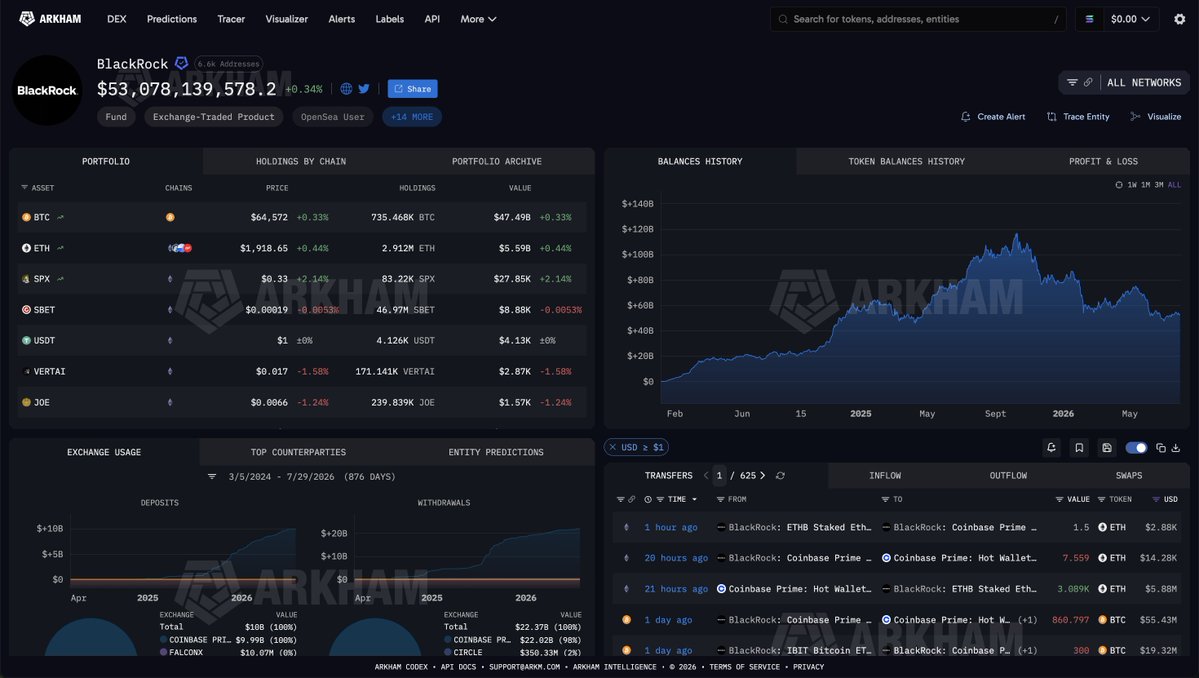
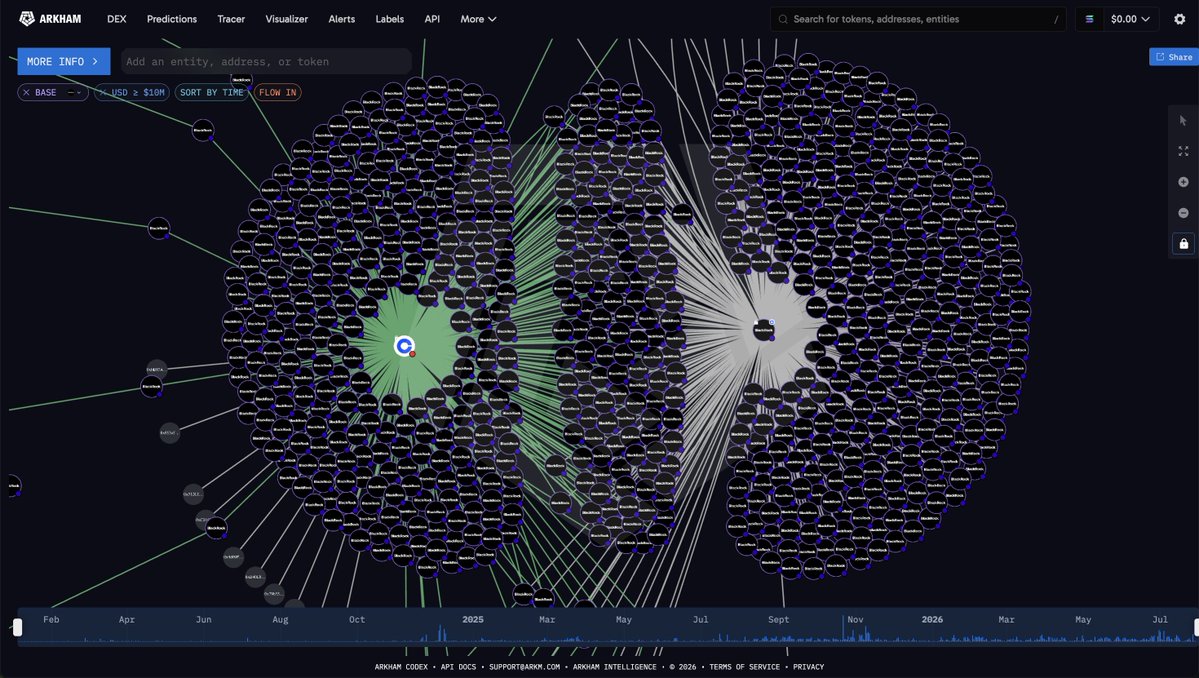
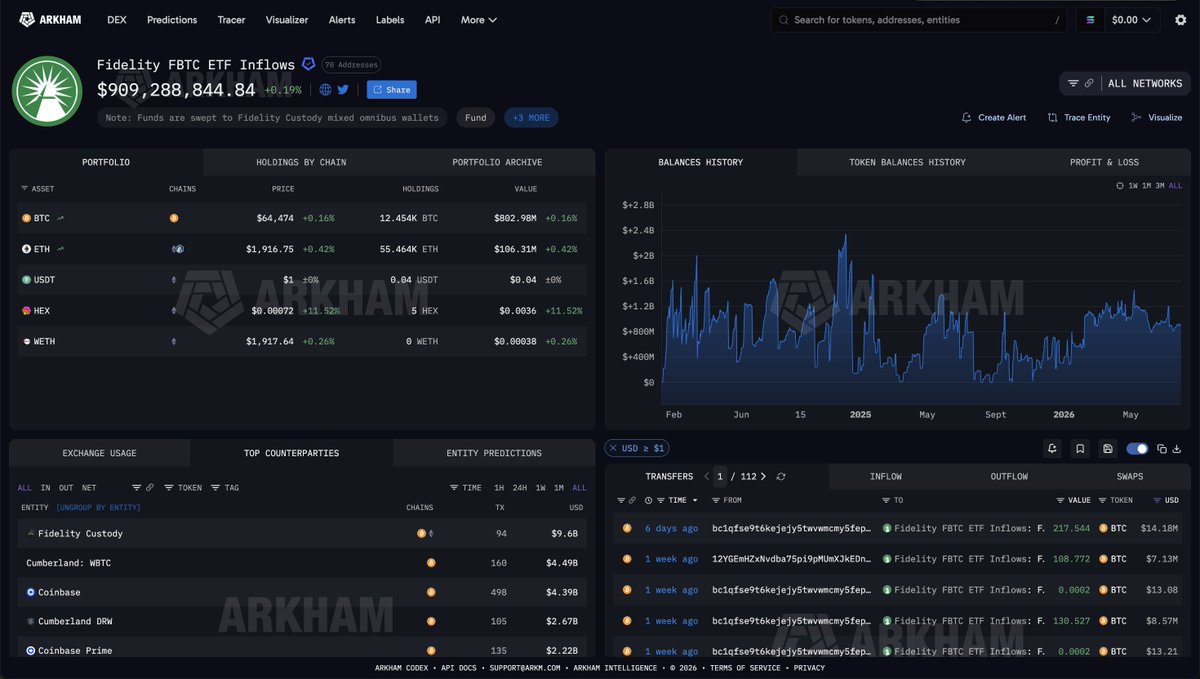
Fidelity is selling. But BlackRock is buying.
Fidelity’s clients net sold $43.1M of BTC today, but BlackRock’s clients bought over double that.
BlackRock bought $89.8M of BTC, more than in the entire past week.
HAWKISH WORDS, PATIENT HANDS: We have been saying that it's time to watch the tape, not the transcripts. The data from now to September will determine if we see higher for longer rates. While inflation has remained elevated, there's still a question of whether we'll see any demand destruction on the heels of that. Risks to growth are emerging in the tail end of the year.
https://t.co/jl6zCdWGAb
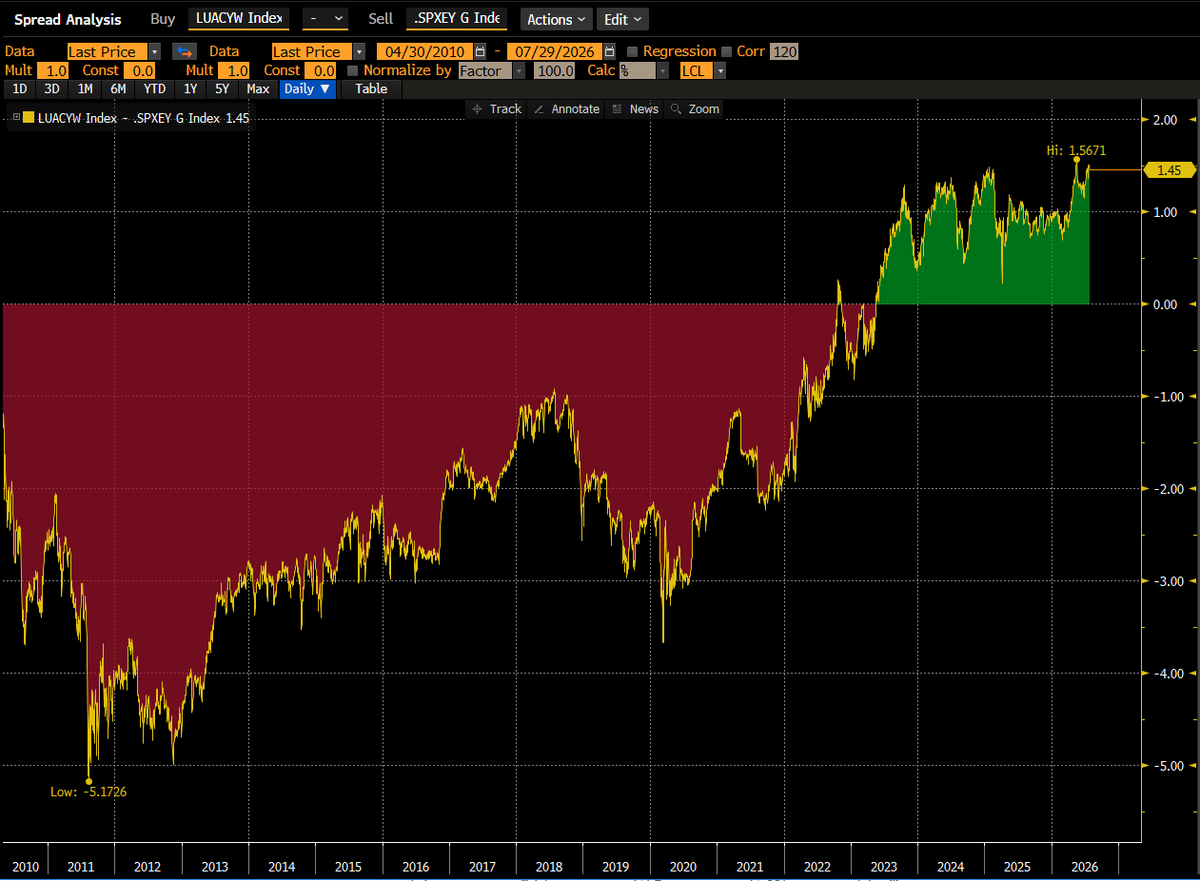
U.S. investment-grade bond yields have risen to about the highest since 2002 relative to a comparable measure - the earnings yield - on the S&P 500. Bond vigilantes are reasserting themselves, even as corporate profits keep climbing.
Stocks now the most expensive to bonds in ~25 years. The S&P 500’s dividend yield is at its widest negative gap to US Treasury yields going back to the early 2000s.
Bonds on an all-in yield basis giving our cheapness vibes, but no visible end to climbing debt burdens.
Surprised things like gold haven’t caught a tailwind given this
SUMMARY OF FED CHAIR WARSH'S STATEMENT:
1. The US economy is showing "impressive resilience"
2. Inflation "remains elevated" relative to the Fed's 2% target
3. The policy statement displays "just the facts" and "steers clear" of guidance
4. There is no soft inflation target, the only target is 2%
5. Fed notes nominal and real yields are materially higher since last Fed meeting
6. Market participants are "learning to play the ball, not the referee"
Once again, the Fed has declined to provide guidance.
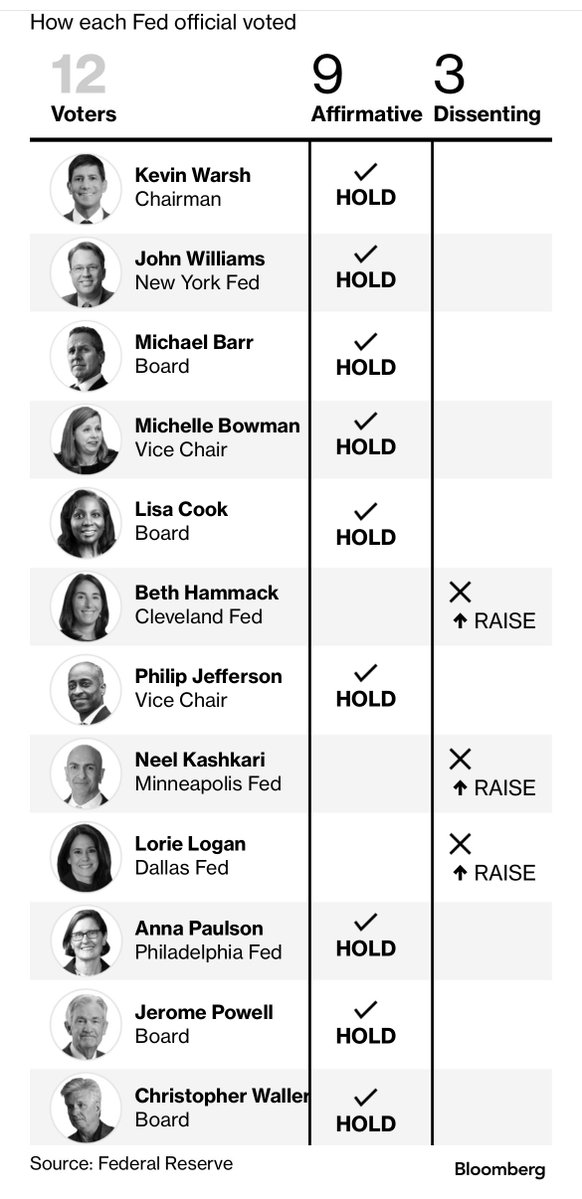
12 orang yang menentukan suku bunga Bank Sentral US
Apa yang mereka tentukan juga menjadi acuan bank sentral di seluruh dunia
9 orang voting tetap, 3 orang naik
Meski Kevin Warsh adalah ketua, keputusannya tetap mengikuti voting mayoritas
Semoga harga minyak cepat turun lagi
I agree that the market is overreacting to the widening in hyperscaler credit spreads, although the strongest argument is not that CDS should be ignored. It is that the credit market is confusing lower near-term free cash flow with weaker debt-servicing capacity.
The charts show the contradiction clearly. Hyperscaler CDS spreads have moved above the investment-grade index even though Microsoft, Alphabet, Amazon and Meta collectively have lower debt-to-assets ratios and interest coverage of roughly 60 times, versus around 10 times for the broader market. These are not companies struggling to meet interest payments. They are companies deliberately converting enormous operating cash flow into AI infrastructure.
That distinction matters. Free cash flow is falling because capital expenditure is being pulled forward, not because the underlying businesses have stopped generating cash. Microsoft’s latest quarterly operating cash flow increased 30% to $55.4 billion despite spending $41 billion on capital expenditure including leases. Amazon had already reported 30% growth in trailing operating cash flow to $148.5 billion in Q1. The cash engines are accelerating even while free cash flow is temporarily compressed by the buildout.
The pricing argument is also directionally compelling. If new GPU capacity is renting in the spot market at materially higher prices than legacy contracted capacity, hyperscalers are currently under-earning on infrastructure installed under older agreements. As contracts expire, part of the installed base can reprice upward, allowing cloud revenue and operating cash flow to grow without a proportional increase in physical capacity.
However, spot and contracted pricing are not perfectly comparable. Spot prices include a scarcity premium, shorter commitments, regional constraints and different uptime or networking guarantees. Not every customer will renew at twice the previous rate, particularly once more supply becomes available. The market may also respond through optimization, model routing and greater use of cheaper accelerators. Therefore, I would not place the entire credit thesis on a literal doubling of contract prices.
The broader conclusion remains valid even with more conservative repricing. Hyperscalers have several levers that are missing from static free-cash-flow forecasts: higher utilization, contract repricing, usage-based AI revenue, proprietary silicon, better model efficiency and greater throughput from existing fleets. Microsoft increased Copilot workload throughput fourfold and said that incremental capacity created through efficiency improvements is monetized almost immediately because demand still exceeds supply.
This is why operating cash flow may be a better indicator of financing capacity than near-term free cash flow. Capital expenditure is occurring before the associated revenue is fully recognized. The cash outflow arrives when the data centre, power connection and GPUs are purchased, while customer contracts, consumption and repricing mature over several years. A conventional forecast that extrapolates current contracted rates while immediately recognizing future capex will naturally exaggerate the funding gap.
Even using the proposed scenario of $1.5 trillion to $2.2 trillion of 2028 capex against $1.3 trillion to $1.4 trillion of operating cash flow, the residual funding requirement would be distributed across several of the most profitable companies in history. It would be material, but it would not automatically constitute a solvency problem. Less than one turn of incremental leverage for companies with these interest-coverage ratios is very different from the leveraged telecommunications carriers of the dot-com era.
The widening CDS spreads are therefore probably pricing uncertainty around returns on capital, future debt issuance and the duration of the AI investment cycle, rather than a realistic probability that Microsoft or Alphabet cannot service their obligations. Tech-related CDS activity has risen sharply, so sector hedging, relative-value trades and limited liquidity can move spreads more dramatically than underlying default fundamentals justify. Still, calling CDS purely manipulable would go too far. The widening is a legitimate warning that investors want greater compensation for capex risk, even if the implied credit anxiety is excessive.
The real risk is not access to financing. It is physical execution. Power generation, grid interconnection, transformers, cooling systems and construction timelines are increasingly the binding constraints. A hyperscaler can finance another data centre; it cannot instantly create several gigawatts of reliable electricity. If power delays leave expensive GPUs idle, utilization and returns on invested capital will disappoint even if demand remains strong. Recent technical work on large AI clusters describes power availability as a more important bottleneck than accelerator supply itself.
Net, I think the credit market has moved too quickly from “free cash flow is temporarily under pressure” to “AI capex is creating meaningful default risk.” Those are not the same proposition.
Hyperscalers are not borrowing to rescue deteriorating businesses. They are investing ahead of demand while their operating cash flow is accelerating, their balance sheets remain unusually strong and scarce compute capacity continues to command premium pricing.
The spreads should eventually tighten if contract repricing, Azure and cloud acceleration, and operating cash flow growth continue. The thesis would break only if utilization declines, renewal pricing disappoints, major AI customers become unable to honor commitments or power constraints leave a material share of the installed infrastructure unproductive.
For now, the market is pricing the hyperscalers as though they are running out of money. The greater risk is that they are running out of electricity.
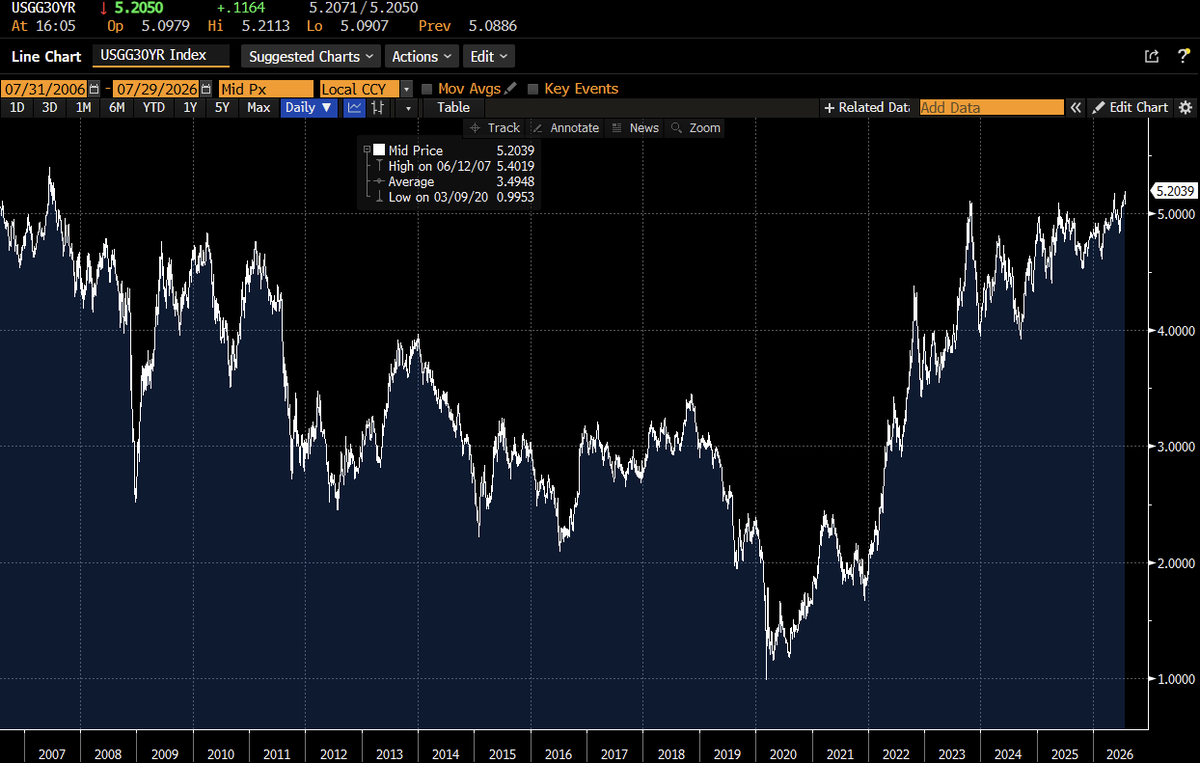
July 31 2007 was the day Bear Stearns liquidated its subprime mortgage portfolios, marking the beginning of the GFC, and the eventual birth of Bitcoin.
Today the 30yr yield passed 5.2%, the highest level of the year and since that dramatic event.
The time for Bitcoin is near.
Saya izin menjelaskan,
Yuk mulai dari awal.
BI itu apa sih, kerjanya ngapain?
BI itu bank sentral. Beda sama bank tempat kita nabung kayak BCA atau Mandiri.
Kerjaan BI itu jaga biar duit rupiah nilainya stabil, biar harga-harga barang nggak naik-turun kayak roller coaster.
Dia bisa kontrol rupiah lewat yang namanya suku bunga.
Kalau harga-harga lagi pada naik kenceng (cabe mahal, bensin naik, sewa kos naik), BI bakal bikin pinjam duit di bank jadi lebih mahal.
Begitu ini naik, orang jadi mikir dua kali buat ngutang beli motor atau modal usaha, soalnya cicilan makin berat.
Yang punya duit nganggur di rekening juga jadi males belanjain, mending disimpen aja karena bunga tabungan ikut naik.
Karena banyak orang ngerem belanja bareng-bareng, permintaan barang di pasar turun, dan harga pelan-pelan berhenti naik.
Kalau ekonomi lagi lesu, sepi, banyak yang nganggur, BI lakukan kebalikannya. Bikin pinjam duit jadi murah. Orang jadi lebih berani ngutang buat buka usaha, beli barang. Duit jadi lebih banyak muter di masyarakat, toko rame lagi, orang kerja lagi.
Satu hal penting: efeknya nggak langsung kerasa besok. Butuh waktu berbulan-bulan, kadang setahun, baru kelihatan hasilnya. Jadi orang yang megang kebijakan ini harus mikir jauh ke depan, nggak asal reaksi buat masalah hari ini doang.
BI emang sengaja dipisah dari pemerintahan
Menteri keuangan, menteri perdagangan, itu semua dipilih presiden, dan bisa dicopot presiden kapan aja. Wajar, karena mereka bagian dari tim presiden yang harus sejalan sama presidennya.
BI enggak. Ada undang-undang sendiri yang bilang: BI itu lembaga independen, nggak boleh dicampuri pemerintah dalam ngambil keputusan.
Kenapa harus dipisah?
Alasan paling besarnya: biar BI nggak jadi mesin cetak duit buat nutup utang pemerintah.
Coba bayangin gini: pemerintah itu kayak rumah tangga, kadang pengeluaran lebih gede dari pemasukan. Cara yang bener buat nutupin itu ada dua: pinjem duit atau naikin pajak.
Tapi kalau BI bisa diperintah, ada jalan pintas ketiga yang jauh lebih gampang: tinggal suruh BI cetak duit aja, terus dipake langsung buat nutup APBN.
Bisa juga dipakai untuk program *** ya kalian tau sendiri lah ya.
Kedengerannya enak banget kan? Nggak usah ribet nunggu orang mau beli surat utang, nggak usah pusing mikirin rakyat protes soal pajak naik.
Tapi masalahnya, kalau duit yang beredar makin banyak sementara barangnya tetep segitu-segitu aja, nilai duit itu jadi turun.
Harga barang jadi kelihatan makin mahal, padahal sebenernya bukan barangnya yang mahal, duitnya yang nilainya makin turun.
Makanya independensi BI itu fungsinya kayak pagar. Biar pemerintah nggak bisa seenaknya minta BI cetak duit buat nutup anggaran.
Karena kalau bisa, yang terdampak paling besar ya rakyat menengah lagi.
Semoga tidak terjadi ya.
Yuan tidak diperdagangkan bebas kayak Dolar AS.
Tiap pagi PBOC pasti ngerilis satu angka: Fixing Rate.
Nah, dari angka itu Yuan cuma boleh gerak sekitar ±2% aja sehari. Lewat dari situ? Regulator langsung intervensi.
Beda sama bank sentral lain, fixing-nya PBOC ini bukan cuma sekadar nyesuaiin harga pasar. Mereka punya yang namanya counter-cyclical factor.
Gampangnya kalau pasar lagi rame-rame nge-short Yuan, PBOC bisa sengaja pasang angka fixing yang lebih kuat buat melibas spekulan.
Makanya trader di Asia tiap pagi selalu nungguin angka ini. Bukan cuma mau nengok kurs, tapi buat ngebaca arah Beijing hari ini.
Nah, pagi ini PBOC menetapkan Yuan midpoint di 6,7530 per dolar AS.
Angka itu lebih kuat dari estimasi pasar.
Artinya, PBOC masih ingin menjaga Yuan tetap stabil, bukan membiarkan pasar yang menentukan arahnya.
Mereka justru masih kasih sinyal ingin menjaga mata uangnya tetap kuat.
Jika ini berlanjut, tekanan ke Dolar AS di Asia pasti mereda.
Rupiah, Won Korea, sampai Dolar Singapura ikut diuntungkan.
Gimana kalau suatu saat fixing-nya sengaja dipasang lebih lemah dari ekspektasi?
Itu jadi tanda Beijing mulai sengaja mau bikin Yuan melemah demi ngedorong ekspor. Dan pasar pasti langsung bergerak duluan sebelum mereka bikin rilis resmi.
Kira-kira PBOC bakal sanggup nahan Yuan kuat sampai kapan ya?
The 30-year US Treasury yield reaching approximately 5.21% is one of the most important macro signals in global markets, but the first point to clarify is that the long bond does not move only with inflation expectations.
A 30-year nominal Treasury yield can be decomposed into the expected path of future short-term interest rates, expected inflation and the term premium investors demand for accepting duration, inflation, fiscal and policy uncertainty over three decades. The US Treasury’s official curve closed on July 29 with the two-year yield at 4.22%, the 10-year at 4.67% and the 30-year at 5.20%, while the long bond traded as high as approximately 5.23% intraday, its highest level since 2007. At the beginning of July, the 30-year yield was only 4.97%, meaning the long end has repriced by more than 20 basis points in less than one month.
The composition of that move matters more than the headline level.
Thirty-year real yields, which remove market-implied inflation compensation, had already climbed to approximately 2.98%, their highest level since 2008. Reuters reported that real yields were leading the sell-off, reflecting a higher expected terminal federal funds rate, resilient economic growth and uncertainty over the Federal Reserve’s policy reaction. This means the move cannot be described simply as investors expecting higher inflation. Investors are also demanding a much higher real return for lending to the US government for three decades.
The immediate catalyst was the combination of renewed Middle East conflict, rising oil prices and a Federal Reserve that kept its policy rate unchanged at 3.50% to 3.75% despite inflation remaining materially above target. The Fed’s July Monetary Policy Report acknowledged that inflation had risen during 2026, partly because of energy-related supply shocks, while PCE inflation reached 4.1% in the twelve months through May. The market reaction suggests investors are concerned that maintaining the current policy rate may allow an energy shock to become embedded in wages, services prices and longer-term inflation behavior.
The yield-curve movement is particularly revealing. The two-year yield declined after the Fed decision while the 10-year and 30-year yields rose, creating a long-end-led steepening. In simple terms, the market became slightly less convinced about an immediate rate increase but more concerned about where inflation, interest rates and government borrowing costs will settle over the longer term. That is arguably a more uncomfortable signal than a uniform rise across all maturities because it suggests the bond market is imposing a risk premium that the Fed does not directly control.
The Fed can set the overnight policy rate, but it cannot command investors to finance the US government for thirty years at a particular yield.
This is where fiscal risk enters the discussion. The United States must continually refinance maturing debt while financing large structural deficits, rising interest expense and additional defense spending. A Federal Reserve study published earlier this year argued that increasing concerns about future debt sustainability can raise far-forward interest-rate risk premiums because investors require greater compensation for the possibility that future Treasury supply, inflation or policy intervention will be materially different from today. The study did not find evidence that long-term inflation expectations had become unanchored, but it concluded that adverse supply shocks and debt-sustainability risks plausibly explain part of the rise in far-forward rates.
Therefore, the long bond is currently pricing several risks simultaneously: higher oil-driven inflation, a higher terminal policy rate, stronger nominal economic growth, reduced Federal Reserve guidance, heavier future Treasury issuance and a greater term premium for holding long-duration government debt.
The rise in yields also tells us something important about AI. AI is likely to become disinflationary over the long term if it raises productivity, reduces labor requirements and lowers the cost of producing services. However, the infrastructure buildout can initially be inflationary because it requires enormous spending on data centers, semiconductors, electricity generation, transmission networks, cooling systems, metals, construction workers and specialized engineers. The Federal Reserve has already identified AI-related capital investment as an important contributor to manufacturing and business-investment growth. The productivity dividend may arrive later, while the demand for capital, energy and physical infrastructure arrives now.
For equity investors, 5.21% is not just a bond-market number. It is the new hurdle rate for nearly every financial asset.
When investors can earn more than 5% in nominal terms from a long-dated US government security, equities must offer a sufficiently attractive earnings yield and growth rate to compensate for their additional risk. Companies whose valuations depend heavily on profits expected ten or twenty years into the future are especially sensitive because those cash flows are discounted at a higher rate. This does not invalidate the structural AI thesis, but it makes valuation far more important and favors profitable, cash-generative AI beneficiaries over companies whose investment cases depend primarily on distant terminal value.
A rising 30-year yield can therefore coexist with strong AI earnings while still producing technology-stock multiple compression. Earnings can increase, but share prices can fall if the discount rate rises faster than earnings expectations. This is why an excellent company can report exceptional growth and still disappoint the market. The bond market is effectively increasing the price of time.
The same mechanism affects the physical economy. Mortgage rates, infrastructure financing, commercial real estate loans and long-term corporate bonds are priced with reference to Treasury yields. Higher long-term rates discourage housing transactions, reduce the present value of real estate and infrastructure projects, and make corporate refinancing more expensive. The Federal Reserve had already described the US housing market as stagnant when prevailing 30-year mortgage rates were around 6.4%; a sustained rise in Treasury yields risks tightening that constraint further even without another official Fed increase.
For banks, the consequences are mixed. Higher yields improve the returns available on newly originated loans and securities, but they also reduce the market value of existing long-duration bond portfolios. Banks with large holdings of fixed-rate securities can experience renewed unrealized losses, while borrowers face greater refinancing stress. A steeper curve may ultimately support net interest margins, but only if deposit costs stabilize and credit quality does not deteriorate first.
For emerging markets, a near-3% US 30-year real yield is particularly restrictive. It raises the return global investors can receive without accepting emerging-market currency and sovereign risk, supporting the dollar and increasing the required yield on emerging-market bonds. Countries with fiscal deficits, external financing requirements or weak currencies must either tolerate capital outflows, offer higher interest rates or allow their currencies to depreciate. For Indonesia, this makes domestic monetary easing more difficult and increases the importance of fiscal credibility, because global investors will compare every rupiah asset with a much more attractive US risk-free alternative.
The move also supports our cautious view on gold. Gold produces no income, so a 30-year real Treasury yield near 3% creates a substantial opportunity cost for holding it. If the yield increase is primarily driven by stronger real growth and a higher terminal policy rate, the environment is fundamentally negative for gold. The outlook would become more supportive only if long yields were rising because investors had genuinely lost confidence in US fiscal sustainability, the dollar or the Federal Reserve’s ability to preserve purchasing power. Current evidence suggests real yields and policy repricing are leading the move, not a wholesale abandonment of dollar assets.
The comparison with 2007 is historically interesting, but it should not be interpreted mechanically as evidence that another financial crisis is imminent. The economic structure is different, household mortgages are more heavily fixed-rate and the banking system is better capitalized than before the global financial crisis. However, the same nominal yield may still be more consequential today because government debt is larger, asset valuations are higher and much of the modern economy has been built around more than a decade of unusually cheap capital.
The key issue is not whether 5.21% is numerically high. It is whether the economy and financial markets have been priced for it.
A 30-year bond with a duration of roughly sixteen years loses approximately 1.6% of its value for every ten-basis-point increase in yield, before accounting for convexity. A 20-basis-point move can therefore erase more than 3% of its market value in a short period. The damage can be even larger in equities whose valuations resemble ultra-long-duration assets.
At the same time, a 5.2% long bond is beginning to offer a genuinely attractive absolute return. If inflation eventually returns toward 2% to 3%, investors purchasing at today’s yield could earn a meaningful real return and substantial capital gains if yields decline during a future slowdown. However, high yield does not automatically mean the sell-off is over. Long-duration bonds can remain under pressure while oil prices rise, the Fed’s reaction function remains unclear and Treasury issuance concerns intensify.
I would therefore not aggressively buy duration merely because the 30-year yield has crossed 5.2%. I would wait for clearer evidence that the inflation impulse is peaking, oil prices are stabilizing, the Fed is regaining control of expectations and Treasury auctions are being absorbed without progressively larger concessions. The most important indicators are the 30-year real yield, long-term inflation compensation, the shape of the two-year to 30-year curve and the strength of demand at upcoming Treasury auctions.
The sharpest conclusion is that the bond market is no longer waiting for the Federal Reserve to tighten financial conditions.
It is doing the tightening itself. The rise to 5.21% does not merely say that investors expect more inflation. It says they require more compensation for uncertainty surrounding inflation, growth, monetary policy, fiscal sustainability and the supply of government debt. That raises the discount rate for the entire global financial system.
For years, investors were rewarded for assuming that every rise in yields would eventually be reversed by the Fed. The 30-year Treasury market is now testing the opposite proposition: what happens when the cost of capital remains structurally higher even before the central bank raises rates again?
BREAKING: US June PCE inflation, the Fed's preferred inflation metric, falls to 3.7%, in-line with expectations.
Core PCE inflation fell to 3.3%, the second highest reading since October 2024.
US inflation continues to run at nearly double the Fed's 2.0% target.
This trader generated $18,060 in profit from just $15K in volume by trading crypto markets on Limitless!
Here's his strategy:
• Buys underpriced shares at an average price of 11¢
• Holds all them them till market resolution without selling
• Generated the most profit in the 10–25¢ range, looting a 237% average ROI
• He won only 50.6% of markets
Essentially, he’s buying cheap outcomes with big potential upside, so he only needs to be right half the time to remain profitable
...and it's working
Winning traders returned 9x the cost of losing ones, allowing a near coin-flip hit rate to be profitable over time
Not every trader shouts about their trades on Twitter.
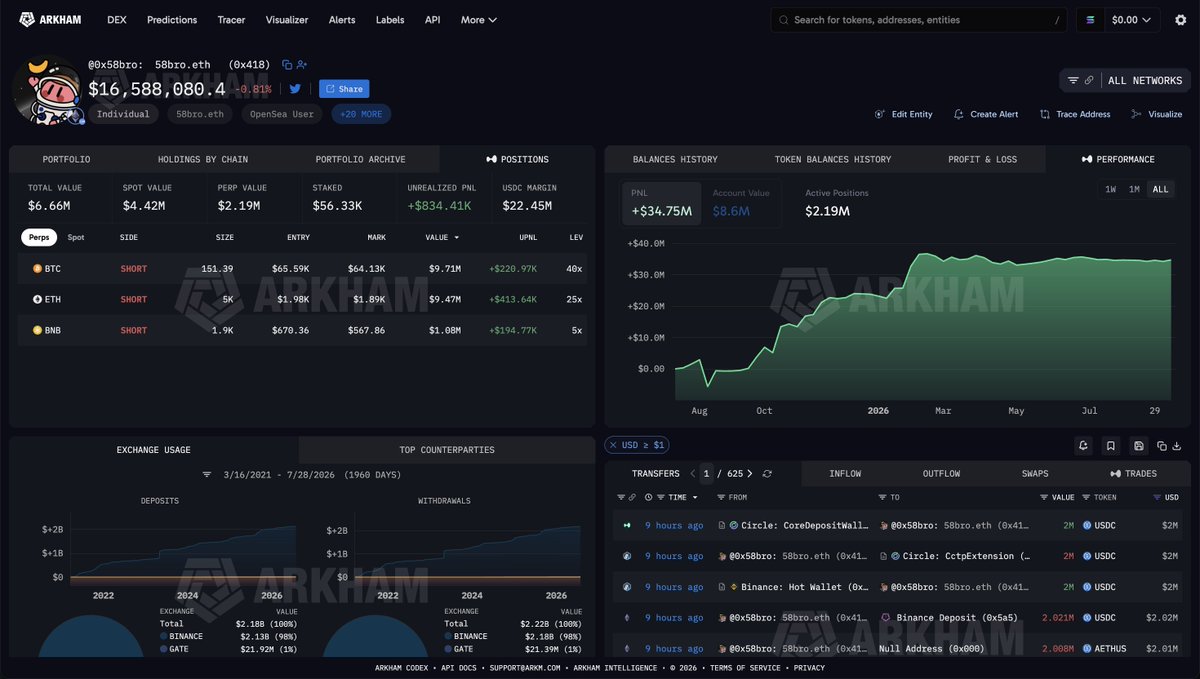
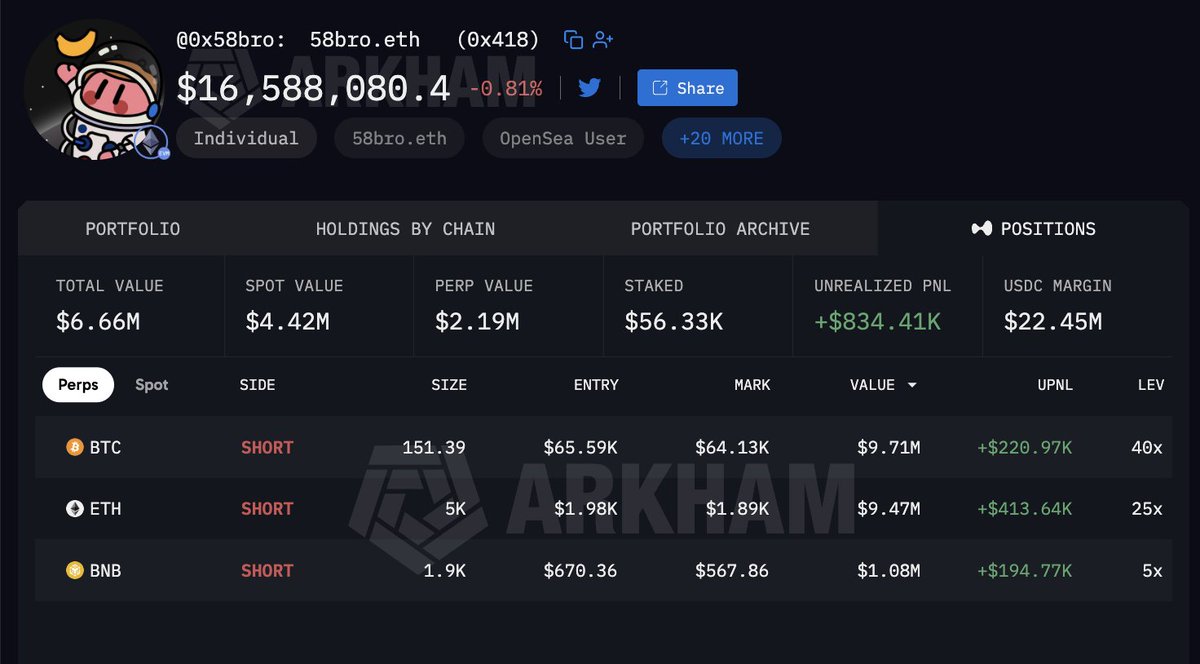
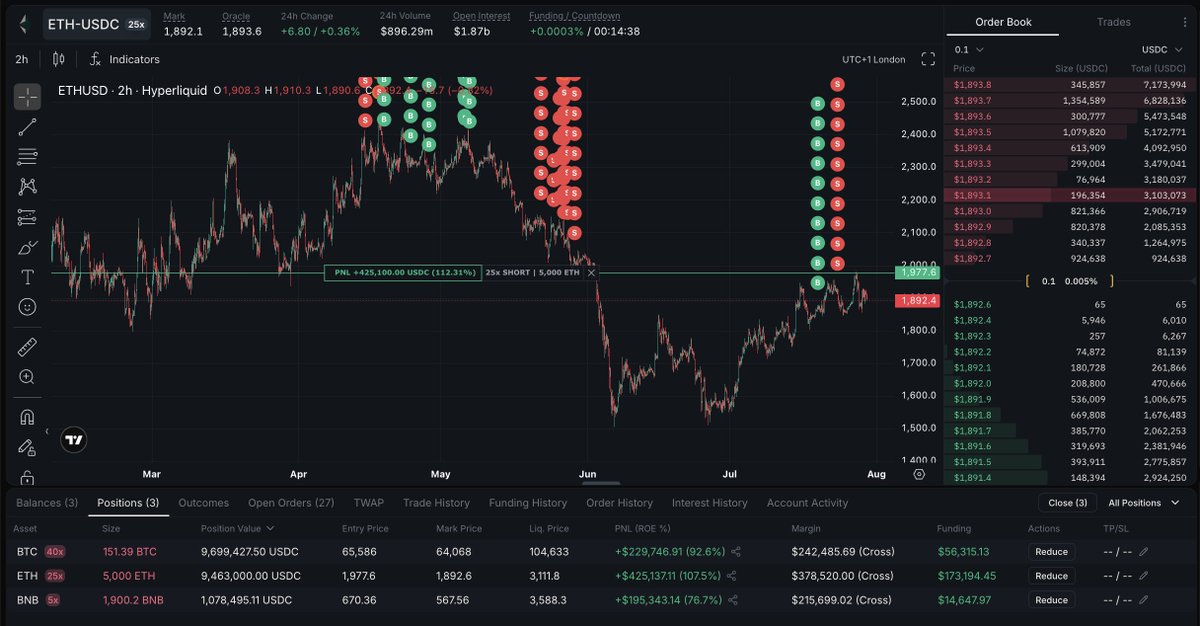
@0x58bro has a tiny X account and barely posts about crypto. But he’s made almost $35 MILLION trading on-chain perps over the past year.
Now, he’s up $850K shorting BTC, ETH and BNB. What will he do next?
A guide to Warsh's rhetorical techniques. (since we'll living with it for the next 5 years)
Here's 8: :
1. Replace the question with a broader one (otherwise known as "bridging), i.e. when someone ask X, you answer Y. Q: Was today's decision close? Answer: The vote was 9-3. The broader discussion showed a lot of agreement. We had commonality on the questions....
2. Reject the reporter's premise. I.e. Q: What's the argument for a pause? Answer: I wouldn't characterize what we did as anything like a pause.
3. When asked about conclusions, answer with process. Q: What haven't you hiked? A: We spent an inordinate amount of time looking at monetary policy strategy...thinking hard...looking at data...
4. Admit uncertainty, but only about the economy, not objectives. i.e. he never expresses uncertainty about the 2% inflation target or the Fed's mission, but he freely admits uncertainty about anything about the economy.
5. Create memorable slogans to create rhetorical anchors. i.e. "Watchful thinking, not watchful waiting." "Family fight." "We're in the performance business." "No magic wand."
6. Controlled self-deprecation to diffuse tension. i.e. "Believe it or not, this press conference is not all I've done today."
7. Use questions to answer questions. He presented the four questions that the FOMC discussed, but never provide answers.
8. Divert attention to the markets but does not provide market analysis. Q from reporter: what are you hearing from the markets? A: Markets are the best source of information.
Avoid the Prajogo Pangestu complex. If the repo financing begins to unravel, the downside could become highly nonlinear.
When highly valued shares are pledged as collateral, falling prices can trigger margin calls, forced deleveraging, and additional selling. That creates a dangerous feedback loop: lower prices weaken collateral coverage, weaker collateral coverage forces more selling, and more selling pushes prices even lower.
The real risk is not simply an earnings disappointment. It is the possibility that the financing structure supporting the ecosystem begins to fail. Until there is greater transparency around pledged shares, leverage, and related funding arrangements, I would stay away.