Thrilled to share our recent work published in @Dev_journal from my PhD at @angerslab. This research introduces a novel approach by using Wnt receptor antibodies to understand neural patterning and enhance the differentiation of hPSCs into DA neurons.📰🧵https://t.co/qpnZvKCAZ9
🎉 Excited to share our latest work in @stemcellreports! This marks the final chapter of my postdoc in the @angerslab. https://t.co/XVM4X17CLZ
🧬✨ We show how individual Frizzled receptors regulate Wnt-β-catenin signaling kinetics in hPSCs, influencing mesoderm commitment🧵1/n
Researchers at #TemertyMed & @DonnellyCentre found a way to better control the preclinical generation of key neurons depleted in Parkinson’s disease https://t.co/rzdR4KapIA
Read the Research Article "Exploiting spatiotemporal regulation of FZD5 during neural patterning for efficient ventral midbrain specification" here:
https://t.co/l705vn2wBS
Targeting FZD5 to promote midbrain patterning
Read this Research Highlight showcasing work from Andy Yang @DeAndyYang, Stephane Angers @StephAngers and colleagues @UofT:
https://t.co/m7it5gWFP3
To find out more about the story behind the paper, we caught up with first author Andy Yang @DeAndyYang, and corresponding author Stephane Angers @StephAngers:
https://t.co/B0IRkPk6KI
We'd also like to thank the editorial team at @Dev_journal and the reviewers for their comments. Our work is featured as a research highlight in the upcoming issue. Additionally, they conducted a Q&A interview with me and @StephAngers 👨🔬 (12/12) https://t.co/piauJyKzcw
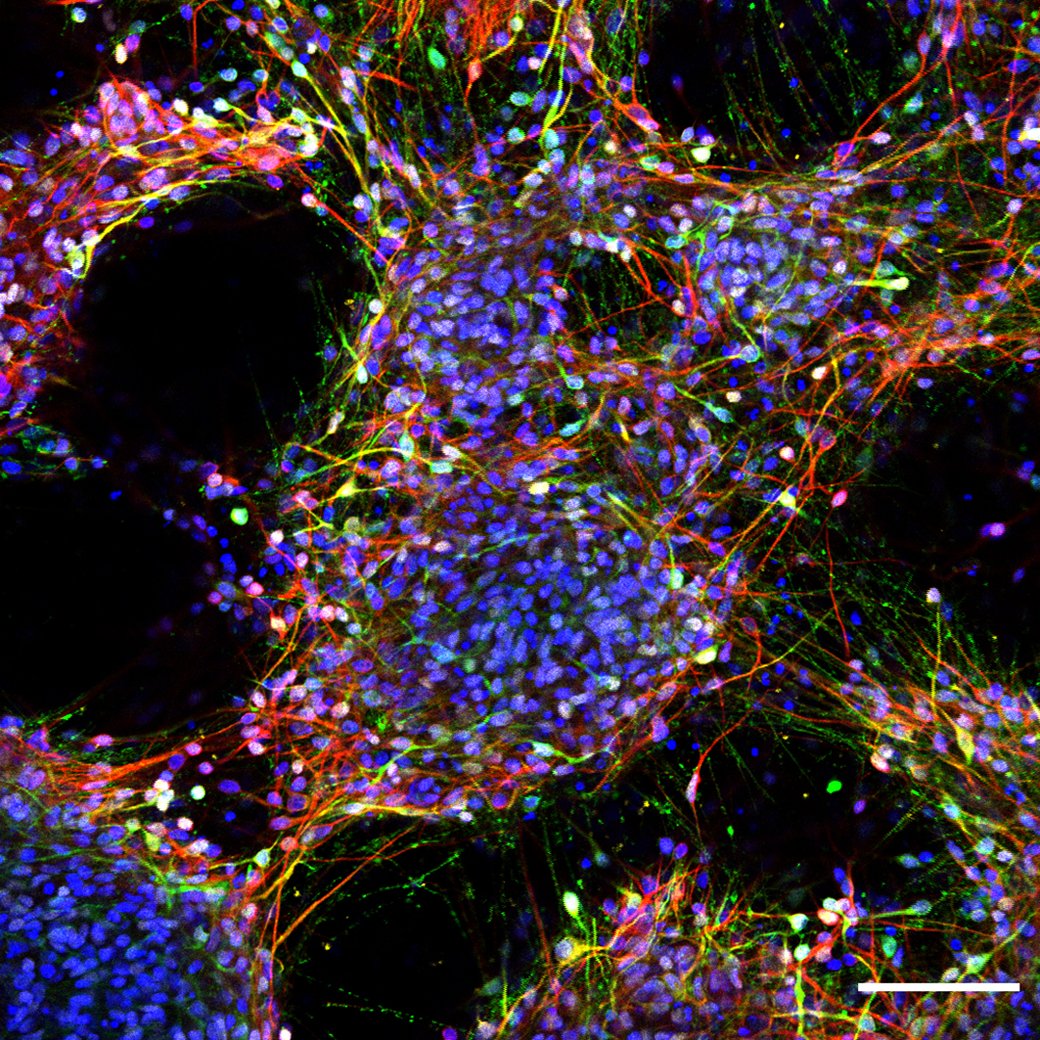
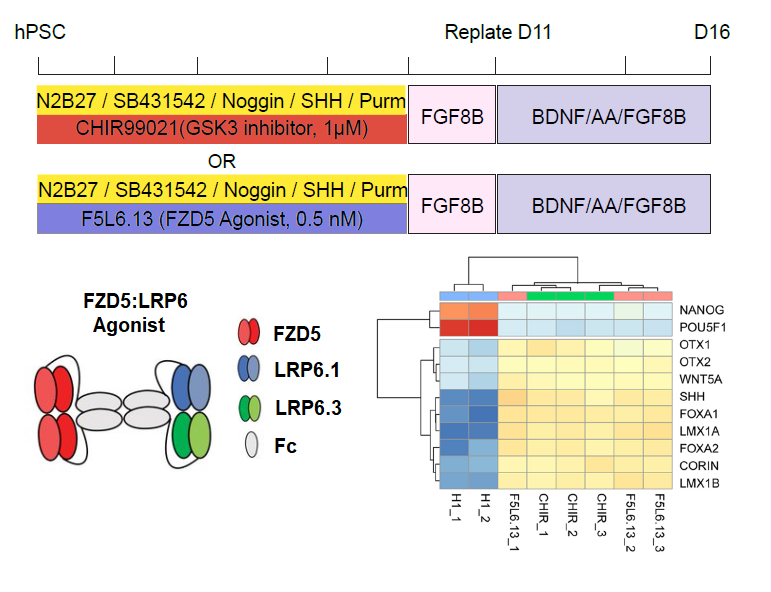
The F5L6.13-derived ventral midbrain progenitors give rise to functional DA neurons in vitro and rescue the motor dysfunction when engrafted in the 6-OHDA hemi-lesion animal model of Parkinson's (7/12)
Given the early upregulation of FZD5 during neural induction, we utilized a tailored synthetic growth factor, F5L6.13, targeting the FZD5:LRP6 receptor complex to activate Wnt signaling. This approach effectively induces midbrain patterning from hPSCs, replacing GSK3i (6/12)
Thrilled to share our recent work published in @Dev_journal from my PhD at @angerslab. This research introduces a novel approach by using Wnt receptor antibodies to understand neural patterning and enhance the differentiation of hPSCs into DA neurons.📰🧵https://t.co/qpnZvKCAZ9
Using CRISPR screen in hPSC differentiation, we found that FZD5 expression is dependent on the forebrain regulators OTX2 & LDB1. This discovery highlights a novel regulatory mechanism of Wnt receptor expression, and may be forming a feedback loop for regional specification (5/12)
We discovered that FZD5 is not expressed in the pluripotent state, but it is upregulated in anterior progenitors and dynamically downregulated in NPC adopting a posterior fate. (4/12)
Leveraging our previously developed selective Wnt receptor antibodies , we characterized the cell surface expression of FZD receptors in hPSC-derived neural progenitor cells with different regional identity 🧠(3/12)
We aimed to tackle some gaps in hPSC differentiation protocols. Current methods use GSK3 inhibitors for Wnt activation, missing receptor-level specificity and regulation. GSK3 also plays in multiple pathways. The roles of FZD receptors in neural patterning are also unclear (2/12)
From a new PhD student at a Gordon conference on Wnt signalling in Vermont four years ago to presenting my own research and sharing the stage with world-class minds like Hans Clevers in Barcelona, this journey is a blend of hard work and true inspiration. 🧑🔬🤓 #Wnt@angerslab
📢Calling all Wnt trainees🌎 Applications for the GRS on Wnt signaling is open! #Wnt_GRS2023 is scheduled for July 29-30, 2023 in Spain. Plenty of short talks to be selected from abstracts. Fantastic program by the associated GRC https://t.co/3s3PQefVYG