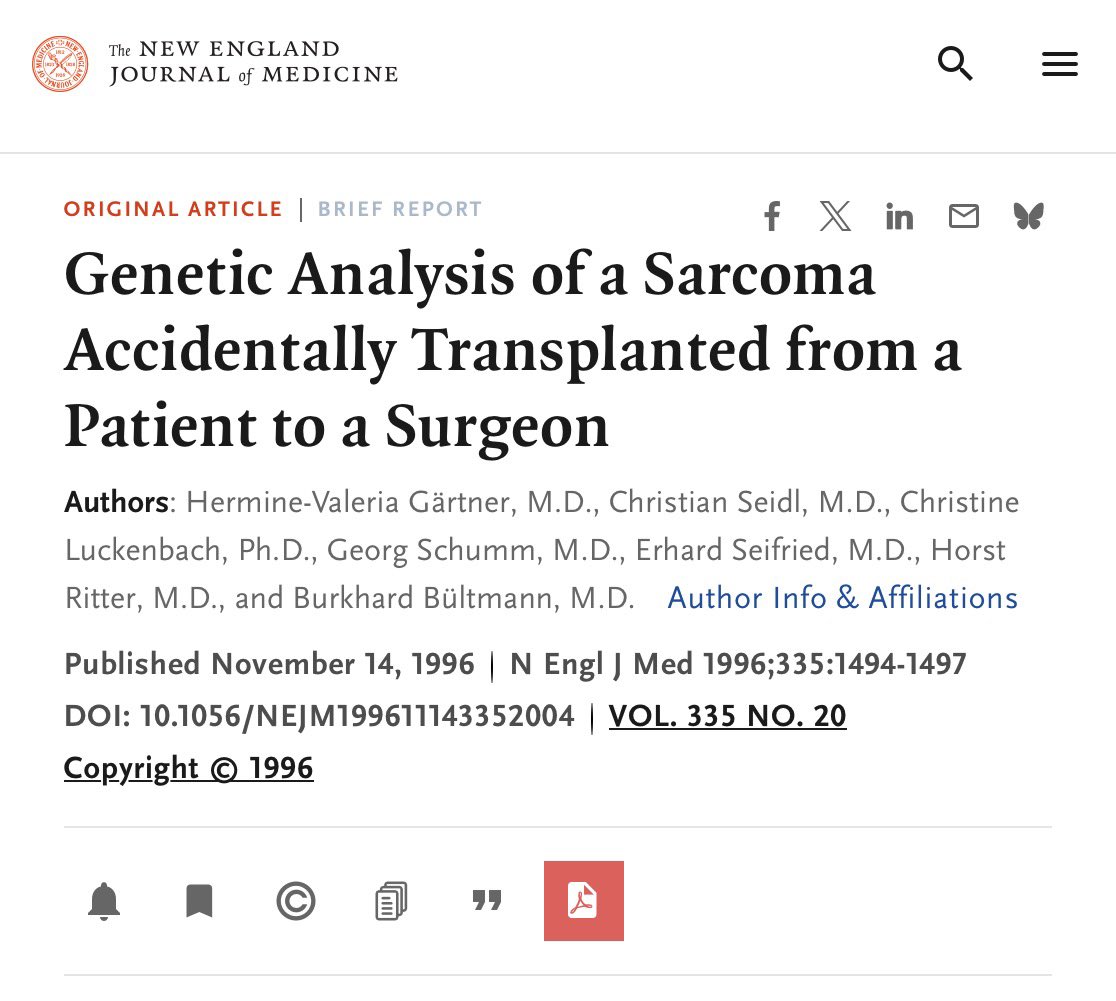
A rare case where a surgeon accidentally developed his patient’s cancer
Cancer is not considered contagious. If cancer cells from another person enter your body, your immune system is supposed to destroy them.
But in very rare situations, biology doesn’t follow the rules.
A 32-year-old man underwent emergency surgery for an aggressive soft-tissue cancer called malignant fibrous histiocytoma. Sadly, he died shortly after the operation due to complications.
During the surgery, the 53-year-old surgeon accidentally injured the palm of his left hand while placing a drain. The wound was small, immediately cleaned, and properly dressed. No one thought much of it.
Five months later, the surgeon noticed a hard lump growing at the exact spot where his hand had been injured. It slowly enlarged to about 3 cm, roughly the size of a large coin.
The lump was surgically removed.
The diagnosis was shocking.
It was malignant fibrous histiocytoma, the same rare cancer the patient had.
The surgeon was otherwise healthy. Tests showed no immune deficiency. So how could this happen?
The DNA answered the question
Pathologists compared both tumors under the microscope and found them to be identical in appearance. But the real proof came from DNA testing.
Using genetic markers and HLA typing (a way of identifying tissue origin), doctors showed that the tumor in the surgeon’s hand carried genetic material from the patient.
This meant only one thing:
👉 The cancer had been accidentally transplanted from patient to surgeon during surgery.
Cancer cells likely entered through the small hand injury and managed to survive long enough to form a tumor.
Fortunately, the tumor was completely removed.
At two-year follow-up, the surgeon was healthy, with no recurrence and no spread.
Why this case is so remarkable:
This case does not mean cancer spreads through touch or casual contact. It shows that direct implantation of living cancer cells, under very specific conditions, can rarely lead to tumor growth, even in a healthy person.
It’s a rare exception that reminds us:
- Cancer isn’t contagious, but biology has loopholes
- The immune system is powerful, not perfect
- Medicine still encounters situations that challenge long-held beliefs
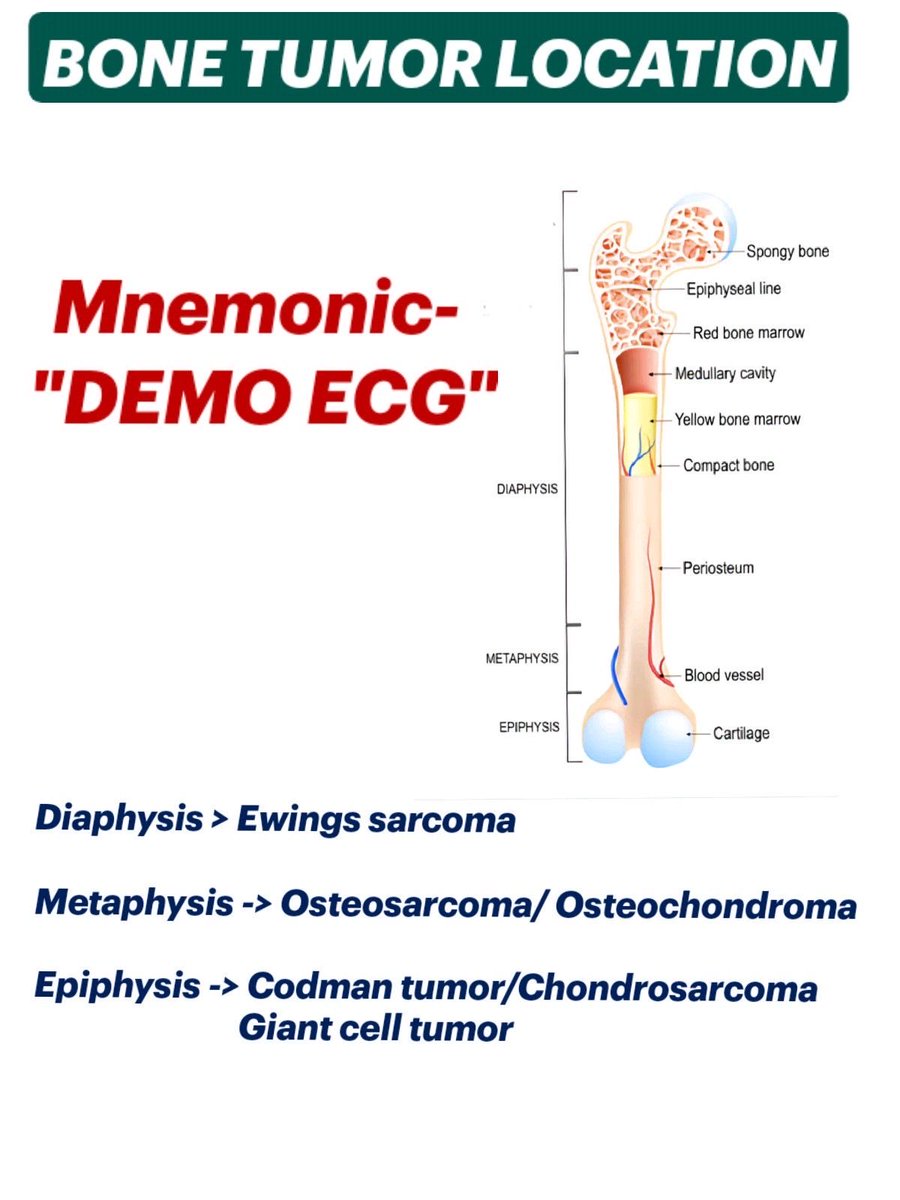
Giant Cell Tumor (Osteoclastoma)
Benign but locally aggressive tumor
Seen in young adults (20–40 yrs) → often female
Arises from epiphysis of long bones → may extend to metaphysis
X-ray → ���soap-bubble” lytic lesion, eccentric & expansile
May be incidental or present with pain, swelling, ↓ joint motion
Treatment → curettage + bone graft/cement → denosumab or resection if recurrent
Risk → can recur or rarely transform malignantly
Hi @fly2ohare — my mom forgot her phone at the TSA checkpoint in Terminal 1 this morning before her connection to Vancouver. We tracked it and it’s still showing at Terminal 1. Who can we contact to retrieve it? Appreciate your help!
🛑Rotator cuff muscles work together to draw humeral head medially & inferiorly, allowing it to clear the acromium.
Supraspinatus pulls mainly in a horizontal direction. Infraspinatus pulls ~45° & Teres minor pulls ~55° to the horizontal.
Subscapularis pulls ~45° to horizontal
Contei pros residentes aqui em Seattle q meu vô foi picado por uma cascavel esses tempos, aí eles perguntaram se ele tomou soro antiofídico e que isso é MUITO CARO 😀😀😀😀😃😁 #SUS