An 18-year-old high school student has developed a promising new water filter that removes over 95% of microplastics from drinking water.
Mia Heller, a senior at Kettle Run High School in Virginia, became frustrated after learning that her local tap water contained microplastics and that government agencies were not taking strong action to address the issue. Tired of the expensive, high-maintenance membrane filters her family used at home, she decided to build a better solution in her garage.
After months of experimentation, Heller created a prototype filtration system that eliminates 95.52% of microplastics — a performance that rivals or exceeds many conventional technologies, but with far less waste and maintenance. The compact device is roughly the size of a standard home appliance and is designed for easy under-sink use.
At the heart of her invention is ferrofluid — a magnetic liquid (based on canola oil in her prototype) that binds to microplastic particles ranging from 1 nanometer to 5 millimeters. As contaminated water flows through the system, a magnetic field pulls the ferrofluid-bound plastics out, producing cleaner water while allowing most of the ferrofluid (about 87%) to be recovered and recycled for repeated use.
Heller was a finalist at the 2025 Regeneron International Science and Engineering Fair, where she received a special $500 award from the Patent and Trademark Office Society for her innovative, low-cost, and sustainable approach.
She hopes her self-recycling system will eventually reach the consumer market, giving families an affordable and effective tool to reduce their exposure to microplastics, which have been linked to various health concerns.
@ATRightMovies This scene defines where we are at as humanity with artificial intelligence. Do we want to still feel, research, contemplate and reflect the nuances or just let (fill in the blank large language model) summarize for us how we should react and feel.
I vote we use our agency.
#MatthewMcConaughey says the moral apprehensions around AI are “not gonna last”:
“There’s too much money to be made, and it’s too productive. So I say: Own yourself. Voice, likeness, et cetera. Trademark it. Whatever you gotta do, so when it comes, no one can steal you.”
https://t.co/eLZrq7LJnn
Check out my latest article: In the AI age, effective internal complaint reporting systems including whistleblower hotline channels matter more than ever. https://t.co/mdtzjo6ZA3 via @LinkedIn
AI agents. agentic AI. agentic architectures. agentic workflows.
Agents are everywhere. But what are they really?
And can they actually do anything useful?
Let's cut through the noise and explain what AI agents actually are and how they work in practical workflows.
𝗪𝗵𝗮𝘁 𝗶𝘀 𝗮𝗻 𝗔𝗜 𝗮𝗴𝗲𝗻𝘁?
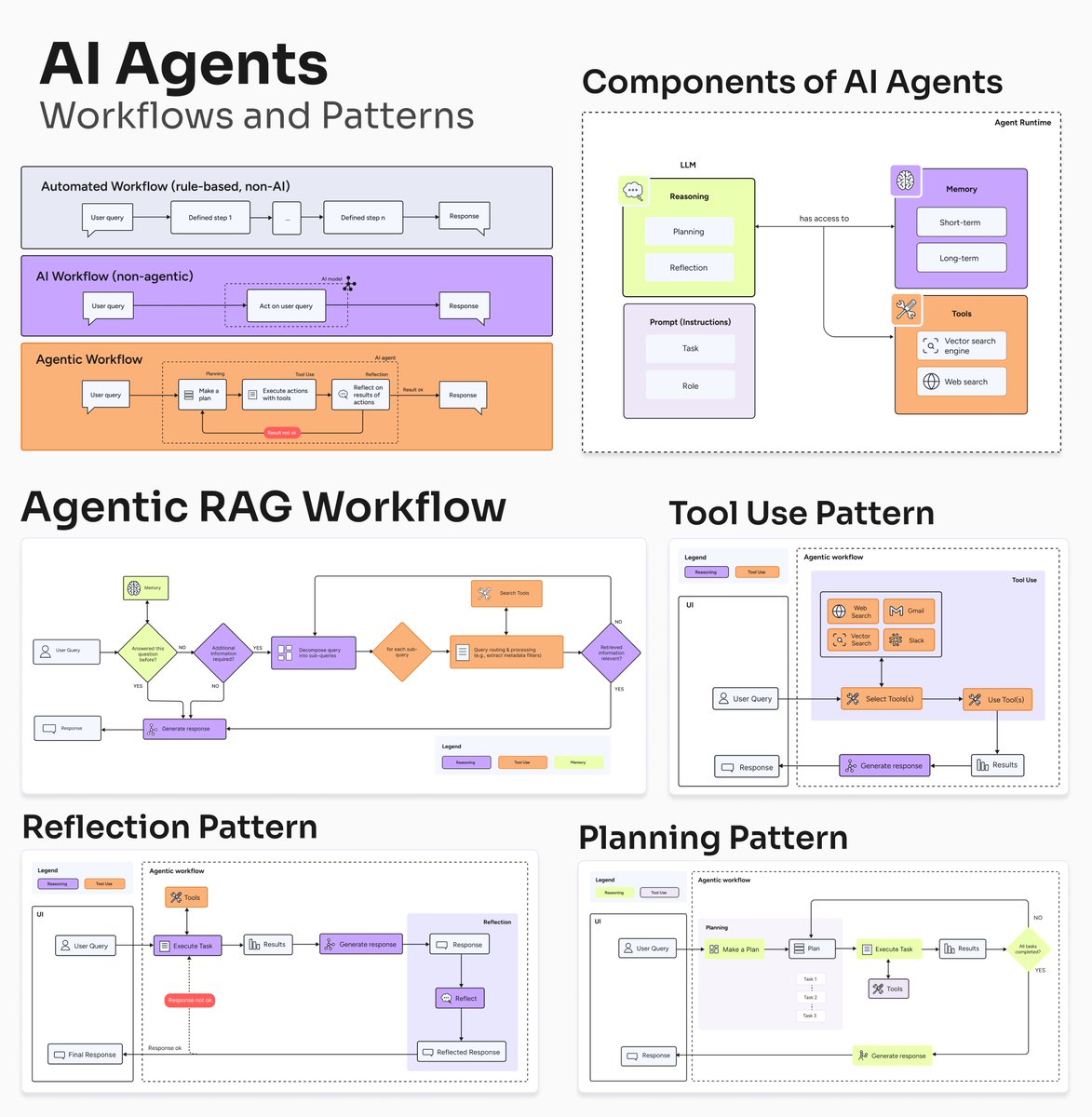
An AI agent is a system that combines LLMs for reasoning and decision-making with tools for real-world interaction, enabling it to complete complex tasks with limited human involvement. Think of them as automated decision-making engines that operate and use various tools to solve problems for you.
The key components that make an AI agent work:
• 𝗥𝗲𝗮𝘀𝗼𝗻𝗶𝗻𝗴 - The agent can break down complex problems into smaller, actionable steps and reflect on the outcomes
• 𝗧𝗼𝗼𝗹𝘀 - Agents can leverage external resources like search engines, APIs, databases, and code interpreters to overcome the limitations of LLMs
• 𝗠𝗲𝗺𝗼𝗿𝘆 - Both short-term (for the current conversation) and long-term (across multiple sessions) memory allow agents to learn from experience
𝗪𝗵𝗮𝘁 𝗺𝗮𝗸𝗲𝘀 𝗮 𝘄𝗼𝗿𝗸𝗳𝗹𝗼𝘄 "𝗮𝗴𝗲𝗻𝘁𝗶𝗰"?
An agentic workflow is a series of connected steps dynamically executed by an agent to achieve a specific task or goal. It's different from traditional AI workflows because it can:
- Make a plan by breaking down complex tasks into smaller sub-tasks
- Execute actions with tools to carry out the plan
- Reflect and iterate, adjusting the approach as needed
𝗧𝗵𝗲 𝟯 𝗞𝗲𝘆 𝗣𝗮𝘁𝘁𝗲𝗿𝗻𝘀 𝗶𝗻 𝗔𝗴𝗲𝗻𝘁𝗶𝗰 𝗪𝗼𝗿𝗸𝗳𝗹𝗼𝘄𝘀:
1. 𝗣𝗹𝗮𝗻𝗻𝗶𝗻𝗴 𝗣𝗮𝘁𝘁𝗲𝗿𝗻 - Agents break down complex tasks into smaller, manageable steps. This reduces cognitive load on the LLM and improves reasoning
2. 𝗧𝗼𝗼��� 𝗨𝘀𝗲 𝗣𝗮𝘁𝘁𝗲𝗿𝗻 - Agents interact with external resources and applications to overcome the limitations of static training data
3. 𝗥𝗲𝗳𝗹𝗲𝗰𝘁𝗶𝗼𝗻 𝗣𝗮𝘁𝘁𝗲𝗿𝗻 - Agents evaluate their own outputs before finalizing a response, enabling continuous improvement without human feedback
𝗔𝗴𝗲𝗻𝘁𝗶𝗰 𝗥𝗔𝗚: 𝗔 𝗣𝗿𝗮𝗰𝘁𝗶𝗰𝗮𝗹 𝗘𝘅𝗮𝗺𝗽𝗹𝗲
Traditional RAG retrieves relevant documents and feeds them to an LLM. Agentic RAG takes this further by:
- Breaking complex queries into smaller, more focused subqueries
- Evaluating the relevance and accuracy of retrieved data
- Reformulating queries
- Creating new plans for responding to queries when needed
This approach is significantly more powerful than traditional RAG, as agents can dynamically adjust their search strategy based on the initial results.
Learn more in this free ebook on Agentic Architectures: https://t.co/uFCUtVNNna
For anyone who’s had lemons in their life Forest Frank puts a whole new meaning to .. making lemonade!
Jumping around on stage 21 days after breaking back 🤯 https://t.co/3t5V1JZcAo via @YouTube
Casey’s!
Yah. I’ll take an all around!
Renowned Massachusetts Diner is Being Called the Best Classic Diner in the State https://t.co/WwMmrrnhlC @wupefm