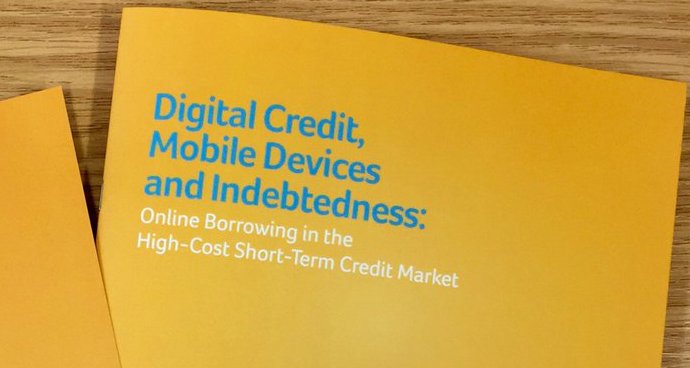
Our final paper from @Debt_Interfaces project. Thanks @BenAndersonGeog @ash_ecotechnics and Rachel Gordon. Hopefully of interest to those working on payday lending and credit-debt relations, and to those trying to incorporate theories of affect into cultural economy approaches
New Transactions paper that explores the relation between theories of affect and definitions of ‘culture’ in cultural economy, as a means to attune to how harmful forms of credit-debt are lived with @_paullangley @ash_ecotechnics and Rachel Gordon
https://t.co/h7uYO91hew
Out now, our new briefing with @dropthedebt@NEF@Research_Act about @TheFCA failure to protect low income credit card borrowers, it's lack of adequate research into low income household indebtedness, and the need for politicians to force it to act https://t.co/JHsl7kVeRp
It's here. Our digital resource 'Indebted Life' is available to play. Follow three characters thinking about applying for a #payday loan. Based on real life experiences of online borrowing of high-cost credit #indebtedlife#debt#highcostcredit#HCSTC https://t.co/U9fc0dYc4r
Fantastic that @Debt_Interfaces is making news in @thetimes Regulators told me night time curfew on digitally mediated payday loans is contrary to consumer choice, despite data they collected from lenders showing default rate spike for loans taken out in small hours at weekends
'Call for ‘credit curfew’ to help late-night borrowers' - Pleased to see yet more evidence adding to our call for people to be able to limit their own access to shopping, borrowing & gambling at times when the impulse is hardest to resist, often at night. https://t.co/jzLHCiD3rN
Out today in Economy and Society. Research by @Debt_Interfaces project shows borrowers relate to their digitally mediated payday loans as money, and not as cedit, debt or finance. Thanks to participants and @BenAndersonGeog @ash_ecotechnics Rachel Gordon
https://t.co/VtcIWC40pU