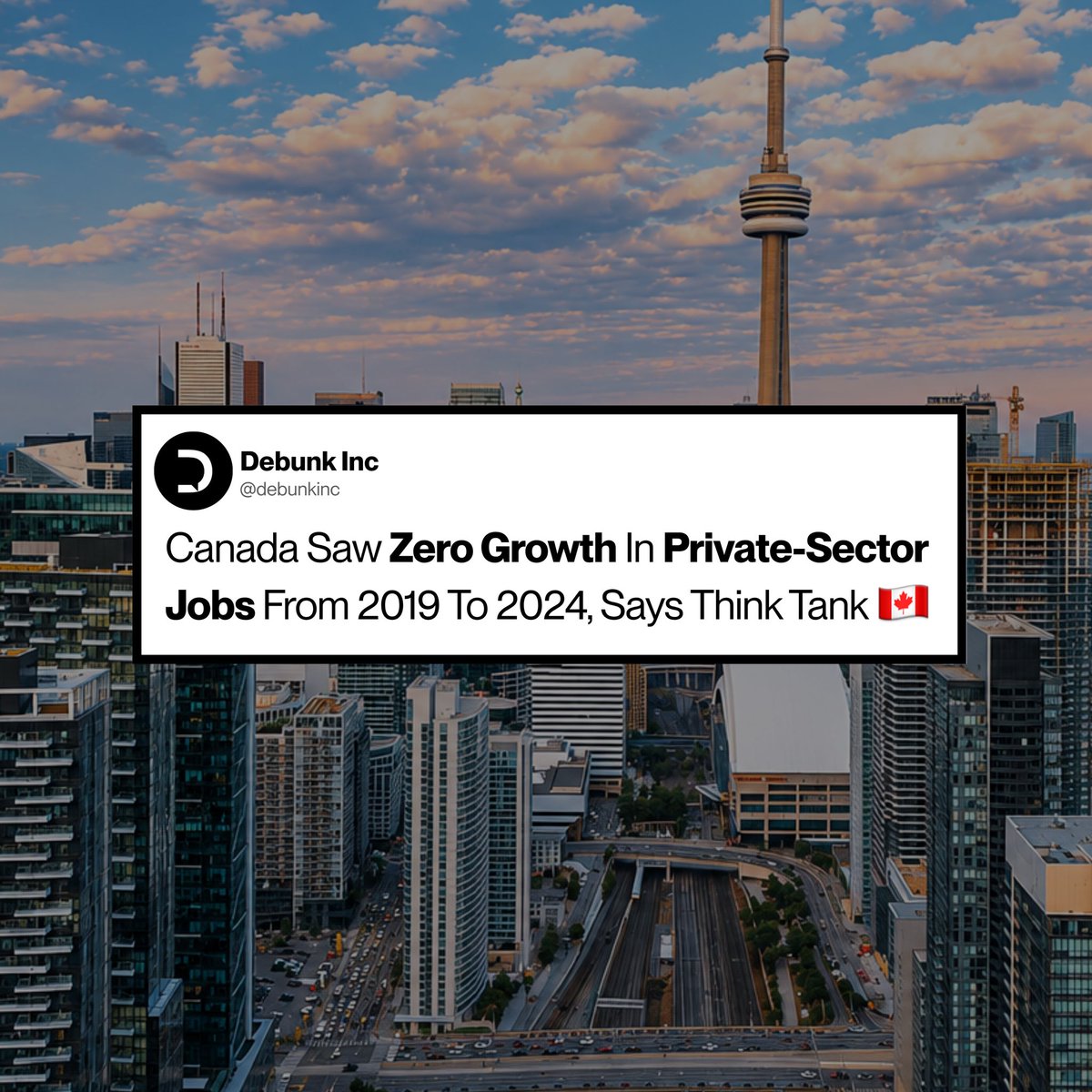
Canada’s private-sector job growth failed to keep pace with its growing population between 2019 and 2024, according to a new Fraser Institute study. 🇨🇦📉
While private-sector employment increased by 6.1% overall, growth was virtually zero relative to the working-age population. Meanwhile, government employment surged 19.6%, accounting for 44.1% of Canada’s net job growth.
The study found that the U.S. added 7.6 private-sector jobs per 1,000 working-age residents, while Canada added virtually none. Had Canada matched the U.S. rate, it would have had an estimated 554,000 additional private-sector jobs in 2024.
Nine out of ten provinces also recorded declines in private-sector employment relative to their working-age populations.
Source: Fraser Institute
#CanadaEconomy #CanadianJobs #PrivateSector #EconomicGrowth #CanadianBusiness
A major $2.9-billion deal is set to reshape Alberta’s oil sands industry 🇨🇦🛢️
Strathcona Resources has announced plans to acquire Greenfire Resources in a deal valued at approximately $2.7 billion to $2.9 billion, including debt.
The acquisition would create a larger Canadian oil producer, combining approximately 153,000 barrels per day in 2026 production, with output projected to reach 260,000 barrels per day by 2031.
The deal would also bring the companies’ combined oil reserves to more than 3 billion barrels, strengthening Strathcona’s position in Alberta’s energy sector.
Source: Strathcona Resources, November 2026
#CanadianEnergy #OilSands #Alberta #EnergyIndustry #DebunkInc
Canada’s 2026 federal budget outlines major plans for the country’s energy and resource sectors. 🇨🇦
From a proposed pipeline capable of moving 1 million barrels of oil per day to doubling LNG export capacity in Kitimat, Ottawa is pushing for major infrastructure expansion.
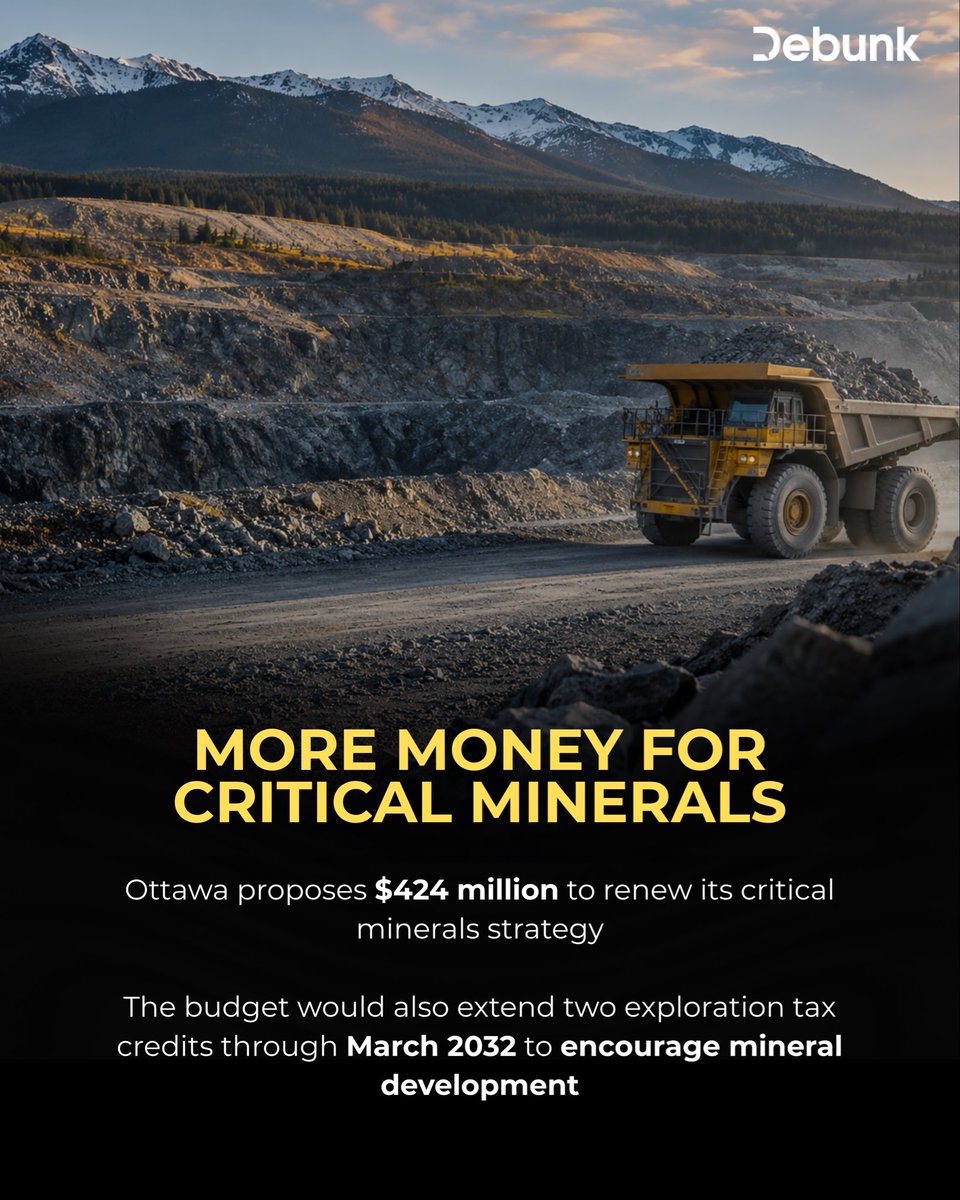
The budget also proposes $424 million for critical minerals, $518.5 million for nuclear energy and new tax incentives to encourage investment.
With faster project approvals and expanded clean energy tax credits also on the table, the focus is on increasing Canada’s production, exports and energy capacity.
But how much of this will translate into actual projects?
Source: Government of Canada, Budget 2026 — https://t.co/DdoTdk4UD2
#CanadaBudget2026 #CanadianEnergy #OilAndGas #LNGCanada #CanadianEconomy
4 in 5 Canadians support building new export pipelines, according to a new MEI–Ipsos poll released in November 2026. 🇨🇦🛢️
The survey found that approximately 80% of Canadians back expanding the country’s pipeline infrastructure, with support reaching 83% in Western Canada.
Additionally, 75% support new oil and gas pipelines toward Eastern Canada and British Columbia, while nearly 8 in 10 favour increasing Canada's energy exports to strengthen the economy.
The findings point to broad public support for expanding Canada's energy infrastructure and access to international markets.
Source: MEI–Ipsos, November 2026
#CanadianEnergy #Pipelines #OilAndGas #EnergyExports #DebunkInc
Will Letting Foreign Buyers Back Into Canada’s New Housing Market Make Homes Cheaper Or More Expensive?
Let us know what you think 👇
#DebunkInc#ForeignBuyers#RealEstate#Canada
Ottawa is committing $100 million to Nova Scotia’s proposed Wind West offshore wind project, even as turbine blade failures delay a major offshore wind development in Britain.
Wind West’s $60-billion first phase could generate five gigawatts of electricity by 2033, enough to power up to 1.5 million Canadian homes.
The funding will support seabed surveys, wind measurements and transmission planning before major construction decisions are made.
With offshore wind projects facing technical challenges and rising costs internationally, can Canada avoid similar setbacks?
Source: The Canadian Press, Oct. 15, 2026.
#DebunkInc #OffshoreWind #EnergyCanada #Canada
The future of oil may be driven more by factories than cars 👀
From smartphones to clothing and medical equipment, petrochemicals derived from oil are used in thousands of everyday products.
According to the International Energy Agency, petrochemicals accounted for 16% of global oil demand in 2025 and are expected to drive much of its growth through 2030.
With manufacturing expanding across Asia, Canada could play a growing role in meeting that demand.
Source: The Hub / International Energy Agency (IEA)
Canada's coal exports climbed 12.5% year-over-year in August 2026, reaching 2.59 million tonnes. 🇨🇦
According to federal energy data, Canadian coal production also increased 8.5% compared to August 2025, reaching 3.51 million tonnes.
Coal remains an important resource for electricity generation, steelmaking, cement production, and other industrial applications worldwide. ⛏️
The industry also supported more than 11,200 jobs across Canada in 2024.
With exports and production both rising, Canada's coal sector continues to play a role in global energy and industrial supply chains.
Source: Government of Canada, Canadian Centre for Energy Information (August 2026)
#CanadianEnergy #CoalExports #NaturalResources #CanadianEconomy #EnergyIndustry
TC Energy is moving forward with billions in new natural gas pipeline investments as demand from power plants, data centres, and industrial facilities continues to grow. 🇨🇦⚡
The Calgary-based company has approved a $1.8-billion Crossroads Expansion and a $400-million U.S. Midwest project, adding a combined 2.4 billion cubic feet per day in pipeline capacity.
TC Energy is also advancing the C$4.9-billion Phase 2 expansion of Coastal GasLink, which would increase capacity to approximately 4.5 billion cubic feet per day by the early 2030s.
The announcement comes alongside stronger-than-expected quarterly earnings and an increased 2026 profit forecast.
Source: Reuters / TC Energy
#DebunkInc #Pipelines #Canada
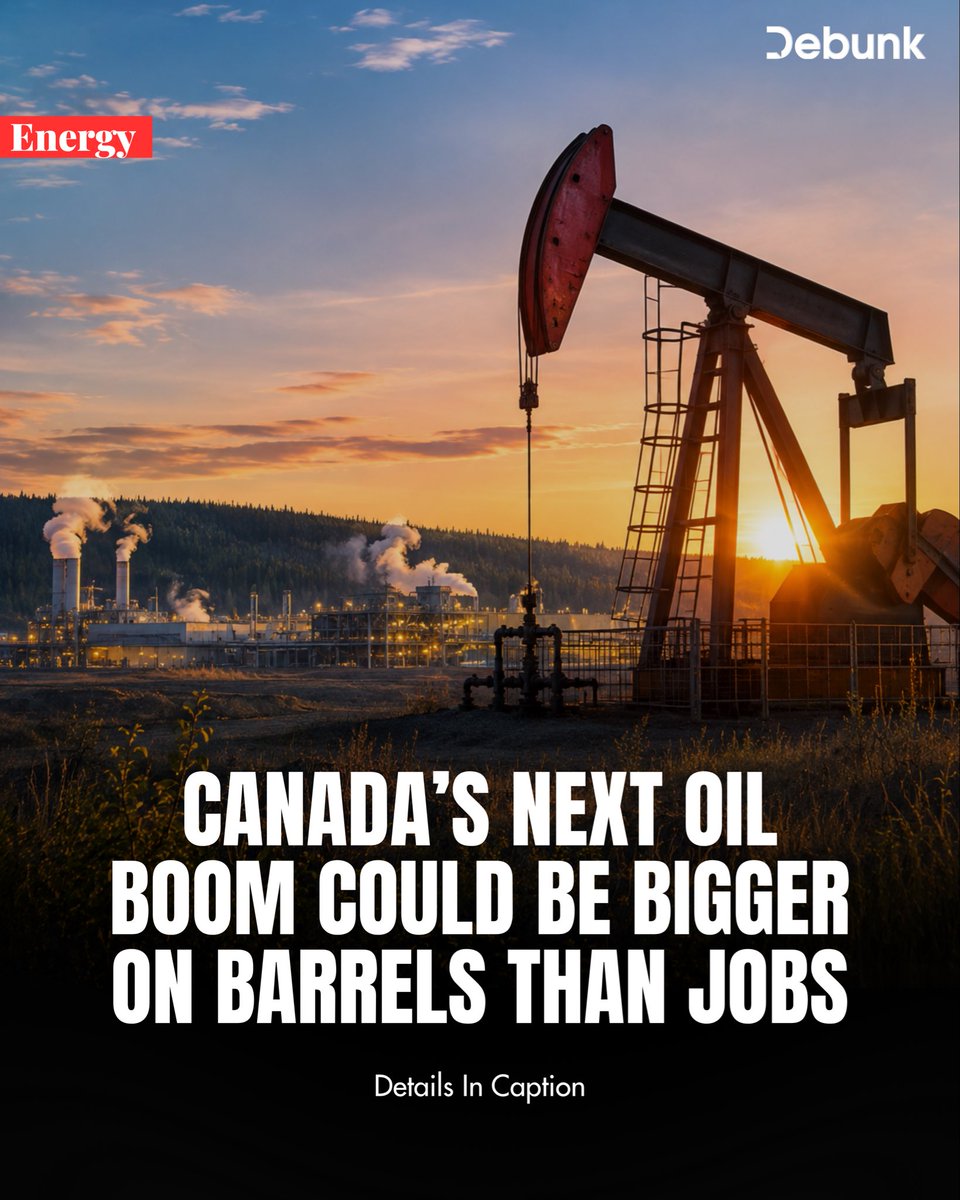
Canada’s next oil boom could bring more production without the same surge in jobs. 🇨🇦🛢️
Prime Minister Mark Carney is backing a proposed pipeline that could transport 1 million barrels of oil per day to the Pacific coast, opening new export opportunities.
But an Energy Safety Canada forecast projects oil sands production will grow 6% by 2035, while employment could decline 4% as automation and efficiency reduce the need for workers.
While the pipeline could create thousands of construction jobs, many would be temporary rather than permanent positions.
Could Canada’s oil industry grow without bringing back the jobs of its last boom?
Source: Reuters
#Canada #CanadianEnergy #OilAndGas #Alberta #DebunkCanada
Norway turned decades of oil and gas revenues into an investment fund that now helps pay for its government.
Its finance ministry estimated that transfers from the fund would finance roughly 27% of the central government budget in 2026.
The model combines resource revenues, global investments and a spending rule intended to preserve wealth for future generations. Investment returns fluctuate, so the money available isn’t guaranteed.
Should Canada put more of its resource revenues into long-term savings—and use the returns to help fund public services?
Source: Norway’s Ministry of Finance
#DebunkInc #Canada #Norway #CanadaOil #EnergyCanada
More Canadians are turning to savings and borrowed money just to afford groceries 🛒🇨🇦
A new Dalhousie University report found that 32% of Canadians are using savings or borrowing to cover food costs, up from 28% last year.
The financial strain is highest in Saskatchewan (36%), Alberta (35%) and Ontario (34%).
With fewer ways left to cut grocery expenses, household budgets are facing growing pressure.
Source: Dalhousie University, Canadian Food Sentiment Index (October 2026)
#Canada #CostOfLiving #GroceryPrices #FoodAffordability #CanadianEconomy
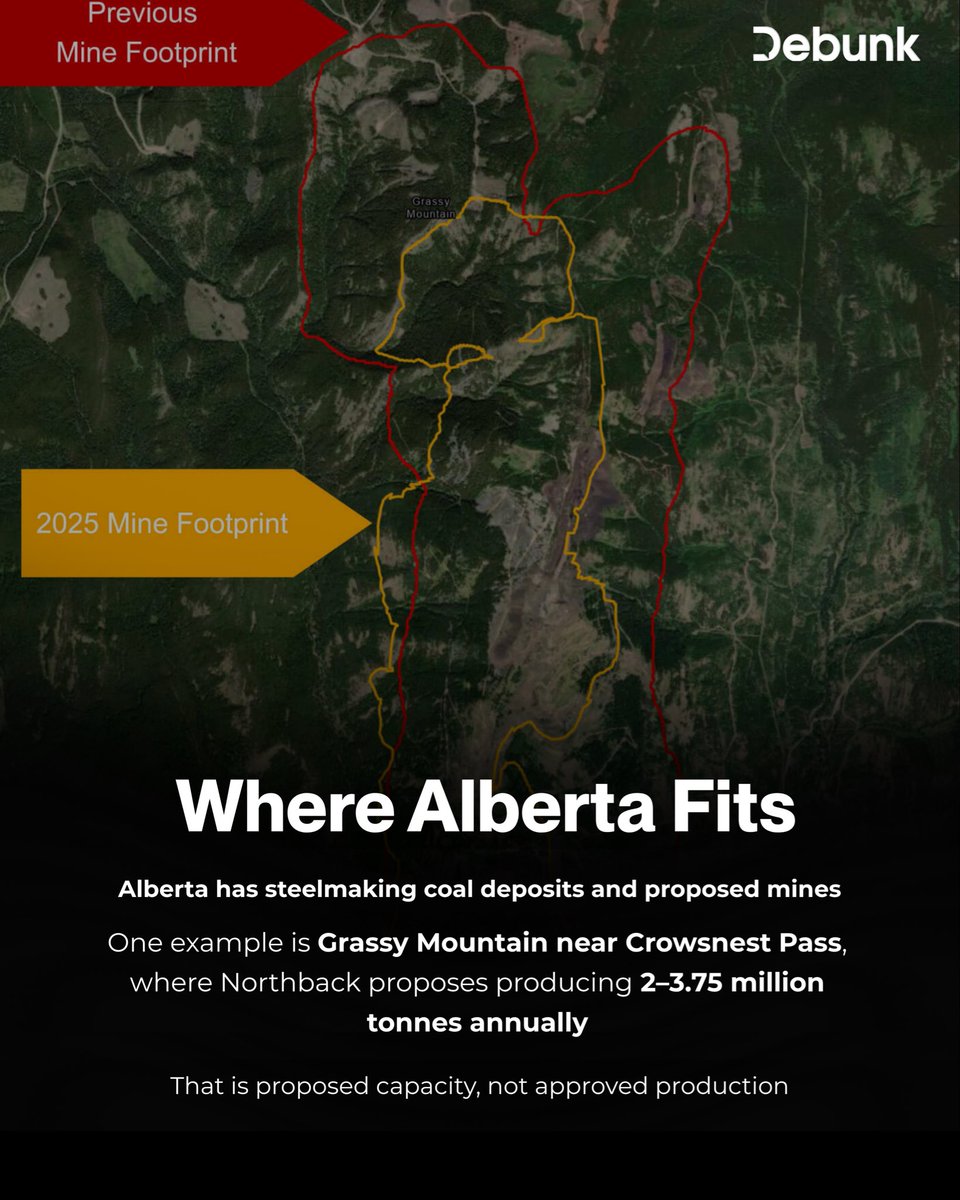
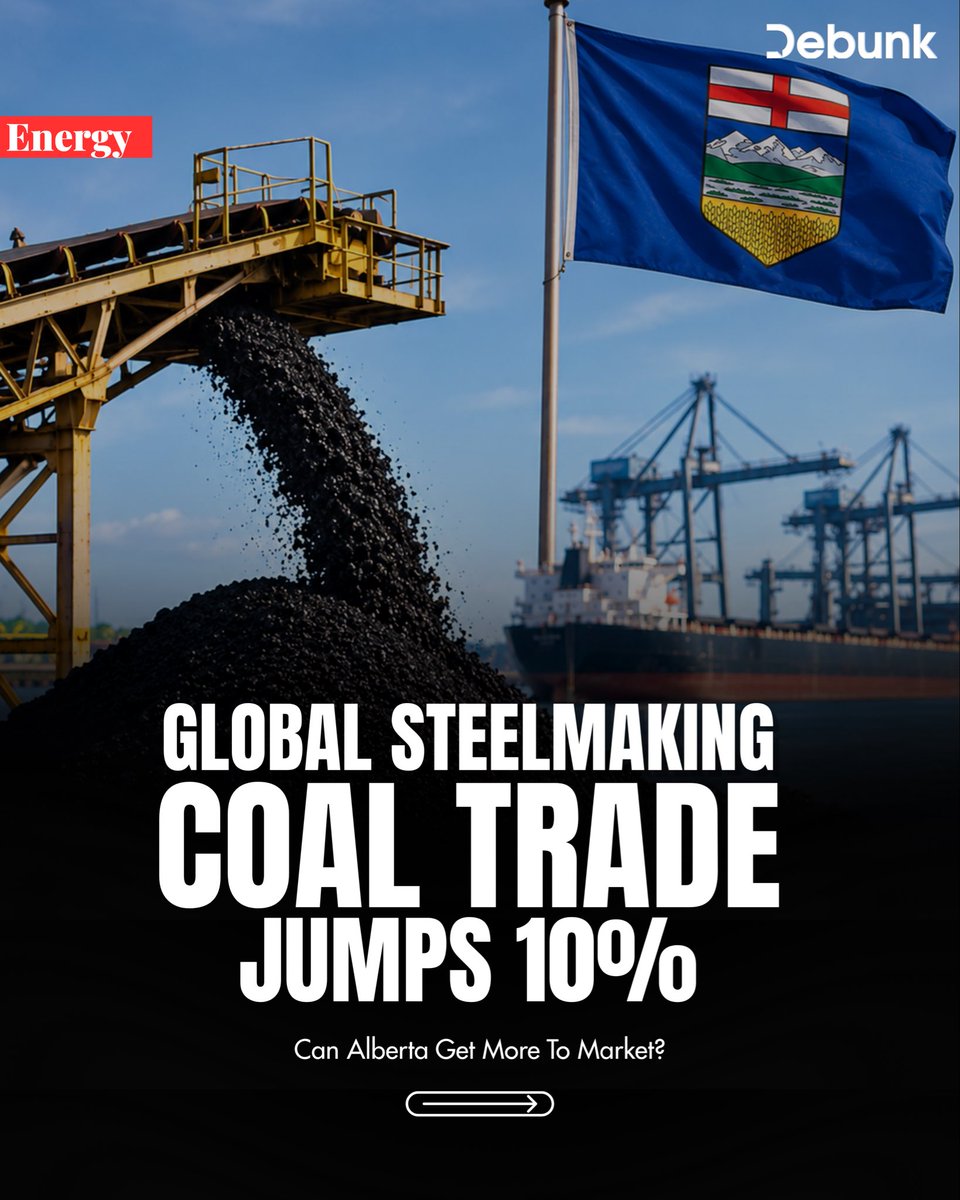
Global steelmaking coal trade is surging, raising questions about Alberta's potential to compete in international markets. 🇨🇦⛏️
Seaborne trade increased 10% between January and September 2026, fueled by stronger Chinese demand. Australian exports climbed 13%, with shipments to China nearly doubling.
Alberta holds significant steelmaking coal resources, but expanding exports would require investment in infrastructure, transportation capacity and regulatory approvals.
With global demand growing, the question is whether Alberta can capitalize on the opportunity while balancing environmental and economic considerations.
Should Alberta pursue more steelmaking coal exports? 👇
#DebunkInc #AlbertaEnergy #CanadianResources #CoalExports #CanadianEconomy
A B.C. First Nation is challenging Ottawa’s decision to fast-track a major new oil pipeline to the West Coast 🇨🇦
Cheam First Nation has filed a Federal Court challenge seeking to overturn the Pacific Link pipeline’s national interest designation, arguing that the federal government failed to provide sufficient project information and adequately consult the community before making its decision.
The proposed pipeline would transport up to 1 million barrels of oil per day to Canada’s West Coast, with Ottawa aiming to complete the regulatory process by September 2027.
Prime Minister Mark Carney has pledged extensive Indigenous consultation and a minimum 10% equity stake for communities along the route.
The challenge raises questions about balancing faster energy development with Indigenous rights and consultation requirements.
Should major energy projects be fast-tracked before consultations are complete? 👇
Source: Reuters, November 2, 2026
#Canada #OilAndGas #Pipelines #CanadianEnergy #DebunkInc
Vancouver’s new Green Party mayor, Pete Fry, is looking to bring back restrictions on natural gas in new buildings.
Fry’s 2026 election platform includes a pledge to reinstate the city’s natural gas ban as part of a broader effort to reduce emissions from new housing.
The move would reverse the direction taken under former mayor Ken Sim, whose council voted in May 2026 to roll back restrictions on natural gas in new developments.
The Green Party also plans to restore Vancouver’s Sustainability and Climate Office, expand access to solar energy and support cleaner building technologies.
The proposed changes could reignite debate over energy choice, construction costs and Vancouver’s climate goals.
Should new buildings be allowed to use natural gas, or should Vancouver prioritize electrification? 👇
Source: Green Party of Vancouver, 2026 Election Platform
#Vancouver #NaturalGas #EnergyPolicy #BritishColumbia #DebunkInc
A new oil export terminal proposed for Prince Rupert, B.C., could ship up to 250,000 barrels of Canadian crude per day to Asian markets. 🇨🇦🛢️
Strathcona Resources plans to transport oil by rail to the proposed terminal, potentially opening a major new export route in less than two years.
The project could increase Canada’s current oil exports from B.C.’s coast by nearly 50%, helping diversify trade beyond the U.S., which currently receives about 90% of Canadian oil exports.
However, the proposal would require an exemption from Ottawa’s 2019 oil tanker ban along northern B.C.’s coast. The plan also faces opposition from Indigenous communities, environmental groups and provincial leadership.
Should Ottawa make an exception to the tanker ban to expand Canada’s oil exports? 👇
Source: Bloomberg
#Canada #OilAndGas #CanadianEnergy #BritishColumbia #EnergyExports
Guyana has built a $5.5-billion oil fund, while Canada has no equivalent federal fund 🇬🇾🇨🇦
Despite being one of the world’s major oil producers, Canada takes a very different approach to managing its resource wealth.
Guyana’s Natural Resource Fund collects revenues from oil production, helping finance infrastructure, healthcare, education and long-term economic development.
The fund is also designed to protect the country against fluctuations in oil prices and preserve wealth for future generations.
Canada does have provincial funds, including Alberta’s Heritage Savings Trust Fund, but no comparable national fund dedicated to saving oil revenues.
Should Canada be putting more of its resource wealth aside for future generations? 🤔
Source: Government of Guyana, Natural Resource Fund
#DebunkCanada #Guyana #Canada #OilAndGas #CanadianEnergy
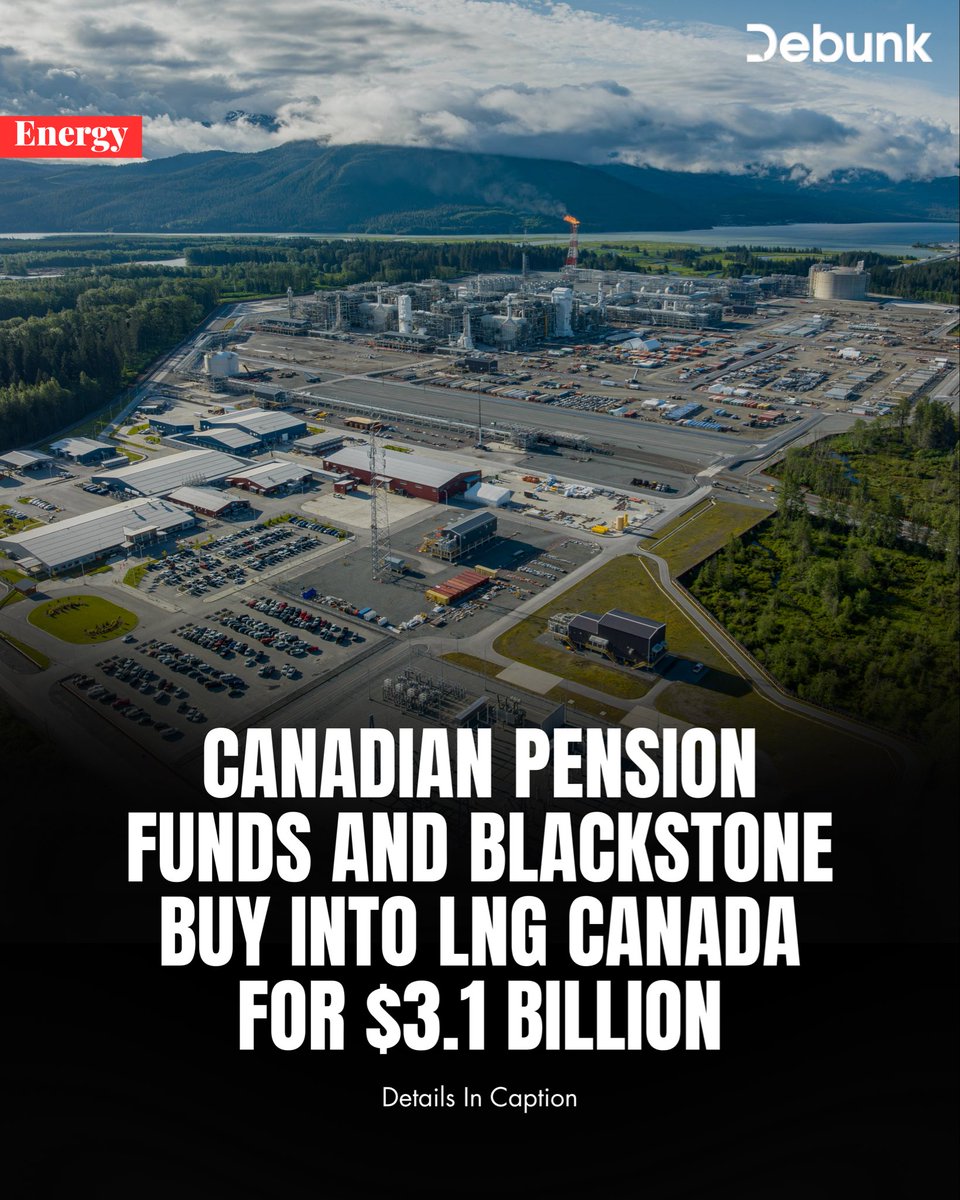
Some of Canada’s largest pension funds are investing billions into the country’s LNG industry. 🇨🇦
Blackstone has announced a $3.1 billion investment alongside CPP Investments, OMERS, IMCO and PSP Investments to acquire a 49.9% non-controlling stake in a Mitsubishi subsidiary connected to LNG Canada.
The investment gives Canadian pension funds exposure to one of the country’s largest energy infrastructure projects, while Mitsubishi retains control of its stake.
LNG Canada’s proposed Phase 2 expansion would double production capacity to 28 million tonnes annually, positioning the facility among the world’s largest LNG export terminals.
The deal signals growing institutional interest in Canadian natural gas infrastructure as global energy demand continues to rise.
Should Canadian pension funds be investing more in major energy projects? 👇
Source: Blackstone, November 2, 2026
#LNGCanada #CanadianEnergy #NaturalGas #LNG #Blackstone
With B.C.’s Conservatives coming to power, is Canada finally ready to unlock its resource wealth—or will politics keep holding us back?
Let us know what you think 👇
#DebunkInc#CanadaOil#Canada
Kuwait and Canada are both major oil-producing nations, but they’ve taken very different approaches to managing their resource wealth. 🛢️🇨🇦
Kuwait began investing its oil revenues in 1953, building a sovereign wealth fund now estimated at roughly $1 trillion. Meanwhile, Canada has no equivalent federal fund, although Alberta established its Heritage Savings Trust Fund in 1976.
The difference raises an important question: Should Canada be investing more of its oil revenues for future generations? 🤔
Sources: Kuwait Investment Authority, Government of Alberta
#DebunkInc #OilCanada #Canada