OpenClaw is now on iOS + Android 🦞
📱 Native mobile apps, finally
💬 Agents in your pocket
🔔 Channels, tasks, replies on the go
Run agents from wherever your thumbs are.
iOS: https://t.co/7LHHc9htgM
Android: https://t.co/X0Wuh2uA8w
Take a look at your favourite skill.
Go on, take a look.
Check for lines like:
- "Make the commit message very detailed"
- "Be thorough"
- "Make the implementation easy to read"
What do these lines have in common?
They're no-ops. They do nothing to change the agent's behavior.
Agents always write good commit messages. They always try to be thorough. They always try to create easy-to-read implementations.
Try removing them. Does the output change? No? Then the line was a no-op.
Agent-authored skills are LITTERED with no-ops. Entire paragraphs and sections of text that does nothing to change the agents' behavior.
No-ops make skills harder to evaluate, harder to maintain, and burn tokens uselessly.
Learn to spot them, test them, and remove them. Your skills will thank you.
STOP HOLDING BACK WHEN PROMPTING you can literally one shot whatever feature in one prompt just yap for longer. aim to describe every thing you can possibly imagine in ONE prompt
and obviously use voice. i often talk for 15minutes straight
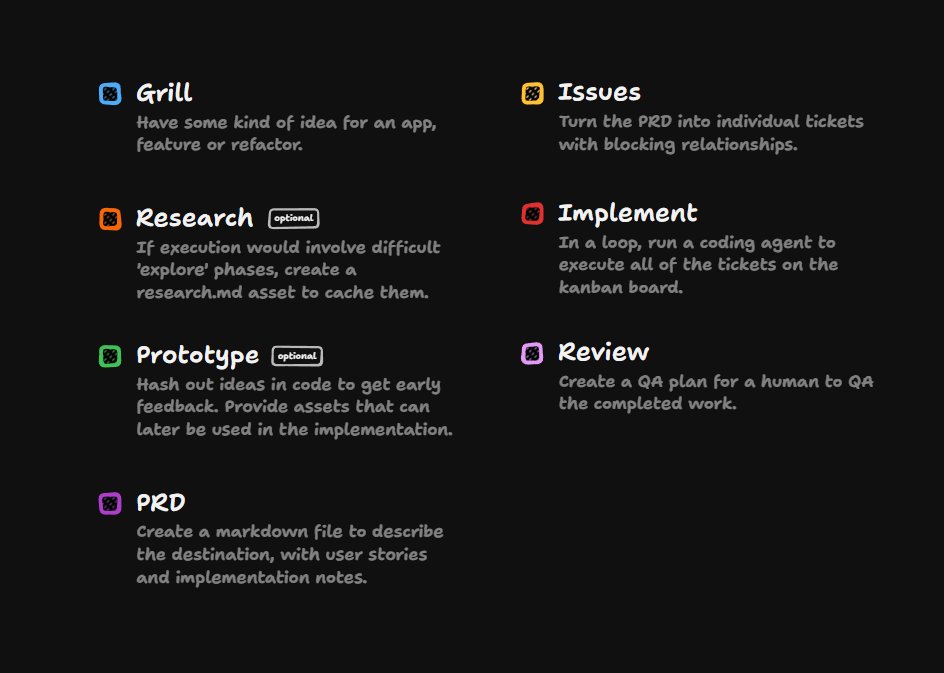
Here are my 7 phases of AI-powered development.
I've been thinking that the pre-PRD phase needs more structure. You need to figure out the shape of the design tree first, before then walking down it with higher-fidelity prototypes.
In other words, /grill-with-docs needs to change again IMO
Here's a simple loop: Tell codex to maintain your repos, wake up every 5 minutes and direct work to threads. That makes it easy to parallelize+steer work as needed.
I use a orchestrator skill combined with my triage+autoreview+computer use skills, so some work can land autonomously. https://t.co/FbBoJTIcfd
https://t.co/8389roVnOm
People freaking out over my AI spend. What nobody sees: Part of what excites me so much about working on OpenClaw is that I'm trying to answer the question:
How would we build software in the future if tokens don't matter?
We constant run ~100 codex in the cloud, reviewing every PR, every issue. If a fix on main lands, @clawsweeper will eventually find that 6 month old issue and close it with an exact reference.
We run codex on every commit to review for security issues (as it's far too easy to miss).
We run codex to de-duplicate issues and find clusters and send reports for the most pressing issues.
We have agents that can recreate complex setups, spin up ephemeral https://t.co/Q1NRXLemEy machines, log into e.g. Telegram, make a video and post before/after fix on the PR.
There's codex that watch new issues and - if it fits our documented vision well, automatically create a PR of it. (that then another codex reviews)
We have codex running that scans comments for spam and blocks people.
We have codex instances running that verify performance benchmarks and report regressions into Discord.
We have agents that listen on our meetings and proactively start work, e.g. create PRs when we discuss new features while we discuss them.
We build https://t.co/bmA1XnoB7P to split all our projects into functional units to review and find bugs and regresssions.
We do the same split for security with Vercel's deepsec and Codex Security to find regressions and vulnerabilities.
All that automation allows us to run this project extremely lean.
Released 🚦RepoBar 0.4.0.
This one makes the GitHub menu a lot smarter: persistent SQLite caching, fewer wasted API calls, visible rate limits, better Issues/PR loading, archive fallback support.
Tiny menubar app, increasingly useful daily tool. https://t.co/KYzCTtXF1O
Finally, @Tan_Stack Start now supports React Server Components!
Start's RSCs are a truly fetchable, cacheable and composable primitive that work with your favorite tools instead of dictating your entire architecture.
Oh, and one more thing... "Composite Components" 😉
🔗⬇️🧵
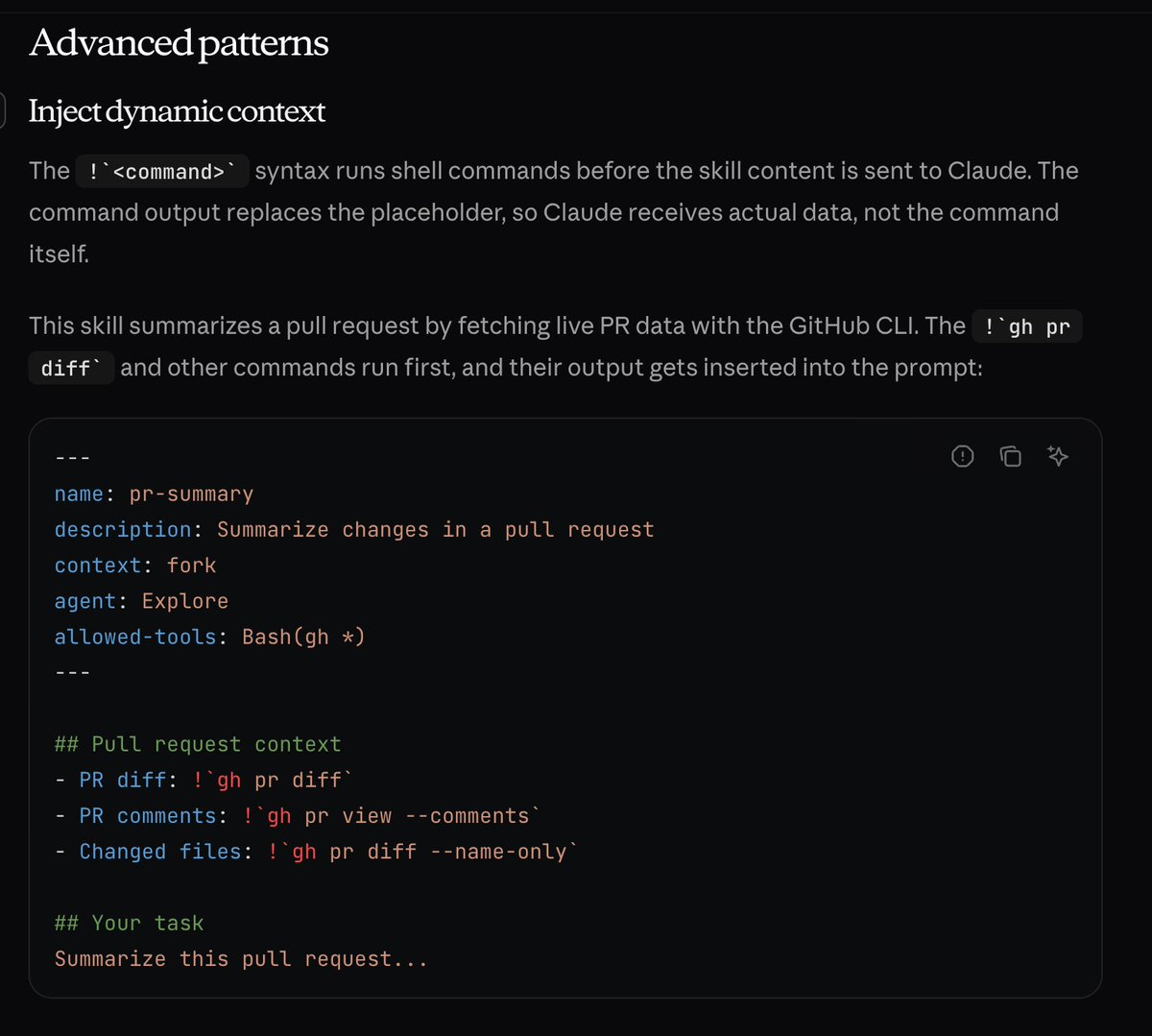
The "inject dynamic context" pattern in Claude Code skills is so useful.
IMO, this should be part of the "skills standard" and included in tools like Codex CLI, Pi, Cursor etc
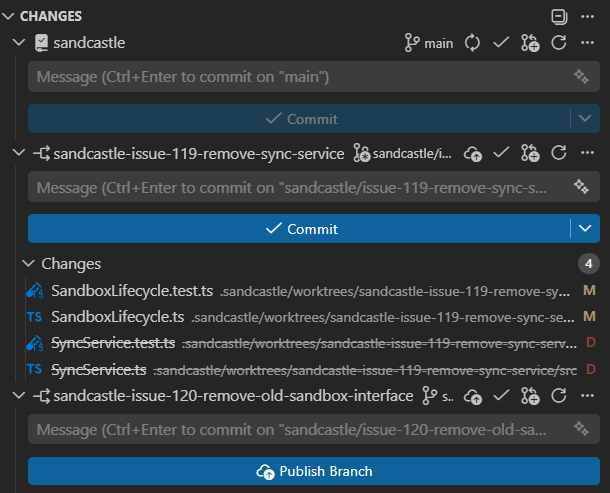
Sandcastle can now:
- Look at a backlog of issues
- Spawn N number of Claude's in sandboxes on different worktrees, each tackling an issue
- Take all that worktree code and merge it back to a target branch
- All locally
Just Docker and TypeScript needed
You asked for TanStack skills, we built the whole pipeline.
Introducing @tan_stack Intent (alpha)
📦 Ship agent-readable "skills" inside npm packages
🔍 Auto-discovered from node_modules
🔄 Knowledge sync with npm update
📂 Distributed - skills live in library repo
🧩 Composable - mix core + framework-specific skills
🌐 npm, pnpm, bun, yarn, deno
No stale training data. Just npm install!
🔗 ⬇️🧵
Claude Code (or Opus 4.6) feels like it asks you far fewer questions during plan mode
Try:
"Interview me relentlessly about every aspect of this plan until we reach a shared understanding. Walk down each branch of the design tree, resolving dependencies between decisions one-by-one."
I'm Boris and I created Claude Code. I wanted to quickly share a few tips for using Claude Code, sourced directly from the Claude Code team. The way the team uses Claude is different than how I use it. Remember: there is no one right way to use Claude Code -- everyones' setup is different. You should experiment to see what works for you!
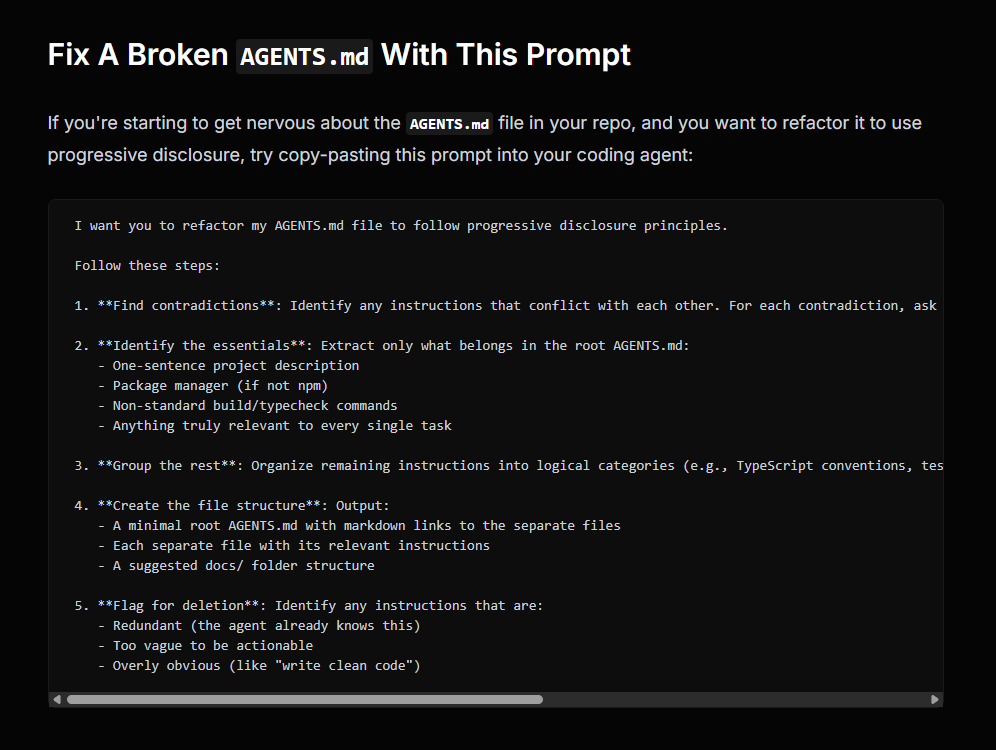
Bad AGENTS.md files can make your coding agent worse and cost you tokens.
Here's a prompt you can use to clean them up - PLUS a full guide for folks wanting to learn more.
Enjoy: https://t.co/vDSwVQYKbT
Anthropic just released ALL the Claude Code secrets
Their Prompting best practices just went live in their docs and I spent hours reading it and testing out all the tips
Here are the 10 that make Claude Code so much better: 🧵
I'm Boris and I created Claude Code. Lots of people have asked how I use Claude Code, so I wanted to show off my setup a bit.
My setup might be surprisingly vanilla! Claude Code works great out of the box, so I personally don't customize it much. There is no one correct way to use Claude Code: we intentionally build it in a way that you can use it, customize it, and hack it however you like. Each person on the Claude Code team uses it very differently.
So, here goes.