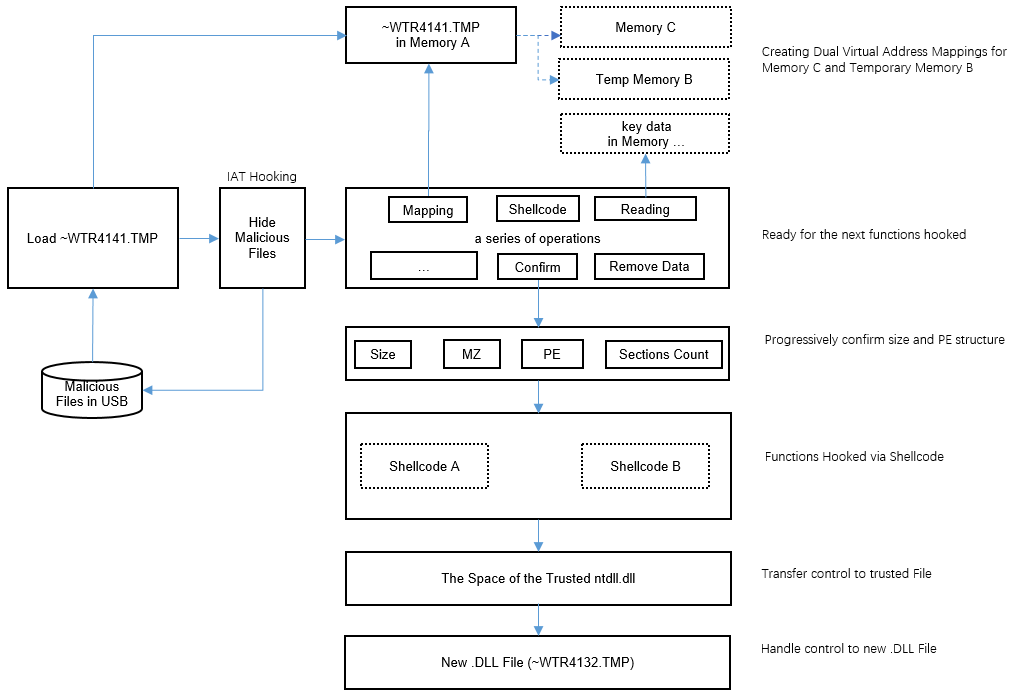
It’s a TDL3 sample btw. Having fun getting my ass handed to me. Will share different phases of the project, first will be sharing papers I’ve read on it. Will do a writeup on what I could infer from them, and discuss basic windows stuff related to it. We in for a long 2026.🥹🤣🤣
remember when 512MB RAM was considered massive?
programmers wrote code like every byte mattered. optimized everything. squeezed performance from nothing.
suddenly nobody cared about efficiency anymore. just throw more RAM at it, problem solved.
now we have 32GB RAM and Slack uses 2GB just to show text messages. Electron apps eat memory like it's free candy.
we got better hardware and built worse software. abundance made us lazy.
C is not a low level language
ACM Queue published this in 2018 and people are still arguing about it
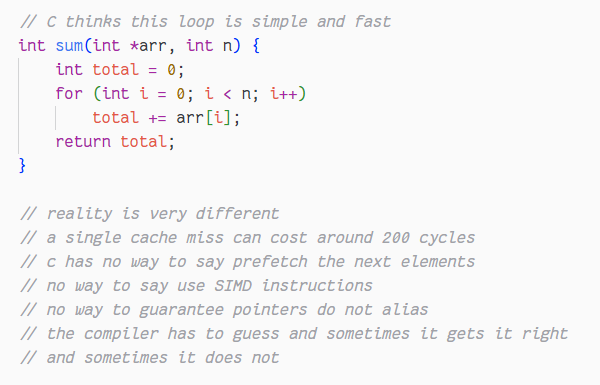
the idea is simple C was low level in 1972 when machines like the PDP-11 mapped code almost directly to instructions
modern CPUs are completely different caches branch prediction SIMD out of order execution
the C abstract machine cannot see or control most of that
it cannot see the cache cannot express prefetching cannot directly control vectorization
so performance depends on the compiler being smart enough to optimize
the same argument C developers often criticize in higher level languages
Since quitting weed I’ve noticed better sleep, more confidence, no anxiety, and dramatically improved mental acuity.
It was honestly one of the hardest addictions for me to beat, and looking back, it may have been the biggest net negative in my life. Crazy to say, but it’s true.
Compiler construction is one of the oldest, best understood CS fields. It's decades of work by the brightest minds, and it's grounded in logic, informed by experience and strictly deterministic.
Comparing that with LLM-based coding agents is just wrong.
https://t.co/4EVmjMIAwn
Hi all, Please be really careful. Even after some warnings from various accounts, after searching for @claudeai 's Claude design, I still come across sponsored malvertised post whose final reflectively loaded payload is malicious from https://claudcode[.]playcode[.]io/. (EDIT: This has since been taken down).
Attempting to download it brings us to clickfix which downloads huge blob that is hiding itself as a sound file which contains HTML code that gets run with mshta. It then downloads obfuscated powershell script. After a few layers of powershell scripts and You can obtain the payload from hxxps://<8 hex bytes>.oakenfjrod[.ru/oth-91267b64-989f-49b4-89b4-984e0154d4d3 and analyze from there as well. Eventually, it loads shellcode acting as full reflectively loader which eventually loads ec1206989449d30746b5ceb2b297cda9f3f09636a0e122ecafb40b1dc2e86772
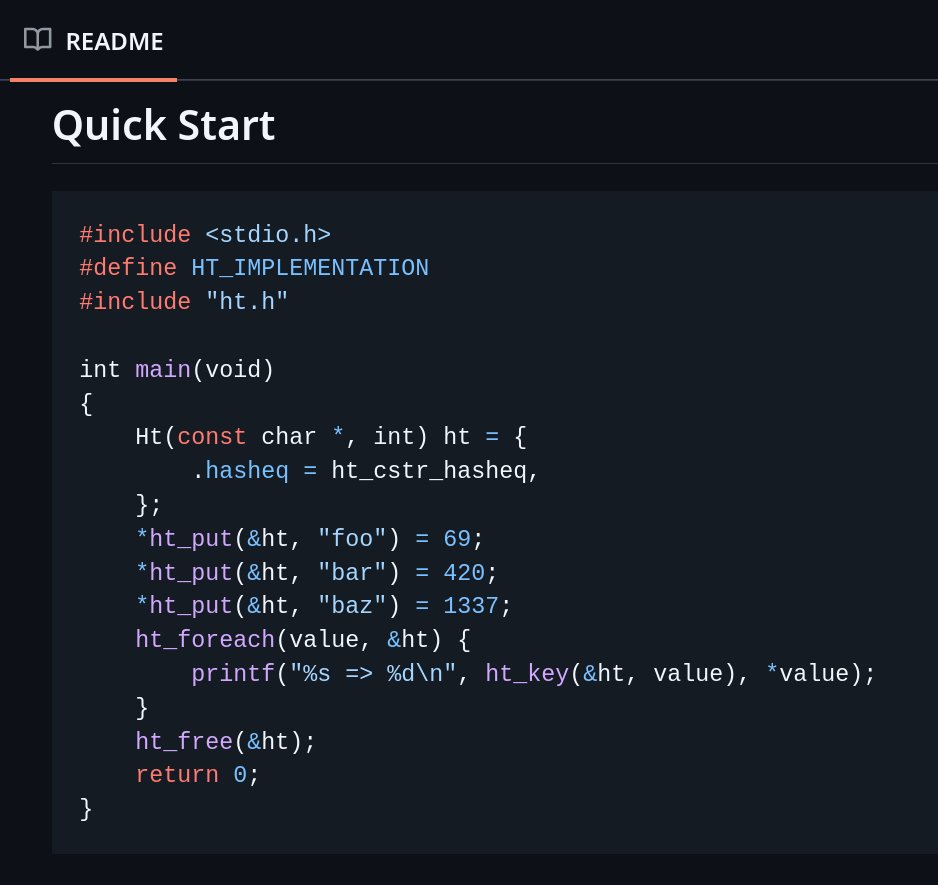
I never liked databases as an idea.
You literally send a string query over TCP to postgres and it returns you data over tcp as strings.
There is so much potential to make this whole thing better …. but everyone seems to be just fine with it.
When Andres Freund, Linux kernel contributor & Microsoft engineer was debugging slow SSH logins on his Debian machine in March 2024, he noticed something weird:
liblzma (part of XZ Utils) was using way too much CPU power, so he kept digging, and what he uncovered was a multi-year supply-chain attack!
An attacker using the name “Jia Tan” had spent two years slowly infiltrating the tiny XZ Utils project, a compression library used by virtually every major Linux distribution.
The backdoor wasn’t in the source code. It was hidden deep inside the build scripts. It would have given the attacker remote root access on millions of servers the moment a specially crafted SSH key was used.
Freund caught it days before it would have shipped in Debian, Fedora, Ubuntu and more.
One man, one anomaly, one routine debug session saved the internet from a potential catastrophe.
Respect!




![malware_owl's tweet photo. Hi all, Please be really careful. Even after some warnings from various accounts, after searching for @claudeai 's Claude design, I still come across sponsored malvertised post whose final reflectively loaded payload is malicious from https://claudcode[.]playcode[.]io/. (EDIT: This has since been taken down).
Attempting to download it brings us to clickfix which downloads huge blob that is hiding itself as a sound file which contains HTML code that gets run with mshta. It then downloads obfuscated powershell script. After a few layers of powershell scripts and You can obtain the payload from hxxps://<8 hex bytes>.oakenfjrod[.ru/oth-91267b64-989f-49b4-89b4-984e0154d4d3 and analyze from there as well. Eventually, it loads shellcode acting as full reflectively loader which eventually loads ec1206989449d30746b5ceb2b297cda9f3f09636a0e122ecafb40b1dc2e86772](https://pbs.twimg.com/media/HGOak8AakAAemys.png)
![malware_owl's tweet photo. Hi all, Please be really careful. Even after some warnings from various accounts, after searching for @claudeai 's Claude design, I still come across sponsored malvertised post whose final reflectively loaded payload is malicious from https://claudcode[.]playcode[.]io/. (EDIT: This has since been taken down).
Attempting to download it brings us to clickfix which downloads huge blob that is hiding itself as a sound file which contains HTML code that gets run with mshta. It then downloads obfuscated powershell script. After a few layers of powershell scripts and You can obtain the payload from hxxps://<8 hex bytes>.oakenfjrod[.ru/oth-91267b64-989f-49b4-89b4-984e0154d4d3 and analyze from there as well. Eventually, it loads shellcode acting as full reflectively loader which eventually loads ec1206989449d30746b5ceb2b297cda9f3f09636a0e122ecafb40b1dc2e86772](https://pbs.twimg.com/media/HGOacZnagAAsjjp.jpg)
![malware_owl's tweet photo. Hi all, Please be really careful. Even after some warnings from various accounts, after searching for @claudeai 's Claude design, I still come across sponsored malvertised post whose final reflectively loaded payload is malicious from https://claudcode[.]playcode[.]io/. (EDIT: This has since been taken down).
Attempting to download it brings us to clickfix which downloads huge blob that is hiding itself as a sound file which contains HTML code that gets run with mshta. It then downloads obfuscated powershell script. After a few layers of powershell scripts and You can obtain the payload from hxxps://<8 hex bytes>.oakenfjrod[.ru/oth-91267b64-989f-49b4-89b4-984e0154d4d3 and analyze from there as well. Eventually, it loads shellcode acting as full reflectively loader which eventually loads ec1206989449d30746b5ceb2b297cda9f3f09636a0e122ecafb40b1dc2e86772](https://pbs.twimg.com/media/HGOaaFqaUAEI5hy.png)


![malware_owl's tweet photo. Hi all, Please be really careful. Even after some warnings from various accounts, after searching for @claudeai 's Claude design, I still come across sponsored malvertised post whose final reflectively loaded payload is malicious from https://claudcode[.]playcode[.]io/. (EDIT: This has since been taken down).
Attempting to download it brings us to clickfix which downloads huge blob that is hiding itself as a sound file which contains HTML code that gets run with mshta. It then downloads obfuscated powershell script. After a few layers of powershell scripts and You can obtain the payload from hxxps://<8 hex bytes>.oakenfjrod[.ru/oth-91267b64-989f-49b4-89b4-984e0154d4d3 and analyze from there as well. Eventually, it loads shellcode acting as full reflectively loader which eventually loads ec1206989449d30746b5ceb2b297cda9f3f09636a0e122ecafb40b1dc2e86772](https://pbs.twimg.com/media/HGOaoySbQAAatM0.jpg)