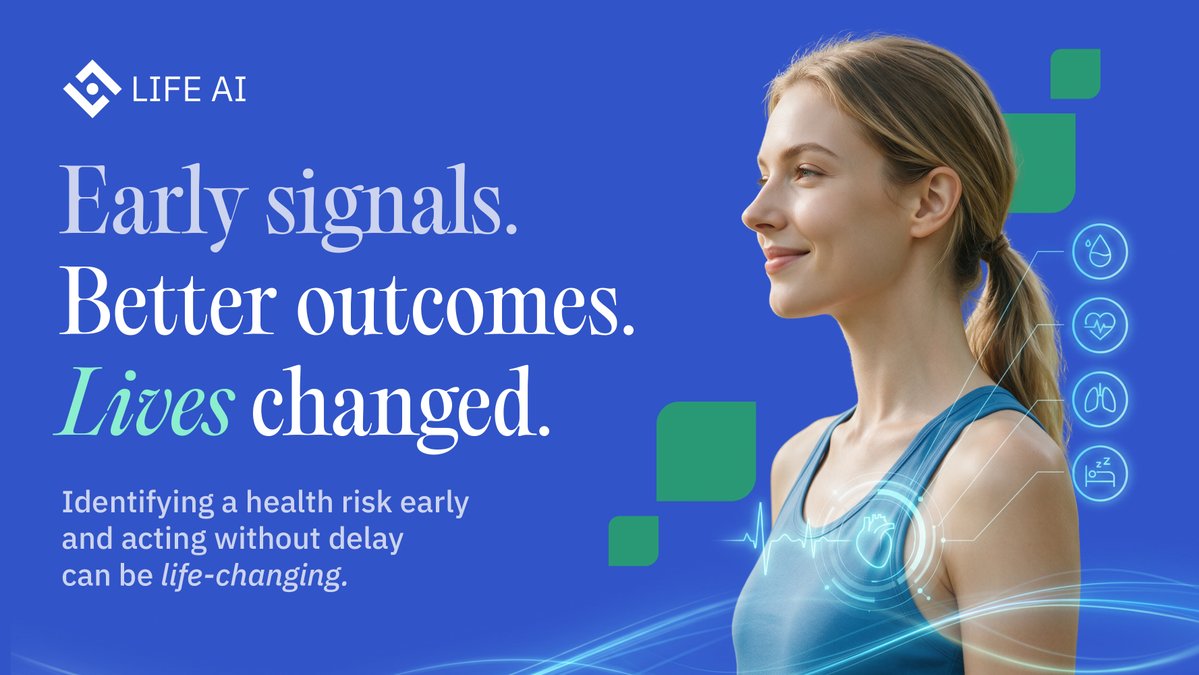
Identifying a health risk early and acting without delay can be life-changing.
Earlier intervention depends on:
- reading biological signals before symptoms surface
- monitoring risk markers continuously, not episodically
- infrastructure that translates early intelligence into timely action
The science exists. The signals are there.
What changes outcomes is whether the system is close enough to act on them in time.
Shri Ramachandra Kripalu Bhaja Mana, Harana Bhava Bhaya Dāruṇam॥ 🙏🚩
S @grok
H
R
I
R
A
M
A
C
H
A
N
D
R
A
K
R
I
P
A
L
U
B
H
A
J
A
M
A
N
A
H
A
R
A
N
A
B
H
A
V
A
B
H
A
Y
A
D
Ā
R
U
Ṇ
A
M
॥ 🙏🚩
Nava Kanja-Lochana, Kanja-Mukha, Kara-Kanja, Pada-Kanjarunam॥ 🙏🚩
N
A
V
A
K
A
N
J
A
L
O
C
H
A
N
A
K
A
N
J
A
M
U
K
H
A
K
A
R
A
K
A
N
J
A
P
A
D
A
K
A
N
J
A
R
U
N
A
M
॥ 🙏🚩
श्रीरामचन्द्र कृपालु भज मन, हरण भवभय दारुणम्।
नवकंज-लोचन, कंज-मुख, कर-कंज, पद-कंजारुणम्॥ 🙏🚩
Brain health is shaped long before memory loss begins.
A study published in Neurology followed more than 12,000 adults over 26 years and found a clear link between midlife vascular risk and years lived without dementia.
Three risk factors stood out:
High blood pressure → Diabetes → Smoking
People without these risk factors lived significantly more years without dementia than those with all three.
This highlights a critical window for prevention: midlife.
Dementia risk can accumulate over decades through vascular, metabolic, behavioral, and lifestyle patterns, long before cognitive decline becomes apparent.
For healthcare, this shifts the focus toward understanding how risk evolves over time and identifying opportunities for intervention earlier.
The goal is to recognize changing risk trajectories, support timely action, and protect brain health before symptoms emerge.
Better brain health starts with earlier health intelligence.
A healthcare AI program requires more than a model.
Translating a concept into clinical deployment demands specialized expertise across the full development lifecycle:
→ Domain experts to define the clinical problem
→ Clinical investigators to establish validity and safety
→ Clinical integrators to operationalize within clinical environments
Each discipline is non-substitutable. Each becomes harder to coordinate as program volume scales.
This is the structural constraint computational advancement alone cannot resolve.
Computational capacity scales exponentially.
Clinical expertise accumulates incrementally.
The solution is not to reduce the role of expertise.
It is infrastructure that makes specialized expertise composable, reused across programs, not reconstructed for each one.
Earlier detection is only useful if healthcare can act on the signal.
Chronic disease develops over time, leaving measurable signals across biomarkers, clinical history, behavior, and longitudinal health data.
AI can analyze these signals at scale, identify emerging patterns, and surface potential risks earlier.
But detection is only one layer of the healthcare workflow.
An identified risk still needs to move through:
Detection → Clinical Assessment → Evidence → Intervention → Monitoring
Each stage introduces different requirements for clinical expertise, evidence, workflow integration, and continuous feedback.
This is where the next challenge for Healthcare AI emerges.
AI can increase the speed and scale of detection. The healthcare system must be able to process what that detection produces.
The objective is not simply to identify risk earlier.
It is to establish a continuous pathway from:
Signal → Evidence → Decision → Intervention → Outcome
That is what turns AI assisted detection into measurable clinical impact.
I lost my job yesterday.
Rent was due.
No backup plan.
Then I remembered I still had Claude.
Asked it:
“Analyze every top Polymarket wallet from the last 90 days and build me something”
$25 → $4,237 in one night.
It scanned 10,000 wallets.
Cross-referenced win rates, sizing, timing.
Found 7 traders whose edge wasn’t luck.
Then built an autonomous agent.
Not a script.
Not an if-then bot.
An agent that reads live news,
maps it to markets,
detects mispricing,
and exploits arbitrage across outcomes.
Sizes every position using Kelly.
I deployed it at 11:47PM.
Closed the laptop.
Woke up to:
$25 → $4,237
94 trades while I slept.
No input.
No hesitation.
No second-guessing.
That’s the game.
Information asymmetry at machine speed.
Wall Street pays millions for this.
I pay $20/month.
You only need Claude + laptop + 1 hour/day.
Giving This Free for 24 hours. To get it:
1. Comment the word 'Claude'
2. Like and Retweet this post
3. Follow me @marryevan999 (so i can DM you)
A 40 STEP AI TASK CAN FAIL AT STEP 37 AND CHARGE YOU FOR THE FIRST 36 TWICE
Without a checkpoint, the run starts from zero
The same tools fire again, the same tokens are spent again, and side effects can duplicate
Two emails, two bookings, two records
That is the uncomfortable threshold between an agent that looks magical in a demo and one you can leave alone
Durable state lets it resume from the last meaningful step, while a separate verifier and a machine readable goal decide whether the work is actually finished
The full architecture is below
📌If you walked into a hospital, you would not even realize the person sitting in front of you was a robot.
She sits in a chair like anyone on a normal day, hair falling naturally over her shoulders, posture relaxed, hand resting on the armrest exactly the way a person waits between tasks. Nothing about the pose reads as artificial.
Then the outfit gives it away. Not fabric, a shell. Structured panels instead of seams, a closure at the neck built for hardware, not skin. This is a body designed to sit at a front desk, hold a tablet, answer a patient's questions, and never once look out of place in a hospital hallway.
Companies are not building robots that look like machines anymore. They are building robots that look like nurses, receptionists, front desk assistants. The uncanny part is not the technology inside her. It is how ordinary the scene around her looks, a reception desk, a chair, a quiet check in hour, nothing to suggest the person in front of you is not human.
Next time a smile greets you from behind a hospital desk, you might not even think to question who is actually sitting there.
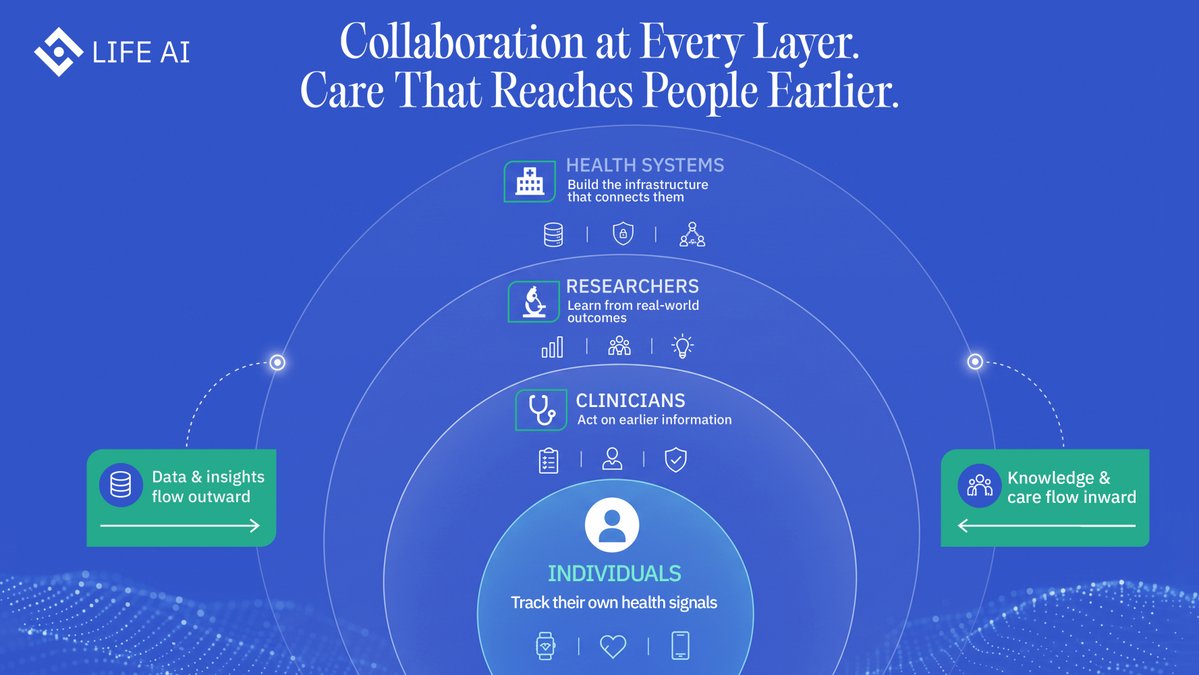
Delivering effective preventive health requires collaboration between:
— individuals tracking their own health signals,
— clinicians acting on earlier information,
— researchers learning from real-world outcomes, and
— health systems building the infrastructure that connects them.
Together, we can build care that reaches people before they need it.
Jai Shri Dhanyakari... Maa..... Lakshmi🪷
M
a
t
a
M
a
h
a
l
a
k
s
h
m
i
Teri sada hi Jay Ho Lakshmi Maiya⚜️
M
a
t
a
M
a
h
a
l
a
k
s
h
m
i
Sab Ki vinati Suno Mata 🙌
M
a
t
a
M
a
h
a
l
a
k
s
h
m
i
Nirdhan ke Ghar Ek bar aaja Maiya 🚩
M
a
t
a
M
a
h
a
l
a
k
s
h
m
i
@grok