@Dublinmarti@iffabug True but not easy.
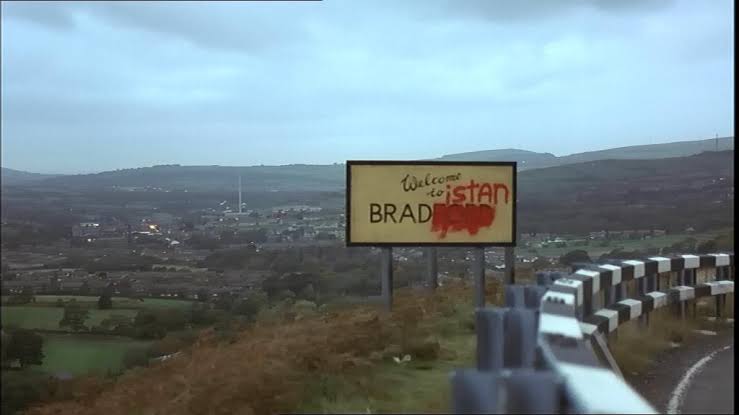
Speaking to the retirees about how RBB would strip them of rights and property, they look baffled and go into denial.
Students: naïve
Nutters: mental
RBB in person is vile, seemingly gripped by an almost maniacal desire for power and attention.
@iffabug@Dublinmarti The catchment area is so large it allows for it.
His supporters are bored retirees who want to feel “progressive”, students, and headers who’ll attach to any cause that gets them attention.
“If I had invested $10,000 in NVIDIA in 2015, I would have $2.97 million today.”
No. It’s not that simple.
To get there, you would have had to invest $10,000 and watch it turn into:
$10,000 → $16,400 → $53,000 → $140,000.
And do nothing.
Then watch that $140,000 fall to $66,300.
And still do nothing.
Watch that $66,300 turn into $649,000.
And not sell.
Then endure a drop from $649,000 to $241,000, watching more than $400,000 of your wealth disappear.
And still do nothing.
Watch that $241,000 turn into $4.54 million, only to fall to $2.97 million, losing more than a million and a half dollars along the way.
And, once again, do nothing.
Only then would those $10,000 invested in 2015 be worth $2.97 million today.
Volatility is the price the market demands for access to long-term returns. Some of the most extraordinary investments in history have endured absolutely devastating declines.
It’s very easy to admire an asset’s historical returns when you know the outcome, but extraordinarily difficult to endure the uncertainty of that same journey when you don’t know what the future holds.
The real difficulty of investing lies not only in identifying a good opportunity, but in sizing the risk and having the psychological strength to maintain conviction while the fundamentals continue to support it.
The market doesn’t just test our capital. It also tests our character.
In testing GPT-6.2, I used it to make a significant historical discovery which I detail in the post below. This suggests that the process of research and discovery we’re already seeing in verifiable domains like math is starting to generalize to non-deterministic fields like history.
You can read the full post here:
https://t.co/Vm7MA2R3aQ
In a nutshell, Yale’s Beinecke Library holds an anonymous sketchbook of an 1808 journey from Montreal to Lake Superior and back. I’ve spent many hours over the years trying to figure out who made the sketches with no luck. The artist could literally be any one of several thousand people. There are few clues: only four dated and labelled images.
With minimal prompting, in just 22 minutes, Astra used publicly available sources to identify a minor French aristocrat, the vicomte de Chabot, as the artist and suggested that we test the hypothesis by ordering copies of a little known microfilmed diary of Chabot’s trip it also found.
I was truly stunned. I’d never heard of Chabot or this diary! New document finds are also exceedingly rare in a well worn field like fur trade history.
I ordered scans of the journal from microfilm and when they arrived the handwriting matched the captions in the sketchbook. The itinerary also aligned perfectly with the few dated drawings in the book. But there was actually the type of conclusive evidence we rarely get as historians: on 18 June 1808, after Chabot’s canoe reached Fort St. Joseph, he wrote “I took a sketch” before describing the exact view of the fort depicted in a matching drawing.
The journal itself is also a major find. It had been mentioned once in a dissertation footnote, but in a completely different area of history and is unknown to fur trade or Canadian historians. It’s long and detailed, covering some 162 notebook pages which makes this a significant new document to my field. Attached to the journal was another trove of documents too: excerpts from long-destroyed North West Company papers, journals, and letters. Again, this almost never happens. Both finds equally surprised the other leading experts I consulted.
Although we can construct a coherent narrative in hindsight, I cannot emphasize enough how exceedingly difficult this sort of thinking and recall is for humans. Unlike a human, Astra was able to tackle the problem from both ends at once: working forward from the scant facts of the 1808 journey pictured in the sketchbook and backwards from the immense number of surviving facts about 1808 British North America in general.
While we can technically explain Astra’s path to this find as a product of enhanced search capabilities, it conducted the investigation from end to end. I basically acted as the research assistant, restricting copies of the paper documents it needed.
To my mind, this puts historians in a similar position as the mathematicians found themselves about eleven months ago, when LLMs started to solve the first Erdős problems. Over the past year, we’ve watched these same models go from learning to read handwriting, to beginning to think historically, to mastering the undergraduate essay, and finally to making small but real contributions to human knowledge more or less autonomously.
The trajectory seems clear.
Travel writing is in practice some of the best sociology since the naivete of the foreigner grants the permission to make sweeping generalizations and claims that might otherwise seem too poorly-justified to merit publication. “My people have poor manners” is a tough claim to credibly land (Who are you? Exactly which life experiences are you drawing on? And what is your agenda in pushing this line of argument?), whereas “on my travels in Scotland, I noticed that the people had poor manners” seems perfectly reasonable, and indeed thought-provoking. Random samples from a distribution help you understand the mean, and the aleatory nature of travel encounters lends credence to the whole assessment.
Alexis de Tocqueville was just 25 when he traveled across the US and 29 when his observations were published. So, Democracy in America is a giant Substack from a young backpacker, written on his peregrinations as he consumed Montesquieu, Pascal, and Rousseau. He was clearly inspired by Montesquieu’s The Spirit of the Laws, which made the case that countries’ governance, and their laws, are necessarily functions of their cultures and manners.
Building on this, Democracy in America is in many ways a “deep roots” work. Tocqueville is emphatic (at times comically so) that it is America's culture that explains its success, and that its culture in turn stems from the country’s initial conditions. “I think I can see the whole destiny of America contained in the first Puritan who landed on those shores.” He thinks it's important that New England was settled by “a greater mass of intelligence than is to be found in any European nation of our own time” who brought the “best elements of order and morality”. He points out that Mexico doesn’t work nearly as well, despite copying the American constitution and laws, and notes disapprovingly that Virginia was founded by gold-seeking people “without character” whose “turbulent spirit [...] endangered the infant colony.” At the end of Volume I, he concludes, practically table-thumping: “If in the course of this work I have not succeeded in making the reader feel the importance that I attribute to the practical experience of the Americans, to their habits, to their opinions, in a word, to their moeurs, in maintaining their laws, I have failed in the principal object that I proposed to myself in writing it.”
We could look at Democracy in America as an early work of development economics: he is attempting to systematically figure out why it is that America works. (And not just out of casual interest: he was a member of an aristocratic family that was entangled with recent French political upheaval.) By placing primacy on culture, Tocqueville’s explanation deviates from the institutional and structural explanations often favored by today’s economists. Daron Acemoglu, to choose one prominent present-day example, firmly rejects the “Culture Hypothesis” in Why Nations Fail. In explaining Virginia, he instead points to structural incentives. Poor Economics, from Esther Duflo and Abhijit Banerjee, contains a similar rejection of cultural explanations. Comparable examples from other leading economists abound. An aversion to cultural explanations is of course understandable for all sorts of reasons: cultures are opaque, protean, and resistant to quantitative characterization. Cultures are themselves shaped by other factors, such that it’s hard to attribute definitive causality, and it’s uncomfortable to adopt anything that feels like a normative orientation. Nonetheless, can we explain why New England differs from Mexico without starting with the inner disposition, habits, and worldviews of the people? Tocqueville thinks not.
For all culture’s importance, it would be wrong to suggest that Tocqueville believes that culture is the only factor that matters. He dwells extensively on how America’s institutions are important, and how the microstructure of town life shapes the country’s federal civics. It is also true that development economics has taken a more strongly cultural turn in recent times, most of all in Joel Mokyr’s 2025 Nobel Prize. Mokyr’s work feels downright Tocquevillian at times: contra the intimidatingly quantitative econometrics that dominates today, Mokyr engages in an extended and earnestly curious qualitative synthesis of relevant patterns (in his case, in service of trying to figure out why the Industrial Revolution started when it did). Like Tocqueville, he concludes that the best explanation places cultural changes above other factors.
I’m very interested in whether LLMs will help us characterize culture in new and at least somewhat more objective ways. Can we ingest and process vast quantities of work that may not even have been OCR’d or translated until now? Can we map cultural corpora to vectors in some foundation model embedding space? Where large datasets and computational techniques enabled new ways to analyze many economic questions in recent decades, perhaps LLMs will enable newly objective light to be shone on hypothesized cultural explanations.
–
Speaking of LLMs, Democracy in America is a book about a new kind of society, and a Frenchman trying to figure out what the future might hold. As we sit on the cusp of another upheaval, is there anything that reads with resonance today?
Part of the declared promise of AI is that it might obviate our need to work. In slavery, Tocqueville observes a version of this phenomenon on his travels. He is struck by its barbarous cruelty (and his travel companion later published an anti-slavery novel), but also by its effects on the slaveowners themselves. He perceived that the practice rendered work dishonorable, and thus yielded idleness, ignorance, and pride. Slavery, he says, “enervates the powers of the mind, and benumbs the activity of man.” He observes the contrast between slavery-rejecting Ohio and slavery-embracing Kentucky. In Kentucky, “those who are active and enlightened either do nothing or pass over into the State of Ohio, where they may work without dishonor.” Ohio’s harvests are more abundant, homes are more elegant, and people seem to be “in enjoyment of that wealth and contentment which is the reward of labor.”
Presented with an evil release from manual labor, the Kentuckians did not apply themselves to productive studies and great creations, and the South did not become a new Florence. There is an obvious question for us: how will AI change our relationship with work? Will it become dishonorable, and what will the reflexive effect on our society be if so? Should this change our view of utopian visions of “automated communism”?
Tocqueville also raises the issue of coexistence with more advanced neighbors. He noted that the arrival of the Europeans had been ruinous for the Indians (as he termed them). European technology – firearms, metallurgy, steam power – was a kind of superintelligence relative to their practices. The disruptions and destruction wrought by the settlers led to cultural problems (“their traditions obscured, and the chain of their recollections broken”), which in turn led to declines in both the physical and the moral conditions of the tribes. Tocqueville believed that the Indians faced a choice given that their old way of living was no longer viable: they could adopt European mores or suffer inevitable destruction. He predicted that they would reject cultural adaptation, and thus were “doomed to perish”. This is all to say that the arrival of the European settlers was in Tocqueville’s eyes injurious to the Indians not only because of the direct violence and displacement, but also because the contact was itself so disruptive to their societies that their cultures ceased to function. Some of this was later observed in Pacific island societies – even though there wasn’t the same degree of violent dispossession, the mere presence of Western contact was intrinsically destabilizing. In many visions of the future, superintelligent AIs are much more numerous than humans, with consequences that are hard to predict. In Tocqueville, there is a cautionary suggestion.
Given the new powers afforded by AI, there is a question of what we will choose to do with it – to the extent that we are in control, we will wield a vastly expanded authority. Americans faced some version of this question: in democracy, society was endowed with wholly new ways to express its collective will, with no ultimate superior power, for society was for the first time in charge of itself. Tocqueville repeatedly emphasizes how democracy thus increased the importance of religion as a regulator of hasty or unwise impulses. “Whilst the law permits the Americans to do what they please, religion prevents them from conceiving, and forbids them to commit, what is rash or unjust.” If we take seriously Tocqueville’s idea that religion was a critical complement in ensuring that people shaped societies in prudent ways, Democracy implicitly raises a question: which are the ideas, philosophies, religions, or doctrines that will help us wield AI well?
Part of what’s interesting and memorable about the work is Tocqueville’s combination of curiosity, enthusiasm, and slight ambivalence about democracy itself. He grants that democracy is likely to be the future of governance, and he is admiring of what it has achieved in America, but he can’t avoid concerns about what it may augur (such as the unchecked and totalitarian impulses of the mob). At the end of Volume II, he describes his chief concern with democracy: that it may yield a new form of despotism that he struggles to define. He fears not tyrants, but, he says, “guardians”. He is worried about a world where:
> Above this race of men stands an immense and tutelary power, which takes upon itself alone to secure their gratifications, and to watch over their fate. [...] It would be like the authority of a parent, if, like that authority, its object was to prepare men for manhood; but it seeks on the contrary to keep them in perpetual childhood: it is well content that the people should rejoice, provided they think of nothing but rejoicing. For their happiness such a government willingly labors, but it chooses to be the sole agent and the only arbiter of that happiness. [...] What remains, but to spare them all the care of thinking and all the trouble of living? Thus it every day renders the exercise of the free agency of man less useful and less frequent; it circumscribes the will within a narrower range, and gradually robs a man of all the uses of himself.
The Iain Banks Culture novels are often invoked by AI proponents. For Tocqueville, something strikingly like the world that they describe was his dystopian fear, for a world bereft of autonomy would be intrinsically degrading and humiliating for humanity:
> The will of man is not shattered, but softened, bent, and guided: men are seldom forced by it to act, but they are constantly restrained from acting: such a power does not destroy, but it prevents existence; it does not tyrannize, but it compresses, enervates, extinguishes, and stupefies a people, till each nation is reduced to be nothing better than a flock of timid and industrious animals, of which the government is the shepherd.
The analogy to animals is noteworthy. In interviews, AI leaders occasionally analogize the future human state to that of pets. Banks himself noted that in the Culture novels, “[humans] have a status somewhere between passengers, pets and parasites.” In Richard Brautigan’s famous poem, All Watched Over by Machines of Loving Grace, he hopes that humans are “returned to our mammal brothers and sisters”.
Tocqueville at heart thought that agency and cultivation of people came above all else. He dreaded anesthetized placidity. In soft despotism, he feared that “ambition will lose its vigor and its greatness; that human passions will be appeased and lowered at the same time”. This vigor was for Tocqueville at the heart of what was admirable in America, whose bustle and intensity he repeatedly extols. American self-reliance and self-direction are paramount: “the citizen of the United States is taught from his earliest infancy to rely upon his own exertions in order to resist the evils and the difficulties of life.” For Tocqueville, any kind of servile and manicured comfort was not just undesirable, but a negation of the American promise.
Many of the Elysian visions for AI hinge on AI resolving the messy coordination challenges that afflict humans. (Scott Alexander invokes this vision towards the end of Meditations on Moloch.) For Tocqueville, the arbitration of such differences was precisely the constructive activity that reaffirmed our agency. Townships, juries, associations, and their attendant squabbles are how culture is reinforced and how judgment is cultivated. When a town decides whether to fund a school, there are two outputs: a decision, and practice in governance itself. If AI could resolve such matters, we might get better outcomes, but will we get better people?
Fancy a round after dark? #OnThisDay in 1991, Rob Brydon met former professional golfer Peter Stebbings, who was proving that the game doesn't have to stop when the sun goes down, thanks to the unusual world of night golf.
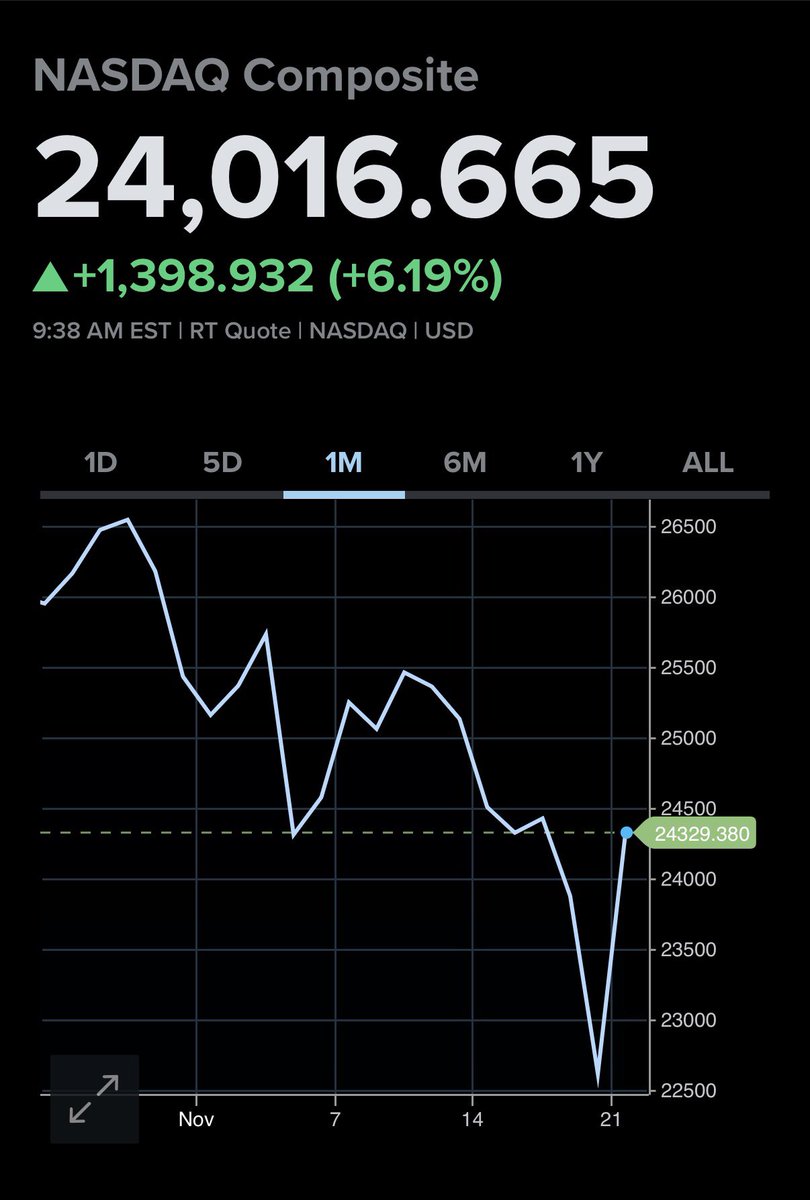
Days like today make it feel like financial markets are running a series of “natural experiments,” or what a friend calls “simulations.”
Whatever you call it, the sheer fluidity and volatility are breathtaking.
(CNBC NASDAQ chart below.)
#economy#markets@nvidia#nvidia@cnbc
Getting an academic job in 2022 felt like getting the last helicopter out of Saigon, but now it increasingly feels like that the helo has landed in Ho Chi Minh City.
Senior Reporter Joe Howlett on today's claim that AI has solved the Riemann hypothesis.
"This is the biggest day in the field's modern history."
https://t.co/iTFOFDj52q
If you love London, and appreciate this account, kindly share this post to help others find and follow us at @Lost___London.
Help us bring the bygone days of our glorious city into the hearts and minds of modern day people.
Thank you. 🤝
Holy shit. Levent Alpöge from Anthropic just claimed Claude has resolved the General Reimann Hypothesis!!!
Proof is 250,000+ pages long. Lean is released.
GRH is the 2nd of 6 Millenium prizes solved by AI, after Navier-Stokes. This may be the biggest AI math result of all time.
Retirees are becoming more affluent than ever in high-income countries, with pensions now accounting for one in every four euros the French, Spanish and Italian governments spend on all public goods and services.
Why are states still giving them so much? https://t.co/w45i933GjT