Ḥasbiyallāhu lā ilāha illā huwa `alayhi tawakkalt, wa huwa Rabbu ‘l-`Arshi ‘l-'Aẓīm.
Allah is sufficient for me. There is none worthy of worship but Him. I have placed my trust in Him, He is Lord of the Majestic Throne.
Being unemployed is expensive, not just financially, but mentally.
Don’t let rejection convince you you’re not good enough.
The market is competitive, not impossible. Stay consistent, keep applying, expand your network, and don’t stop putting yourself out there.
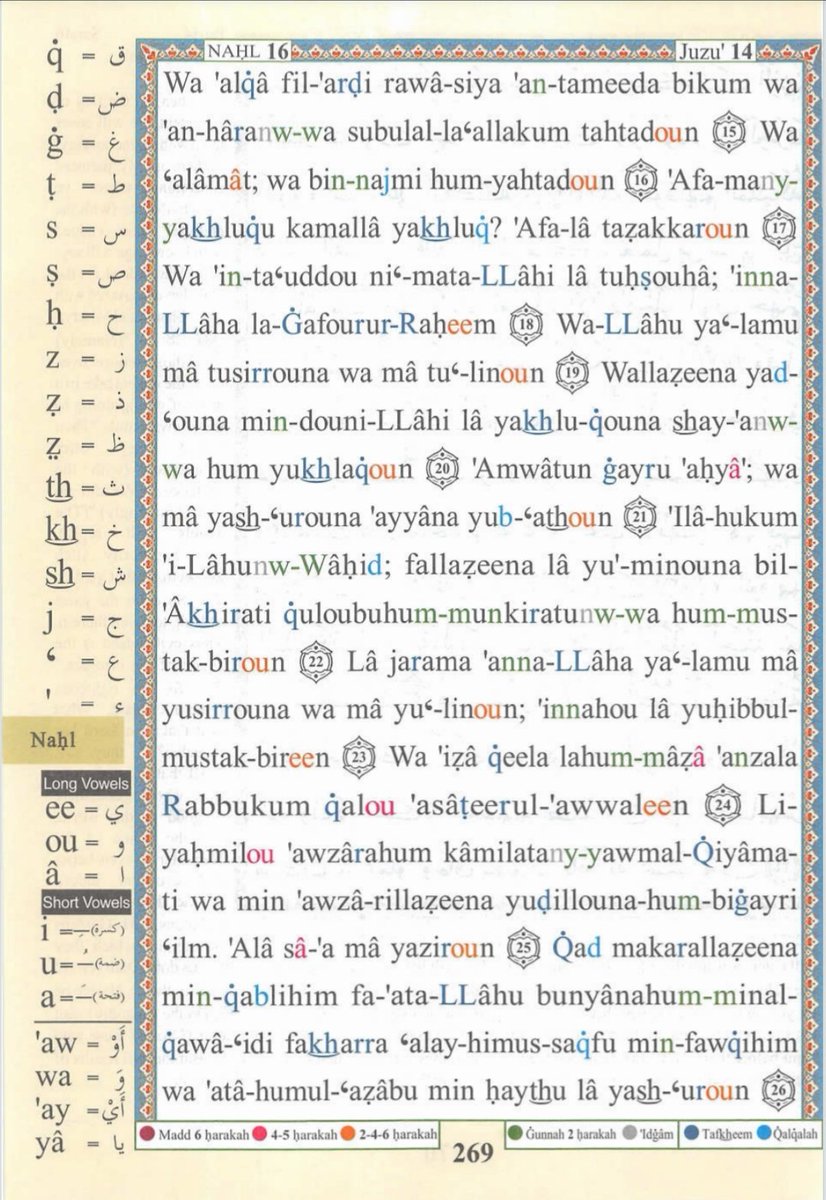
Pages of the Glorius Qur'ān today, Wednesday 5/8/26, al-Naḥl (16): 15-34, tafakkur verse 16: 23
Theme: Tawḥīd
{إِلَـٰهُكُمۡ إِلَـٰهࣱ وَ ٰحِدࣱۚ فَٱلَّذِینَ لَا یُؤۡمِنُونَ بِٱلۡـَٔاخِرَةِ قُلُوبُهُم مُّنكِرَةࣱ وَهُم مُّسۡتَكۡبِرُونَ}
"Your god is one God. But those who do not believe in the Hereafter - their hearts are disapproving, and they are arrogant".
LESSONS
1. Tawḥīd is the foundation of every aspect of life.
The verse begins by declaring that God is One, reminding believers that every act of worship, every moral decision, and every aspiration should be directed to Him alone. Tawḥīd is not merely a theological statement; it is a complete worldview. A Muslim who truly believes in the Oneness of Allah cannot divide his loyalty between Allah and worldly desires, wealth, power, or personalities. This conviction gives purpose to life and protects the believer from all forms of idolatry, whether they are spiritual, ideological, or material.
2. Belief in the Hereafter strengthens faith in Tawḥīd.
The verse links disbelief in the Hereafter with rejection of the truth. A person who does not believe that he will stand before Allah for judgment finds little reason to submit sincerely to His commands. For Muslims today, belief in the Hereafter is what transforms Tawḥīd from a verbal declaration into a lived reality. It motivates honesty when no one is watching, patience during hardship, justice in dealing with others, and steadfastness when obedience to Allah comes at a personal cost.
3. The greatest barrier to guidance is arrogance, not lack of evidence.
Allah describes the rejecters as arrogant, indicating that many people turn away from the truth not because they lack proof but because they refuse to humble themselves before it. This lesson is equally relevant to Muslims. Arrogance can manifest in refusing correction, dismissing authentic evidence because it challenges one's preferences, or elevating personal opinions above divine guidance. Tawḥīd requires humility, the willingness to submit wholeheartedly to Allah regardless of one's status, knowledge, or influence.
4. The condition of the heart determines the direction of life.
The verse points to hearts that inwardly reject the truth. Islam consistently teaches that reform begins with the heart. A heart filled with sincerity, remembrance of Allah, gratitude, and fear of accountability naturally inclines toward Tawḥīd and righteous action. Conversely, a heart consumed by pride, envy, and attachment to worldly life gradually distances itself from Allah. Muslims must therefore give as much attention to purifying their hearts as they do to increasing their knowledge and outward acts of worship.
5. Tawḥīd demands exclusive devotion and complete reliance upon Allah.
Affirming that God is One means recognizing Him as the sole Creator, Sustainer, Lawgiver, and ultimate source of hope and fear. A Muslim should therefore seek help from Allah before all others, place trust in Him above every worldly means, and measure success by His pleasure rather than public approval. In an age of celebrity culture, materialism, and ideological confusion, Tawḥīd calls Muslims back to a life centred on Allah alone. It liberates the believer from the slavery of human opinions and worldly ambitions, replacing them with dignity, purpose, and unwavering trust in the Lord of the worlds.
O Allah, make our hearts firm upon Your Oneness and keep us steadfast upon sincere faith. Āmīn.
When you have something on your heart that only Allah can take care of, make this du'a.
You don't always have to know exactly how your need will be fulfilled. Sometimes, you simply need to turn to Him, admit your need, and trust Him to send you what is best.
Pages of the Glorius Qur'ān today, Tuesday 4/8/26, al-Ḥijr (15): 91-99 & al-Naḥl (16): 1-14, tafakkur verse 16: 14
Theme: Recognizing Allah's blessings through the miracles of the body of waters and the endless provisions provided in them
{وَهُوَ ٱلَّذِی سَخَّرَ ٱلۡبَحۡرَ لِتَأۡكُلُوا۟ مِنۡ��ُ لَحۡمࣰا طَرِیࣰّا وَتَسۡتَخۡرِجُوا۟ مِنۡهُ حِلۡیَةࣰ تَلۡبَسُونَهَاۖ وَتَرَى ٱلۡفُلۡكَ مَوَاخِرَ فِیهِ وَلِتَبۡتَغُوا۟ مِن فَضۡلِهِۦ وَلَعَلَّكُمۡ تَشۡكُرُونَ}
"And it is He who subjected the sea for you to eat from it tender meat and to extract from it ornaments which you wear. And you see the ships plowing through it, and [He subjected it] that you may seek of His bounty; and perhaps you will be grateful".
LESSONS:
1. Every provision is ultimately from Allah.
The sea, with all its resources, is not a product of human ingenuity but a blessing placed at our service by Allah. Fish, other seafood, and countless marine resources are divine provisions that should deepen our awareness of the Giver rather than merely the gift.
2. Islam encourages the lawful enjoyment of Allah's blessings.
The verse mentions both necessities ("tender meat") and adornments ("ornaments which you wear"). This demonstrates that Islam does not prohibit beauty or lawful enjoyment of worldly blessings, provided they are acquired and used within the limits of the Sharīʿah.
3. Human progress is built upon Allah's favour.
Ships crossing the seas symbolize commerce, travel, exploration, and civilization. While people design and build vessels, their success depends on the natural laws, oceans, and winds that Allah has created and subjected for humanity. Every scientific and technological achievement should therefore inspire humility before the Creator.
4. Seeking wealth through lawful means is an act of worship.
Allah explicitly mentions that people travel the seas "to seek of His bounty." Earning a living through lawful trade, industry, and honest labour is not contrary to spirituality; it is a noble pursuit when accompanied by sincerity, integrity, and gratitude to Allah.
5. Gratitude is the proper response to divine blessings.
The verse concludes by reminding us that all these favours are meant to produce gratitude. True gratitude is not merely saying al-ḥamdu lillāh; it is recognizing Allah as the source of every blessing, obeying Him, and using His gifts in ways that please Him.
Allāhumma ijʿalnā min ʿibādika al-shākirīn, warzuqnā rizqan ḥalālan ṭayyiban, wa bārik lanā fīmā razaqtanā, wa lā tajʿal niʿamaka sababan lighaflatinā ʿanka. Āmīn.
O Allah, make us among Your grateful servants. Grant us lawful and wholesome provision, bless what You have provided for us, and do not let Your blessings become a cause of heedlessness toward You. Āmīn.
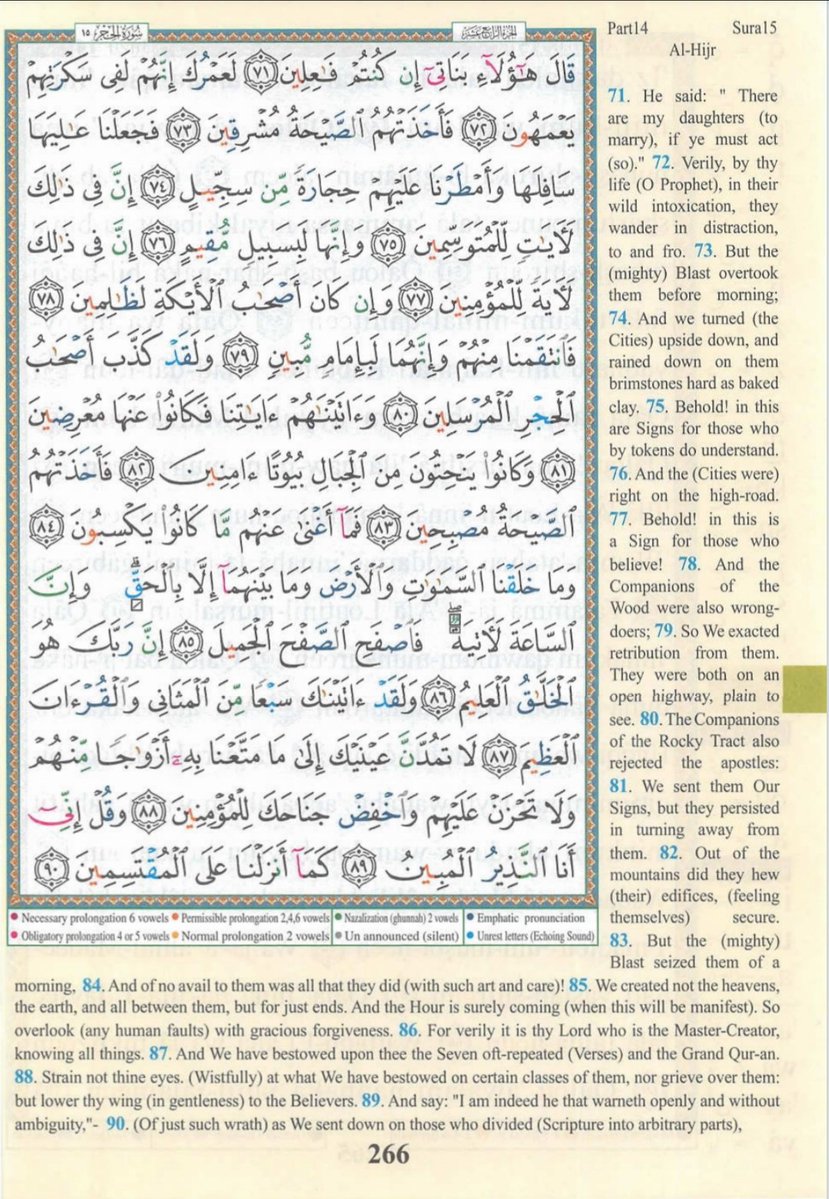
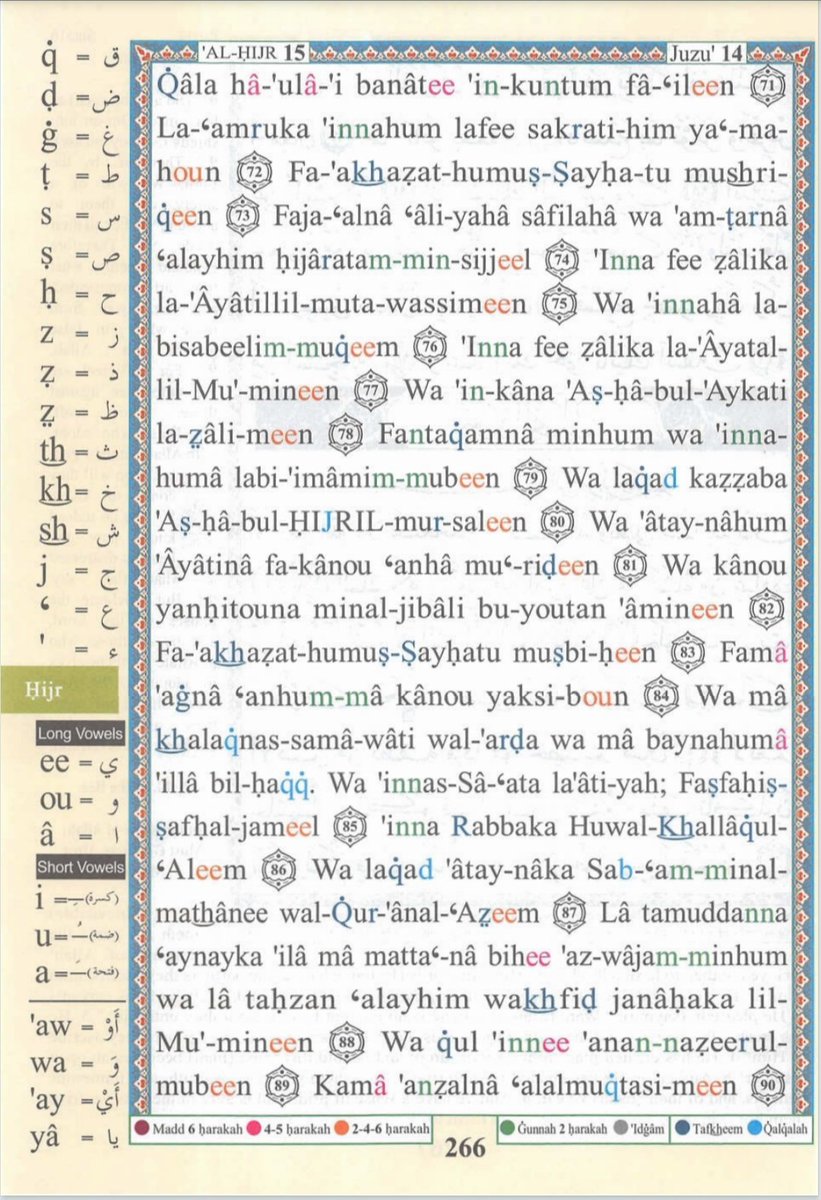
Pages of the Glorius Qur'ān today, Monday 3/8/26, al-Ḥijr (15): 52-90, tafakkur verse 15: 54-56
Theme: Never despair of the mercy and limitless power of Allah
{قَالَ أَبَشَّرۡتُمُونِی عَلَىٰۤ أَن مَّسَّنِیَ ٱلۡكِبَرُ فَبِمَ تُبَشِّرُونَ (54) قَالُوا۟ بَشَّرۡنَـٰكَ بِٱلۡحَقِّ فَلَا تَكُن مِّنَ ٱلۡقَـٰنِطِینَ (55) قَالَ وَمَن یَقۡنَطُ مِن رَّحۡمَةِ رَبِّهِۦۤ إِلَّا ٱلضَّاۤلُّونَ (56)}
"He (Ibrāhīm) said, "Do you give me glad tidings despite old age having overtaken me? Then of what do you give me glad tidings?"
They said, "We have given you glad tidings in truth, so do not be among those who despair."
He said, "And who despairs of the mercy of his Lord except those who are astray?"
LESSONS
1. Allah's power transcends human limitations.
Prophet Ibrāhīm (ʿalayhi al-salām) was astonished because he and his wife had reached old age, when having children seemed naturally impossible. Yet Allah's decree is never constrained by what appears impossible to human beings.
2. Genuine faith never gives way to despair.
The angels reminded Ibrāhīm not to be among those who despair, reaffirming that Allah's promises are always true, regardless of how improbable they may seem.
3. Despair of Allah's mercy is a sign of misguidance.
Ibrāhīm's response establishes a profound principle: "Who despairs of the mercy of his Lord except those who are astray?" A believer may feel pain, grief, or uncertainty, but should never lose hope in Allah's mercy and ability to change any situation.
4. Human reasoning has limits, but Allah's decree has none.
What appears impossible according to worldly standards may be effortless for Allah. The believer therefore combines practical effort with complete trust (tawakkul) in Allah.
5. Allah fulfils His promises at the most appropriate time.
The birth of Isḥāq (Isaac) to elderly parents demonstrates that Allah's timing is always perfect. Delays are not denials; they are often part of His wisdom and a means of strengthening faith.
اللَّهُمَّ لَا تَجْعَلْنِي مِنَ الْقَانِطِينَ مِنْ رَحْمَتِكَ، وَارْزُقْنِي حُسْنَ الظَّنِّ بِكَ، وَثِقَةً بِوَعْدِكَ، وَاجْعَلْ لِي مِنْ كُلِّ هَمٍّ فَرَجًا، وَمِنْ كُلِّ ضِيقٍ مَخْرَجًا، إِنَّكَ عَلَىٰ كُلِّ شَيْءٍ قَدِيرٌ.
Allāhumma lā tajʿalnī mina al-qāniṭīna min raḥmatika, warzuqnī ḥusna al-ẓanni bika, wa thiqatan bi-waʿdika, wajʿal lī min kulli hammin farajan, wa min kulli ḍīqin makhrajan, innaka ʿalā kulli shayʾin qadīr.
"O Allah, do not make me among those who despair of Your mercy. Grant me good expectations of You, confidence in Your promise, and make for me a way out of every worry and every hardship. Indeed, You are Powerful over all things."
Āmīn.
Pages of the Glorius Qur'ān today, Sunday 2/8/26, al-Ḥijr (15): 16-51, tafakkur verse 15: 49-50
Theme: A Muslim should understand the balancing of hope in Allah's mercy with fear of His punishment
{۞ نَبِّئۡ عِبَادِیۤ أَنِّیۤ أَنَا ٱلۡغَفُورُ ٱلرَّحِیمُ (49) وَأَنَّ عَذَابِی هُوَ ٱلۡعَذَابُ ٱلۡأَلِیمُ (50)}
"[O Muḥammad], inform My servants that it is I who am the Forgiving, the Merciful,
And that it is My punishment which is the painful punishment".
LESSONS:
1. Allah's mercy is vast and always open to the repentant.
Allah begins by introducing Himself as al-Ghafūr (the All-Forgiving) and al-Raḥīm (the Most Merciful), reminding believers that no sin is too great to be forgiven when one sincerely repents and returns to Him.
2. A believer must balance hope and fear.
These two verses teach that faith should neither be based solely on hope nor solely on fear. Hope without fear may lead to complacency, while fear without hope may lead to despair. The true believer walks the middle path.
3. Allah's punishment is real and should never be taken lightly.
Just as Allah's mercy is real, so is His punishment. Persisting in disbelief, arrogance, oppression, and unrepented sins exposes a person to a painful punishment. This serves as a powerful deterrent against disobedience.
4. Effective daʿwah combines glad tidings with warning.
Allah commanded the Prophet ﷺ to inform people of both His mercy and His punishment. Islamic preaching should therefore inspire people with hope while also warning them of the consequences of rejecting Allah's guidance.
5. A sound relationship with Allah is built on both love and reverence.
These verses cultivate a balanced spirituality in which the believer loves Allah for His boundless mercy, hopes for His forgiveness, and reveres Him enough to avoid actions that incur His punishment. Such balance produces sincerity, humility, and steadfast obedience.
O Allah, O All-Forgiving, O Most Merciful, forgive us all our sins, the small and the great, the first and the last, the hidden and the public.
O Allah, make us among Your servants who hope for Your mercy and fear Your punishment, and do not make us among the heedless.
O Allah, keep our hearts firm upon obedience to You, grant us a good ending, admit us into Paradise through Your mercy, and protect us from the Fire through Your grace. Indeed, You are the All-Forgiving, the Most Merciful. Āmīn.
Pages of the Glorius Qur'ān today, Saturday 1/8/26, Ibrāhīm (14): 43-52 & al-Ḥijr (15): 1-15, tafakkur verse 15: 9
Theme: the Preservation of the Qur'ān is divine, no amount of effort could corrupt it
{إِنَّا نَحۡنُ نَزَّلۡنَا ٱلذِّكۡرَ وَإِنَّا لَهُۥ لَحَـٰفِظُونَ}
"Indeed, it is We who sent down the message [i.e., the Qur’ān], and indeed, We will be its guardian".
LESSONS:
1. The Qur'ān is a Divine Revelation.
Allah emphatically declares that He Himself revealed the Qur'ān. It is not the product of human thought, philosophy, or imagination. Its origin is divine, making it the ultimate and final source of guidance for humanity.
2. Allah Himself Guarantees Its Preservation.
Unlike previous scriptures, whose preservation was entrusted to human communities, Allah personally undertook the responsibility of safeguarding the Qur'ān. Throughout more than fourteen centuries, it has remained intact in both its written form and in the hearts of millions of memorizers across generations.
3. The Integrity of Islam Rests Upon the Preservation of the Qur'ān.
Since the Qur'ān is the primary source of Islamic belief, law, ethics, and spirituality, its preservation ensures that the authentic message of Islam remains accessible to every generation until the Day of Resurrection.
4. The Verse Strengthens the Believer's Confidence.
This divine promise assures Muslims that no conspiracy, distortion, or hostility can extinguish Allah's guidance. While attempts to alter or suppress the Qur'ān have occurred throughout history, Allah's promise has consistently been fulfilled.
5. Preserving the Qur'ān Includes Living by It.
Although Allah has guaranteed the preservation of the Qur'ānic text, believers are honoured with the responsibility of preserving its teachings through recitation, memorisation, study, implementation, teaching, and conveying its message to others with wisdom and sincerity.
Allāhumma ijʿal al-Qur'āna rabīʿa qulūbinā, wa nūra ṣudūrinā, wa jalā'a aḥzāninā, wa dhahāba humūminā, wajʿalnā min ahlihi alladhīna hum ahluka wa khāṣṣatuk.
O Allah, make the Qur'ān the spring of our hearts, the light of our chests, the remover of our sorrows, and the reliever of our anxieties. Make us among the people of the Qur'ān, Your chosen and beloved servants. (Qur'ān 15:9). Āmīn.
Pages of the Glorius Qur'ān today, Friday 31/7/26, Ibrāhīm (14): 25-42, tafakkur verse 14: 40-41
Theme: Show your children the path to Allah, walk it with them, they would pray for you when you are no more
{رَبِّ ٱجۡعَلۡنِی مُقِیمَ ٱلصَّلَوٰةِ وَمِن ذُرِّیَّتِیۚ رَبَّنَا وَتَقَبَّلۡ دُعَاۤءِ (40) رَبَّنَا ٱغۡفِرۡ لِی وَلِوَ ٰلِدَیَّ وَلِلۡمُؤۡمِنِینَ یَوۡمَ یَقُومُ ٱلۡحِسَابُ (41)}
"My Lord, make me an establisher of prayer, and [many] from my descendants. Our Lord, and accept my supplication.
Our Lord, forgive me and my parents and the believers the Day the account is established".
LESSONS:
1. The greatest inheritance a parent can leave is not wealth or status but unwavering faith. Prophet Ibrāhīm (ʿalayhi al-salām) prayed first that he and his descendants would remain devoted to ṣalāh, teaching us to prioritize spiritual legacy over material inheritance.
2. Children learn more from what they see than from what they hear. When parents consistently walk the path of obedience to Allah, they become living examples whose faith naturally inspires the next generation.
3. Righteous upbringing bears fruit long after a parent's death. Children nurtured upon faith and righteousness become a continuous source of duʿāʾ, asking Allah to forgive and elevate their parents, just as Prophet Ibrāhīm prayed for his own.
4. Raising children upon Islam is an investment for the Hereafter. Every prayer they perform, every act of righteousness they do, and every sincere supplication they make for their parents continues to benefit them even after they have left this world.
5. The verses remind us that a successful family is one united by worship, supplication, and hope in Allah's mercy. Show your children the path to Allah, walk it faithfully with them, and they will remember you before Allah when you are no more.
O Allah, make us and our descendants among those who establish prayer and remain steadfast in obedience to You. Instill in the hearts of our sons and daughters love for You and love for Your Messenger ﷺ, and enable us to be righteous role models for them. O Allah, make them the comfort of our eyes in this world, and make them among those who continue to pray for our mercy and forgiveness after our death. Gather us together with them in the Highest Paradise through Your infinite mercy, O Most Merciful of those who show mercy. Āmīn.
Alḥamdu lillāhil-ladhī 'aḥyānā ba`da mā 'amātanā wa 'ilayhin-nushūr.
Praise is to Allah Who gives us life after He has caused us to die and to Him is the return.




![IdrisAOni1's tweet photo. Pages of the Glorius Qur'ān today, Tuesday 4/8/26, al-Ḥijr (15): 91-99 & al-Naḥl (16): 1-14, tafakkur verse 16: 14
Theme: Recognizing Allah's blessings through the miracles of the body of waters and the endless provisions provided in them
{وَهُوَ ٱلَّذِی سَخَّرَ ٱلۡبَحۡرَ لِتَأۡكُلُوا۟ مِنۡ��ُ لَحۡمࣰا طَرِیࣰّا وَتَسۡتَخۡرِجُوا۟ مِنۡهُ حِلۡیَةࣰ تَلۡبَسُونَهَاۖ وَتَرَى ٱلۡفُلۡكَ مَوَاخِرَ فِیهِ وَلِتَبۡتَغُوا۟ مِن فَضۡلِهِۦ وَلَعَلَّكُمۡ تَشۡكُرُونَ}
"And it is He who subjected the sea for you to eat from it tender meat and to extract from it ornaments which you wear. And you see the ships plowing through it, and [He subjected it] that you may seek of His bounty; and perhaps you will be grateful".
LESSONS:
1. Every provision is ultimately from Allah.
The sea, with all its resources, is not a product of human ingenuity but a blessing placed at our service by Allah. Fish, other seafood, and countless marine resources are divine provisions that should deepen our awareness of the Giver rather than merely the gift.
2. Islam encourages the lawful enjoyment of Allah's blessings.
The verse mentions both necessities ("tender meat") and adornments ("ornaments which you wear"). This demonstrates that Islam does not prohibit beauty or lawful enjoyment of worldly blessings, provided they are acquired and used within the limits of the Sharīʿah.
3. Human progress is built upon Allah's favour.
Ships crossing the seas symbolize commerce, travel, exploration, and civilization. While people design and build vessels, their success depends on the natural laws, oceans, and winds that Allah has created and subjected for humanity. Every scientific and technological achievement should therefore inspire humility before the Creator.
4. Seeking wealth through lawful means is an act of worship.
Allah explicitly mentions that people travel the seas "to seek of His bounty." Earning a living through lawful trade, industry, and honest labour is not contrary to spirituality; it is a noble pursuit when accompanied by sincerity, integrity, and gratitude to Allah.
5. Gratitude is the proper response to divine blessings.
The verse concludes by reminding us that all these favours are meant to produce gratitude. True gratitude is not merely saying al-ḥamdu lillāh; it is recognizing Allah as the source of every blessing, obeying Him, and using His gifts in ways that please Him.
Allāhumma ijʿalnā min ʿibādika al-shākirīn, warzuqnā rizqan ḥalālan ṭayyiban, wa bārik lanā fīmā razaqtanā, wa lā tajʿal niʿamaka sababan lighaflatinā ʿanka. Āmīn.
O Allah, make us among Your grateful servants. Grant us lawful and wholesome provision, bless what You have provided for us, and do not let Your blessings become a cause of heedlessness toward You. Āmīn.](https://pbs.twimg.com/media/HO2pNDHXQAAUA4Y.jpg)
![IdrisAOni1's tweet photo. Pages of the Glorius Qur'ān today, Tuesday 4/8/26, al-Ḥijr (15): 91-99 & al-Naḥl (16): 1-14, tafakkur verse 16: 14
Theme: Recognizing Allah's blessings through the miracles of the body of waters and the endless provisions provided in them
{وَهُوَ ٱلَّذِی سَخَّرَ ٱلۡبَحۡرَ لِتَأۡكُلُوا۟ مِنۡ��ُ لَحۡمࣰا طَرِیࣰّا وَتَسۡتَخۡرِجُوا۟ مِنۡهُ حِلۡیَةࣰ تَلۡبَسُونَهَاۖ وَتَرَى ٱلۡفُلۡكَ مَوَاخِرَ فِیهِ وَلِتَبۡتَغُوا۟ مِن فَضۡلِهِۦ وَلَعَلَّكُمۡ تَشۡكُرُونَ}
"And it is He who subjected the sea for you to eat from it tender meat and to extract from it ornaments which you wear. And you see the ships plowing through it, and [He subjected it] that you may seek of His bounty; and perhaps you will be grateful".
LESSONS:
1. Every provision is ultimately from Allah.
The sea, with all its resources, is not a product of human ingenuity but a blessing placed at our service by Allah. Fish, other seafood, and countless marine resources are divine provisions that should deepen our awareness of the Giver rather than merely the gift.
2. Islam encourages the lawful enjoyment of Allah's blessings.
The verse mentions both necessities ("tender meat") and adornments ("ornaments which you wear"). This demonstrates that Islam does not prohibit beauty or lawful enjoyment of worldly blessings, provided they are acquired and used within the limits of the Sharīʿah.
3. Human progress is built upon Allah's favour.
Ships crossing the seas symbolize commerce, travel, exploration, and civilization. While people design and build vessels, their success depends on the natural laws, oceans, and winds that Allah has created and subjected for humanity. Every scientific and technological achievement should therefore inspire humility before the Creator.
4. Seeking wealth through lawful means is an act of worship.
Allah explicitly mentions that people travel the seas "to seek of His bounty." Earning a living through lawful trade, industry, and honest labour is not contrary to spirituality; it is a noble pursuit when accompanied by sincerity, integrity, and gratitude to Allah.
5. Gratitude is the proper response to divine blessings.
The verse concludes by reminding us that all these favours are meant to produce gratitude. True gratitude is not merely saying al-ḥamdu lillāh; it is recognizing Allah as the source of every blessing, obeying Him, and using His gifts in ways that please Him.
Allāhumma ijʿalnā min ʿibādika al-shākirīn, warzuqnā rizqan ḥalālan ṭayyiban, wa bārik lanā fīmā razaqtanā, wa lā tajʿal niʿamaka sababan lighaflatinā ʿanka. Āmīn.
O Allah, make us among Your grateful servants. Grant us lawful and wholesome provision, bless what You have provided for us, and do not let Your blessings become a cause of heedlessness toward You. Āmīn.](https://pbs.twimg.com/media/HO2pMOPW0AAjdmN.jpg)
![IdrisAOni1's tweet photo. Pages of the Glorius Qur'ān today, Tuesday 4/8/26, al-Ḥijr (15): 91-99 & al-Naḥl (16): 1-14, tafakkur verse 16: 14
Theme: Recognizing Allah's blessings through the miracles of the body of waters and the endless provisions provided in them
{وَهُوَ ٱلَّذِی سَخَّرَ ٱلۡبَحۡرَ لِتَأۡكُلُوا۟ مِنۡ��ُ لَحۡمࣰا طَرِیࣰّا وَتَسۡتَخۡرِجُوا۟ مِنۡهُ حِلۡیَةࣰ تَلۡبَسُونَهَاۖ وَتَرَى ٱلۡفُلۡكَ مَوَاخِرَ فِیهِ وَلِتَبۡتَغُوا۟ مِن فَضۡلِهِۦ وَلَعَلَّكُمۡ تَشۡكُرُونَ}
"And it is He who subjected the sea for you to eat from it tender meat and to extract from it ornaments which you wear. And you see the ships plowing through it, and [He subjected it] that you may seek of His bounty; and perhaps you will be grateful".
LESSONS:
1. Every provision is ultimately from Allah.
The sea, with all its resources, is not a product of human ingenuity but a blessing placed at our service by Allah. Fish, other seafood, and countless marine resources are divine provisions that should deepen our awareness of the Giver rather than merely the gift.
2. Islam encourages the lawful enjoyment of Allah's blessings.
The verse mentions both necessities ("tender meat") and adornments ("ornaments which you wear"). This demonstrates that Islam does not prohibit beauty or lawful enjoyment of worldly blessings, provided they are acquired and used within the limits of the Sharīʿah.
3. Human progress is built upon Allah's favour.
Ships crossing the seas symbolize commerce, travel, exploration, and civilization. While people design and build vessels, their success depends on the natural laws, oceans, and winds that Allah has created and subjected for humanity. Every scientific and technological achievement should therefore inspire humility before the Creator.
4. Seeking wealth through lawful means is an act of worship.
Allah explicitly mentions that people travel the seas "to seek of His bounty." Earning a living through lawful trade, industry, and honest labour is not contrary to spirituality; it is a noble pursuit when accompanied by sincerity, integrity, and gratitude to Allah.
5. Gratitude is the proper response to divine blessings.
The verse concludes by reminding us that all these favours are meant to produce gratitude. True gratitude is not merely saying al-ḥamdu lillāh; it is recognizing Allah as the source of every blessing, obeying Him, and using His gifts in ways that please Him.
Allāhumma ijʿalnā min ʿibādika al-shākirīn, warzuqnā rizqan ḥalālan ṭayyiban, wa bārik lanā fīmā razaqtanā, wa lā tajʿal niʿamaka sababan lighaflatinā ʿanka. Āmīn.
O Allah, make us among Your grateful servants. Grant us lawful and wholesome provision, bless what You have provided for us, and do not let Your blessings become a cause of heedlessness toward You. Āmīn.](https://pbs.twimg.com/media/HO2pLWCXkAAD4cz.jpg)


![IdrisAOni1's tweet photo. Pages of the Glorius Qur'ān today, Sunday 2/8/26, al-Ḥijr (15): 16-51, tafakkur verse 15: 49-50
Theme: A Muslim should understand the balancing of hope in Allah's mercy with fear of His punishment
{۞ نَبِّئۡ عِبَادِیۤ أَنِّیۤ أَنَا ٱلۡغَفُورُ ٱلرَّحِیمُ (49) وَأَنَّ عَذَابِی هُوَ ٱلۡعَذَابُ ٱلۡأَلِیمُ (50)}
"[O Muḥammad], inform My servants that it is I who am the Forgiving, the Merciful,
And that it is My punishment which is the painful punishment".
LESSONS:
1. Allah's mercy is vast and always open to the repentant.
Allah begins by introducing Himself as al-Ghafūr (the All-Forgiving) and al-Raḥīm (the Most Merciful), reminding believers that no sin is too great to be forgiven when one sincerely repents and returns to Him.
2. A believer must balance hope and fear.
These two verses teach that faith should neither be based solely on hope nor solely on fear. Hope without fear may lead to complacency, while fear without hope may lead to despair. The true believer walks the middle path.
3. Allah's punishment is real and should never be taken lightly.
Just as Allah's mercy is real, so is His punishment. Persisting in disbelief, arrogance, oppression, and unrepented sins exposes a person to a painful punishment. This serves as a powerful deterrent against disobedience.
4. Effective daʿwah combines glad tidings with warning.
Allah commanded the Prophet ﷺ to inform people of both His mercy and His punishment. Islamic preaching should therefore inspire people with hope while also warning them of the consequences of rejecting Allah's guidance.
5. A sound relationship with Allah is built on both love and reverence.
These verses cultivate a balanced spirituality in which the believer loves Allah for His boundless mercy, hopes for His forgiveness, and reveres Him enough to avoid actions that incur His punishment. Such balance produces sincerity, humility, and steadfast obedience.
O Allah, O All-Forgiving, O Most Merciful, forgive us all our sins, the small and the great, the first and the last, the hidden and the public.
O Allah, make us among Your servants who hope for Your mercy and fear Your punishment, and do not make us among the heedless.
O Allah, keep our hearts firm upon obedience to You, grant us a good ending, admit us into Paradise through Your mercy, and protect us from the Fire through Your grace. Indeed, You are the All-Forgiving, the Most Merciful. Āmīn.](https://pbs.twimg.com/media/HOsWD18XoAAX3uT.jpg)
![IdrisAOni1's tweet photo. Pages of the Glorius Qur'ān today, Sunday 2/8/26, al-Ḥijr (15): 16-51, tafakkur verse 15: 49-50
Theme: A Muslim should understand the balancing of hope in Allah's mercy with fear of His punishment
{۞ نَبِّئۡ عِبَادِیۤ أَنِّیۤ أَنَا ٱلۡغَفُورُ ٱلرَّحِیمُ (49) وَأَنَّ عَذَابِی هُوَ ٱلۡعَذَابُ ٱلۡأَلِیمُ (50)}
"[O Muḥammad], inform My servants that it is I who am the Forgiving, the Merciful,
And that it is My punishment which is the painful punishment".
LESSONS:
1. Allah's mercy is vast and always open to the repentant.
Allah begins by introducing Himself as al-Ghafūr (the All-Forgiving) and al-Raḥīm (the Most Merciful), reminding believers that no sin is too great to be forgiven when one sincerely repents and returns to Him.
2. A believer must balance hope and fear.
These two verses teach that faith should neither be based solely on hope nor solely on fear. Hope without fear may lead to complacency, while fear without hope may lead to despair. The true believer walks the middle path.
3. Allah's punishment is real and should never be taken lightly.
Just as Allah's mercy is real, so is His punishment. Persisting in disbelief, arrogance, oppression, and unrepented sins exposes a person to a painful punishment. This serves as a powerful deterrent against disobedience.
4. Effective daʿwah combines glad tidings with warning.
Allah commanded the Prophet ﷺ to inform people of both His mercy and His punishment. Islamic preaching should therefore inspire people with hope while also warning them of the consequences of rejecting Allah's guidance.
5. A sound relationship with Allah is built on both love and reverence.
These verses cultivate a balanced spirituality in which the believer loves Allah for His boundless mercy, hopes for His forgiveness, and reveres Him enough to avoid actions that incur His punishment. Such balance produces sincerity, humility, and steadfast obedience.
O Allah, O All-Forgiving, O Most Merciful, forgive us all our sins, the small and the great, the first and the last, the hidden and the public.
O Allah, make us among Your servants who hope for Your mercy and fear Your punishment, and do not make us among the heedless.
O Allah, keep our hearts firm upon obedience to You, grant us a good ending, admit us into Paradise through Your mercy, and protect us from the Fire through Your grace. Indeed, You are the All-Forgiving, the Most Merciful. Āmīn.](https://pbs.twimg.com/media/HOsWB-CXcAADbwL.jpg)
![IdrisAOni1's tweet photo. Pages of the Glorius Qur'ān today, Sunday 2/8/26, al-Ḥijr (15): 16-51, tafakkur verse 15: 49-50
Theme: A Muslim should understand the balancing of hope in Allah's mercy with fear of His punishment
{۞ نَبِّئۡ عِبَادِیۤ أَنِّیۤ أَنَا ٱلۡغَفُورُ ٱلرَّحِیمُ (49) وَأَنَّ عَذَابِی هُوَ ٱلۡعَذَابُ ٱلۡأَلِیمُ (50)}
"[O Muḥammad], inform My servants that it is I who am the Forgiving, the Merciful,
And that it is My punishment which is the painful punishment".
LESSONS:
1. Allah's mercy is vast and always open to the repentant.
Allah begins by introducing Himself as al-Ghafūr (the All-Forgiving) and al-Raḥīm (the Most Merciful), reminding believers that no sin is too great to be forgiven when one sincerely repents and returns to Him.
2. A believer must balance hope and fear.
These two verses teach that faith should neither be based solely on hope nor solely on fear. Hope without fear may lead to complacency, while fear without hope may lead to despair. The true believer walks the middle path.
3. Allah's punishment is real and should never be taken lightly.
Just as Allah's mercy is real, so is His punishment. Persisting in disbelief, arrogance, oppression, and unrepented sins exposes a person to a painful punishment. This serves as a powerful deterrent against disobedience.
4. Effective daʿwah combines glad tidings with warning.
Allah commanded the Prophet ﷺ to inform people of both His mercy and His punishment. Islamic preaching should therefore inspire people with hope while also warning them of the consequences of rejecting Allah's guidance.
5. A sound relationship with Allah is built on both love and reverence.
These verses cultivate a balanced spirituality in which the believer loves Allah for His boundless mercy, hopes for His forgiveness, and reveres Him enough to avoid actions that incur His punishment. Such balance produces sincerity, humility, and steadfast obedience.
O Allah, O All-Forgiving, O Most Merciful, forgive us all our sins, the small and the great, the first and the last, the hidden and the public.
O Allah, make us among Your servants who hope for Your mercy and fear Your punishment, and do not make us among the heedless.
O Allah, keep our hearts firm upon obedience to You, grant us a good ending, admit us into Paradise through Your mercy, and protect us from the Fire through Your grace. Indeed, You are the All-Forgiving, the Most Merciful. Āmīn.](https://pbs.twimg.com/media/HOsV_REXYAA20al.jpg)


![IdrisAOni1's tweet photo. Pages of the Glorius Qur'ān today, Saturday 1/8/26, Ibrāhīm (14): 43-52 & al-Ḥijr (15): 1-15, tafakkur verse 15: 9
Theme: the Preservation of the Qur'ān is divine, no amount of effort could corrupt it
{إِنَّا نَحۡنُ نَزَّلۡنَا ٱلذِّكۡرَ وَإِنَّا لَهُۥ لَحَـٰفِظُونَ}
"Indeed, it is We who sent down the message [i.e., the Qur’ān], and indeed, We will be its guardian".
LESSONS:
1. The Qur'ān is a Divine Revelation.
Allah emphatically declares that He Himself revealed the Qur'ān. It is not the product of human thought, philosophy, or imagination. Its origin is divine, making it the ultimate and final source of guidance for humanity.
2. Allah Himself Guarantees Its Preservation.
Unlike previous scriptures, whose preservation was entrusted to human communities, Allah personally undertook the responsibility of safeguarding the Qur'ān. Throughout more than fourteen centuries, it has remained intact in both its written form and in the hearts of millions of memorizers across generations.
3. The Integrity of Islam Rests Upon the Preservation of the Qur'ān.
Since the Qur'ān is the primary source of Islamic belief, law, ethics, and spirituality, its preservation ensures that the authentic message of Islam remains accessible to every generation until the Day of Resurrection.
4. The Verse Strengthens the Believer's Confidence.
This divine promise assures Muslims that no conspiracy, distortion, or hostility can extinguish Allah's guidance. While attempts to alter or suppress the Qur'ān have occurred throughout history, Allah's promise has consistently been fulfilled.
5. Preserving the Qur'ān Includes Living by It.
Although Allah has guaranteed the preservation of the Qur'ānic text, believers are honoured with the responsibility of preserving its teachings through recitation, memorisation, study, implementation, teaching, and conveying its message to others with wisdom and sincerity.
Allāhumma ijʿal al-Qur'āna rabīʿa qulūbinā, wa nūra ṣudūrinā, wa jalā'a aḥzāninā, wa dhahāba humūminā, wajʿalnā min ahlihi alladhīna hum ahluka wa khāṣṣatuk.
O Allah, make the Qur'ān the spring of our hearts, the light of our chests, the remover of our sorrows, and the reliever of our anxieties. Make us among the people of the Qur'ān, Your chosen and beloved servants. (Qur'ān 15:9). Āmīn.](https://pbs.twimg.com/media/HOnNmoWWMAA86Lx.jpg)
![IdrisAOni1's tweet photo. Pages of the Glorius Qur'ān today, Saturday 1/8/26, Ibrāhīm (14): 43-52 & al-Ḥijr (15): 1-15, tafakkur verse 15: 9
Theme: the Preservation of the Qur'ān is divine, no amount of effort could corrupt it
{إِنَّا نَحۡنُ نَزَّلۡنَا ٱلذِّكۡرَ وَإِنَّا لَهُۥ لَحَـٰفِظُونَ}
"Indeed, it is We who sent down the message [i.e., the Qur’ān], and indeed, We will be its guardian".
LESSONS:
1. The Qur'ān is a Divine Revelation.
Allah emphatically declares that He Himself revealed the Qur'ān. It is not the product of human thought, philosophy, or imagination. Its origin is divine, making it the ultimate and final source of guidance for humanity.
2. Allah Himself Guarantees Its Preservation.
Unlike previous scriptures, whose preservation was entrusted to human communities, Allah personally undertook the responsibility of safeguarding the Qur'ān. Throughout more than fourteen centuries, it has remained intact in both its written form and in the hearts of millions of memorizers across generations.
3. The Integrity of Islam Rests Upon the Preservation of the Qur'ān.
Since the Qur'ān is the primary source of Islamic belief, law, ethics, and spirituality, its preservation ensures that the authentic message of Islam remains accessible to every generation until the Day of Resurrection.
4. The Verse Strengthens the Believer's Confidence.
This divine promise assures Muslims that no conspiracy, distortion, or hostility can extinguish Allah's guidance. While attempts to alter or suppress the Qur'ān have occurred throughout history, Allah's promise has consistently been fulfilled.
5. Preserving the Qur'ān Includes Living by It.
Although Allah has guaranteed the preservation of the Qur'ānic text, believers are honoured with the responsibility of preserving its teachings through recitation, memorisation, study, implementation, teaching, and conveying its message to others with wisdom and sincerity.
Allāhumma ijʿal al-Qur'āna rabīʿa qulūbinā, wa nūra ṣudūrinā, wa jalā'a aḥzāninā, wa dhahāba humūminā, wajʿalnā min ahlihi alladhīna hum ahluka wa khāṣṣatuk.
O Allah, make the Qur'ān the spring of our hearts, the light of our chests, the remover of our sorrows, and the reliever of our anxieties. Make us among the people of the Qur'ān, Your chosen and beloved servants. (Qur'ān 15:9). Āmīn.](https://pbs.twimg.com/media/HOnNlu-WUAAJkdJ.jpg)
![IdrisAOni1's tweet photo. Pages of the Glorius Qur'ān today, Saturday 1/8/26, Ibrāhīm (14): 43-52 & al-Ḥijr (15): 1-15, tafakkur verse 15: 9
Theme: the Preservation of the Qur'ān is divine, no amount of effort could corrupt it
{إِنَّا نَحۡنُ نَزَّلۡنَا ٱلذِّكۡرَ وَإِنَّا لَهُۥ لَحَـٰفِظُونَ}
"Indeed, it is We who sent down the message [i.e., the Qur’ān], and indeed, We will be its guardian".
LESSONS:
1. The Qur'ān is a Divine Revelation.
Allah emphatically declares that He Himself revealed the Qur'ān. It is not the product of human thought, philosophy, or imagination. Its origin is divine, making it the ultimate and final source of guidance for humanity.
2. Allah Himself Guarantees Its Preservation.
Unlike previous scriptures, whose preservation was entrusted to human communities, Allah personally undertook the responsibility of safeguarding the Qur'ān. Throughout more than fourteen centuries, it has remained intact in both its written form and in the hearts of millions of memorizers across generations.
3. The Integrity of Islam Rests Upon the Preservation of the Qur'ān.
Since the Qur'ān is the primary source of Islamic belief, law, ethics, and spirituality, its preservation ensures that the authentic message of Islam remains accessible to every generation until the Day of Resurrection.
4. The Verse Strengthens the Believer's Confidence.
This divine promise assures Muslims that no conspiracy, distortion, or hostility can extinguish Allah's guidance. While attempts to alter or suppress the Qur'ān have occurred throughout history, Allah's promise has consistently been fulfilled.
5. Preserving the Qur'ān Includes Living by It.
Although Allah has guaranteed the preservation of the Qur'ānic text, believers are honoured with the responsibility of preserving its teachings through recitation, memorisation, study, implementation, teaching, and conveying its message to others with wisdom and sincerity.
Allāhumma ijʿal al-Qur'āna rabīʿa qulūbinā, wa nūra ṣudūrinā, wa jalā'a aḥzāninā, wa dhahāba humūminā, wajʿalnā min ahlihi alladhīna hum ahluka wa khāṣṣatuk.
O Allah, make the Qur'ān the spring of our hearts, the light of our chests, the remover of our sorrows, and the reliever of our anxieties. Make us among the people of the Qur'ān, Your chosen and beloved servants. (Qur'ān 15:9). Āmīn.](https://pbs.twimg.com/media/HOnNkldWgAAaroQ.jpg)


![IdrisAOni1's tweet photo. Pages of the Glorius Qur'ān today, Friday 31/7/26, Ibrāhīm (14): 25-42, tafakkur verse 14: 40-41
Theme: Show your children the path to Allah, walk it with them, they would pray for you when you are no more
{رَبِّ ٱجۡعَلۡنِی مُقِیمَ ٱلصَّلَوٰةِ وَمِن ذُرِّیَّتِیۚ رَبَّنَا وَتَقَبَّلۡ دُعَاۤءِ (40) رَبَّنَا ٱغۡفِرۡ لِی وَلِوَ ٰلِدَیَّ وَلِلۡمُؤۡمِنِینَ یَوۡمَ یَقُومُ ٱلۡحِسَابُ (41)}
"My Lord, make me an establisher of prayer, and [many] from my descendants. Our Lord, and accept my supplication.
Our Lord, forgive me and my parents and the believers the Day the account is established".
LESSONS:
1. The greatest inheritance a parent can leave is not wealth or status but unwavering faith. Prophet Ibrāhīm (ʿalayhi al-salām) prayed first that he and his descendants would remain devoted to ṣalāh, teaching us to prioritize spiritual legacy over material inheritance.
2. Children learn more from what they see than from what they hear. When parents consistently walk the path of obedience to Allah, they become living examples whose faith naturally inspires the next generation.
3. Righteous upbringing bears fruit long after a parent's death. Children nurtured upon faith and righteousness become a continuous source of duʿāʾ, asking Allah to forgive and elevate their parents, just as Prophet Ibrāhīm prayed for his own.
4. Raising children upon Islam is an investment for the Hereafter. Every prayer they perform, every act of righteousness they do, and every sincere supplication they make for their parents continues to benefit them even after they have left this world.
5. The verses remind us that a successful family is one united by worship, supplication, and hope in Allah's mercy. Show your children the path to Allah, walk it faithfully with them, and they will remember you before Allah when you are no more.
O Allah, make us and our descendants among those who establish prayer and remain steadfast in obedience to You. Instill in the hearts of our sons and daughters love for You and love for Your Messenger ﷺ, and enable us to be righteous role models for them. O Allah, make them the comfort of our eyes in this world, and make them among those who continue to pray for our mercy and forgiveness after our death. Gather us together with them in the Highest Paradise through Your infinite mercy, O Most Merciful of those who show mercy. Āmīn.](https://pbs.twimg.com/media/HOiDt1yWsAARaRd.jpg)
![IdrisAOni1's tweet photo. Pages of the Glorius Qur'ān today, Friday 31/7/26, Ibrāhīm (14): 25-42, tafakkur verse 14: 40-41
Theme: Show your children the path to Allah, walk it with them, they would pray for you when you are no more
{رَبِّ ٱجۡعَلۡنِی مُقِیمَ ٱلصَّلَوٰةِ وَمِن ذُرِّیَّتِیۚ رَبَّنَا وَتَقَبَّلۡ دُعَاۤءِ (40) رَبَّنَا ٱغۡفِرۡ لِی وَلِوَ ٰلِدَیَّ وَلِلۡمُؤۡمِنِینَ یَوۡمَ یَقُومُ ٱلۡحِسَابُ (41)}
"My Lord, make me an establisher of prayer, and [many] from my descendants. Our Lord, and accept my supplication.
Our Lord, forgive me and my parents and the believers the Day the account is established".
LESSONS:
1. The greatest inheritance a parent can leave is not wealth or status but unwavering faith. Prophet Ibrāhīm (ʿalayhi al-salām) prayed first that he and his descendants would remain devoted to ṣalāh, teaching us to prioritize spiritual legacy over material inheritance.
2. Children learn more from what they see than from what they hear. When parents consistently walk the path of obedience to Allah, they become living examples whose faith naturally inspires the next generation.
3. Righteous upbringing bears fruit long after a parent's death. Children nurtured upon faith and righteousness become a continuous source of duʿāʾ, asking Allah to forgive and elevate their parents, just as Prophet Ibrāhīm prayed for his own.
4. Raising children upon Islam is an investment for the Hereafter. Every prayer they perform, every act of righteousness they do, and every sincere supplication they make for their parents continues to benefit them even after they have left this world.
5. The verses remind us that a successful family is one united by worship, supplication, and hope in Allah's mercy. Show your children the path to Allah, walk it faithfully with them, and they will remember you before Allah when you are no more.
O Allah, make us and our descendants among those who establish prayer and remain steadfast in obedience to You. Instill in the hearts of our sons and daughters love for You and love for Your Messenger ﷺ, and enable us to be righteous role models for them. O Allah, make them the comfort of our eyes in this world, and make them among those who continue to pray for our mercy and forgiveness after our death. Gather us together with them in the Highest Paradise through Your infinite mercy, O Most Merciful of those who show mercy. Āmīn.](https://pbs.twimg.com/media/HOiDq8pWIAARtI0.jpg)
![IdrisAOni1's tweet photo. Pages of the Glorius Qur'ān today, Friday 31/7/26, Ibrāhīm (14): 25-42, tafakkur verse 14: 40-41
Theme: Show your children the path to Allah, walk it with them, they would pray for you when you are no more
{رَبِّ ٱجۡعَلۡنِی مُقِیمَ ٱلصَّلَوٰةِ وَمِن ذُرِّیَّتِیۚ رَبَّنَا وَتَقَبَّلۡ دُعَاۤءِ (40) رَبَّنَا ٱغۡفِرۡ لِی وَلِوَ ٰلِدَیَّ وَلِلۡمُؤۡمِنِینَ یَوۡمَ یَقُومُ ٱلۡحِسَابُ (41)}
"My Lord, make me an establisher of prayer, and [many] from my descendants. Our Lord, and accept my supplication.
Our Lord, forgive me and my parents and the believers the Day the account is established".
LESSONS:
1. The greatest inheritance a parent can leave is not wealth or status but unwavering faith. Prophet Ibrāhīm (ʿalayhi al-salām) prayed first that he and his descendants would remain devoted to ṣalāh, teaching us to prioritize spiritual legacy over material inheritance.
2. Children learn more from what they see than from what they hear. When parents consistently walk the path of obedience to Allah, they become living examples whose faith naturally inspires the next generation.
3. Righteous upbringing bears fruit long after a parent's death. Children nurtured upon faith and righteousness become a continuous source of duʿāʾ, asking Allah to forgive and elevate their parents, just as Prophet Ibrāhīm prayed for his own.
4. Raising children upon Islam is an investment for the Hereafter. Every prayer they perform, every act of righteousness they do, and every sincere supplication they make for their parents continues to benefit them even after they have left this world.
5. The verses remind us that a successful family is one united by worship, supplication, and hope in Allah's mercy. Show your children the path to Allah, walk it faithfully with them, and they will remember you before Allah when you are no more.
O Allah, make us and our descendants among those who establish prayer and remain steadfast in obedience to You. Instill in the hearts of our sons and daughters love for You and love for Your Messenger ﷺ, and enable us to be righteous role models for them. O Allah, make them the comfort of our eyes in this world, and make them among those who continue to pray for our mercy and forgiveness after our death. Gather us together with them in the Highest Paradise through Your infinite mercy, O Most Merciful of those who show mercy. Āmīn.](https://pbs.twimg.com/media/HOiDmxwWQAArzo1.jpg)





![IdrisAOni1's tweet photo. Pages of the Glorius Qur'ān today, Tuesday 4/8/26, al-Ḥijr (15): 91-99 & al-Naḥl (16): 1-14, tafakkur verse 16: 14
Theme: Recognizing Allah's blessings through the miracles of the body of waters and the endless provisions provided in them
{وَهُوَ ٱلَّذِی سَخَّرَ ٱلۡبَحۡرَ لِتَأۡكُلُوا۟ مِنۡ��ُ لَحۡمࣰا طَرِیࣰّا وَتَسۡتَخۡرِجُوا۟ مِنۡهُ حِلۡیَةࣰ تَلۡبَسُونَهَاۖ وَتَرَى ٱلۡفُلۡكَ مَوَاخِرَ فِیهِ وَلِتَبۡتَغُوا۟ مِن فَضۡلِهِۦ وَلَعَلَّكُمۡ تَشۡكُرُونَ}
"And it is He who subjected the sea for you to eat from it tender meat and to extract from it ornaments which you wear. And you see the ships plowing through it, and [He subjected it] that you may seek of His bounty; and perhaps you will be grateful".
LESSONS:
1. Every provision is ultimately from Allah.
The sea, with all its resources, is not a product of human ingenuity but a blessing placed at our service by Allah. Fish, other seafood, and countless marine resources are divine provisions that should deepen our awareness of the Giver rather than merely the gift.
2. Islam encourages the lawful enjoyment of Allah's blessings.
The verse mentions both necessities ("tender meat") and adornments ("ornaments which you wear"). This demonstrates that Islam does not prohibit beauty or lawful enjoyment of worldly blessings, provided they are acquired and used within the limits of the Sharīʿah.
3. Human progress is built upon Allah's favour.
Ships crossing the seas symbolize commerce, travel, exploration, and civilization. While people design and build vessels, their success depends on the natural laws, oceans, and winds that Allah has created and subjected for humanity. Every scientific and technological achievement should therefore inspire humility before the Creator.
4. Seeking wealth through lawful means is an act of worship.
Allah explicitly mentions that people travel the seas "to seek of His bounty." Earning a living through lawful trade, industry, and honest labour is not contrary to spirituality; it is a noble pursuit when accompanied by sincerity, integrity, and gratitude to Allah.
5. Gratitude is the proper response to divine blessings.
The verse concludes by reminding us that all these favours are meant to produce gratitude. True gratitude is not merely saying al-ḥamdu lillāh; it is recognizing Allah as the source of every blessing, obeying Him, and using His gifts in ways that please Him.
Allāhumma ijʿalnā min ʿibādika al-shākirīn, warzuqnā rizqan ḥalālan ṭayyiban, wa bārik lanā fīmā razaqtanā, wa lā tajʿal niʿamaka sababan lighaflatinā ʿanka. Āmīn.
O Allah, make us among Your grateful servants. Grant us lawful and wholesome provision, bless what You have provided for us, and do not let Your blessings become a cause of heedlessness toward You. Āmīn.](https://pbs.twimg.com/media/HO2pN8gXAAEAXJS.jpg)
![IdrisAOni1's tweet photo. Pages of the Glorius Qur'ān today, Sunday 2/8/26, al-Ḥijr (15): 16-51, tafakkur verse 15: 49-50
Theme: A Muslim should understand the balancing of hope in Allah's mercy with fear of His punishment
{۞ نَبِّئۡ عِبَادِیۤ أَنِّیۤ أَنَا ٱلۡغَفُورُ ٱلرَّحِیمُ (49) وَأَنَّ عَذَابِی هُوَ ٱلۡعَذَابُ ٱلۡأَلِیمُ (50)}
"[O Muḥammad], inform My servants that it is I who am the Forgiving, the Merciful,
And that it is My punishment which is the painful punishment".
LESSONS:
1. Allah's mercy is vast and always open to the repentant.
Allah begins by introducing Himself as al-Ghafūr (the All-Forgiving) and al-Raḥīm (the Most Merciful), reminding believers that no sin is too great to be forgiven when one sincerely repents and returns to Him.
2. A believer must balance hope and fear.
These two verses teach that faith should neither be based solely on hope nor solely on fear. Hope without fear may lead to complacency, while fear without hope may lead to despair. The true believer walks the middle path.
3. Allah's punishment is real and should never be taken lightly.
Just as Allah's mercy is real, so is His punishment. Persisting in disbelief, arrogance, oppression, and unrepented sins exposes a person to a painful punishment. This serves as a powerful deterrent against disobedience.
4. Effective daʿwah combines glad tidings with warning.
Allah commanded the Prophet ﷺ to inform people of both His mercy and His punishment. Islamic preaching should therefore inspire people with hope while also warning them of the consequences of rejecting Allah's guidance.
5. A sound relationship with Allah is built on both love and reverence.
These verses cultivate a balanced spirituality in which the believer loves Allah for His boundless mercy, hopes for His forgiveness, and reveres Him enough to avoid actions that incur His punishment. Such balance produces sincerity, humility, and steadfast obedience.
O Allah, O All-Forgiving, O Most Merciful, forgive us all our sins, the small and the great, the first and the last, the hidden and the public.
O Allah, make us among Your servants who hope for Your mercy and fear Your punishment, and do not make us among the heedless.
O Allah, keep our hearts firm upon obedience to You, grant us a good ending, admit us into Paradise through Your mercy, and protect us from the Fire through Your grace. Indeed, You are the All-Forgiving, the Most Merciful. Āmīn.](https://pbs.twimg.com/media/HOsWGhZWAAEh11C.jpg)
![IdrisAOni1's tweet photo. Pages of the Glorius Qur'ān today, Saturday 1/8/26, Ibrāhīm (14): 43-52 & al-Ḥijr (15): 1-15, tafakkur verse 15: 9
Theme: the Preservation of the Qur'ān is divine, no amount of effort could corrupt it
{إِنَّا نَحۡنُ نَزَّلۡنَا ٱلذِّكۡرَ وَإِنَّا لَهُۥ لَحَـٰفِظُونَ}
"Indeed, it is We who sent down the message [i.e., the Qur’ān], and indeed, We will be its guardian".
LESSONS:
1. The Qur'ān is a Divine Revelation.
Allah emphatically declares that He Himself revealed the Qur'ān. It is not the product of human thought, philosophy, or imagination. Its origin is divine, making it the ultimate and final source of guidance for humanity.
2. Allah Himself Guarantees Its Preservation.
Unlike previous scriptures, whose preservation was entrusted to human communities, Allah personally undertook the responsibility of safeguarding the Qur'ān. Throughout more than fourteen centuries, it has remained intact in both its written form and in the hearts of millions of memorizers across generations.
3. The Integrity of Islam Rests Upon the Preservation of the Qur'ān.
Since the Qur'ān is the primary source of Islamic belief, law, ethics, and spirituality, its preservation ensures that the authentic message of Islam remains accessible to every generation until the Day of Resurrection.
4. The Verse Strengthens the Believer's Confidence.
This divine promise assures Muslims that no conspiracy, distortion, or hostility can extinguish Allah's guidance. While attempts to alter or suppress the Qur'ān have occurred throughout history, Allah's promise has consistently been fulfilled.
5. Preserving the Qur'ān Includes Living by It.
Although Allah has guaranteed the preservation of the Qur'ānic text, believers are honoured with the responsibility of preserving its teachings through recitation, memorisation, study, implementation, teaching, and conveying its message to others with wisdom and sincerity.
Allāhumma ijʿal al-Qur'āna rabīʿa qulūbinā, wa nūra ṣudūrinā, wa jalā'a aḥzāninā, wa dhahāba humūminā, wajʿalnā min ahlihi alladhīna hum ahluka wa khāṣṣatuk.
O Allah, make the Qur'ān the spring of our hearts, the light of our chests, the remover of our sorrows, and the reliever of our anxieties. Make us among the people of the Qur'ān, Your chosen and beloved servants. (Qur'ān 15:9). Āmīn.](https://pbs.twimg.com/media/HOnNoPDWgAAJGLH.jpg)
![IdrisAOni1's tweet photo. Pages of the Glorius Qur'ān today, Friday 31/7/26, Ibrāhīm (14): 25-42, tafakkur verse 14: 40-41
Theme: Show your children the path to Allah, walk it with them, they would pray for you when you are no more
{رَبِّ ٱجۡعَلۡنِی مُقِیمَ ٱلصَّلَوٰةِ وَمِن ذُرِّیَّتِیۚ رَبَّنَا وَتَقَبَّلۡ دُعَاۤءِ (40) رَبَّنَا ٱغۡفِرۡ لِی وَلِوَ ٰلِدَیَّ وَلِلۡمُؤۡمِنِینَ یَوۡمَ یَقُومُ ٱلۡحِسَابُ (41)}
"My Lord, make me an establisher of prayer, and [many] from my descendants. Our Lord, and accept my supplication.
Our Lord, forgive me and my parents and the believers the Day the account is established".
LESSONS:
1. The greatest inheritance a parent can leave is not wealth or status but unwavering faith. Prophet Ibrāhīm (ʿalayhi al-salām) prayed first that he and his descendants would remain devoted to ṣalāh, teaching us to prioritize spiritual legacy over material inheritance.
2. Children learn more from what they see than from what they hear. When parents consistently walk the path of obedience to Allah, they become living examples whose faith naturally inspires the next generation.
3. Righteous upbringing bears fruit long after a parent's death. Children nurtured upon faith and righteousness become a continuous source of duʿāʾ, asking Allah to forgive and elevate their parents, just as Prophet Ibrāhīm prayed for his own.
4. Raising children upon Islam is an investment for the Hereafter. Every prayer they perform, every act of righteousness they do, and every sincere supplication they make for their parents continues to benefit them even after they have left this world.
5. The verses remind us that a successful family is one united by worship, supplication, and hope in Allah's mercy. Show your children the path to Allah, walk it faithfully with them, and they will remember you before Allah when you are no more.
O Allah, make us and our descendants among those who establish prayer and remain steadfast in obedience to You. Instill in the hearts of our sons and daughters love for You and love for Your Messenger ﷺ, and enable us to be righteous role models for them. O Allah, make them the comfort of our eyes in this world, and make them among those who continue to pray for our mercy and forgiveness after our death. Gather us together with them in the Highest Paradise through Your infinite mercy, O Most Merciful of those who show mercy. Āmīn.](https://pbs.twimg.com/media/HOiDxdlWgAAOmSP.jpg)


