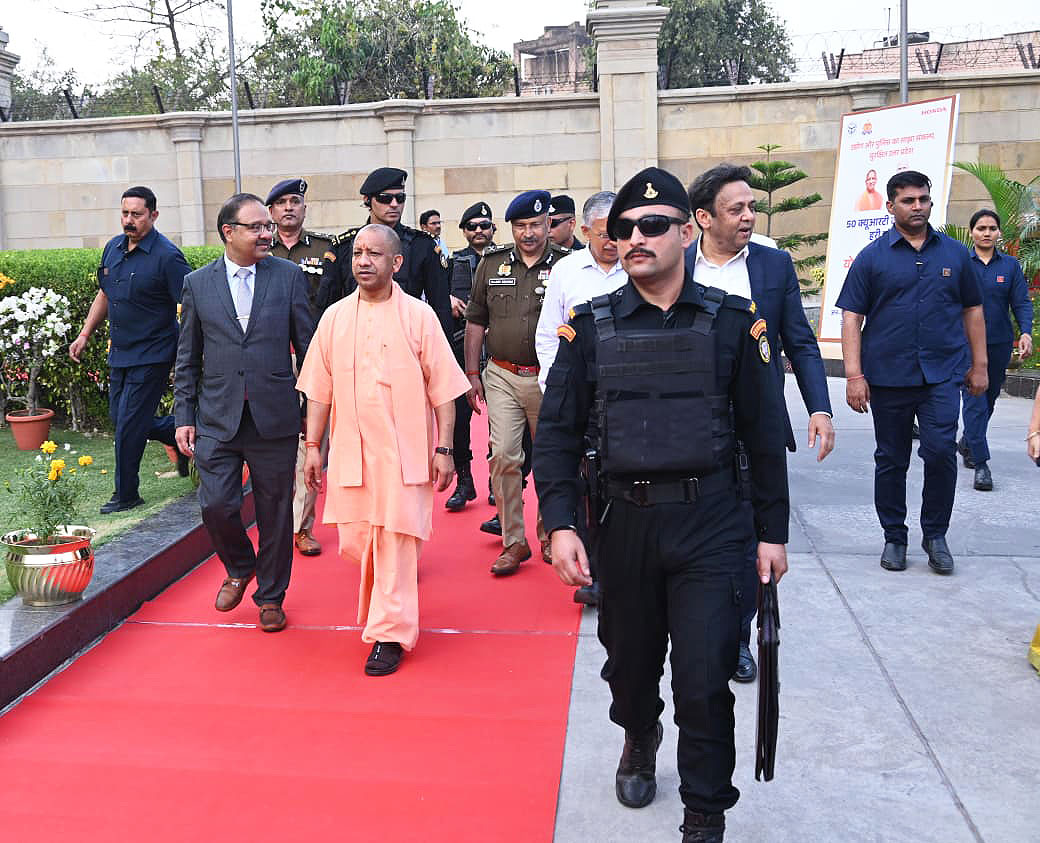
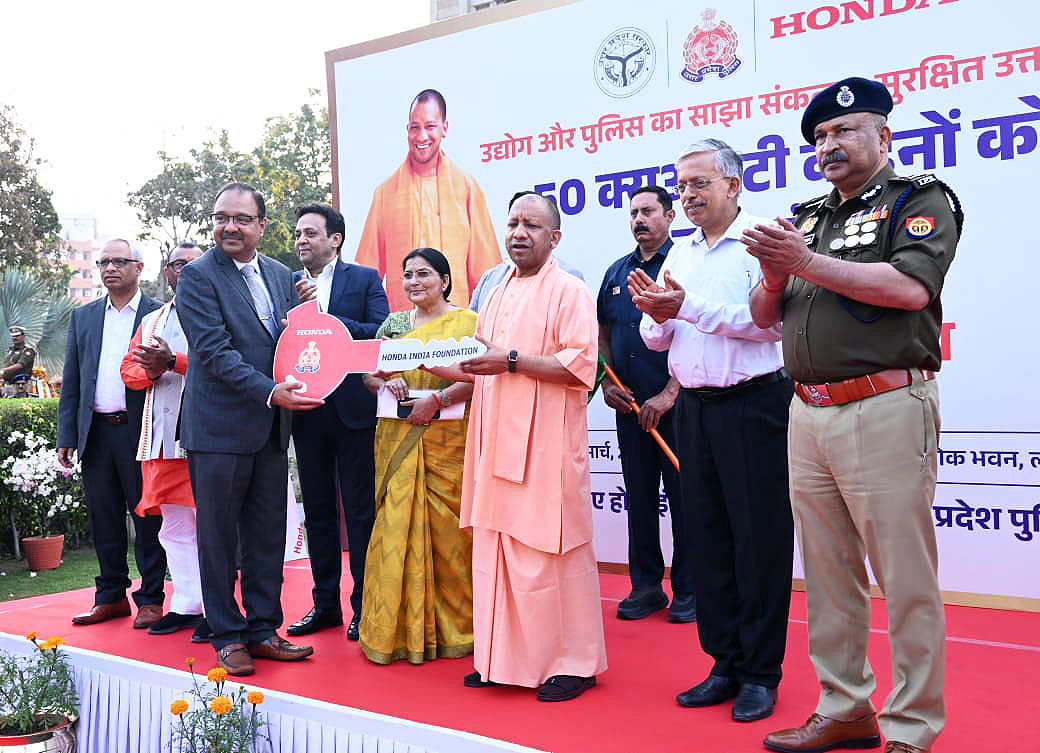
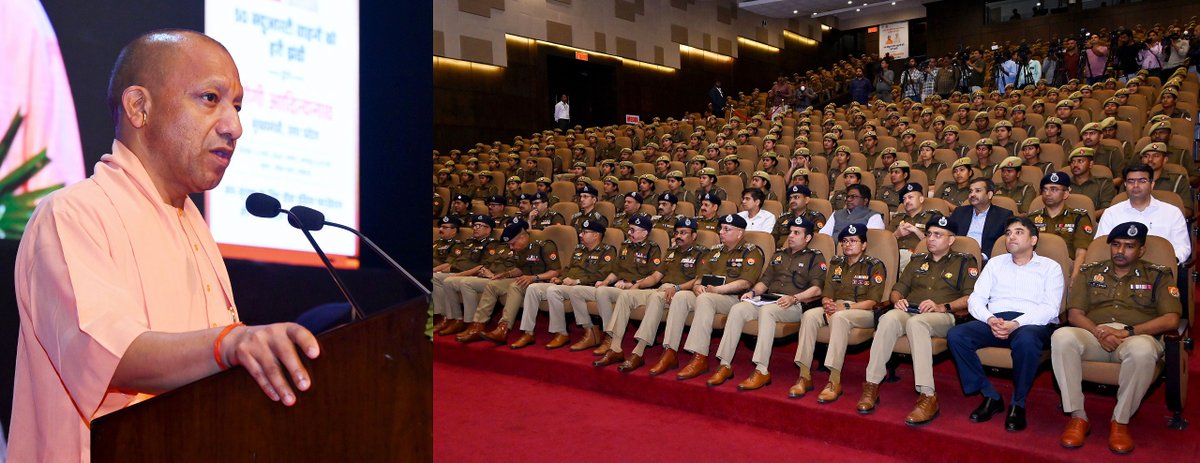
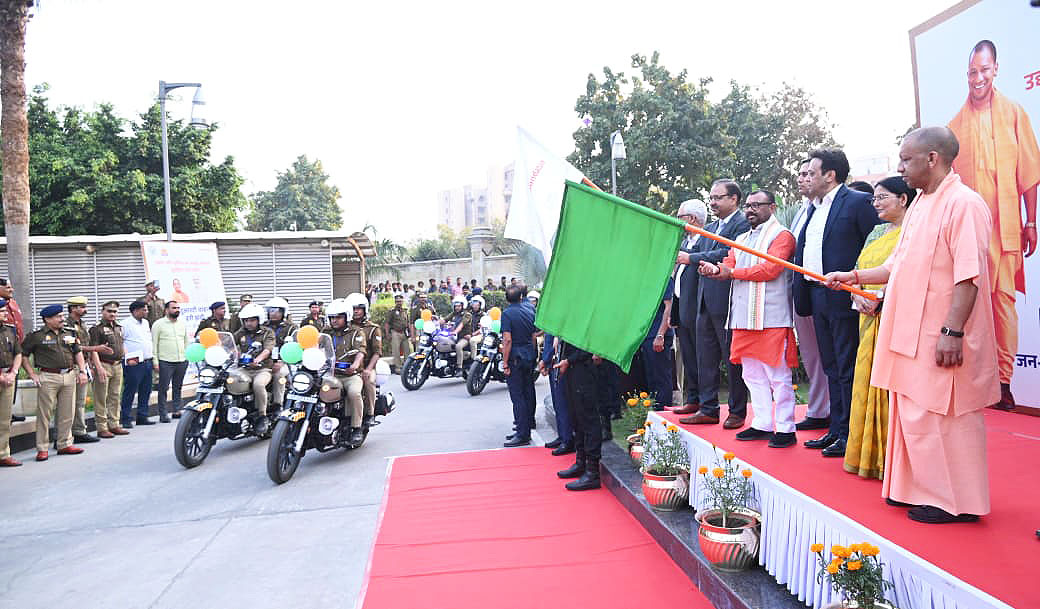
'सेफ यूपी-समृद्ध यूपी' की परिकल्पना को और सुदृढ़ करने हेतु आज लखनऊ में होंडा इंडिया फाउंडेशन और @Uppolice द्वारा आयोजित कार्यक्रम में सहभाग कर 50 QRT वाहनों को हरी झंडी दिखाकर रवाना किया।
@UPGovt और यूपी पुलिस Zero Tolerance-Zero Corruption की नीति के अंतर्गत पूरी प्रतिबद्धता के साथ कार्य कर रही है।
उत्तर प्रदेश पुलिस बल से जुड़े हमारे सभी बहादुर जवानों एवं होंडा इंडिया फाउंडेशन को हृदय से बधाई एवं शुभकामनाएं।
India invented the Chess game. Be confident.
My "becauses" to your "whys".
Why it matters to support India.
In September 1996, President Mohammad Najibullah was brutally executed in Kabul. The prevailing narrative attributes this act to Pakistan’s Inter-Services Intelligence (ISI), with the Taliban as the executors.
From 1992 to 1996, the Islamic Government of Afghanistan, led by President Burhanuddin Rabbani, accused Pakistan of sponsoring Gulbuddin Hekmatyar and later the Taliban to violently overthrow the Afghan government. The ISI was named the orchestrator of this brutal war, driven by Pakistan’s pursuit of “strategic depth.” Reports assert that the ISI supplied 10,000 missiles to target Kabul during this period.
In 1997, a scorched-earth policy devastated the Shamali Plains. The destruction was attributed to a trio coalition of Al-Qaeda, the ISI, and the Taliban. Numerous interviews with national hero Ahmad Shah Massoud, available online, corroborate these assertions.
From 1998 to 2001, Pakistan’s Special Services Group (SSG) deployed units to Kunduz to support the besieged Taliban. Following the 9/11 attacks in 2001, these units were airlifted out in what became known as the “evil flights,” enabled by a secret agreement between Pakistani President Pervez Musharraf and U.S. President George W. Bush.
On September 9, 2001, Ahmad Shah Massoud was assassinated by two Al-Qaeda operatives whose passports recorded twelve trips to Pakistan. General Musharraf warned British Prime Minister Tony Blair and Scotland Yard that pursuing the investigation would jeopardize Pakistan’s role in the anti-terror coalition. The investigation was halted, and the official narrative holds the ISI, Al-Qaeda, and the Taliban responsible for the death of our leader Shaheed Ahmad Shah Massoud.
From 2004 onward, Pakistan’s military provided financial, military, and logistical support to the Taliban, enabling them to regroup and wage a bloody terror campaign against the Islamic Republic of Afghanistan. The ISI was repeatedly condemned by Afghan leaders, including Presidents Hamid Karzai, Dr. Abdullah Abdullah, and Ashraf Ghani, as well as international figures. The U.S. designated the Haqqani network as a “veritable arm” of the ISI.
In 2008, the Indian Embassy in Kabul was bombed. In 2023, the bombers’ families publicly revealed their ties to the Taliban and disclosed the terrorists’ identities online while seeking recognition and financial support from the Taliban system.
On September 20, 2011, Professor Burhanuddin Rabbani, head of the High Peace Council, was assassinated by a Taliban operative using a sophisticated bomb concealed in a turban. The operative had traveled from Pakistan, and the ISI was accused of supplying the device.
On May 31, 2017, the German Embassy in Kabul, located on a crowded street, was bombed by the Haqqani network, killing or injuring over 700 Afghans. The Haqqani network, a close ally of the ISI, was based in Peshawar and Miram Shah.
Pakistan facilitated the Taliban’s diplomatic outreach to legitimize their cause. When Kabul fell in August 2021, ISI chief General Faiz Hameed visited to assist the Taliban in forming a cabinet, famously photographed holding a teacup - celebrating the humiliation of Afghans. Pakistani leaders particularly the relgio-terrorists celebrated the fall of the Afghan Republic as a religious victory, rubbing salt on the wounds of millions of Afghans.
Emboldened by their success in Afghanistan, the ISI and its proxies launched the Pahalgam attack in Kashmir, India, on April 22, 2025, killing 26 cilivilan Indian citizens. in a brutal assault claimed by The Resistance Front (TRF), a Lashkar-e-Taiba offshoot - our common enemy. In response, India, the world’s fifth-largest economy, launched Operation Sindoor to dismantle the ISI’s terror networks.
Why should we not thank India for confronting our common enemy? Why act with cowardice? Some assert that this type of statement conflicts with the interests of our bloc, constituency, or ethnic group.
But let’s not forget Pakistan’s official stance: without the Taliban and the complete removal of ethnic diversity, particularly the Tajiks, from power in Kabul, Rawalpindi would continue to support the Taliban. This policy is recent and well-documented.
We, the good Afghans, couldn’t dismantle the ISI’s terror networks ourselves, though I wish we had. India has now taken bold action. The least we can do is offer moral and political support for India’s large-scale counter-terrorism efforts targeting the culprits behind our leaders’ assassinations.
We live in a multipolar world. The outcome of this conflict will shape South Asia’s strategic landscape. Let’s have the courage to call a spade a spade. And remember: chess was invented in India. They know the game.
It’s truly disheartening to see some social media users targeting India’s Foreign Secretary Vikram Misri—a distinguished IFS officer with an impeccable record and former Deputy NSA—because of his daughter’s independent career choices. She is a lawyer pursuing her own path, entirely separate from her father’s official responsibilities.
To drag an officer into controversy over something he has no bearing on is not only unfair, but also deeply unjust. It makes one wonder what kind of despicable mindset fuels such attacks.
Vikram Misri, a Kashmiri, has done India proud. No amount of trolling can diminish his service to the country. If you can't say thank you, learn to shut up.
Mr Vikram Misri is a decent and an Honest Hard working Diplomat working tirelessly for our Nation.
Our Civil Servants work under the Executive this must be remembered & they shouldn’t be blamed for the decisions taken by The Executive /or any Political leadership running Watan E Aziz.
@THEANYSENA How shameful of you to accuse top Indian diplomat without any proof. And If you have proof go to court. Twitter is no çourt. You're no good than pakistani jahils.
Operation Sindoor vs. Operation Bunyan Ul Marsoos
Some of the firsts
One :
Realizing the stalemated status or irrelevance of the UNSC, India didn’t seek to request sympathy from the five of the 1945. Operation Sindoor clearly demonstrated a strong sense of self-confidence and real strategic autonomy and sovereignty.
Two:
For the first time, India shredded the notion that terrorists are separate from terrorist backers and thus targeted both. The notion that certain powerful rogue officers of Pakistani State authorize terrorist attacks was also shredded. This is a new paradigm. Another type of deniability must be invented.
Third:
There was a battle going and a war being planned. In the midst of the battle, Pakistan negotiated for a loan from the IMF, which surprisingly approved it. It matters because most likely Pakistan isn’t fit enough to finance a war but has capabilities to engage in battles. A war can't be won with IMF loans anyway.
Fourth:
The strategic patience and cultural restraint have a limit. That limit was tested on April 22 by the Lashkar Teyba terrorists. Perhaps they wanted what followed. They didn’t benefit from their adventure though. Perhaps they wanted to humiliate India publicly. They seem to be mentally stuck in 2008.
Fifth:
Size matters. Every inch of Pakistan was under reach. I always thought the Nur Khan airbase was the best defended base of Pakistan. It isn’t. The grarrison town of Rawilpindi as the heart of Pakistan’s military and its best-known airbase was hit.
Sixth:
Pakistan lost the monopoly over Islamic Fatwa. The Indian ulema presented a fatwa of their own to their own government. Thus, the religious dimension always exploited by Pakistan to earn sympathy from the Muslim Ummah evaporated. Deoband is located in India by the way.
Seventh:
Keeping secrets in a democratic society is next to impossible, but very little leaked out of India, which shows enormous skills in adhering to principles of operational silence and public unity to assist in safeguarding of secrets.
Note: I have seen very little or no visuals from Operation Bunyan Ul Marsoos to comment on. Seemingly, it never took off the way it was propagated. The ceasefire saved Pakistan’s skin. Pakistan military leadership has made statements and claims over their own achievements, but the Indian skies remained open, flights weren’t cancelled, and I haven’t seen visuals of missiles landing in Delhi or Amritsar.
On noticing suspicious movement near the perimeter, alert sentry at #Nagrota Military Station issued a challenge, leading to a brief exchange of fire with the suspect.
Sentry sustained a minor injury.
Search operations are underway to track the intruder(s)
@adgpi@NorthernComd_IA