BREAKING NEWS! The engineer who built Claude Code from scratch just released a 28-minute video that's pure gold: how to write prompts that deliver ridiculously good results.
I've seen $300 courses that don't even come close to what he explains in the first 10 minutes.
CLAUDE.md files, memory shortcuts, parallel sessions, and prompting patterns that almost no one uses...
All in one single video. Completely free.
No fluff.
Whether you're a developer, just starting, or have already been using Claude for months: this changes the game for you starting today.
Save. Watch. Share.
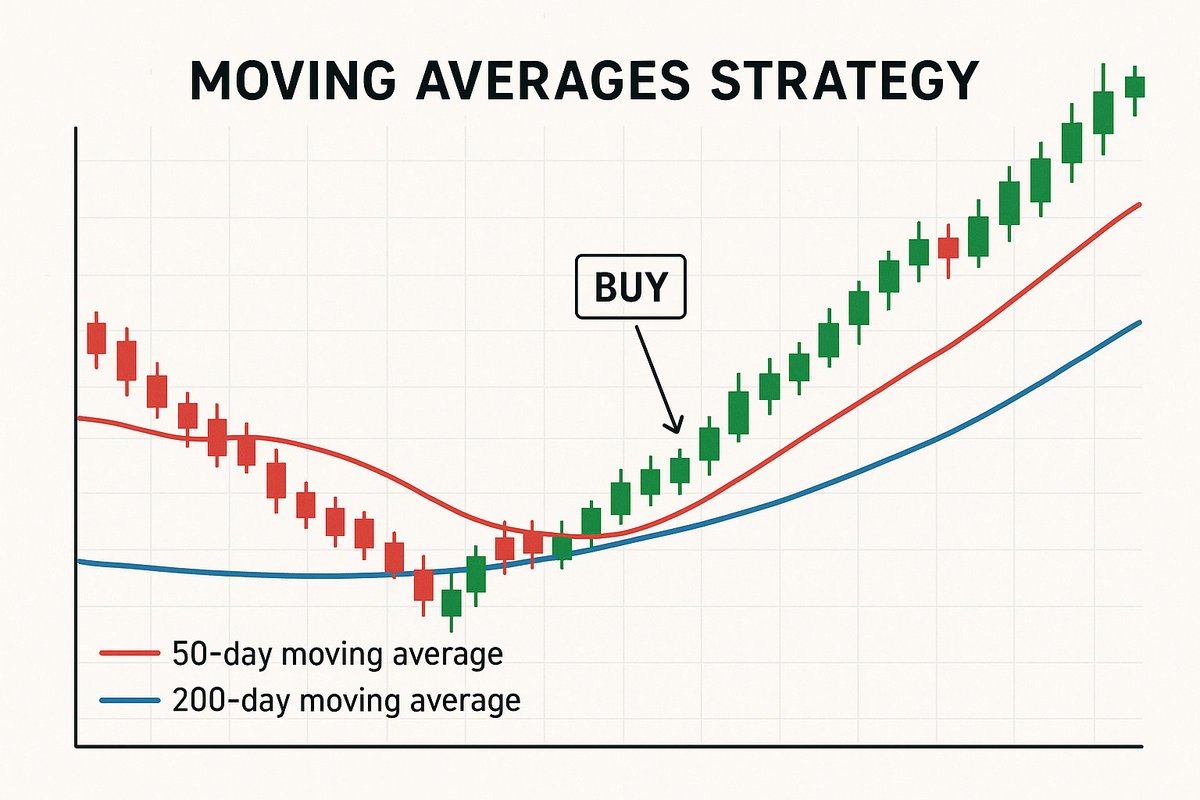
MOVING AVERAGES STRATEGY:
1. Understand the Basics What is a Moving Average (MA)? A moving average smooth's price data to identify trends.
Types:
1.Simple MA (SMA) and Exponential MA (EMA).
2. Types of Moving Averages Simple Moving Average (SMA): Average prices over a specific time. Less responsive to recent price changes.
Exponential Moving Average (EMA): Gives more weight to recent prices. More sensitive to short-term price movement.
3. Common Time Periods Short-Term: 5, 10, 20-day MAs Medium-Term: 50-day MA Long-Term: 100-day, 200-day MA
4. Key Strategies
a) Golden Cross 50-day MA crosses above 200-day MA → Bullish signal (Buy)
b) Death Cross 50-day MA crosses below 200-day MA → Bearish signal (Sell)
c) MA Crossover Strategy Buy when short-term MA crosses above long-term MA. Sell when short-term MA crosses below long-term MA.
d) Support & Resistance MAs act as dynamic support during uptrends and resistance during downtrends.
e) Trend Confirmation Price above MA = Uptrend Price below MA = Downtrend
5. Advanced Techniques Double/Triple MA Strategies: Use combinations like 20-50-200 EMAs for refined signals. MA Envelope/Bands: Measure volatility by plotting % bands above/below an MA.
Confluence Zones: Look for overlap between MA signals and other indicators like RSI, MACD.
6. Timeframe Considerations Use different MAs based on trading style: Scalping: 5-min or 15-min with 5/20 EMAs Day Trading: 1H to 4H with 20/50/100 MAs Swing/Position Trading: Daily/Weekly charts with 50/200 MAs
7. Risk Management Use stop-loss below moving average. Combine with volume and confirmation indicators. Never rely on MAs alone – avoid false breakouts.
8. Backtesting and Optimization Test different MA periods on historical data. Adjust for asset volatility and trading style.
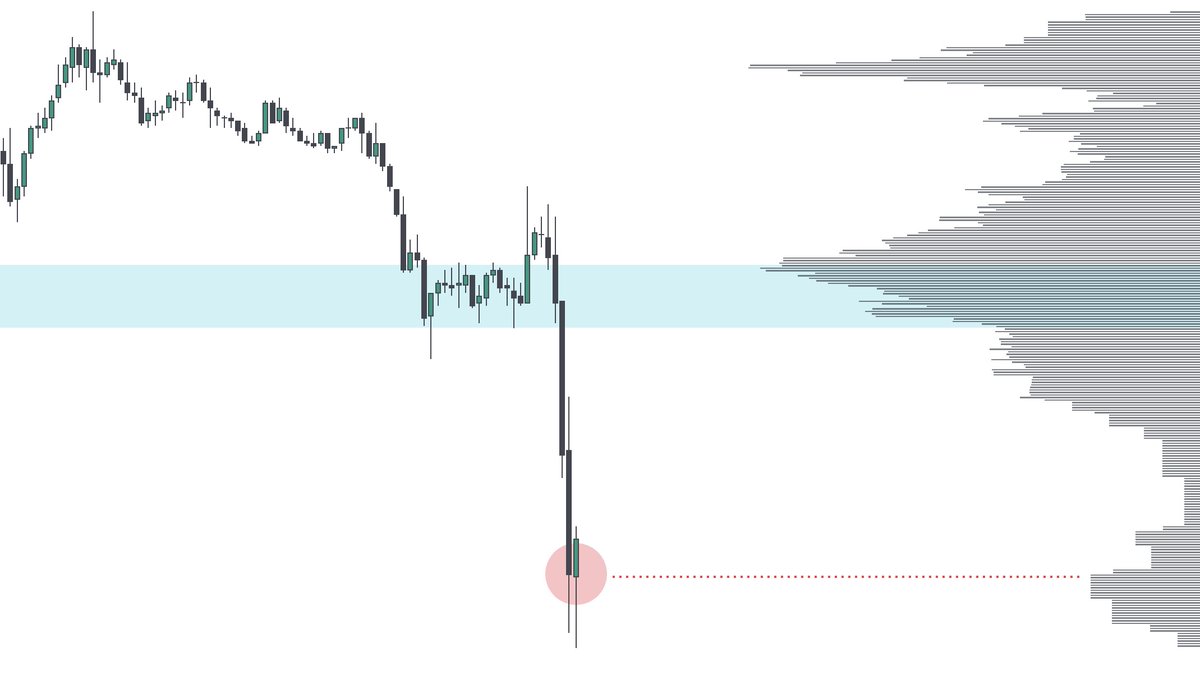
Volume profile is the closest thing in trading to a broken slot machine.
But 97% of traders use it wrong or overcomplicate it
Here's how to trade it the right way (and make it insanely profitable):
Volume profile is the cheat code I wish I knew on day one.
But most just slap it on their chart without understanding a thing
Here's the *real* way to use it & let the market hand you money:
🧵
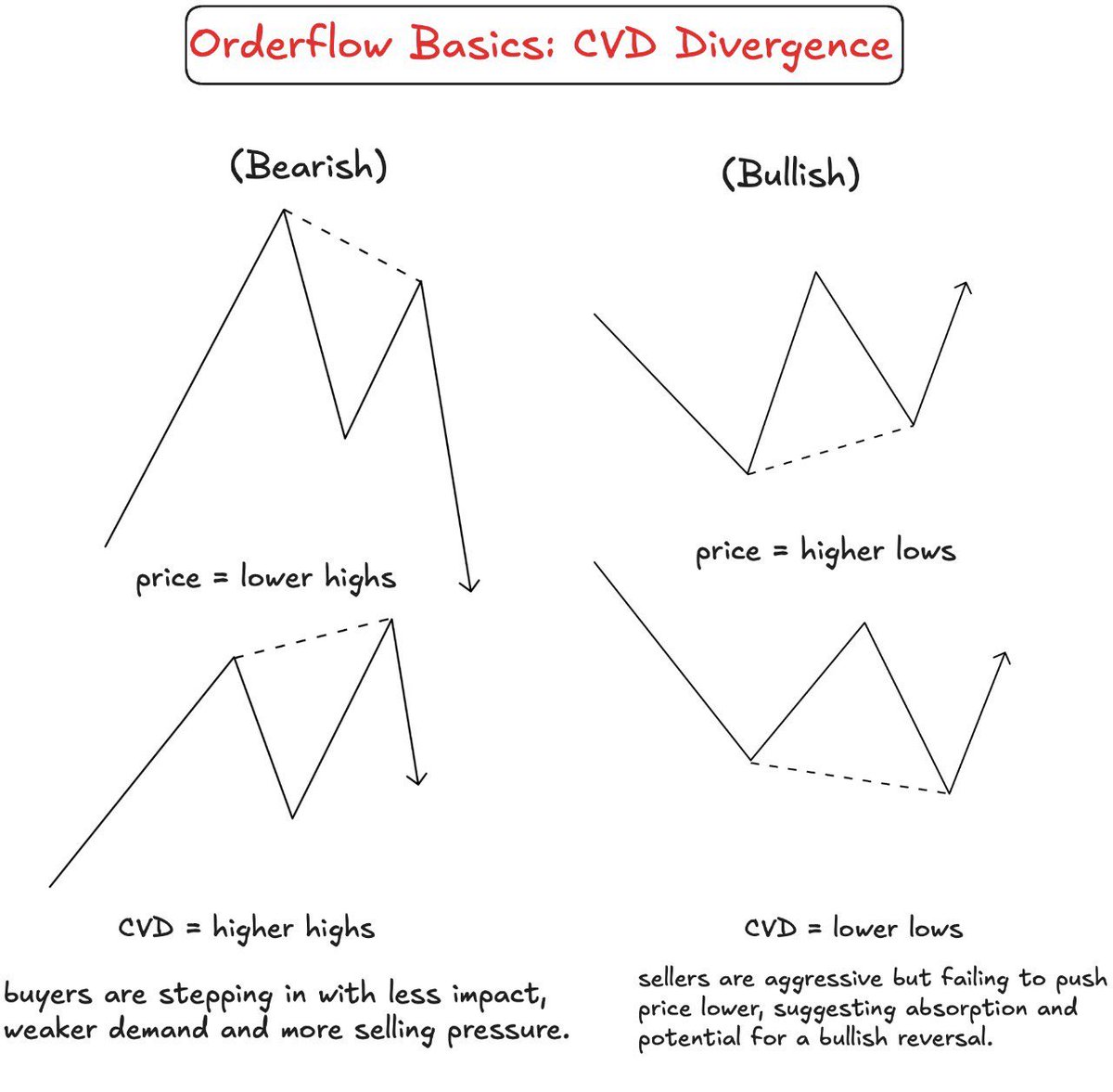
Order flow Basics Pt2: CVD Divergence
Context to use it in: Near Higher timeframe Areas Of Interest
Timeframe: Not more than 15minute
Pro Tip: Use both spot and perp CVDs together
If you want a detailed educational video on CVDs, then like and comment below
ICT traders confuse themselves with complicated strategies.
Most of them don’t know that all they need is a 4-hour candle...
This one 4-hour candle strategy will make you money.
🧵.