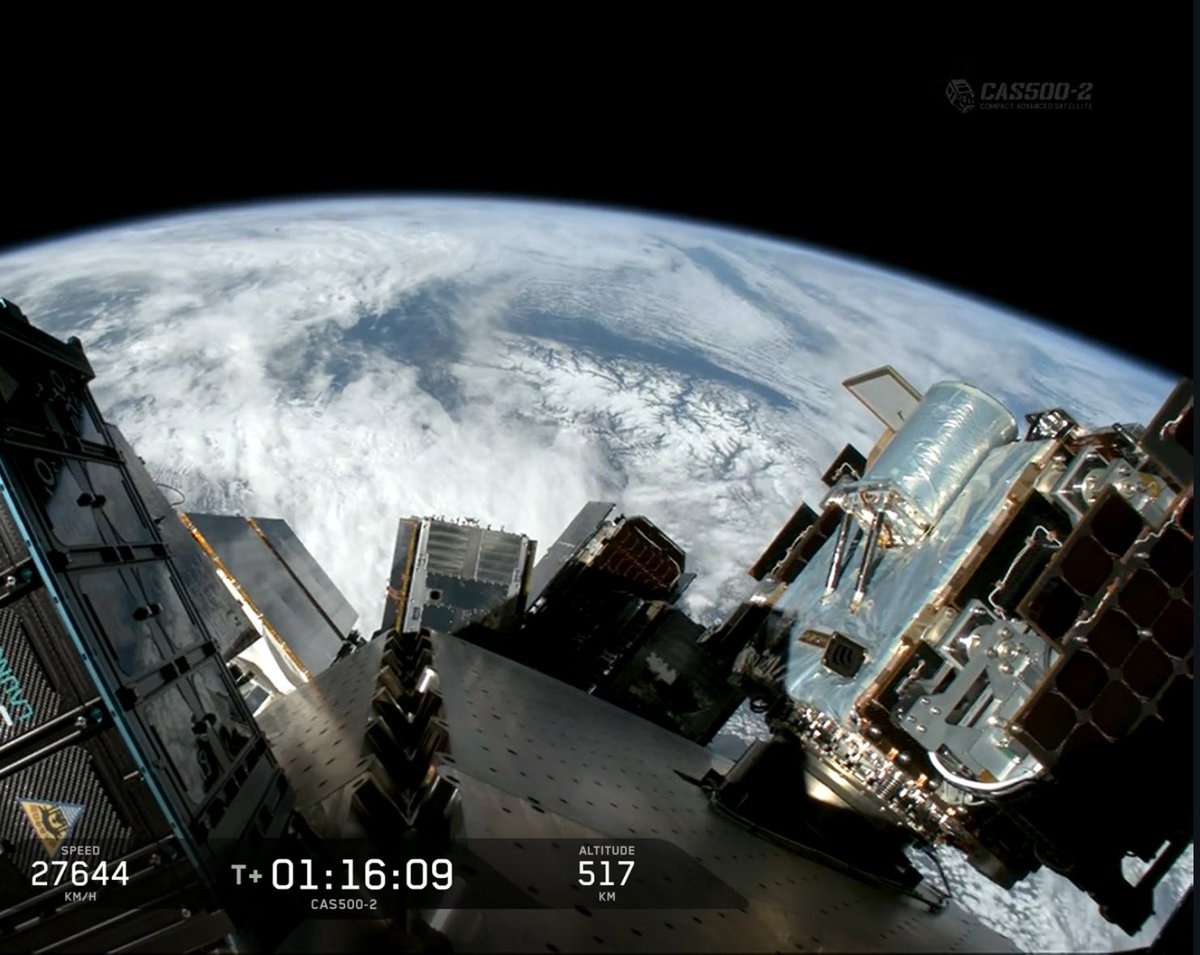
What if I told you that in 2006, astronauts aboard the International Space Station took an old spacesuit, filled it with electronics, and threw it into space?
Not as trash.
As a satellite.
This is the incredible story of SuitSat—the spacesuit that became a spacecraft. 🧵 (1/n)
Five years ago, the team at @GalaxEye were students at IIT Madras, chasing what many would have called an “outrageously ambitious” dream.
Yesterday, they launched Mission Drishti, the world’s first OptoSAR satellite.
There’s a simple but powerful lesson here: leapfrogging the world begins with a leap of faith.
By combining optical and radar imaging into a single platform, they didn’t just improve on what existed, they reimagined what was possible.
They’re showing us that the way to take a place on the global stage, is not by catching up, but by changing the game.
They’re my #MondayMotivation
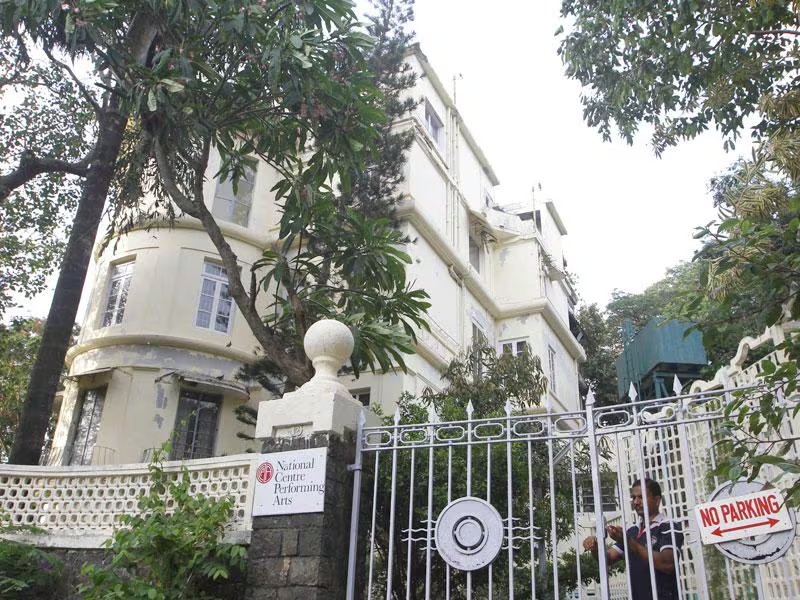
This was Homi J Bhaba's iconic bungalow in Mumbai, Mehrangir named after his mother. His brother Jamshed stayed here for a long time , and willed the property to NCPA, who maintained it for some time, after his death.
In 2014 NCPA, auctioned this bungalow, and it was bought by Smita Godrej for Rs 372 crore.
In 2016, this bungalow was demolished for a high rise, inspite of many scientists, members of Atomic Energy Comission demanding it be made a memorial.
What stands out here is not only the scale of what is unfolding, but the language that is being used to frame it.
When a President speaks of “a whole civilization” potentially dying within hours, that is not routine strategic signalling. It is apocalyptic framing. It collapses the distinction between regime and people, between military objective and societal existence. Once that line is blurred, everything that follows becomes easier to justify.
At the same time, the operational picture is methodical, almost clinical. Infrastructure is being unpicked layer by layer: energy, transport, command, revenue streams. This is not a single strike; it is a design to disable a state’s ability to function. In military terms, it is coercive degradation. In human terms, it is something far more consequential, because civilian life is inseparable from that infrastructure.
The human chains complicate this further. They are not just acts of protest; they are strategic interventions. They seek to force a moral reckoning by placing civilians directly in the path of force. That does not make the situation symmetrical, but it does make it more volatile. Every decision now carries not just military risk, but reputational and ethical cost that will reverberate far beyond the region.
There is also a deeper question about credibility. If the United States proceeds with strikes that visibly endanger civilian concentrations or essential services, it risks undermining the very principles it has long invoked, distinction, proportionality, restraint. Those are not abstract legal terms; they are the foundation of how power claims legitimacy.
And then there is the regional spillover. Iran’s warning about energy flows is not idle rhetoric. The Gulf is not a distant theatre; it is the circulatory system of the global economy. We are already seeing the early tremors, oil prices, supply disruptions, logistical strain. Escalation here does not remain contained.
So the decision before Washington is not simply whether to act, but how far it is prepared to go and what it is prepared to lose in the process. Military advantage can be calculated. Moral authority, once forfeited, is much harder to recover.
The moment is not just about Iran. It is about the thresholds the international system is willing to cross, and the precedents it is willing to set, in full view of the world.
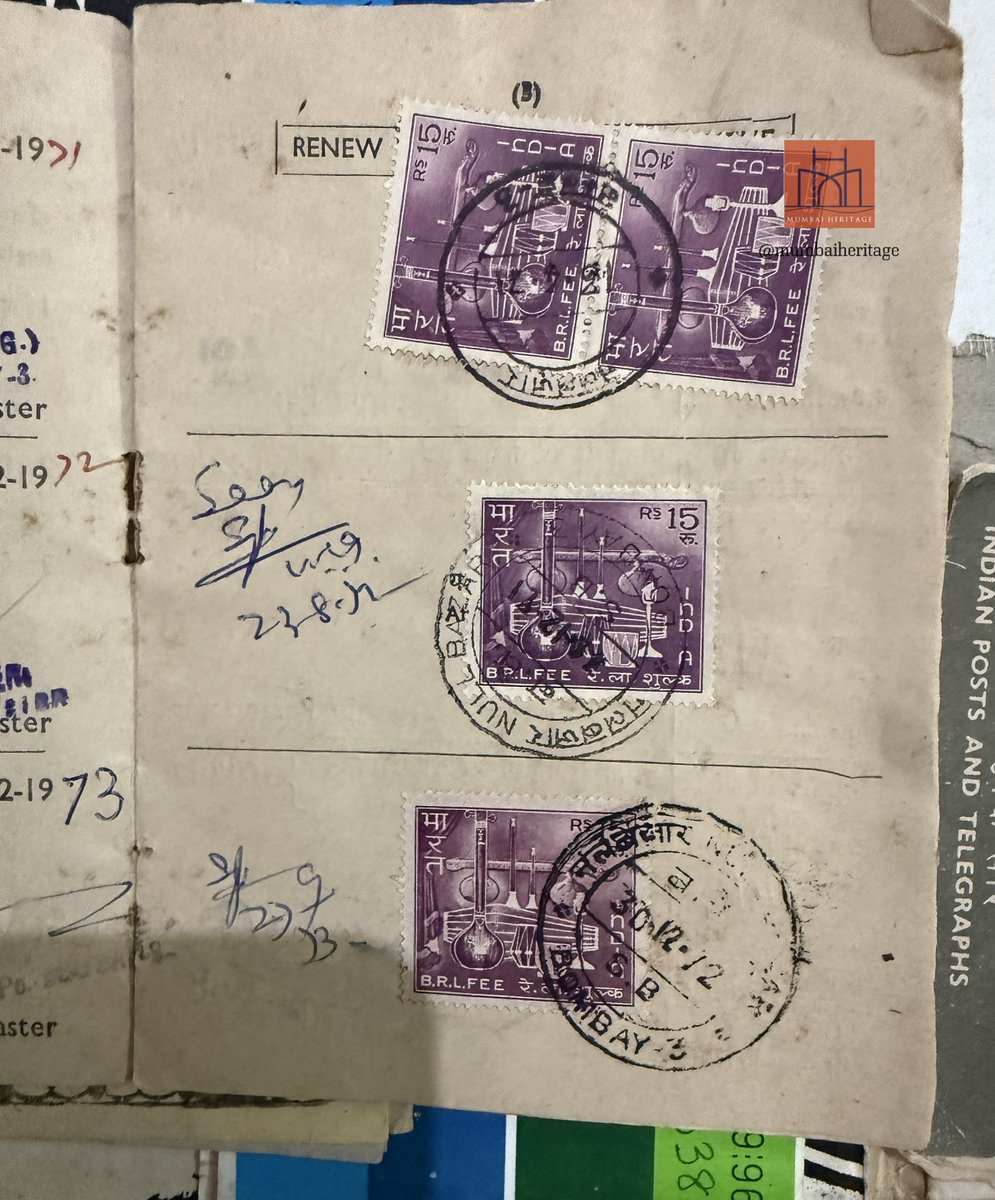
From my personal collection.
A Radio license from 1971.
Did you know?
Owning a radio in India required a license. Issued by the Indian Postal Department, it had to be renewed annually.
The fee was Rs 15 for domestic radios and Rs 25 for commercial use.
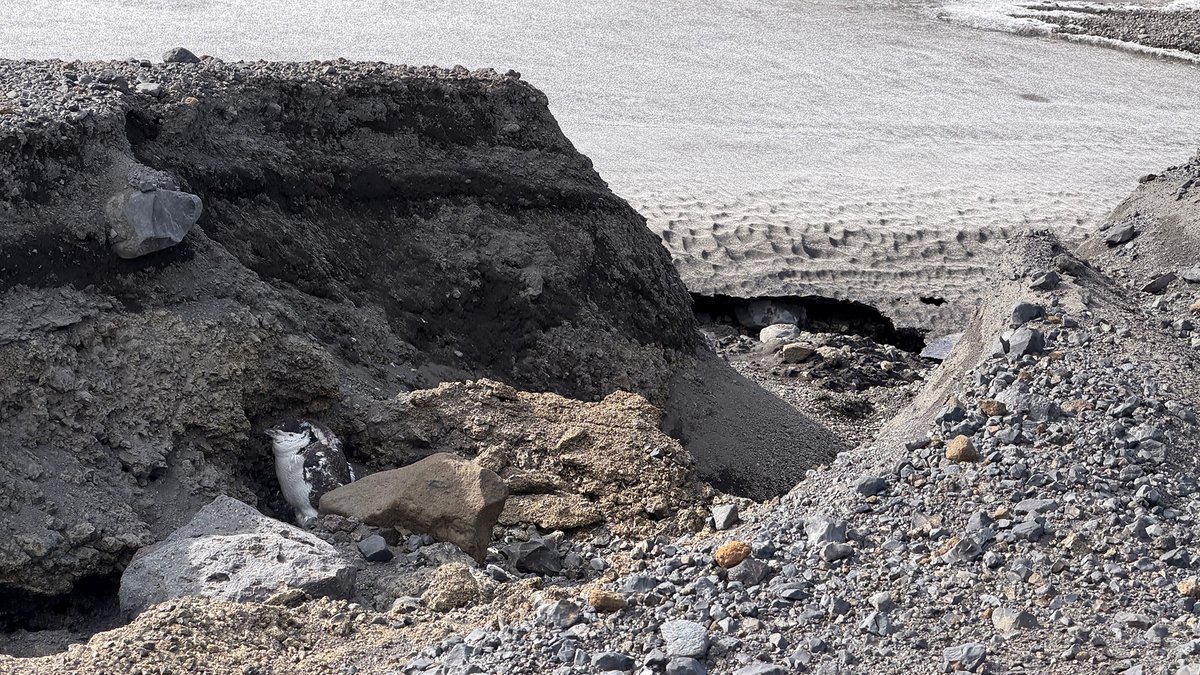
Goodbye, Bouvetøya! For my full 201-hour stay on this isolated island in the South Atlantic.
2026-03-14 flight from 54.444°S, 3.410°E to 54.427°S, 3.448°E. This is my 43rd flight of 2026 and the 1153rd of all time. 🇧🇻🚁🚢
When people talk about a once-in-a-lifetime trip, they often don’t realize that they may truly never return there. Many journeys that seem grand at the time eventually become ordinary parts of our lives. But even the little restaurant next to your home might, after some ordinary day, become a place you never visit again.
Will space be once in a lifetime? I think not. But I really don’t know whether I will ever set foot on Bouvet again. I think Bouvet Island will very likely remain my true once-in-a-lifetime trip.
@volklub Kushaq 1.5 DSG over Elevate CVT after parting ways with Hector AT. 70:30 highway driving so needed better engine performance, handling, and safety over features. Fuel efficiency was a consideration but not a deal breaker. Your vids & Team-BHP forum posts helped greatly 🙏🏻 🙂
National Science Day.
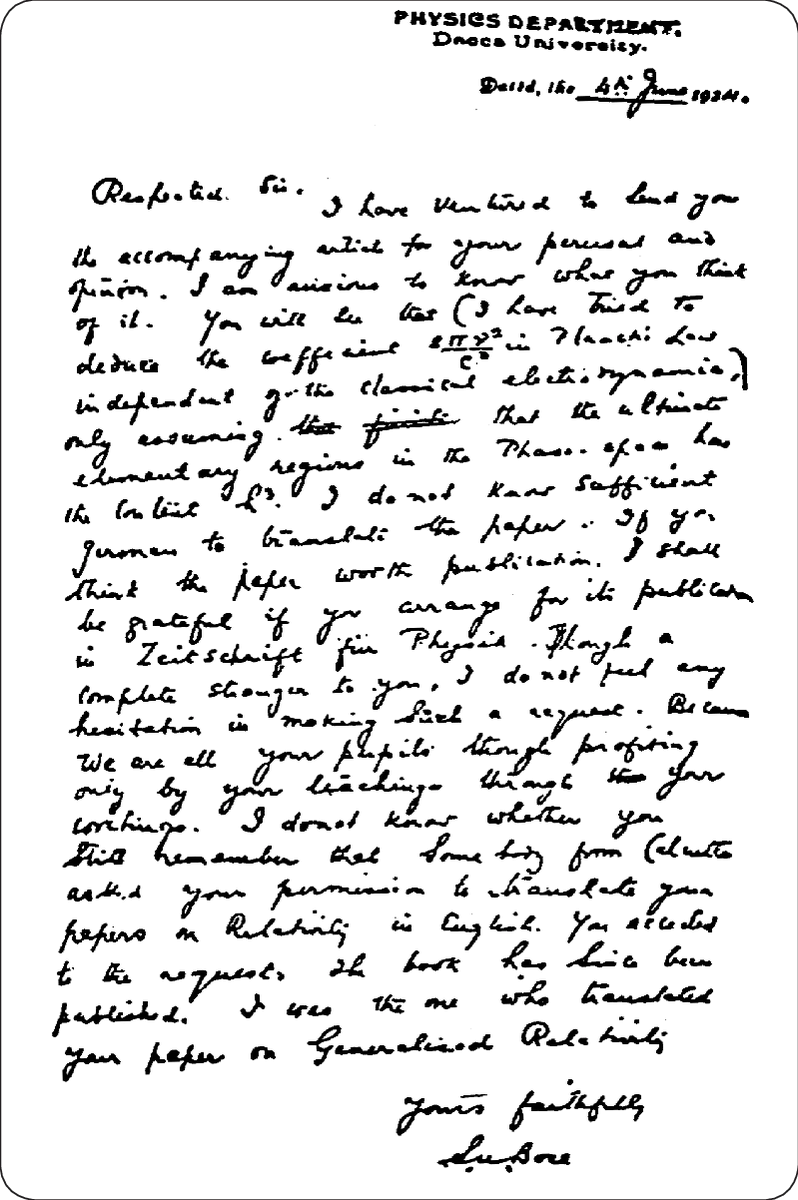
In June 1924, Albert Einstein received a letter from an Indian who admitted that he was a stranger but was sending Einstein an article. The article addressed an issue in quantum theory with which Einstein had struggled.
Einstein read it and realized that the author, Satyendra Nath Bose of Dhaka University, had solved the flaw.
Einstein immediately decided to collaborate, and their joint work yielded the concept of a new phenomenon, what they called the “Bose–Einstein condensation”.
Over 75 years later, Eric Cornell, Wolfgang Ketterle and Carl Wieman won the Nobel Prize for Physics for actually creating the Bose-Einstein condensate, though Bose never won the award himself.
This is that famous letter!
@K0AP_Z32XX@HB9VQQ +1 to DXLab. The interface is as old as the OMs who use it and may not be to everyone's liking. But it's a Swiss Army Knife and a very good one at that.
Wealth, Fame, Power and Alcohol are great revealers.
“God is infinite creativity, compassion, care and love”, said Deepak Chopra the celebrated new age guru and author of several books.
Somewhere along the way new revelations came to him and he wrote to his good friend Jeffrey Epstein, “God is a construct, cute girls are real!”.
US Presidents, Royal family members, Tech Tzars and an assortment of Billionaires' indiscretions are getting revealed which run contrary to their carefully curated public image.
None of these are ordinary men. They are all men with extraordinary power, wealth and privileges.
So did wealth corrupt their thinking?
Alcohol often gets blamed for our irresponsible behaviour. Poor thing is entirely innocent, all it has done is lifted our veneer and the world sees what we really are!
Power gives us the illusion of being above the law and Fame provides opportunities not available to ordinary mortals.
Wealth, Fame and Power I think are like Alcohol. Inhibition Suppressor. Gives opportunity and a feeling of invincibility. It does not corrupt, it merely reveals who we really are.
The second mistake we make is presuming successful people as wise. History has time and again revealed that some of the successful people become so narcissistic that they lose their discriminatory intellect.
The third mistake is in thinking that if they are good at one thing they are an authority at everything! I get amused when I see some of these celebrities say stupid things outside their area of competence and that get taken seriously for we attribute more weight to who said it than what is said.
The fourth mistake is presuming niceness. I don’t know why we believe that successful people are nice! Niceness isn’t a pre-requisite quality to being successful. In fact a lot of their success could be attributed to a self-centred view that didn’t mind sacrificing relationships, friendships in single minded pursuit of their objectives.
The fifth mistake is projecting qualities we like on people we admire. You may like an actor, a cricketer, a businessman etc. You like them for a specific skill. Then, somehow we measure them to our standard of perfection and when they slip we feel let down. We forcibly put it on their head and now blame them when the crown slips.
Human beings are complex and as Gandhiji said Happiness is when what you think, say and do are in harmony.
A huge part of our turmoil comes from this insecurity within. There is a public image we projecting and there are private demons roaring within. These are suppressed until opportunity presents itself in form of wealth, fame or power. In the absence of opportunity, these demons often express as frustration. Either way the demons extract their price.
We have forgotten what was taught to us since childhood. The softest pillow is a clean conscience. Whatever we are hiding is creating fear in us.
Real success is living a life in which there is nothing to hide.