Europe and the UK move to T+1 settlement in October 2027, which takes a day out of the time to match trades and fix breaks. When a partner runs the ops team, who owns a break that now has hours to fix instead of a day?
The ECB says euro area banks have lending commitments of €24.3bn to AI supply-chain firms, and their own AI use leans on a handful of US providers. If AI gets repriced, some of the same names could sit in the credit book and the op risk register. Who at a bank looks at both?
A hijacked testing tool pushed card-skimming code onto bank sites this week, a global bank's among them. The bank never wrote that script, yet it ran on the bank's page in front of its customer. Do marketing's testing tools sit on the same vendor list as core systems?
@sytaylor@Affirm A markdown file moved the pass rate by more than 20 points. That's the number a lender's conduct team would notice. Whoever writes that file is shaping what customers get told about their money, so I'd guess it ends up under the same sign-off as a product disclosure.
@jackiereses@pennyleedc@Sunayna@fintechassoc From the customer's side, could switching an agent off ever feel as easy as freezing a card in the app? I'm not sure most people could list which apps can see their account today, let alone which ones can move money.
@patio11 Funny, but after Synapse I get why the FDIC wants it hard to miss. Its customers found out how hard it was to tell whether their money sat at an insured bank or just with an app.
@SureshRukman Your test counts one improved decision, on the bank's own data. That's what a board or a supervisor ends up asking about. I'd add what that decision costs to run a year later, once the pilot team has moved on.
@StitchHQ An agent that can change configuration across a bank's platform could cut time to market on product changes. The bank still owns what goes live. How does it walk a supervisor through a change an agent made?
ISDA's CEO wants the industry past pilots, with tokenised collateral high on the list. If settlement is near-instant, collateral ops would be working to an intraday clock.
Card rails come with chargebacks and a dispute process customers understand. Letting an agent use a card is a smaller step for a bank than opening write access to the account itself. If agentic commerce is really stuck, that gap in write access may be a big part of why.
It’s fascinating that Chase credit cards work in ChatGPT Wallet despite Chase’s general reluctance to enable write access for its customers’ accounts with third-party agents.
I’m guessing that wasn’t an easy commitment to secure. And it underlines @vigstar1’s core point: Agentic commerce is, at the moment, really stuck.
Fed Governor Barr said on Monday that AI agents could accelerate runs that unfold in minutes, faster than liquidity controls and supervisors can respond. How many bank stress tests model a run that's over before the first committee call?
When someone is talked into paying a scammer, it's their own phone and their own login, so to the bank the payment looks normal. The story behind it is very hard to see from where the bank sits, and the customer still comes to the bank once the money's gone
Fiserv plans to offload one of its two debit networks, and a bank or a group of banks could end up owning it. What does that do to routing choice and cost for the smaller issuers that use the network?
.@Fiserv plans to offload one of its two debit networks, opening up an opportunity for a #bank — or a group of banks — to reshape #debitcard routing. More here: https://t.co/1uhTxCq6kE
The SFC is planning guidelines on agentic AI, and the HKMA has Project SAGE running. A bank under both could end up with two sets of questions about the same agents
Hong Kong FinTech Week x StartmeupHK 2026 drew more than 48,000 visitors and brought a wave of launches, from HKMA’s Project SAGE to SFC's plans for agentic AI guidelines.
Read here: https://t.co/QemfwqGdeq
#fintech#AI#tokenization#HKFTWxSMUHK#HKFTWxSMUF#HKFTW#HKFTW26
@felikg23 Thanks, that's useful. So the interchange share follows who carries first loss. Makes me wonder how those reserves get sized when the card volume comes from an AI assistant with no loss history yet
If AI assistants start issuing cards, there's still a bank underneath, and the risk and accountability stay with that bank when things go wrong. How banks weigh the interchange share against that risk is the part I'd like to understand
Generation 1 of making money on the web was commerce. Amass consumers attention, and sell them things. Gen 2 was ads. Gen 3 is fintech. Issue a card, account, loan, or trade.
AI assistants can fintech too. Issue a card and take interchange, rather than monthly fees or ads.
A Signicat report says most consumers want AI to help them with money decisions and are far less keen on it acting alone. The same piece says 79% of FS firms are building the second kind. What I'll be watching is which one customers actually use, and complain about
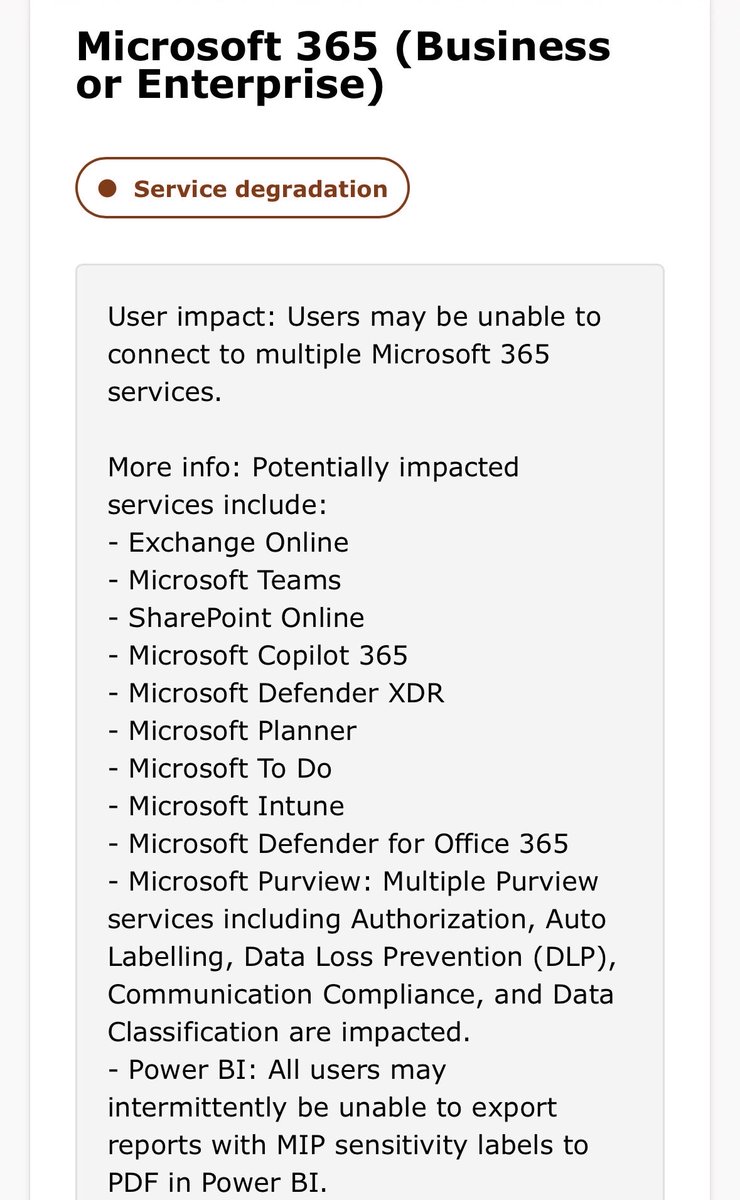
If your staff email sits on M365, a day like this leaves the call centre and ops teams without it. I wonder how many incident plans assume email still works
Holy cow, there’s a massive Microsoft outage going on. Outlook .com is down, globally, as I understand. Microsoft employees cannot send/receive email as well (plus everyone else using M365)
This is very bad given how important email is for comms
Postmortem will interesting
Canada's Real-Time Rail is now live. Payments clear in seconds, so a bad one can be gone before anyone has much time to catch it. Curious how fraud loss budgets change in year one
A screen that interprets "Pay the electricity bill" and the code that posts that payment often share one change process, and you pay a tax on time to market or on risk. I wrote about it here https://t.co/elMpxnAck8