Wonder what these two are doing right now
Himanshu
- Applied to a few tech companies
- Got rejected by all of them
- Posted a story saying he doesn't know what to do next in life
- His family was surviving on his salary. They must be devastated right now
Sejal Pawar
- Started going to college regularly again
- Her college formed a "committee" that investigated nothing in her case
- Went to watch Argentina vs Jordan
- Got brand deals with Mamaearth
- Now Flipkart has approached her for a "what not to buy" ad
One is struggling just to survive while the other continues living the same lavish life. And people still say a man's life is easy
A daycare employee at Capgemini's Bengaluru campus couldn't bear the abuse of the kids at the centre.
She reported it to supervisor, but instead of taking action, they fired her. She then became a whistleblower and leaked videos that exposed the abuse.
In the videos, toddlers were made to sit inside the drum of a front-loading washing machine, had water sprayed into their mouths using a toilet jet spray, were locked inside bathrooms, and were forced into narrow, water-filled pipes to frighten them. The videos triggered outrage, forcing authorities to act.
Today, according to media reports, the police have arrested the whistleblower only for allegedly "leaking sensitive videos." Lol! What a system! A poor woman with a clear conscience stood up to the powerful and went public, not for personal gain or with any malicious intent, but solely to protect those children. And she's the one who gets arrested.
BRUTALISED. LOADED INTO WASHING MACHINE. DUNKED INTO TOILET BOWLS. TODDLERS BRUTALISED.
Their wails shocked a nation.
But the Bengaluru police are yet to arrest the 5 accused "care givers" of Capgemini day care center! In fact, even if arrested the accused won't even spend 5 years in jail if convicted because the charges filed by the police are disproportionately lenient.
Lukewarm take: we need to stop using mental health/therapy buzzwords in day to day life. Not everyone you dislike is a narcissist. Being sad doesn’t mean you’re depressed. There’s a resounding difference between being nervous and having anxiety. You’re not ADHD because you don’t like to sit still. You’re not autistic because you’re quirky. OCD doesn’t mean you’re organized. And for the love of all that is holy, not every situation that made you uncomfortable is “trauma”.
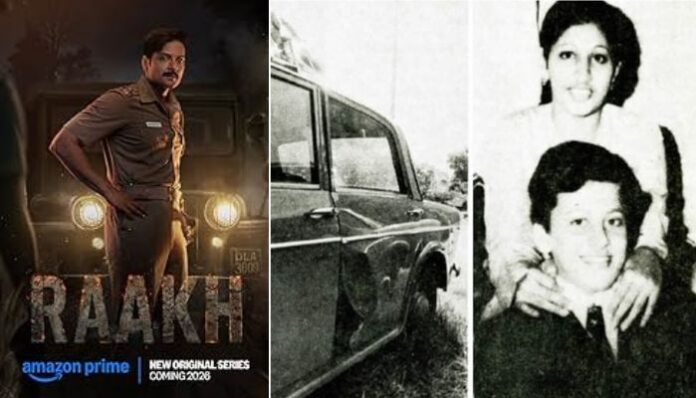
Raakh is facing backlash for adding caste and religious spin to the infamous Ranga-Billa case.
From Dahaad to Tandav, Prime Video has repeatedly pushed similar ideological narratives in Indian stories.
Creative liberty cannot become a cover for twisting real events and vilifying Hindus.
writes @immortalsoulin
https://t.co/RGbNv8wszw
Evlenirsen pişman olursun. Evlenmezsen de pişman olursun. Çocuk yapsan da yapmasan da pişman olursun. Kierkegaard bunu 200 yıl önce şöyle söylemiştir:
"Neyi seçersen seç pişman olursun. Çünkü sorun tercihlerinde değil yaşanmamış bir hayatı romantize etmendir. İnsan her daim gidilmemiş bir yolu cazibeli ve gizemli bulur. Bu yüzden mesele en doğru seçimi yapman değil. Hangi pişmanlıkla yaşayacağını seçip karar vermendir."
Sen neye karar verdin?
Meet Mr. Gulshan Pahuja
He has been sent to 6 months in Jail by the Delhi HC holding him guilty of contempt of court for saying "Judiciary ki manmarzi badhti jaa rahi hai jiska doosra arth hai tanaashahi, I do not think I will get Justice"
Follow him @GulshanPahujaJR
This is my conversation with Mr. Gulshan Pahuja on the day he was convicted of contempt of court for which he has been sentenced to 6 months in Jail.
This man has only brought out the pain of people, demanded judicial reforms, transparency in the way our courts function
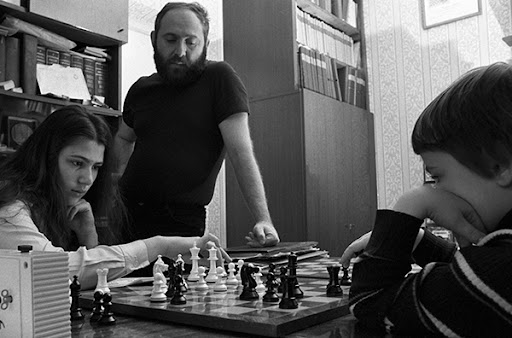
A Hungarian psychologist raised three daughters to prove that any child could become a chess grandmaster through early specialization. He succeeded. Two of them became grandmasters. One became the greatest female chess player who ever lived.
Then a sports scientist looked at the data and found something nobody wanted to hear.
His name is David Epstein. The book is called "Range."
The Polgar experiment is one of the most famous case studies in the history of deliberate practice. Laszlo Polgar wrote a book before his daughters were even born arguing that geniuses are made, not born. He homeschooled all three girls in chess from age four. By their teens, Susan, Sofia, and Judit were dominating tournaments against grown men. Judit became the youngest grandmaster in history at the time, breaking Bobby Fischer's record. The story became the gospel of early specialization. Pick a domain young, drill it hard, and you can manufacture excellence.
Epstein opens his book by telling that story honestly and then quietly demolishing the conclusion most people drew from it.
Chess works that way. Most things do not.
Here is the distinction that took him four years of research to articulate, and that almost nobody who quotes the 10,000 hour rule has ever read.
There are two kinds of environments in which humans develop expertise. Psychologists call them kind and wicked. A kind environment has clear rules, immediate feedback, and patterns that repeat reliably. Chess is the cleanest example. Every game ends with a winner and a loser. Every move is recorded. The board never changes shape. The pieces never invent new ways to move. A child who plays ten thousand games will see most of the patterns that exist in the game, and pattern recognition is exactly what chess mastery is built on.
A wicked environment is the opposite. Feedback is delayed or misleading. Rules shift. The patterns that worked yesterday may be exactly the wrong patterns to apply tomorrow. Most of the real world looks like this. Medicine is wicked. Investing is wicked. Building a company is wicked. Scientific research is wicked. Almost every job that involves a complex changing system with humans in it is wicked.
The Polgar sisters trained in the kindest environment any human can train in. Their success was real and the method was correct. The mistake was generalizing the method to fields where the underlying structure of the environment is completely different.
Epstein's research is what made the implication impossible to ignore.
He looked at the careers of elite athletes outside of chess and golf and found that the pattern was almost the inverse of what people assumed. The athletes who reached the very top of their sports were overwhelmingly people who had played multiple sports as children, specialized late, and often switched disciplines well into their teens. Roger Federer played squash, badminton, basketball, handball, tennis, table tennis, and soccer before tennis became his focus. The kids who specialized in tennis at age six and trained year-round for a decade mostly burned out, got injured, or topped out at lower levels of the sport.
The same pattern showed up everywhere he looked outside of kind environments. Inventors with the most patents had worked in multiple unrelated fields before their breakthrough work. Comic book creators with the longest careers had drawn for the most different genres before settling. Scientists who won Nobel Prizes were dramatically more likely than their peers to be serious amateur musicians, painters, sculptors, or writers.
The skill that mattered in wicked environments was not depth in one pattern. It was the ability to recognize when a pattern from one domain applied unexpectedly in another. That kind of thinking cannot be built by drilling a single subject. It can only be built by accumulating mental models from many subjects and learning to move between them.
The deeper finding is the one that should change how you think about your own career.
Specialists in wicked environments often get worse with experience, not better. Epstein cites studies of doctors, financial analysts, intelligence officers, and forecasters showing that years of experience in a narrow domain frequently produce more confident judgments without producing more accurate ones. The expert builds elaborate mental models that feel comprehensive and turn out to be increasingly disconnected from the actual structure of the problem. They stop noticing what does not fit their framework. They mistake fluency for understanding.
Generalists do better in wicked domains for a reason that sounds almost mystical until you understand the mechanism. They have less invested in any single mental model, so they abandon broken models faster. They are used to being a beginner, so they are not threatened by the discomfort of not knowing. They have seen enough different domains that they can usually find an analogy from one field that unlocks a problem in another. The technical name for this is analogical thinking, and the research on it is one of the most underrated bodies of work in cognitive science.
The single most useful sentence in the entire book is the one Epstein puts almost as a throwaway.
Match quality matters more than head start.
A person who tries six different fields in their twenties and finds the one that genuinely fits them will outperform a person who picked one field at fourteen and stuck to it on willpower alone. The lost years were not lost. They were the search process that produced the match. Every field they walked away from taught them something they later imported into the field they finally chose.
The reason this is so hard to accept is cultural, not empirical. We tell children to pick a path early. We reward the prodigy who knew at six. We treat the late bloomer as someone who failed to launch on time, when the data suggests they were running an entirely different and often more effective optimization process underneath.
The Polgar sisters were not wrong. The conclusion the world drew from them was.
If your environment is genuinely kind, specialize early and drill hard. If it is wicked, and almost every interesting human problem is, then the people who win are the ones who refused to specialize until they had seen enough to know what was actually worth specializing in.
You are not behind. You were running the right experiment all along.
फर्जी विकलांग सर्टिफिकेट बनवा के लोग IAS बन सकते हैं,
लेकिन असली दिव्यांग सड़क किनारे दुकान नहीं लगा सकते टी9डी दी जाएगी, दुकान की कहीं और व्यवस्था की जाए
He starts with that intense, almost stern expression while eating.
Then, on being asked, “naam kya hai unka,” his face sharpens, becoming attentive. There’s a brief flicker of confusion as he processes the question, and the moment he realizes he is being asked about Ila… that soft, almost shy smile appears.
So many emotions in seconds, all effortless, all real. Irrfan Khan was, arguably, the finest actor of our times. It’s been six years since we lost him.
Este hombre se llama Mohamed Bzeek, vive en California y esa niña que tiene en brazos murió pocos días después de que le hicieran la foto, también en sus brazos. No era su hija. Era uno de los diez niños que han muerto bajo su cuidado. Porque Bzeek es padre de acogida y solo acoge a niños en estado terminal, para que no mueran solos.
Nació en Trípoli en 1954, antes de irse de Libia corría maratones. En 1978 entró en Estados Unidos con un visado de estudiante y allí se quedó. Vive en Azusa, una de esas localidades del extrarradio de Los Ángeles por donde circulan camiones y donde las casas tienen una pinta genérica, agrupadas sin llamar la atención.
En 1989 conoció a Dawn Rowe, que ya era madre de acogida desde principios de los ochenta, se casaron y empezaron a acoger juntos. En 1995 tomaron la decisión de dedicarse exclusivamente a niños con enfermedades terminales, los que nadie quería.
Me pregunto cómo fue ese momento exacto en que dos personas se sientan en una cocina y deciden que van a abrir su casa a los niños que se mueren, y en cómo esa decisión se toma, sin actas, sin nada que la registre, y sin embargo organiza el resto de una vida.
La primera niña que murió en su casa tenía un año, espina bífida, parte de la columna le crecía fuera de la piel. Murió el 4 de julio de 1991, mientras Mohamed se duchaba y Dawn preparaba la cena, él recuerda haber salido del baño y haber encontrado médicos en su salón. Lloró tres días.
Desde entonces ha acogido a unos ochenta niños, diez han muerto en sus brazos. El condado de Los Ángeles, cuatro millones de habitantes, lo llama cuando no hay nadie más. Lo llaman el padre de último recurso.
Muchos llegan sin nombre, nacen en hospitales y los abandonan, las familias no los nombran y en el papel pone "Baby boy", "Baby girl". Mohamed los nombra, les pone un nombre antes de que mueran.
Un nombre es gratis, cuatro sílabas, pero ese gesto, cuando se pone el nombre, decide si un niño que vivirá tres semanas existirá como persona o como registro administrativo.
Su hijo biológico, Adam, nació con osteogénesis imperfecta y enanismo, se ha roto casi todos los huesos del cuerpo. Dawn murió en 2015 de una enfermedad pulmonar y desde entonces Mohamed sigue solo, solo puede ocuparse de un niño a la vez. Cuando un periodista del Los Angeles Times entró en su casa en 2017 cuidaba de una niña de seis años con microcefalia, ciega, sorda, pies zambos, caderas dislocadas, no movía brazos ni piernas, tenía convulsiones. La había recibido con siete semanas de vida y le habían dicho que viviría unos meses. La sostenía durante las convulsiones y le hablaba aunque no oyera.
Sé que no puede oír, sé que no puede ver, pero le hablo, tiene sentimientos, es un ser humano.
En 2016, a Bzeek le diagnosticaron cáncer de colon, le pidió tiempo al médico, no puedo operarme todavía, tengo a un niño en casa que es terminal y tengo a mi hijo, que es discapacitado, no hay nadie más para ellos. En el hospital, ingresado, solo, dijo que por primera vez entendió lo que sentían los niños que cuidaba. Si yo a esta edad estoy asustado, cómo estarán ellos. Se operó y siguió.
Bzeek es musulmán practicante. Su historia se hizo internacional en febrero de 2017, justo cuando Trump firmó la orden ejecutiva que vetaba la entrada en Estados Unidos a ciudadanos de siete países de mayoría musulmana, Libia era uno de ellos. Ese mismo mes, en Azusa, el único padre de acogida de toda la ciudad de Los Ángeles dispuesto a llevarse a casa a los niños terminales era un libio musulmán.
Aunque mi corazón se rompa, dijo una vez, la muerte es parte de la vida, estoy con ellos hasta el final, los conforto, los quiero, quiero que sientan que tienen una familia, que tienen a alguien. Que no están solos.