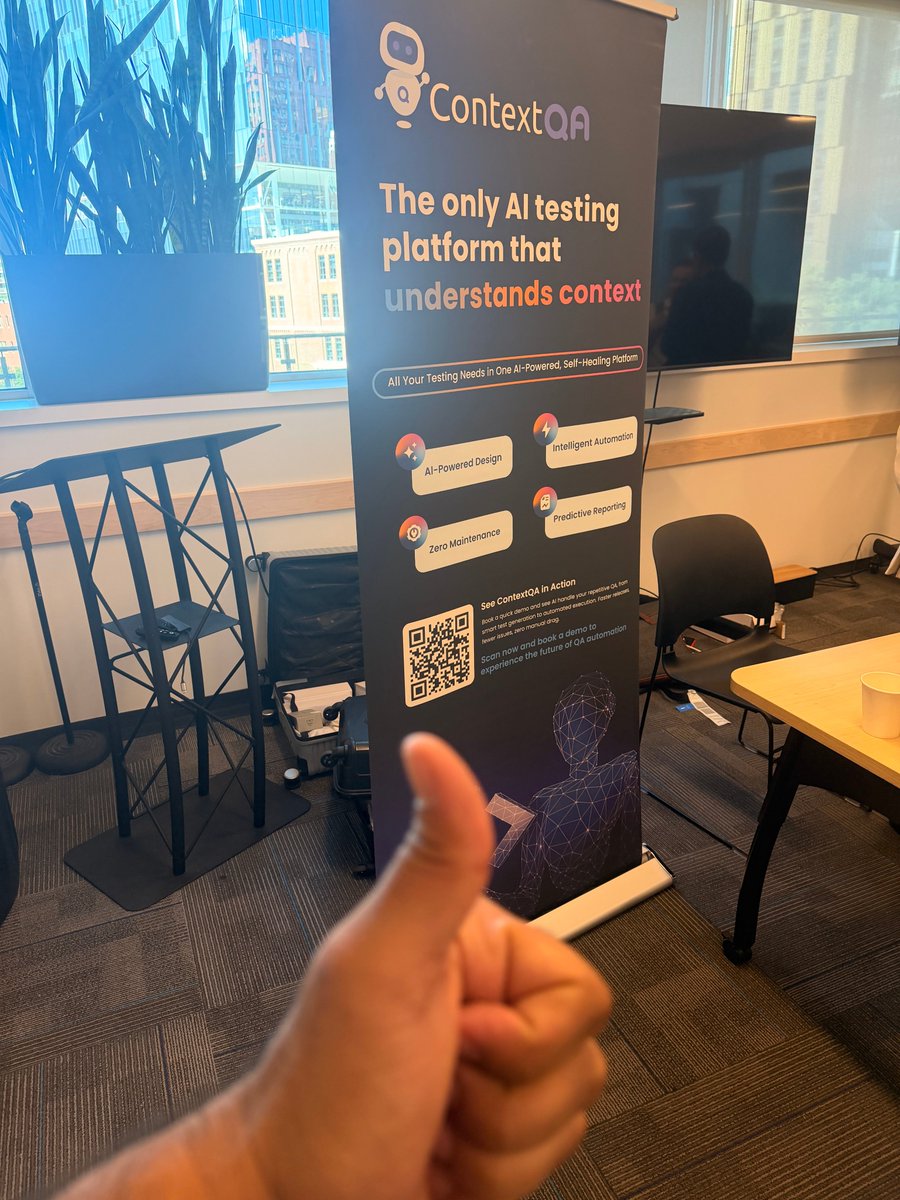
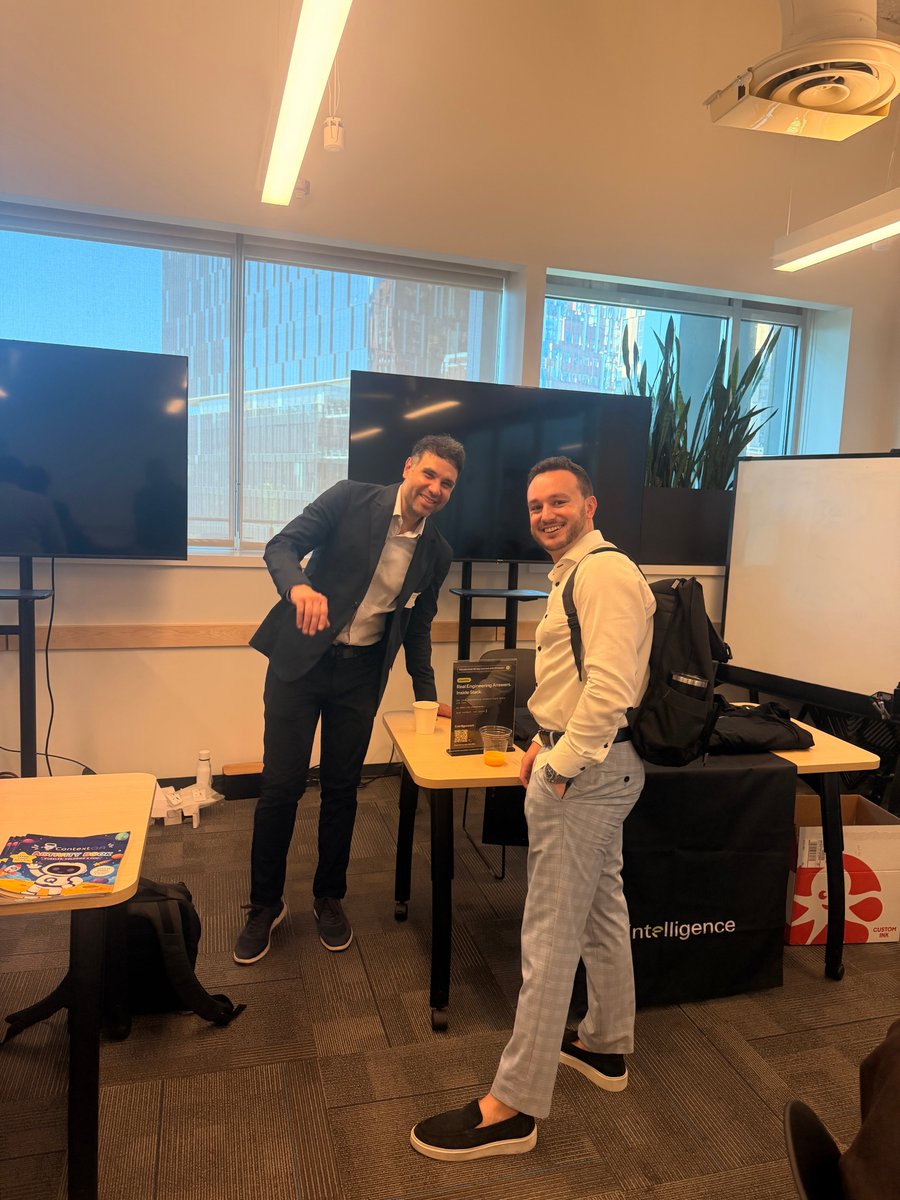
We’re hiring at ContextQA. 🚀
As we continue to grow, I’m looking for two people to join our GTM team:
→ Demand Generation Lead - someone who can own demand generation, experiment with channels and messaging, and help us build a predictable pipeline.
→ Sales Development Representative - someone who treats outbound as a craft, knows how to start meaningful conversations, and is excited to use AI to make prospecting smarter and more effective.
We’re a fast-moving team, so we’re looking for people who are comfortable with ownership, experimentation, and figuring things out as we scale.
If that sounds like you or someone you know, I’d love to hear from you.
Apply through the ContextQA careers page or check out the open roles on LinkedIn. https://t.co/2taPuZJj1a
#Hiring #DemandGeneration #SDR #B2BSaaS #Sales #Marketing #AIJobs #ContextQA
We’re hiring an SDR at ContextQA.
One thing I’ve learned while building a company: great outbound isn’t about sending more messages. It’s about understanding the person on the other side well enough to start a conversation worth having.
Looking for someone who enjoys that craft, researching accounts, experimenting with messaging, using AI intelligently, and figuring out what actually resonates.
If you have 3–5 years of SDR/BDR experience and want to build with an early-stage AI team, I’d love to hear from you.
📍 India
Apply: https://t.co/2taPuZJj1a
And if someone immediately came to mind while reading this, send this their way :)
We’re hiring an SDR at ContextQA.
One thing I’ve learned while building a company: great outbound isn’t about sending more messages. It’s about understanding the person on the other side well enough to start a conversation worth having.
Looking for someone who enjoys that craft, researching accounts, experimenting with messaging, using AI intelligently, and figuring out what actually resonates.
If you have 3–5 years of SDR/BDR experience and want to build with an early-stage AI team, I’d love to hear from you.
📍 India
Apply: https://t.co/2taPuZJj1a
And if someone immediately came to mind while reading this, send this their way :)
When AI started changing the industry, everyone had questions.
What happens to QA? How does testing change? What can we trust?
Some of the best answers came from simply getting the right people around the same table.
A throwback to Palo Alto ,good food, honest conversations, and a lot of thoughts on where quality goes next.
#QualityEngineering #AITesting #AI #EngineeringLeadership
We’re a remote team, so moments like this mean a lot.
Events give us a chance to step away from our screens, spend time together in person, and keep the connection and energy going, not just within the team, but with the customers, advisors, and partners who are part of the journey.
After The Agentic Quality Tour – Boston, we got to continue the conversations over dinner with @Sean Bridgeman from @HALIGHT, a @ContextQA customer, and @Tivan, our advisor.
A special thank you to Sean for joining us at the event and sharing his perspective on “When Everyone Ships, Who Owns Quality?”
Having customers contribute their real-world experiences is what makes these conversations genuinely valuable.
Great conversations, great company, and a nice way to wrap up Boston. 🙌
This is one of my favorite parts of building a company remotely, the moments when the people behind all those calls and messages finally get to sit around the same table.
AI investment is easy to measure in dollars. The harder question: what value is it actually creating?
A great session from @Aiswarya_Sankar, Founder & CEO of @EntelligenceAI, at The Agentic Quality Tour – Boston on turning Agentic AI into measurable business impact. 🚀
@boardyai That sounds very aligned with what we’re looking for. Thanks for reaching out! Could you send over their profile or a few details about their experience? Would love to take a look and connect.
Landed this morning in Boson, grabbed a coffee, and went straight to The Agentic Quality Tour – Boston. 🇺🇸☕
It’s pretty exciting to walk into a room full of engineering leaders, founders, and quality practitioners discussing the same questions I think about every day:
How do we test AI agents?
What breaks when they reach production?
And how do we know when an AI system is actually ready to ship?
One thing I’ve learned from events like this is that some of the best insights don’t necessarily come from the stage. They come from the conversations between sessions, the unexpected questions, and meeting someone who has already faced the problem you’re trying to solve.
I’m speaking today, but I’m equally excited to listen, learn, and meet everyone here.
If you’re at CIC Boston today, come find me. Tell me what you’re building—or what’s currently breaking. 😄
📍 CIC Boston, Cambridge, MA 🇺🇸
Looking forward to a great day of building, learning, and conversations. 🚀n. 🙌
12 years in tech. 2x founder. 3+ years as a CEO.
I didn’t spend 12 years following a plan to become a founder. I just kept getting closer to problems I cared enough to solve.
Just keep building.I started as a developer. Then moved through software engineering, DevOps, startups, and eventually building @ContextQA.
None of those steps felt like they were leading to one clean destination at the time.
But every role taught me something I needed later. Coding taught me how to build.
DevOps taught me how systems fail.
Starting companies taught me how customers think.
Being a CEO taught me that the hardest problems are rarely technical.The biggest lesson?
Careers compound.
You don't need every move to look impressive on paper. You need to keep learning, keep shipping, and keep putting yourself in situations where you're slightly uncomfortable.
The outcome usually makes sense only in hindsight. So if you're early in your career and overthinking the next 5 years:
Pick a hard problem.
Get good at something useful.
Build things.
Talk to users.
Keep moving.
The dots connect later. Thanks for reading :)
One thing I've learned while building ContextQA is that you can spend weeks trying to solve a problem yourself...
...or have one conversation that completely changes the way you think about it.
Some of the biggest shifts in our product didn't come from planning meetings or brainstorming sessions.
They came from conversations with engineering leaders, customers, founders, and practitioners who challenged our assumptions, shared lessons from production, or simply asked a question we hadn't considered.
That's why I still make time to attend conferences.
Not because I expect someone to hand me the answer.
But because the right conversation often helps me ask a better question—and sometimes, that's far more valuable.
That's exactly the kind of environment we're trying to create at The Agentic Quality Tour – Boston.
A room full of engineering leaders, AI practitioners, architects, founders, and quality professionals openly sharing what's actually working as AI reshapes software engineering.
No hype.
No recycled presentations.
Just practical lessons, honest discussions, and ideas you can take back to your team on Monday.
If AI, quality engineering, or agentic systems are part of your roadmap, I'd love to meet you in Boston.
📍 CIC Boston, Cambridge, MA
📅 Friday, August 7, 2026
🎟️ Reserve your seat: https://t.co/R0EApzVt4b
My X account was temporarily suspended after I replied to a large number of DMs and comments from our hiring post.
Sorry, I won't be able to reply to everyone individually.
First of all, thank you for the overwhelming response, it genuinely means a lot.
If you're interested in joining ContextQA, please apply through our Careers page instead of replying to this thread or sending your resume via DM.
- https://t.co/2taPuZJj1a
Our team reviews every application, and if your profile aligns with one of our current openings, we'll reach out to you directly.
Thank you again for your patience and interest. Looking forward to connecting with many of you!
We're hiring at ContextQA.
AI is changing how software is built.
We believe it's also changing how software, and AI itself, needs to be tested.
That's the future we're building.
If you're excited about AI, engineering, quality, developer tools, or building products that solve real enterprise problems, we'd love to meet you.
We're hiring across:
AI Engineering
Software Engineering
Quality Engineering
Sales
Growth
We're a small, fast-moving team where everyone has ownership, works directly with customers, and helps shape the product.
Curious about what we're building?
🌐 https://t.co/dmWIdcbbAP
💼 https://t.co/3BaH0EkY9I
DM me if you'd like to be part of the journey.
Over the past year, one thing has become increasingly clear to me.
The AI industry has done an incredible job teaching us how to build AI agents.
Every week there's a new model, a new framework, a new coding agent, or a new benchmark pushing the boundaries of what's possible.
But I don't think we're spending nearly enough time talking about how we validate them.
When I started working across platforms like Agentforce, Bedrock, Azure AI Foundry, Gemini, and others, I expected the biggest challenge to be getting agents to work.
It wasn't.
The harder challenge was understanding when to trust them.
A demo can look impressive.
Production is different.
Agents don't just generate text anymore. They reason, call tools, retrieve enterprise data, make decisions, and trigger real business actions. That changes everything.
We've spent decades building engineering practices around software quality—unit testing, integration testing, performance testing, security testing, observability, and CI/CD.
AI agents deserve the same engineering discipline.
I genuinely believe the next competitive advantage won't come from building more AI agents.
It will come from knowing which ones you can trust in production.
That's a conversation I'm excited to see the industry have over the next few years.
Every AI agent makes decisions.
Very few are held to a quality standard.
We don't ship software without testing it.
Why are AI agents still going live after a few successful demos?
🔍 Book a demo: https://t.co/SPDywSCjGp
#AIAgents#AgenticAI#AITesting#AIEngineering
@RohOnChain 100% worth the watch.
I'd also recommend spending equal time learning AI evaluation and testing.
As agents become more autonomous, knowing when you can trust them will be just as important as knowing how to build them.
It feels like just yesterday everyone was racing to ship AI agents.
And now everyone is asking the same thing:
"Can you actually trust them?"
The first generation of AI products was judged by whether they could generate an answer.
The next generation will be judged by whether that answer is consistently right.
Those are very different problems.
An agent might answer a customer correctly a hundred times, then fail the hundred-and-first because an API timed out, a retrieved document was outdated, or a user asked something slightly outside the expected flow.
None of those failures are particularly dramatic.
Most don't even trigger an alert.
They become support tickets, incorrect approvals, frustrated customers, or decisions made on incomplete information.
That's what makes them expensive because the cost isn't one bad response. It's the false confidence that everything is working because the demo looked good.
Software has always been tested before it's trusted.
As AI agents become responsible for customer conversations, financial workflows, internal operations, and business decisions, that standard shouldn't change.
If you want to scale AI successfully you don't necessarily need the smartest models, you need to know exactly where your agents fail, why they fail, and whether those failures are acceptable before anyone else finds them.
See where your AI agent breaks before your customers do.
AI agents are improving fast. Their reliability is not improving at the same pace.
In Carnegie Mellon’s TheAgentCompany benchmark, the best agent completed only 30% of realistic workplace tasks autonomously. Earlier WebArena research found a GPT-4-based agent completed just 14.4% of long-horizon web tasks, compared with 78.2% for humans.
Production data tells a similar story.
A recent study of deployed AI agents found:
68% are limited to 10 steps or fewer before human intervention
74% still depend primarily on human evaluation
Reliability remains the top development challenge
The issue is not that agents cannot perform useful work.
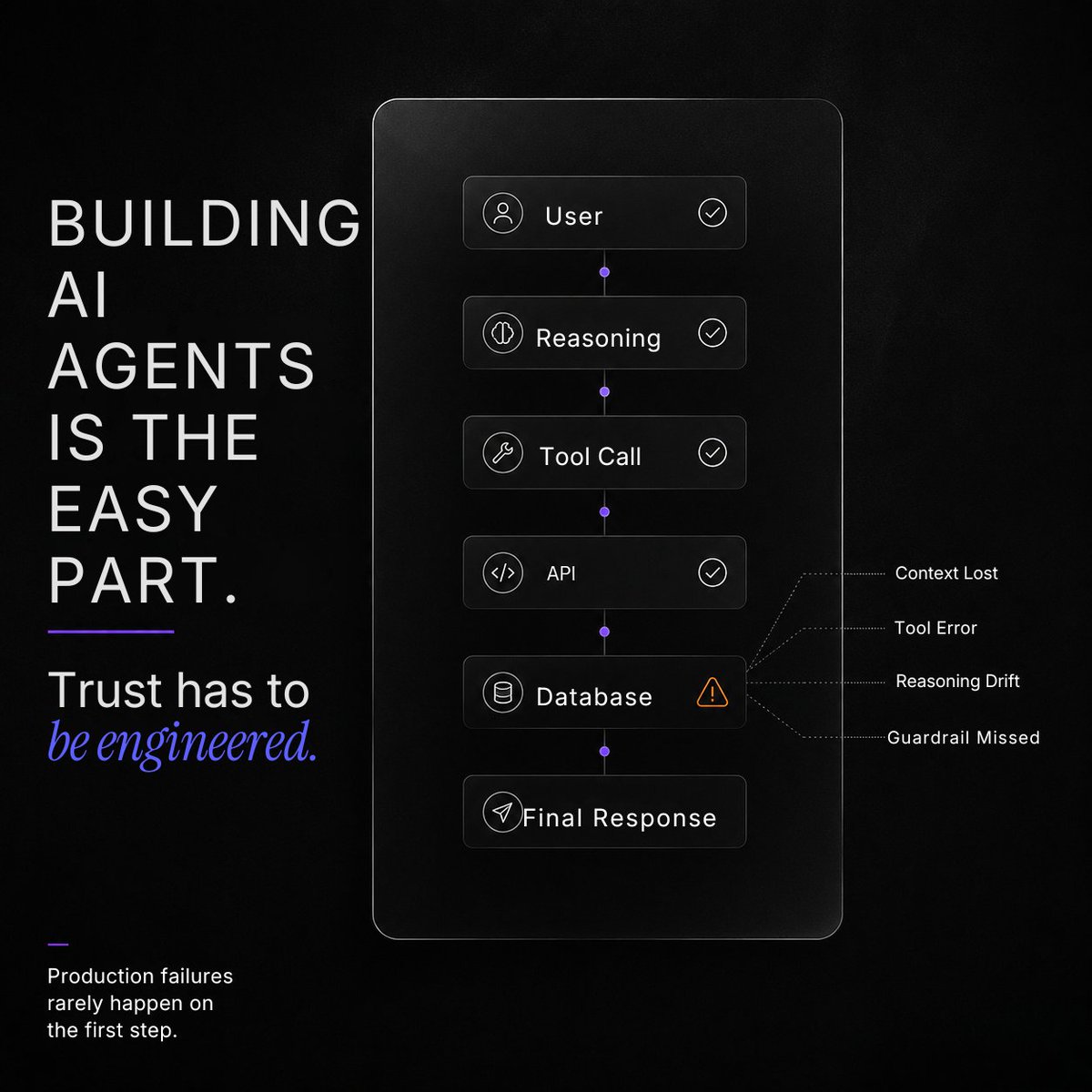
It is that failures compound across reasoning, tool calls, context, APIs, and multi-step workflows. By the time the final output is wrong, the actual failure may have happened several steps earlier.
That is why I believe AI agent testing is becoming a distinct engineering discipline.
We need to test more than the answer. We need to verify the path: every decision, tool call, guardrail, state change, and downstream outcome.
Building an agent is getting easier.
Proving it is ready for production is now the harder problem.
The next competitive advantage won't be building more agents.
It'll be proving you can trust them.
Learn more about how we're approaching AI agent testing:
https://t.co/ypopqpqNxt
#AIAgents #AgenticAI #AITesting #AIEngineering #QualityEngineering #EnterpriseAI #LLM