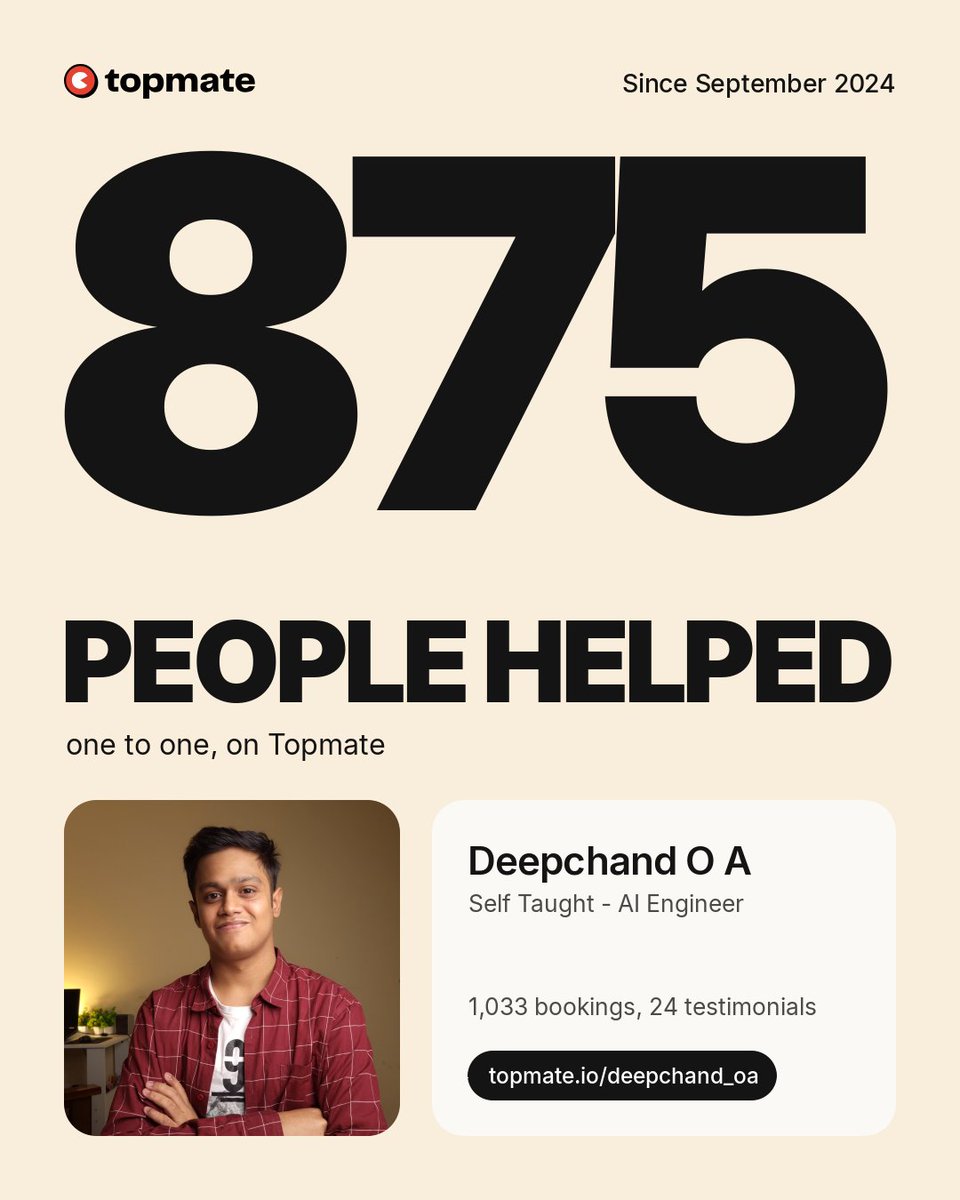
Grateful to have mentored so many aspiring professionals, shared what I've learned, and helped others find their way in tech and AI. ❤️
Here's to learning and growing together!🥂🎊
https://t.co/zb4QNOtl3J
#GenAI#Mentor
Gemma 4 in Space. 🛰️
Google Research's Project Suncatcher just booted up data-center TPUs aboard a prototype satellite and ran Gemma 4 in Low Earth Orbit.
For its "Hello World" test, engineers on Earth asked Gemma 4 to write a haiku about being in space. Passing over Svalbard, Norway, the satellite downlinked its response:
Blue marble below
Data streams in silent grace
Starlight feeds my core. ✨
Built with Planet and running on a ~1kW solar budget, the team is now testing how TPUs handle heat and radiation in space.
Elon Musk says the AI boom will hit a WALL by the end of 2026.
He says the whole industry is about to learn a hard lesson in hardware.
Chip output is exploding, but electricity is nearly flat everywhere outside China.
So the two lines cross this year.
He says by the end of the year, we will be making more AI chips than we can actually turn on.
Millions of them pile up with nowhere to plug in.
In his words, the bottleneck for the next year is not chips, it is raw power.
Whoever can turn on the most chips fastest wins the race.
In the end, the AI race comes down to one thing:
Raw electricity.
— Elon Musk (.@elonmusk) on Dwarkesh Patel's (.@dwarkesh_sp) podcast
🚨 OpenAI's next model might already be hiding in Codex.
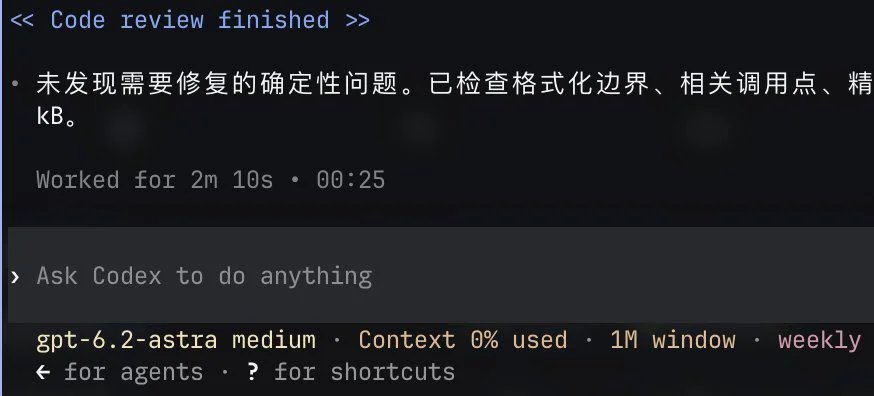
"GPT-6.2 Astra" has reportedly appeared in Codex usage analytics, triggering speculation about a new model release.
No official announcement yet, but the sightings have people watching closely.
But there are leaks where users have got access to this model
Something might be coming. 👀
The problem: Codex dramatically increased parallel development.
Thousands of agents and engineers were creating branches, pushing commits and triggering CI fetches simultaneously.
The old Git backend couldn't keep up. Pushes and fetches slowed down, merges failed, and reliability sometimes dropped below 90%.
The solution: Pando
OpenAI rebuilt the Git backend around three ideas:
1. Independent writes: Each branch gets its own version history. Pushes to unrelated branches no longer block each other.
2. Reusable data: Instead of generating a new compressed Git packfile for every fetch, Pando reuses previously stored packfiles.
3. Background compaction: Small packfiles are periodically combined into larger ones, making fetching large histories more efficient.
Implementation:
Built in Rust, using Codex, with a single engineer designing the core architecture and teams of AI agents implementing it.
🤯 OpenAI's AI agents pushed Git to its breaking point.
As Codex enabled more parallel development, thousands of concurrent pushes, fetches and merges began overwhelming OpenAI's existing Git infrastructure. Reliability sometimes dropped below 90%.
So OpenAI built Pando a completely new Git backend that allows independent branches to process pushes in parallel and reuses stored data to speed up fetches.
The result: nearly 5x faster median pushes and almost 1 petabyte of Git data served daily.
Built with Codex in just 10 weeks.