In 1999, skydiver Joan Murray's parachute malfunctioned, causing her to fall 14,500 feet.
Her backup parachute opened at 700 feet, but it quickly deflated and she continued to plummet towards the ground at 80 miles per hour.
Miraculously, Murray survived the fall thanks to the fact that she landed directly onto a mound of fire ants.
Doctors believe that the intense shock of being stung over 200 times by the ants released a surge of adrenaline which kept her heart beating.
With the “Literal Democrat” candidate winning over 10,000 votes, while the Liberal Democrat candidate lost to the Conservative by just 700, it can be said with a high degree of certainty that the subtleness in the name difference between the descriptions of the two parties had caused the Liberal Democrats to lose.
The Liberal Democrats attempted to challenge this in Court, but it was found by the High Court that, under the law at the time, the nomination of the “Literal Democrat” candidate had to stand, and that the election result was lawful.
The outcome of this election contributed to the passage of Registration of Political Parties Act 1998, which amended the law with a view to preventing candidates from standing under confusingly similar party names to the existing political parties.
@gunsnrosesgirl3 Jadav Payeng, the Indian man who planted one tree every day for 37 years on Majuli Island. He has now created a forest and wildlife reserve twice the size of Central Park in New York.
@AshwiniVaishnaw#indianrailway currently I’m travelling from Mumbai to Kolkata in Duranto, the service is so bad, there is no cleanliness and the food is even worse . The train is even slower than a local one. Very disappointed with Indian railways
@AshwiniVaishnaw#indianrailways@narendramodi
Mumbai-Kolkata duranto, worst food I’ve ever received in a train. I’ve paid ₹600-700 extra, complete waste of my money. Food was served late, tasteless and cold. The manager is simply making excuses for bad food. VERY DISAPPOINTING
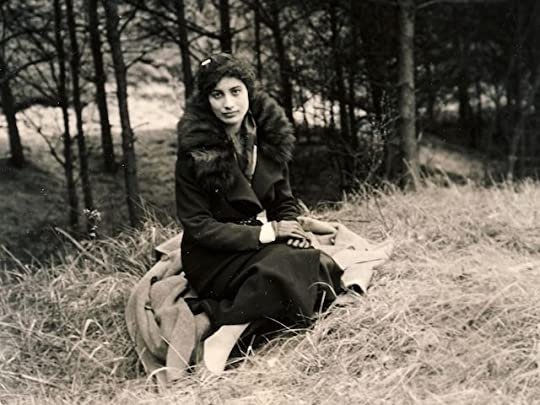
On Sep 13, 1944, a princess from India lay dead at Dachau concentration camp. She had been tortured by the Nazis and then shot in the head. Her name was Noor Inayat Khan.
The Germans knew her only as Nora Baker, a British spy who had gone into occupied France using the code name Madeline. She carried her transmitter from safe house to safe house with the Gestapo trailing her, providing communications for her Resistance unit.
Wireless operators in France had a life expectancy of six weeks. Noor was actively transmitting for over three times as long.
While she was in France, every other wireless operator in her network was slowly picked off until she was the last radio link between London and Paris. It was "the most dangerous and important post in France."
She was offered a way back to Britain and refused.
In fact, in her transmissions to London, she once said that she was having the time of her life, and thanked them for giving her the opportunity to do this.
She was captured by the Gestapo, but never gave up; she made three attempts at escape. One involved asking to take a bath, insisting on being allowed to close the door to preserve her modesty, and then clambering onto the roof of the Gestapo HQ in Paris.
Her last word before being shot was, "Liberté!"
This is Princess Lili'uokalani. She would become the last sovereign ruler of Hawaii. The photo was taken in 1853 when she was only 15 years old.
In 1874, Lili'uokalani's brother, David Kalakaua became king, and a few years later, she was named the heir apparent. She spent the next few years building schools for the people of Hawaii.
In 1881, Liliuokalani served as regent while the king was away on his tour of the world. When a smallpox epidemic broke out on the island of Oahu, she made the quick decision to close down all its ports, which helped to contain the spread and ended up saving many lives. However, her decision irked many of the wealthy sugarcane plantation owners.
In 1891, her brother died, and she became the ruler of Hawaii. Unfortunately, her reign would be very short-lived as a coup led by Sanford Dole (his cousin founded the Dole Food Company) and several other white businessmen and lawyers with the backing of the United States would annex the islands. Two years later, when Lill'uokalani and her supporters attempted to return to power, she was charged with treason and forced to go under house arrest. In order to pardon her supporters, she agreed to yield her power to the United States.
"Now, to avoid any collision of armed forces and perhaps the loss of life, I do, under this protest, and impelled by said forces, yield my authority until such time as the Government of the United States shall, upon the facts being presented to it, undo the action of its representative and reinstate me in the authority which I claim as the constitutional sovereign of the Hawaiian Islands."
She spent the remainder of her life in exile until her death in 1917 at age 79.
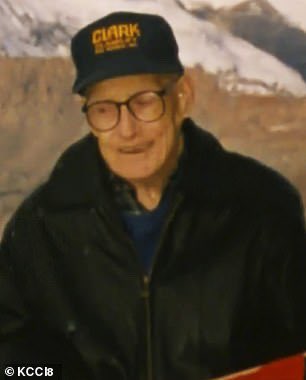
Each student who was given one of Schroeder's scholarships was given enough money to pay for a four-year college education, including tuition, books, accommodation and fees,
'He wanted to help kids that were like him that probably wouldn't have an opportunity to go to college but for his gift,' Nielsen said.
All 33 of those students recently gathered together to share stories about their experiences having been given the opportunity to attend college thanks for Schroeder.
They now call themselves Dale's Kids and many have gone on to become doctors, teachers and therapists.
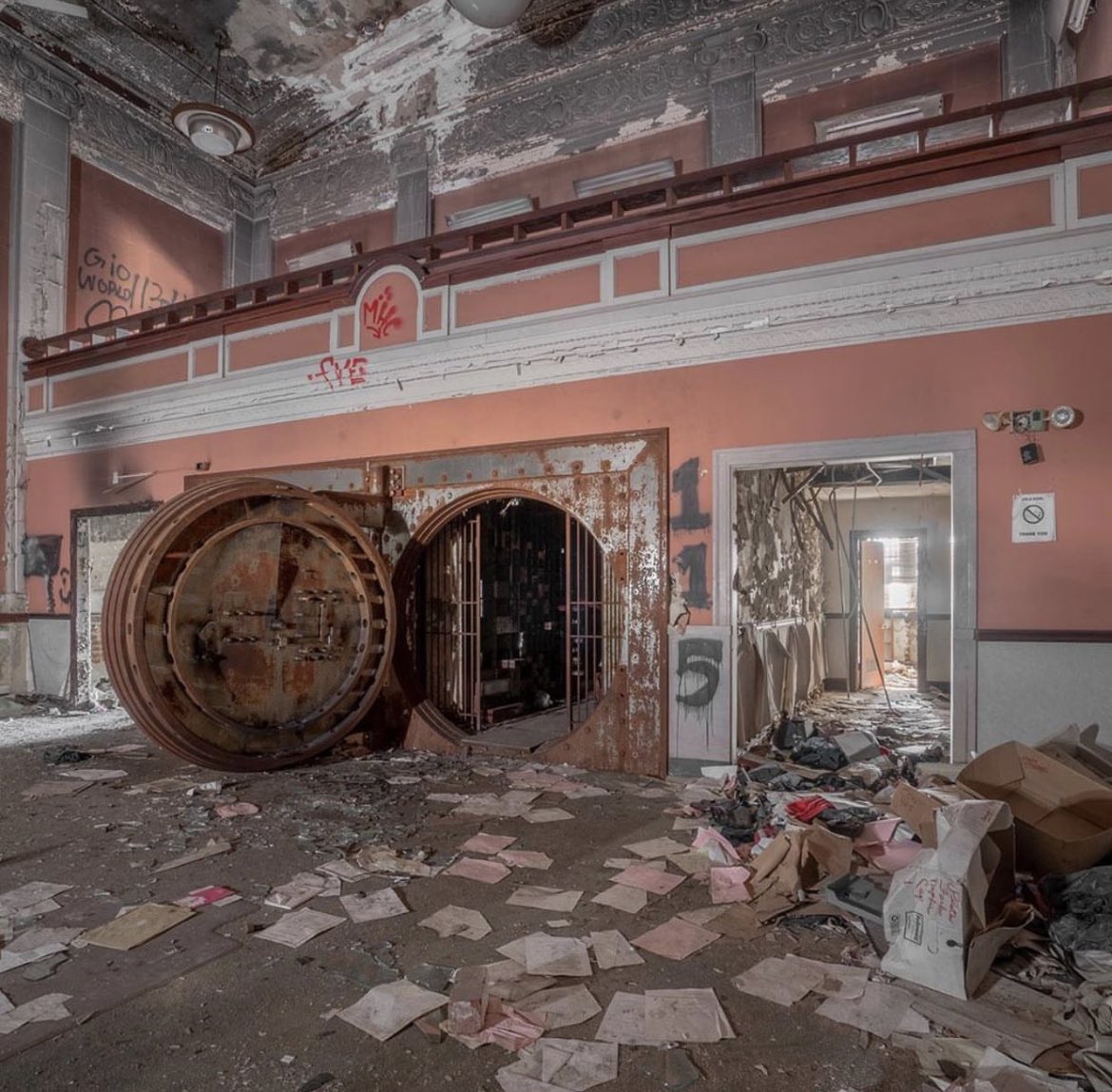
Abandoned bank vault in Gary, Indiana.
Gary is one of the most abandoned cities in the U.S., yet is perhaps most famous for being the hometown of the Jackson 5.
The city came to prosperity in the early 1900s, seeing rapid growth due to the United States Steel Corporation building its largest steel plant in the city, Gary Works.
It had a successful and diverse population all the way until the 1960s. From the 1960s though, Gary followed the fate of the so-called Rust Belt. Growing overseas competitiveness in the steel industry caused U.S. Steel to lay off many workers from the Gary area. As the city declined, crime increased while more and more buildings were abandoned.
Today, it is estimated that one-third of all homes in Gary are unoccupied and/or abandoned. Less than 80,000 people live in the city today, 55% less compared to 1960. The city faces large levels of unemployment, decaying infrastructure, and low literacy and educational attainment levels.