To all the young designers out there, I know things can feel overwhelming right now.
Every generation has had its own battles. When I was starting out, many of us had to justify design as a serious career. Today, you're surrounded by endless possibilities, new tools and the constant pressure to keep up with everything happening around you.
When you see people creating and shipping something new every day, it's easy to feel like you're falling behind. Or that you need to learn everything just to stay relevant. But here's something I've come to believe over the years.
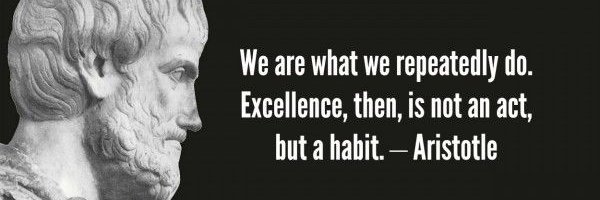
Explore as much as you can. Experiment with new tools, learn different skills and follow your curiosity. That's how you discover what genuinely interests you. But don't confuse doing many things with getting good at something.
We're entering a time when making things is becoming easier than ever. Almost anyone can create a polished interface, an illustration or a working prototype. But making something good, something thoughtful and meaningful, still requires understanding, judgement and taste. And those things take time to develop.
Your competition isn't the person shipping ten things a week. It's the version of yourself that stops being curious or never takes the time to go deeper.
I believe that once the excitement around every new technology settles, the people who have invested in understanding their craft, developed their own perspective and learnt to think independently will continue to have something valuable to offer.
So explore widely, but find a few things worth going deep into.
Don't let the pressure to keep up take away the joy of creating. And don't mistake visibility for progress.
You don't have to be good at everything. You just have to care enough about something to become really good at it.
I think we’re already seeing a generation of designers who don’t really know how to design from scratch. They’re comfortable working with design systems, using existing components and putting together interfaces, but struggle when asked to create something from the ground up.
And with AI becoming part of almost every design workflow, I think this is only going to get worse.
I remember a time when designers would sketch, illustrate, experiment with typography, play with vectors and bring things together to create something. We spent time doing research, speaking to customers, observing behaviour, running feedback sessions and figuring out what to build and why. We understood how to create a visual language, build a brand and make things feel different.
Of course, not every designer did all of this, and I’m not suggesting that things were necessarily better back then.
Design systems have made our lives easier, and AI is going to make us even more efficient. That’s a good thing. But I think somewhere along the way, we’ve started confusing the ability to put things together with the ability to actually design them.
There’s a difference between knowing how to use a design system and knowing how to build one. Between choosing from existing patterns and understanding why those patterns exist in the first place.
And that’s what worries me about AI. Not that it will take away design jobs, but that we’ll become so dependent on these tools that we gradually lose the curiosity, judgement and craft required to create something original.
If we don’t want to end up in a world full of AI slop, we need more designers who can think beyond existing patterns, question things and build from scratch.
The tools are getting better at making things. We need to get better at deciding what should be made and why.
Sometimes the best design projects come from personal frustration.
Mine started with EPFO.
A month of navigating multiple portals, confusing terminology, and broken flows made me wonder:
What would a modern EPFO experience look like?
So I redesigned it.