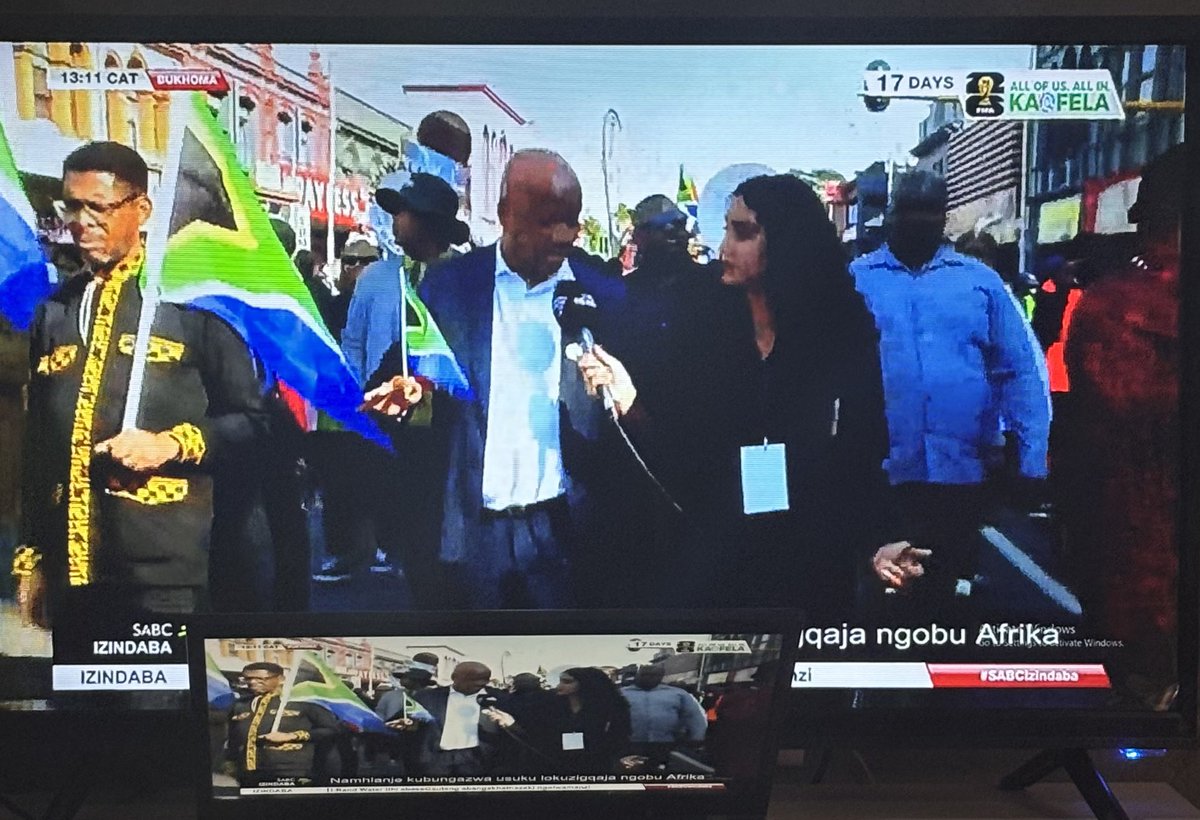
This is what I've been saying all along: we didn't destroy our country and drive out the whites after achieving independence and democracy/freedom. The entire African continent chases away investors and Africa's wealthiest individuals, believing that they will manage the economy in the same manner.
We never destroy infrastructure or retaliate against white people, which is why the name "South Africa" and the rainbow nation🌈 flag remain unchanged. The same countries that destroyed theirs are now demanding nonsense from us.
The ANC desired majority rule, which would have changed the name and flag to match other poor African countries, and we thank you for the negotiations that benefit all of us.
Check out Zondo and Madlanga's commissions right now. What if we'd had all of the black powers?
Actress Dawn Thandeka King, together with Ndalo Enhle Herbs, has provided therapy and support to a 31-year-old KwaZulu-Natal woman who has experienced a rare condition that caused her to appear significantly older than her age
Gabrielle Union burying her Dad's ashes in Cape Town South Africa next to a tree they planted together years ago. Looks like black Americans own places here in SA.
Researchers at the University of Bergen ran a study comparing 213 Sudanese men. Half brushed their teeth with a chewed tree root. Half used a regular plastic toothbrush. The tree root group came out with healthier gums and less plaque.
That stick is called a miswak. The WHO has been quietly recommending it since 1986. In 2011, scientists at Sweden’s Karolinska Institute finally cracked the chemistry.
The active ingredient is benzyl isothiocyanate, a natural plant defense compound from the same family of sulfur molecules that give cabbage and mustard their sharp bite. The compound punches through the outer wall of bacteria that cause gum disease. From there, it dismantles the chemistry that keeps the bacteria alive. The Karolinska team isolated it by running root extracts through a chemical analyzer that identifies individual molecules.
The stick comes from the Salvadora persica tree, which grows in dry parts of Africa, the Middle East, and India. Inside the wood you also find natural fluoride, a gentle abrasive called silica that polishes off plaque, sulfur compounds, and tannins that tighten gum tissue. A separate team at Sweden’s University of Gothenburg ran another trial. They soaked the sticks in a fluoride solution. The fluoride left in the test group’s saliva came out higher than what people got from regular fluoride toothpaste.
A more recent systematic review pulled together a stack of randomized trials. Miswak on its own controlled plaque about as well as a regular toothbrush. Used alongside the toothbrush, it actually beat brushing alone on both plaque and gum inflammation scores. The Princess Nourah University trial from 2024 complicates that. Over two weeks, the miswak group’s plaque held steady while the toothbrush group’s dropped further. And gums in the miswak group got noticeably worse for people who sawed at their teeth too hard. Aggressive horizontal scrubbing tears at the soft tissue along the gum line.
One stick costs under 10 cents in the regions where the tree grows, and a single twig lasts for weeks. In sub-Saharan Africa, herbal toothpastes built around miswak and neem (another bitter chewing-stick tree) made up over a quarter of toothpaste sales in 2023.
The honest caveat is that Western dental literature treats the miswak as an add-on rather than a replacement, mostly because reaching the back molars with a stick is awkward. Used correctly, with soft perpendicular brushing along the gum line and no aggressive sawing, it does what a toothbrush does and adds a low-grade antibiotic on top. For most of human dental history, this is what cleaning your teeth looked like.
‘When we ask for food, they fight with us. We’re not allowed to take more than one chicken.’
South Africa’s Aiden Smith on athlete treatment at their hostel at the ongoing African Athletics Championships.
#JoySports