$PETS sale-leaseback proves there is real estate value.
$37m of proceeds, almost the entire mcap.
But this cash likely won’t go back to shareholders. It just gives management a much longer runway.
That also kills the buyout angle again. Any hope should be gone by now.
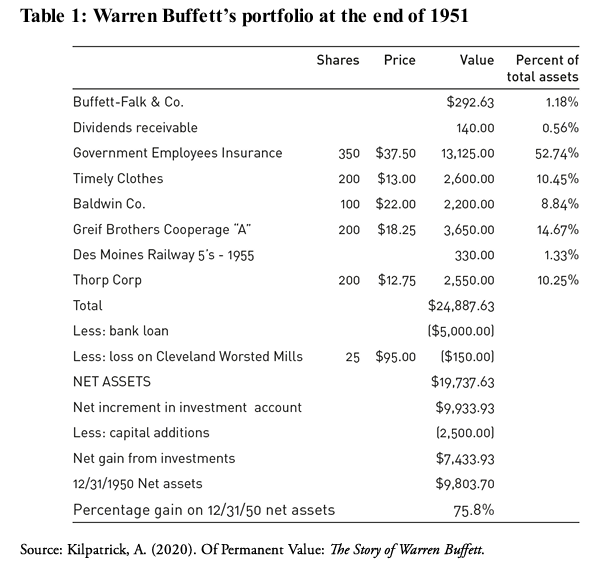
Warren Buffett sold GEICO, then 65% of his net worth, to put more than half his portfolio into a tiny OTC insurer with 311 shareholders.
He found Western Insurance Securities buried inside a Moody’s manual in 1952.
At roughly $25 per share, the entire company was valued at just $1.25 million.
It traded at:
1.3x earnings
0.37x tangible book value
Behind that valuation sat $23 million of investable assets, mostly government and municipal bonds.
The company was earning enough to cover the dividends on its senior share classes seven times over.
But the capital structure was complicated, the stock traded over the counter, and almost nobody received its annual reports.
The market had failed to notice that the common shares were now entitled to most of the rapidly growing profits.
Buffett did the arithmetic.
Within 18 months, the stock reached $65 and he was up roughly 160%.
The business continued growing for decades.
By 1984, each original share was worth a split-adjusted $1,030.
In 1979 alone, it paid common shareholders $2.1 million in dividends, almost twice the company’s entire valuation when Buffett first found it.
Extremely cheap stocks are usually priced as though the business is about to disappear.
Many do something far less dramatic.
They survive, keep earning and eventually make the original valuation look ridiculous.
Found a company trading at 2.5x free cash flow. The founder owns 47%. The company has retired 52% of its shares in 12 years. Revenue per share has quadrupled.
I have built a spreadsheet. It has 1,127 rows. Each row is a deep-value stock in the United States with a market cap below $300 million, an enterprise-value-to-free-cash-flow ratio under 3, net debt below zero, and a CEO who has been in the role for at least ten years. I update it every Sunday from 6 AM to 11 AM while my family attends church without me. I have visited the headquarters of nineteen of these companies in person. I have drunk a complimentary cup of reception coffee at each one. The coffee is how you can tell. A company with bad coffee is a company that respects its shareholders. A company with expensive coffee is a company that will announce a strategic transformation within 36 months and destroy 40% of its value. I am never wrong about the coffee. The coffee has never lied to me. The coffee is the only thing left that tells the truth.
Deep value guys are built like fridges, worth $10M, wear the same $9 jeans for 12 years, hate everything, haven’t smiled since 2008, and haven’t touched their wives since QE1. But they will die on a hill for a 0.4x P/B stock.
Deep value nano-caps are the best. I don’t know why anyone who isn’t managing over $10mm even focuses on anything else. You get incredible edge and don’t have to compete with hedge funds.
Walter Schloss spent nearly 50 years proving you could beat Wall Street with a pencil, Value Line, a tiny office, and the emotional range of a well-maintained filing cabinet. He did not forecast GDP, interview CEOs, model TAMs, or pretend to know where interest rates were going. He bought companies below book value, avoided debt, owned a ridiculous number of ugly little stocks, and waited for arithmetic to embarrass everyone. Buffett called him one of the Superinvestors. The lesson is almost offensive in its simplicity: buy dollars for 40 cents, diversify enough to survive being wrong, and let the market eventually remember that assets are real.
At 21, Warren Buffett made a dying wooden-barrel company his second-largest investment.
The market thought the business was heading for extinction.
Buffett noticed the assets were worth more than the entire company.
Greif Bros. Cooperage traded at just $18.25 per share.
Net current assets were worth $20.47.
Tangible book value was $39.60.
The company also owned 239 plants, valuable timberland and inventory still recorded at 1942 prices.
Buffett invested $3,650.
The exact exit date was never recorded, but estimates suggest he compounded at roughly 20% annually if he sold in 1956.
Greif successfully transitioned into modern industrial packaging and eventually became a multibillion-dollar business.
This is what the market repeatedly gets wrong about extremely cheap stocks.
The price usually implies the business is about to disappear.
More often, it adapts, survives and continues producing value for far longer than anyone expected.