When several teams share one design system, an engineer who opens a design file can't always tell an early idea from a finished design.
On an enterprise design system I led, I gave each frame a status and the relevant ticket.
Each frame's status ran from ideation to complete, with the ticket attached, so anyone who opened a frame could check how far along the work was.
If your team shares design files, put the status where people look first, and the ticket next to it.
Folio is a player skin I designed for my portfolio, where the videos are case studies of how I work. I wanted it to read like a page from a design monograph: the video is the plate, and the controls are its caption.
The controls are in an ink caption pl...
https://t.co/5hTtwTnsnI
My usability engineering readiness review takes four weeks and starts from €6,000. Or start with a €1,000 two-hour triage, credited if you book the review within 14 days.
https://t.co/4BjoFYlZCK
You can find a lot of the places that need a safety gate by looking at close calls.
On a lab instrument I worked on, I added prevention gates before the risky steps, and clear recovery guidance for the use errors a gate can't prevent.
A gate can't prevent every use error, so for the ones that remain, you need clear recovery steps. And you should link every gate and every recovery step back to the risk it controls.
If you're designing a medical device and want to know if your usability work is ready, I can map your gaps in my usability engineering readiness review.
https://t.co/4BjoFYlZCK
Voice control kept failing in the operating room, so we switched to scanning.
In a medical device project I worked on, surgical staff were meant to track instruments by voice, but the operating room was too noisy for it to work.
You can approve an idea in a design review and still see it fail in the room where people use it. That's why you test in the real environment, with the people who'll use it.
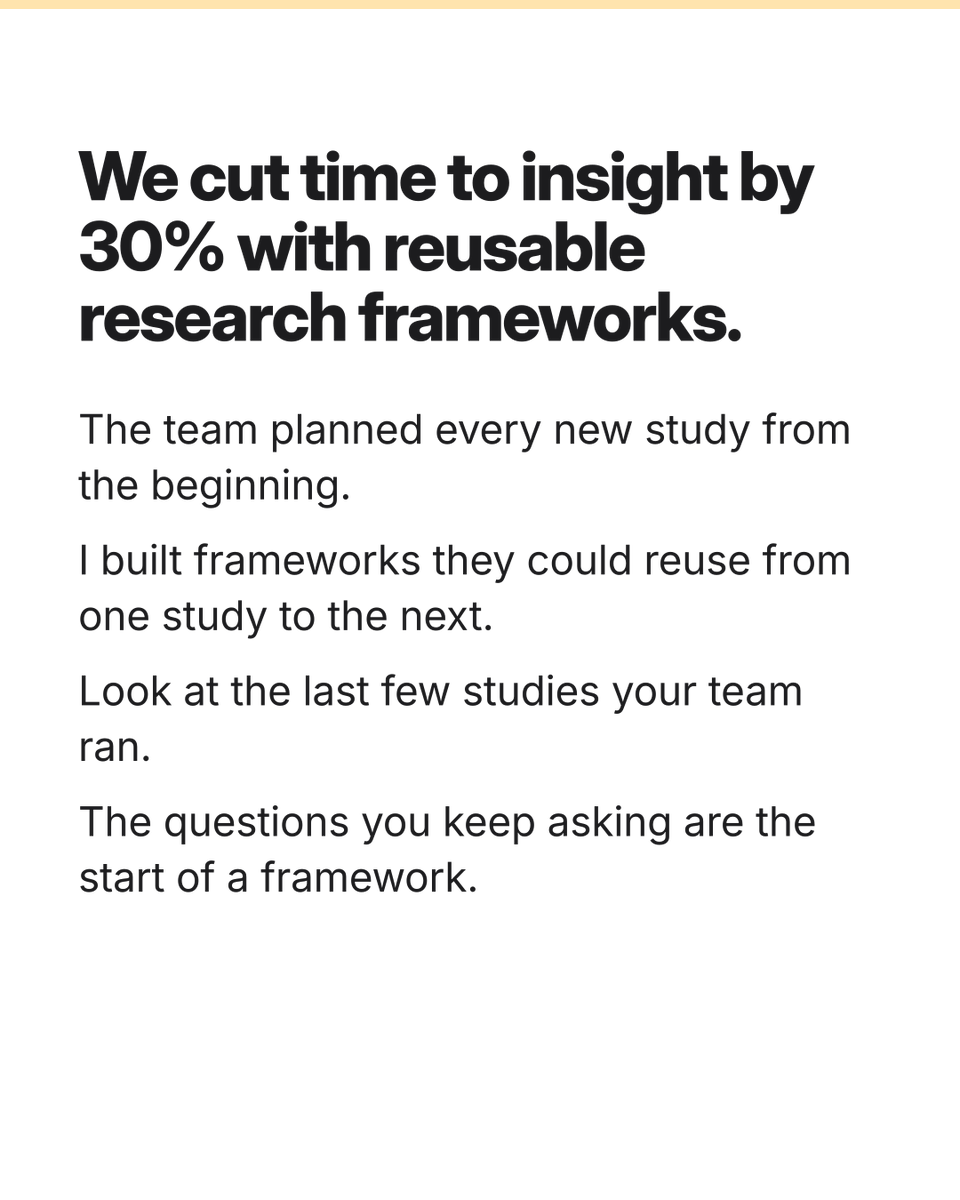
How we cut time to insight by 30% with reusable research frameworks.
A client I worked with ran a lot of research, and the team planned every new study from scratch.
If your team plans every study from a blank page, look at the last few you ran. The questions you keep asking and the way you keep sorting the answers are the start of a framework.