Analysis: What Pakistan claimed was a downed Indian UAV was, in fact, a Pakistani AWACS/ELINT aircraft 🇵🇰 destroyed by India’s S-400 🇮🇳, at a record-breaking range.
1)
On 7–8 May, Pakistani authorities admitted that an object had crashed near Jhand Village, Dinga (Gujrat). Their media and officials quickly framed it as the downing of an Indian UAV.
But the facts don’t add up 👇
2)
Crash-site visual analysis shows:
• Flame height: 8–12 m
• Fire footprint: 1,500–2,500 m²
Such intensity = an aviation fuel pool fire, indicating thousands of liters of jet fuel which can only be carried by a large aircraft. A small UAV typically carries only 200–500 L, which cannot generate this scale or duration of fire.
3)
Reports also confirmed S-400 missile debris recovered in the region. Long range SAMs are not usually fired at small UAVs. This strongly suggests the target was a high-value, large aircraft, not a drone.
4)
Pakistan routinely parades captured Indian wreckage. But this time, despite loud claims, no debris from the crash site was ever shown. The “UAV” story was pushed, but never backed with physical evidence.
5)
A notable silence: Pakistan loves to present aircraft tallies after conflicts. This time, they avoided it. They could have easily countered claims by displaying their AWACS/ELINT fleet on parade, but they did not. Nor did they present a fighter jet tally.
Open-source evidence indicates Pakistan lost at least six aircraft in the air and several more on the ground:
• UAVs at Sukkur
• AWACS & other aircraft at Bholari
• F-16s in Jacobabad
6)
Assessment:
• Crash admitted by Pakistan
• False UAV cover story
• S-400 fragments recovered in same region
• Visual evidence from site proving a large jet
• Unusual silence on fleet strength
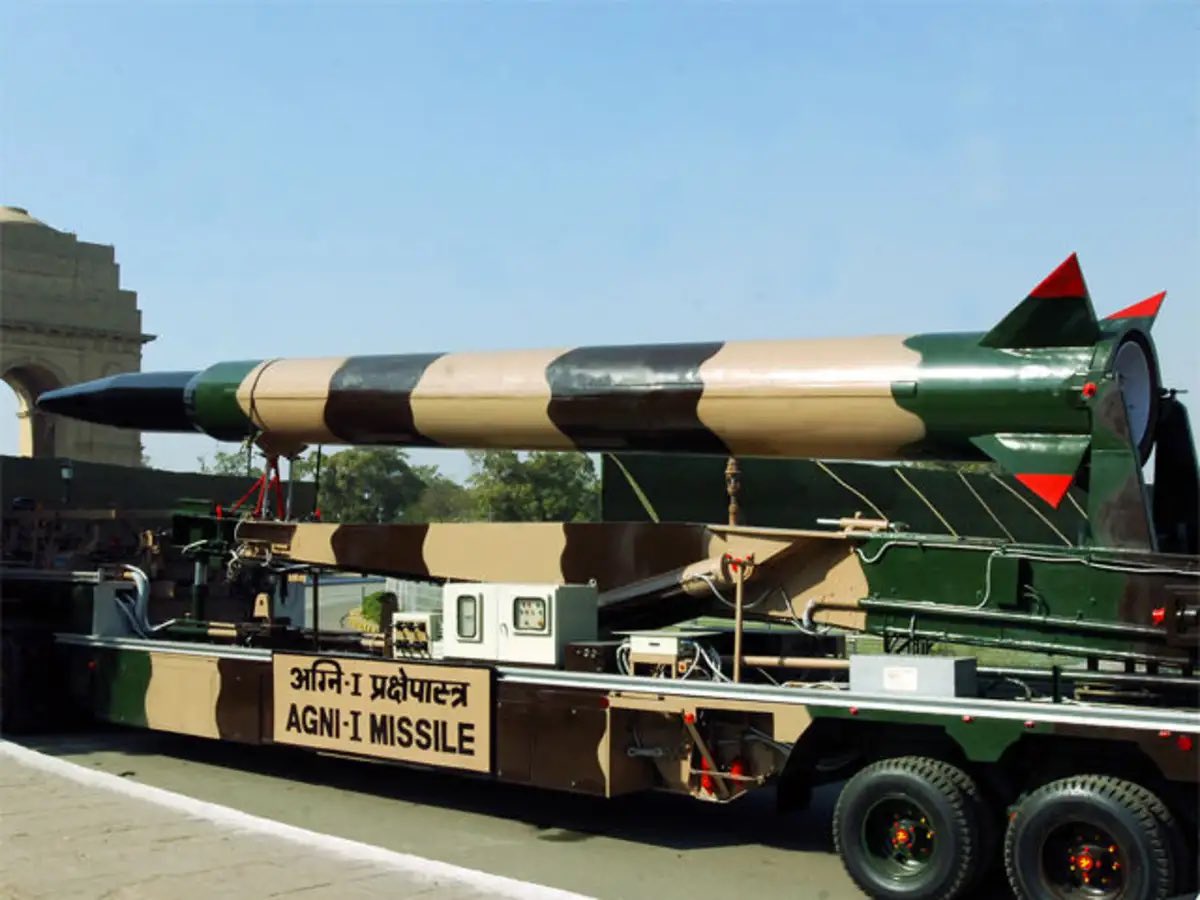
Agni-1 SRBM successfully test-launched from ITR, Chandipur, today. 🇮🇳
launch validated all the OP & technical parameters, It was carried out under the aegis of Strategic Forces Command.
Nibe Ltd conducted successful firing trials of the Suryastra rockets with ranges of 150 km & 300 km at ITR Chandipur.
The rockets achieved a CEP of 1.5 m and 2 m, respectively. 🇮🇳
The 4th squadron of the S-400 system is set to arrive in India this week. 🇮🇳
Its deployment in the western sector will expand IAF’s long range AD engagement envelope,
It will also constrain PAFs operational freedom by extending Long Range coverage deeper into their airspace.
Funny how HAL thinks its not out of AMCA race.
As per HAL, RFI is limited to prototype development, & they can walk in later & Position themselves as the production agency for AMCA program.
@abhinav_vats17@GE_Aerospace Always a gap between plans and execution with HAL. Meanwhile they said they are going to get one more engine next month and 2 more in aug and 15-20 by end of this year
Tejas Mk1A production capacity is being expanded toward 30 aircraft annually with 3 active lines & pvt sector integration. 🇮🇳
40+ industry partners & Pvt suppliers are now part of the production chain.
GE-404 engine deliveries are expected to accelerate from August 2026 onward. 🇮🇳
One engine is scheduled for delivery in June, followed by 02 more engines in August.
Overall, 15-20 engines are projected to be delivered to HAL by the end of 2026.
Uttam AESA radar is currently under DRDO control, with HAL acting only as production agency. 🇮🇳
Uttam Radar is not part of current 83 Tejas Mk1A contract, integration is planned for upcoming 97 aircraft order once DRDO grants prod clearance & DCPP partner is finalised.
Tejas Mk2 orders are unlikely before 2028, as the aircraft first needs to complete its maiden flight before the IAF begins the formal acquisition process.
Tejas Mk2 rollout timeline has now shifted to March 2027.
Earlier, it was anticipated that rollout had unofficially already taken place, with 1st flight expected next month.
Yet another disappointing delay for the Mk2 programme, which is already running behind schedule.