New on the Engineering Blog:
Building Managed Agents—our hosted service for long-running agents—meant solving an old problem in computing: how to design a system for “programs as yet unthought of.”
Read more: https://t.co/YYaEub2QGV
Three things I believe about agents in prod:
- The agent harness matters as much as the model.
- Orchestration shouldn't be every team's problem.
- Teams that win spend their time on product, not infra.
Claude Managed Agents is our answer to all three, and now it’s in Public beta
Introducing Claude Managed Agents: everything you need to build and deploy agents at scale.
It pairs an agent harness tuned for performance with production infrastructure, so you can go from prototype to launch in days.
Now in public beta on the Claude Platform.
Our run-rate revenue has surpassed $30 billion, up from $9 billion at the end of 2025, as demand for Claude continues to accelerate. This partnership gives us the compute to keep pace.
Read more: https://t.co/XgSjL0And7
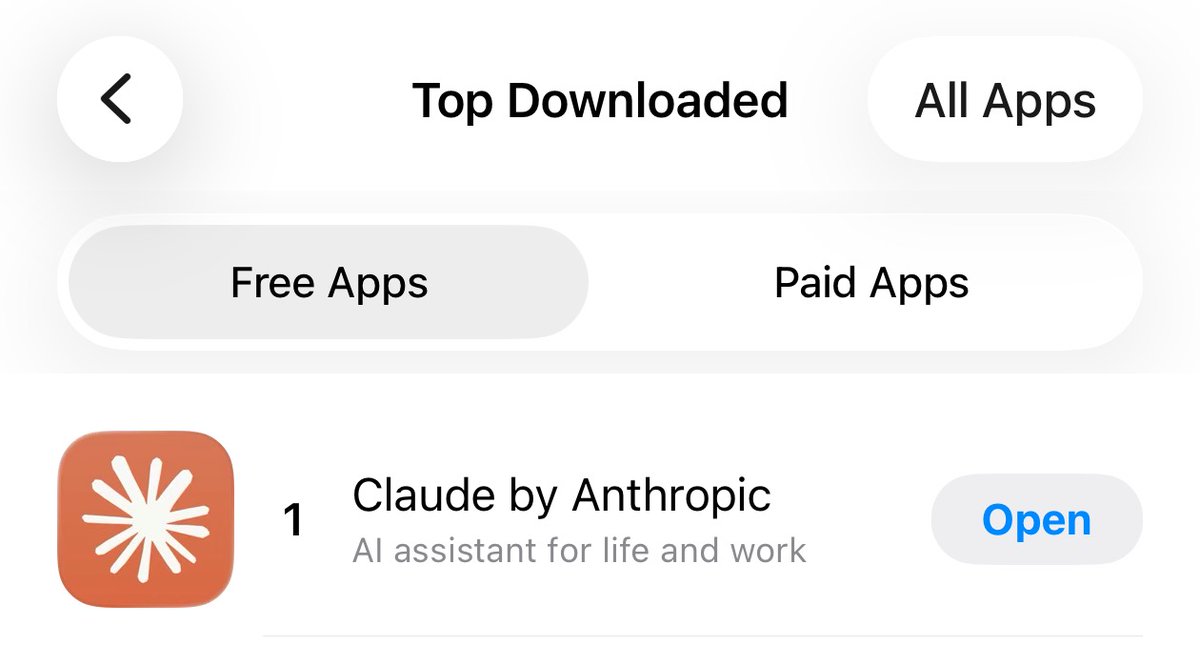
Claude is #1 in the App Store today — I want to say a huge thank you to all of our new (and existing!) users for the support. We’re working hard for you, please share your thoughts and feedback along the way.
Claude Code doesn't just resonate with developers anymore. Non-technical people are using it to build things. Technical people are using it for non-technical work. The line is blurring.
I'm by far not the first to think about this. Multiple teams at Anthropic have been working on "agentic experiences" for months - Claude not just as a chat partner, but as something that helps you do real work. @bcherny nudged me: can we take what we've built internally and ship an early, scoped-down version in a few days? So we took a small team, set an aggressive deadline ("Monday sound good?"), and got to work.
@claudeai wrote Cowork. Us humans meet in-person to discuss foundational architectural and product decisions, but all of us devs manage anywhere between 3 to 8 Claude instances implementing features, fixing bugs, or researching potential solutions.
For native code, we use local Git worktrees on our local machines. For smaller or web-code only changes, we just tell Claude to go implement it. When someone reports a bug in Slack, we often just @-mention Claude and tell it to fix it. A human (and another Claude) reviews all code before it's merged, but we're now spending most of our time orchestrating a fleet of Claudes and making decisions than artisanally writing individual lines of code.
We're releasing Cowork early. It has rough edges. But figuring out what to build is increasingly the hardest part of software engineering - and we think getting feedback early and hearing what users actually need is how we build something truly good.
This illustrates an aspect of AI that I hadn't thought about till now: it cuts through bureaucracy. If a big organization is paralyzed by indecision, AI doesn't care. It will happily generate a version 1. And that becomes the starting point, because there is no other version 1.
opus 4.5 is actually batshit insane
this thing can do anything I ask it with some high-level system design guidance and a clear path for verifying itself and I've been coding for over a decade
you'll soon see $1B+ one person companies
2026 is going to be for the books
@bevel_health Very cool. Love the product and will keep paying for pro. Talking with LLMs about my data is really great, particularly the short term memory. Thanks for making Bevel so great.
I feel this way most weeks tbh. Sometimes I start approaching a problem manually, and have to remind myself “claude can probably do this”. Recently we were debugging a memory leak in Claude Code, and I started approaching it the old fashioned way: connecting a profiler, using the app, pausing the profiler, manually looking through heap allocations. My coworker was looking at the same issue, and just asked Claude to make a heap dump, then read the dump to look for retained objects that probably shouldn’t be there; Claude 1-shotted it and put up a PR. The same thing happens most weeks.
In a way, newer coworkers and even new grads that don’t make all sorts of assumptions about what the model can and can’t do — legacy memories formed when using old models — are able to use the model most effectively. It takes significant mental work to re-adjust to what the model can do every month or two, as models continue to become better and better at coding and engineering.
The last month was my first month as an engineer that I didn’t open an IDE at all. Opus 4.5 wrote around 200 PRs, every single line. Software engineering is radically changing, and the hardest part even for early adopters and practitioners like us is to continue to re-adjust our expectations. And this is *still* just the beginning.
im growing the claude developer platform team at anthropic and im looking for the best engineers out there
ship the platform powering the worlds most successful agents - api performance, model capabilities, agent tooling, best in class developer experiences
dms are open
if you’re building an agent, check out the tool loop that ships in the anthropic sdk. it’s a very minimal scaffold that helps you take advantage of claude’s excellent tool calling ability. let us know what you think!
https://t.co/6ubpfRO1XG
today we launched claude sonnet 4.5, the best coding and computer use model in the world. we’re giving you context management capabilities and a memory tool along with it, so you can build incredibly capable agents for long-running tasks. we’re excited to see what you ship!
Sonnet 4.5 is here! We really made some leaps in agentic coding here. Now my daily driver in Claude Code – it took a lot to compete with Opus 4.1. I highly recommend using it as a general purpose agent in Claude Code; it’s hard to find a task it can’t perform
That's a wrap on Techonomics Season 3!
Don't miss Ben Gibbs discussing the future of robotics and the need for a common language across manufacturers. READY Robotics is leading the charge in making this a reality.
#robotics#automation#technology
https://t.co/DnW5fld4fR
It was a pleasure to have @steven_kotler on the Techonomics podcast to talk about his new book Gnar Country: Growing Old, Staying Rad.
Steven’s work in flow with his books and @thefrc_official is something @arundkv and I can’t recommend enough.
https://t.co/rKsJBF8ArC