CSU's April 2026 seasonal #hurricane forecast press release has been translated into Spanish:
https://t.co/vNZZrsK8AV
Thanks to @Delian_wx and @NicholasAMesa1
for the translation!
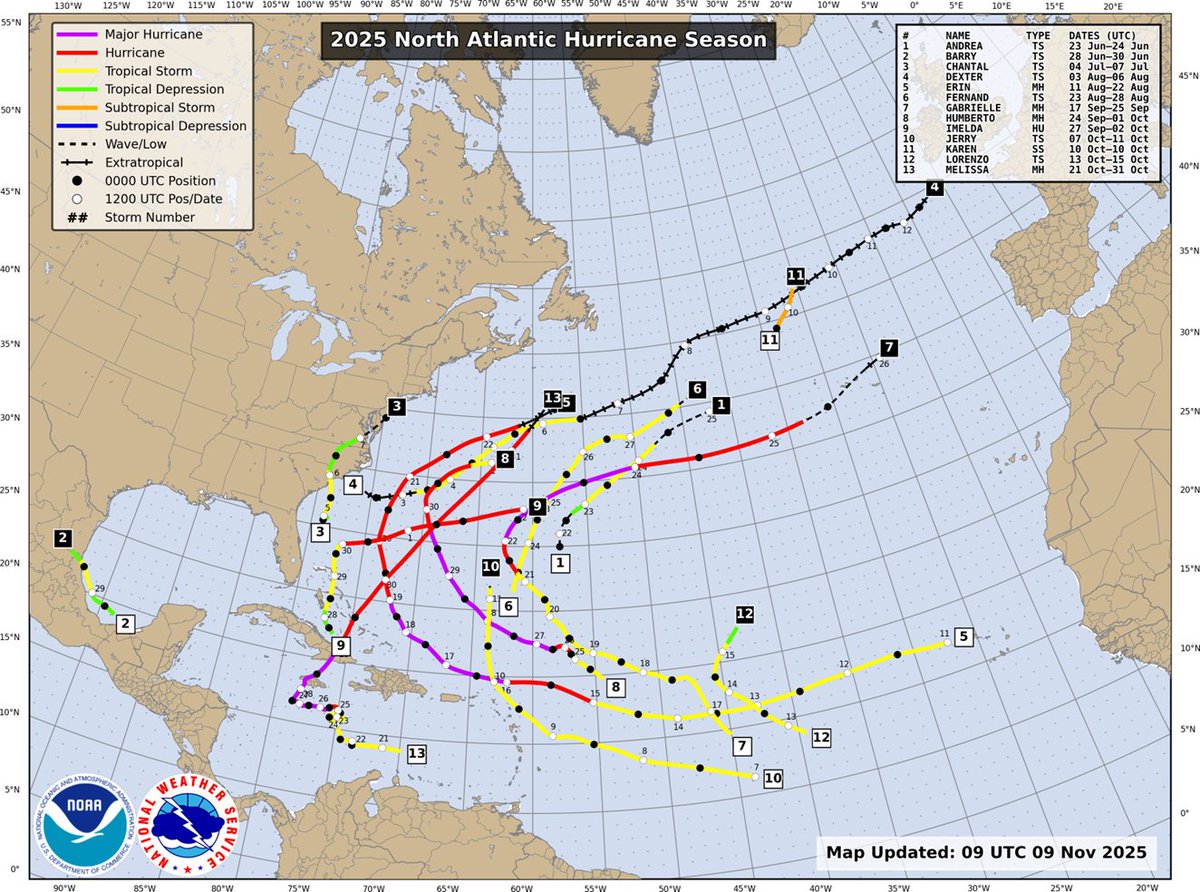
CSU has released its Atlantic seasonal #hurricane forecast verification. 2025 was an above-normal season per NOAA, but with an unusual distribution of storms (e.g., fewer storms but more strong hurricanes) than typically expected given overall activity:
https://t.co/HAcQtg35cj
CSU continues to predict slightly above-normal Atlantic season, with 16 named storms (including 4 that have formed), 8 hurricanes and 3 major (Category 3+ hurricanes):
https://t.co/AX7b2CYDoJ
Relatively warm Atlantic and likely absence of #ElNino the primary factors.
Student Delián Colón-Burgos recently returned from a visit to the Max-Plank-Institute for Meteorology in Hamburg, Germany hosted by scientist Daniel Klocke and working with Professor Michael Bell.
Read more https://t.co/phVIxQbE8d
One reason for CSU's active Atlantic #hurricane season forecast is the unlikelihood of #ElNino. El Nino typically decreases Atlantic hurricane activity via increases in Caribbean/tropical Atlantic vertical wind shear. Lack of El Nino typically results in busier Atlantic seasons.
Atlantic seasonal #hurricane forecast from @ColoradoStateU calls for above-normal season: 17 named storms, 9 hurricanes & 4 major hurricanes. Relatively warm Atlantic and likely absence of #ElNino are the primary reasons.
https://t.co/H82Wa95CqH
⚠️Hay una Advertencia de Tsunami para PR y las USVI
Peligros potenciales: Fuertes corrientes y olas peligrosas para quienes están en el agua o muy cerca de ella
Acción pública: Manténgase fuera del agua, lejos de las playas y vías fluviales
#PRwx#USVIwx
If you are still around #ams2025 in NOLA and want to learn about convective organization in easterly waves, I will share part of my thesis work at 2:00pm today! 🌦️🌀🇵🇷
The wait is over and La Niña is officially here.
There’s a 59% chance La Niña will persist through February–April, followed by a 60% chance of neutral conditions in March–May, according to @NWSCPC.
Read our latest ENSO Blog for more details: https://t.co/LUhJb4jGub
Temperature dropped to -20°F in Hayden, CO this morning and it was the perfect opportunity for a little science experiment🤗. Boiling water turning into a cloud☁️!!
A team from @CSUAtmosSci is here with the CSU SEA-POL Radar as part of the S2noCliME project❄️.
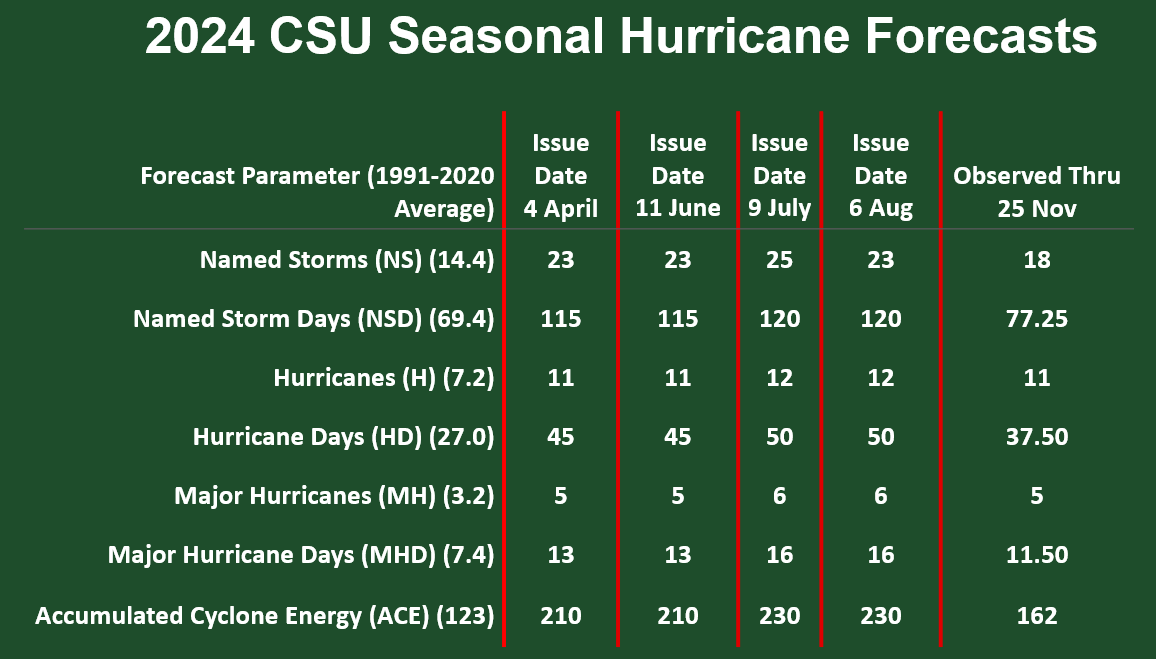
CSU has released its Atlantic seasonal #hurricane forecast verification. These forecasts slightly over-forecast hyperactive season. Hurricanes #Helene and #Milton were the most significant hurricanes for the continental US.
https://t.co/Vc1y9TkkWh
Congratulations to students Nick Mesa, Olivia Sablan, Tom Juliano and Kat Humphreys for all winning awards at the 2024 Grad Show! We're proud of each and every presenter for practicing sharing your research with a broad audience.
https://t.co/CMoVDdIhgi
CSU has issued its two-week forecast for 15 October - 28 October Atlantic #hurricane activity. We slightly favor above-normal activity (50% chance) relative to near normal (40%), with below normal less likely (10%). Details in link:
https://t.co/gP4EIVlxoo
Professor Michael Bell and graduate student Delián Colón-Burgos embarked on a voyage to study tropical cloud systems and how they are organized. Before taking off from the coast of Africa, they constructed the SEA-POL radar to be installed aboard the RV-Meteor research ship.
5pm AST August 12th -- Here are the latest Key Messages for now Tropical Storm #Ernesto.
Expected to bring tropical storm conditions to portions of Leeward Islands tonight & tomorrow, moving into the Virgin Islands and Puerto Rico by late Tuesday.
Latest: https://t.co/crg9j0SYoQ