This is Genie 4, our most realistic and interactive world model yet. 🌐
Explore dynamic environments in real time to see how the scene responds, sounds, and how the people in it move, react, and speak.
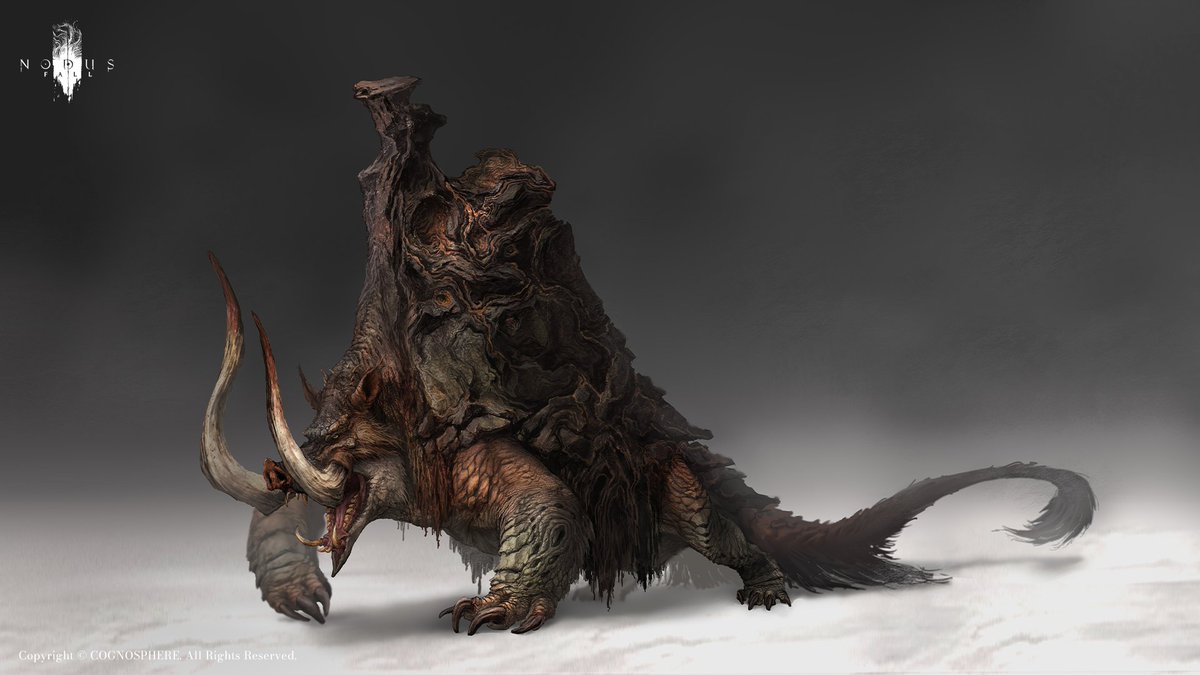
◆ Mythic Fragments ◆ | Sinkmaw
"A boar-like beast that moves like a falling mountain."
Built like a boar, strong as a landslide.
Crouched, it is immovable; claws out, it is relentless.
It moves the very earth, and walls rise where it digs.
#Nodusfall#hoyoverse
#CoOpActionGame
#DiverseMyths
🚀 Introducing DeepInfer, our in-house inference framework, now fully open source!
Powering DeepSeek-V4.1-Flash at scale with high throughput and low latency. We’re sharing our production stack to help the community lower compute costs, reduce energy use, and make AI more affordable.
🔗 https://t.co/JGAik1kgk0
1/4
花费16天,我用 Opus 5.5 将小王子的故事制作成了3D剧情游戏
结合Tripo+Blender,Opus 5.5 将小王子故事中的每一个星球变成了可探索的3D场景
希望大家能支持一手,后续会开源整个游戏,以及详细制作流程
Welcome to The Little Prince: Across the Stars✨:https://t.co/qr4wR0jLu3
Today we're launching Odyssey-3, the most powerful foundation world model yet.
It sets a new state of the art on Physics-IQ, and powers robots, trains AIs, and generates interactive experiences. It's really cool.
Experience the model today, all for free!
This indie dev is making a game where you eliminate others by typing the number on their forehead
- Race to read their number first
- Throw smoke and flashbangs to blind them
- Read far away numbers with binoculars
Game is Figure Me Out
I got this custom scorpion rigged, animated and running in my game in one full day with AI.
GPT-6 built the entire rig. My part was preparing the model and motion references, then giving feedback.
After trying a few approaches, I found a workflow that worked:
1. Give it a model that makes sense.
I generated the model with Tripo P2.0, then cleaned it up myself. Low-poly, optimized, split into logical parts.
I think that preparation mattered a lot. GPT-6 works on the mesh through code. A manageable vertex count and sensible parts give it a clearer starting point for bone placement and skinning.
2. Show it the movement you want.
I took a reference image of the character and used Seedance to generate side-view animation videos. I decided which animations the game needed and selected the takes with the movements I liked.
Then I gave GPT-6 the model, the videos and that animation list. There was no existing rig to start from.
3. Compare the animation frame by frame.
This was the idea I wanted to test: ask GPT-6 to compare its Blender animation against the reference video frame by frame, from the same view.
That gave it concrete poses and timing to work toward. I could point to where the feet should be planted or when the tail should strike.
4. Expect to give feedback.
A generated run can look like hopping. An attack can start with a jump you never wanted. Choosing the references matters, and a side view still leaves depth and hidden legs to figure out.
It took several iterations. I explained what looked wrong and how I wanted it to move, and GPT-6 kept refining the animation.
Once the walk worked, I also had it create left and right strafe animations procedurally from that walk. Those didn't need their own reference videos.
By the end of the day, the creature was in Unity.
I've recorded the full workflow, including the Blender setup and feedback process:
https://t.co/9xdMpuSSVJ
Day 11. Building the game I've dreamed of for 15 years with AI.
I thought humanoid animations would be the easy part. Then I spent half the night trying to get a skeleton to swing its arm.
I wanted that awkward, broken skeleton movement. GPT-6 Astra couldn't get the attack right in Blender on its own, even though other parts were working. Time to bring in some of my own animation knowledge.
Three things I tried:
1. Recorded myself doing the arm swing, turned the video into mocap, and gave that animation to Codex. I asked it to fix just the arm, keeping the parts that already worked.
2. Put my generated Seedance video references through mocap too. They converted surprisingly well. The free option I tried was Unreal Engine 5.8; Quick Magic was the paid one. Both gave me motion I could use.
3. Let the agent try Cascadeur through its MCP server. It set up AutoPosing and experimented with AutoPhysics. This part is still inconclusive for me. The MCP integration felt too limited to call it a reliable part of the workflow yet.
GPT-6 took those mocap clips and assembled the final animations. About six or seven rounds, roughly half an hour each. Today I got the skeletons into the game, and I'm so happy with how they turned out.
I'm already working on the archers. For difficult movements, I'll be using mocap references much more often now. GPT can take just an arm movement from a clip and adjust the rest itself. Being able to combine those two approaches is what finally got this working for me.
Best of Term | Animation - Mechanics (Spring 2026): Gnomon BFA student David Roman stacked every rig from the term into one anxiety-inducing balancing act loop in Maya.
18 animation layers, 10 parent constraints, and 1 animator.
Congrats David!
#gnomon#animation#maya