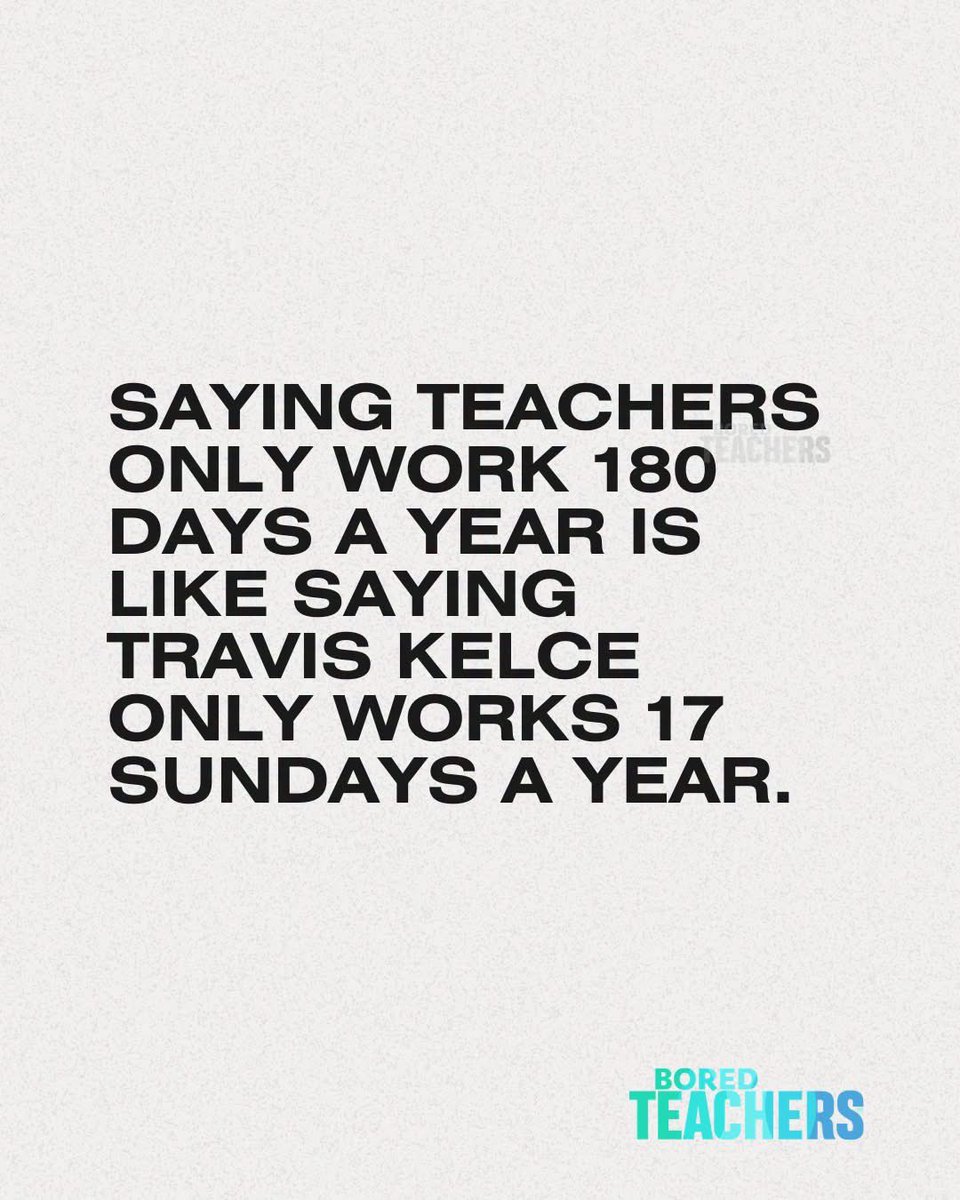
Teachers are said to make around 1,500 decisions EVERY. SINGLE. DAY. 🤯
That’s roughly 4 decisions every minute.
“Can I go to the bathroom?”
“Where’s my pencil?”
“Can I move seats?”
“He’s looking at me.”
“I don’t understand.”
“Can you help me?”
“What are we doing?”
“Is this for a grade?”
And somehow, while making all those decisions, teachers are expected to teach, motivate, redirect, encourage, assess, communicate, manage behavior, and make every kid feel seen.
So if you get home after school and your brain has absolutely NOTHING left…
There might be a reason. 😂
Teaching isn’t just physically exhausting.
It’s decision fatigue on another level.
Teachers, you’re doing more in a day than most people will ever see. ❤️
#schoolofengagement
I just finished listening to Anna Stokke on CBC radio and I can’t think of a single teacher or parent who would disagree with everything she said.
Just like in reading, we need to return to explicit direct instruction of foundational math skills in public education. Anyone who disagrees and thinks an inquiry based approach is more effective should explain why so many parents are going to places like Kumon, Oxford Learning, and other private clinics so their children receive the foundational skills that they need to be successful in math.
If Jo bowler’s approach is in fact effective, then why are private clinics not using it and using direct explicit instruction instead? We are perpetuating the private sector by using an inquiry based approach to mathematics in public education. This IS an equity issue. @rastokke@cbcradio@CBC
Many students are sold a lie that learning should feel pleasurable, and when that's not their experience, the cognitive dissonance eats them alive.
It's like someone signs up for strength & conditioning at a gym and the trainer tells them that they should feel pleasure doing pushups, sprints, deadlifts, etc. Or like a nutritionist saying "you should enjoy the taste of broccoli." Completely alienating.
What a good trainer will say is "Yes, it feels taxing, and that's okay, that's normal. Our goal here is not pleasure, it's satisfaction -- making progress, doing things you weren't able to do before, feeling good about what you've accomplished, transforming yourself in ways that are beneficial for your future. You're here to work, so let's do work."
People respect that, and there's a kind of comfort in knowing that we're all here to do serious work. Whether it's the gym or the classroom, that's what people need to hear.
Explicit instruction is necessary, but not sufficient. You can explicitly teach incorrect things or explicitly teach poorly chosen content. You can explicitly teach badly designed lessons.
If teachers aren't aware of the content that's most important for later success in math, or how math topics build on one another, that's a problem, even if they use explicit instruction. A good math curriculum lays that out cleary.
Several countries (e.g., Canada, Australia, US) have very poor math curricula (or standards). Multiple strategies are baked into them, fluency doesn't have a clear definition, critical content isn't front and centre, standard algorithms are sometimes downplayed or absent, and then we wonder why kids can't do basic arithmetic.
If you explicitly teach novice learners 5 different ways to multiply 23 x 46, that's not going to work out well. It creates unnecessary complexity, and we can't expect new learners to be able to follow along and retain multiple strategies at once (let alone the practice with efficient methods that gets sacrificied by this approach).
From Direct Instruction Mathematics:
"Teachers should select the most generalizable, useful and explicit strategies to teach their students"
The New York Times: No puedes “gamificar” una educación real.
La obsesión por hacer que aprender sea siempre “divertido” ha llevado a llenar las aulas de pantallas, juegos y estímulos rápidos. Pero educar no es entretener: es exigir atención, esfuerzo y pensamiento profundo.
La tecnología debe ser una herramienta complementaria, no el centro del aprendizaje. https://t.co/ar0gPMtXkh
Schools are very good at finding one more thing for teachers to do.
Another initiative, committee, coverage assignment, training, duty, or responsibility might sound small on its own. Keep adding them without increasing compensation, time, or support, though, and eventually the job becomes bigger while the paycheck stays exactly the same.
If the work is valuable enough to require, the people doing it should be valued accordingly.
Teachers are expected to:
• Arrive before everyone else
• Teach all day
• Manage 30+ different personalities in every class
• Differentiate lessons for every learning level
• Keep students engaged
• Handle behavior issues
• Answer parent emails
• Attend endless meetings
• Grade mountains of assignments
• Track data and update online systems
• Complete paperwork
• Plan tomorrow’s lessons
• Support struggling students
• Challenge advanced students
• Cover for absent staff
• Supervise lunch, hallways, and dismissal
• Adapt to every new initiative that comes along
And after all that, they're somehow expected to go home with enough energy to be a parent, partner, friend, or simply a functioning human being.
People talk about teacher shortages, burnout, and declining morale as if they're mysteries.
They're not.
You can't keep adding responsibilities to a job that's already overflowing and then act surprised when people reach their limit.
The real question isn't why teachers are burning out.
It's why anyone expects them not to.
Chapman's Ice Cream has just done something EVERY Canadian should know.
The largest ice cream company in Canada used to source fruit and nuts from American suppliers — for some, for over 30 years. Then, Trump imposed a 25% tariff on Canadian products.
So, what did Chapman's do?
📷 They called Italy.
📷 They called Spain.
📷 They signed multi-year contracts with European suppliers.
And the vice president said it perfectly:
"Even if Trump wakes up smarter than yesterday, we're about to sign long-term deals with other countries — and the American companies that supply them will have nothing but their eyes to cry for."
Oh, and on top of ALL that? They're COLDing their prices so that the average Canadian doesn't have to spend a single cent more.
It's a family business. No shareholders. Just the Chapman family saying: "The least we can do is make sure Canadians still have the means to buy ice cream."
That's what Canadian pride looks like.
Next time you're at the grocery store — grab some Chapman's.
Every scoop of ice cream is a vote for Canada.
I looked up the actual Category 5 teacher salaries this year for Saskatchewan (harmonized grid), British Columbia (I used Saanich because that's where I'm from) and Manitoba (Winnipeg). @ABDanielleSmith understates the top salaries by thousands. Why the deception? #abed#abpoli
‼️ Parents of Alberta, check out this new calculator that shows how many more teachers your child’s school could have if the government of Alberta brought per-student funding up just to the national average. ‼️
#yyc#yeg#yql#ymm#alberta
https://t.co/FogSqt093z
Hot off the press!
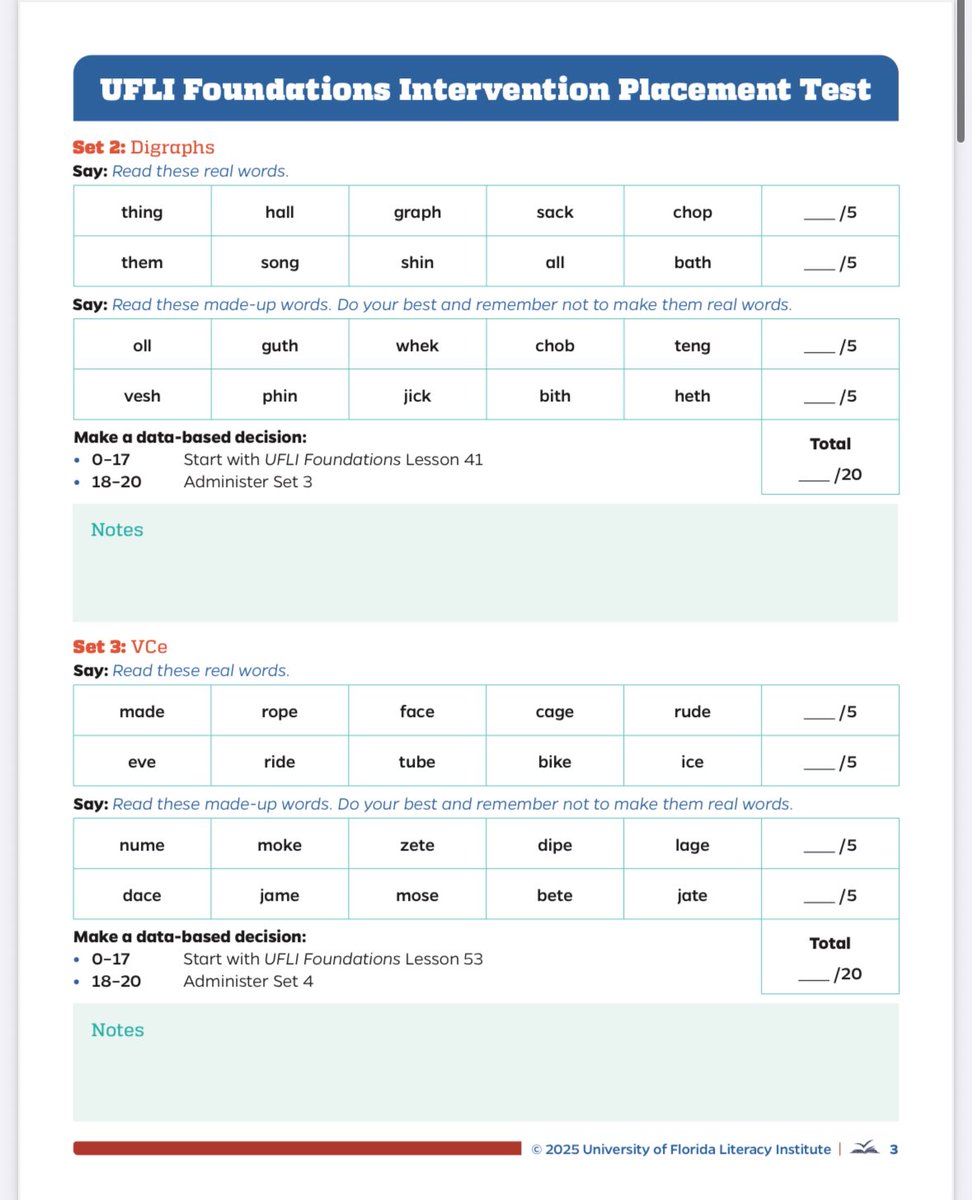
@UFLiteracy now has an Intervention Placement Test to help you figure out where to begin interventions for specific students.
Scoring patterns tell you which UFLI lesson you should start with. This is going to be really helpful!
https://t.co/c3IGHfM7Iw