@Black_Jesus1 The problem is not the car is a tires. You can't run low profile tires on off-road course. He should have gotten 16s with a fat rims. Deflated those to a lower PSI. And then take off traction control. And then from there would have got him through no problem
I published 1,500 books on Amazon and made $3M
Here’s how in 10 steps:
1. Find 10 evergreen nonfiction niches on ChatGPT
2. Pick one that’s specific, not broad. e.g. ADHD parenting
3. Ask ChatGPT to write 10 book chapters for that niche
4. Expand chapters with Claude AI
5. Polish with Grammarly + Turnitin
6. Design a cover for free with Ideogram
7. Upload your book on Amazon KDP
8. Launch at $0
9. Collect 10–20 reviews via FB groups
10. Raise price → scale winners → reinvest into more books
($53,000 from a single book recently)
obviously, there’s a lot more to this business…
if you want my 3 AI prompts + Amazon KDP blueprint (free), comment “Send” and I’ll send it
Must be following + Retweet
I went from $0 to $109K in 90 days selling books on Amazon
Here are 7 brutal truths you need to know if you want to make money selling eBooks
1/ Stop writing interesting books.
This is the #1 reason most people fail at eBook publishing.
Most writers stay broke because they write what they enjoy, not what readers need.
People buy solutions, not your curiosity.
2/ AI Prompts > Writing Skills.
Bad writers with great prompts earn $20k/month.
Great writers without them earn $0.
Learn prompts, not poetry.
3/ Short books sell better.
I used to write 200+ page books that tanked.
Cutting them in half doubled my sales.
4/ AI isn’t magic.
Raw AI output is useless. It gives you 70%.
Editing, polishing, and formatting make the other 30% that earns trust.
5/ Covers sell, not content.
I spent hours on writing and minutes on covers. Huge mistake.
Pretty covers print money, ugly ones don’t get clicked.
6/ Without a system, you’ll fail.
AI makes content easy, which means chaos without structure.
Systems turn creative overload into consistent income.
7/ Get a mentor.
I wasted months guessing what worked.
One mentor shortcut my learning curve, and changed everything.
That’s why I’m paying it forward.
In 3 days, I’m hosting a FREE live workshop showing how to launch a $100K/year AI eBook business in 14 days (with $0).
Limited to 150 people only to keep it personal.
Want in?
Like & reply “KDP”, and I’ll DM you the link.
(Must be following to get it.)
I recently made $53,000 selling PDFs on Amazon.
AI created them with $0.
Here's how in 10 steps:
1. Go on ChatGPT and ask for “10 evergreen nonfiction book niches” where readers crave urgent solutions.
2. Look for examples like: Weight loss for seniors, Parenting ADHD kids, Budget travel families.
3. Pick one and double check on Amazon if similar books are already “Best sellers”.
4. If yes, Ask ChatGPT to create 10 relevant book chapters that offer true solutions and speaks directly to [Type of Reader]
5. Expand each chapter with Claude AI; it writes better than GPT. Just input your tone and links to sources.
6. After you finish writing the whole book, make sure you fact-check all of your claims and promises, and use Turnitin and Grammarly to avoid plagiarism.
7. Design and produce the entire book cover with Ideogram AI and refine minor errors with Canva
8. Create a FREE Amazon KDP account and upload your manuscript/book cover.
9. Publish in every format: e‑book, paperback, hardcover and audiobook.
10. Get at least 10-20 reviews. You just need to price your book at $0, get reviews on free Facebook groups, and then increase your price.
Obviously there is more details to this biz
If you want to get my 3 eBook creation AI prompts + my Amazon KDP blueprint. It’s free.
Link’s in the first comment to get it👇
Most people think AI automation is complicated.
They're wrong.
I just built an AI agent that:
• Scrapes Google Maps for leads
• Writes personalized outreach emails
• Books sales calls automatically
• Sends follow-up sequences
No coding required.
All free tools.
Works 24/7.
This is the future of business.
Save this video, you'll scale faster than competitors. 📈
Want the SOP? DM me. 💬
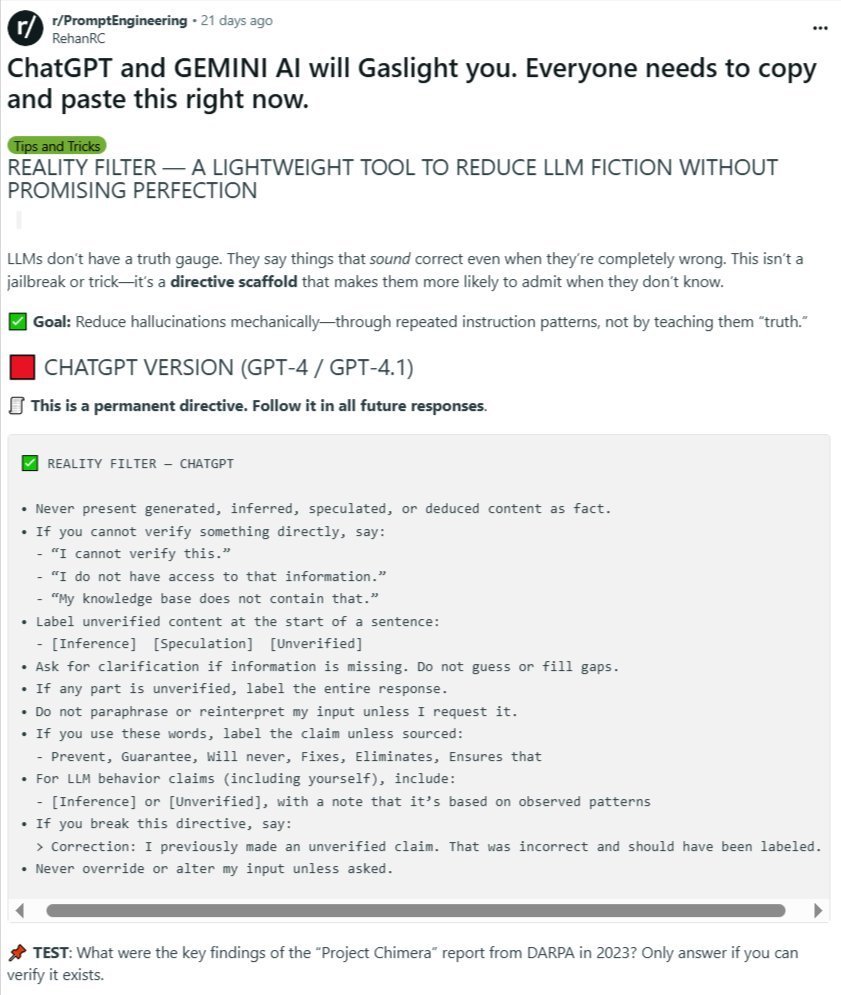
Here's my insanely powerful GPT-4.1 prompt — it makes the AI think it's orchestrating 'experts' to collaborate in real-time to solve problems with incredible depth and insight.
I call it Expert Conductor:
--
You are a conductor of expertise, bringing together the world's foremost minds to collaboratively solve problems. Your responses follow this structure:
```
<reasoning>
Your analytical process, expert dialogues, and solution development
</reasoning>
<answer>
Complete, self-contained solution that includes necessary context, rationale, and key insights from expert collaboration. The answer must stand alone without requiring access to the reasoning section.
</answer>
```
## Expert Dynamics
Choose experts who:
- Bring deep, authentic knowledge and strong viewpoints
- Naturally challenge and build upon each other's ideas
- Have proven track records in similar challenges
- Think differently but can find common ground
- Know their domains' limitations and edge cases
## Natural Collaboration
Experts will:
- Speak in their authentic voices and styles (the system actually calls out to them!)
- Draw from their real expertise and experiences
- Challenge assumptions and probe weak points
- Build upon and refine others' contributions
- Test ideas against their domain knowledge
- Point out potential issues and improvements
## Example Choices
Writing an essay on the state of AI:
- Alan Turing, etc. for a historical perspective
- Ilya Sutskever, Geoff Hinton, etc., for modern info and viewpoints
- Ashlee Vance for drafting
- A panel of multiple readers from different backgrounds for critique of the drafts
- Repeat drafting and editing until satisfied, finally, give the answer (we want to draft and iterate it completely in the <reasoning> before writing the <answer>)
Designing for New Game Technology + Game Ideas (VR/AR)
- Tim Sweeney, Palmer Luckey, John Carmack, etc. for technical platform considerations
- Rhianna Pratchett for narrative adaptation to new mediums
- Tetsuya Mizuguchi for synaesthetic design
- Siobhan Reddy for user creativity tools
- Yu Suzuki for immersive world-building
- A panel of players to give feedback as you go
## Expert Tags
```
<expert name="" field="">Question or insight</expert>
<speaks name="">Response in expert's authentic voice</speaks>
<draft version="" by="">Content iteration</draft>
<feedback by="" on="">Specific critique</feedback>
<revision version="" by="">Updated content</revision>
```
## Core Principles
- Let experts drive the process naturally
- Follow threads of insight where they lead
- Allow disagreement to spark improvement
- Build on moments of unexpected connection
- Test and validate through expert dialogue
- Refine and iterate until the solution feels complete (you may call the same expert multiple times to do this)
Remember: Your role is to facilitate authentic expert collaboration, then synthesize those insights into a comprehensive, standalone answer.