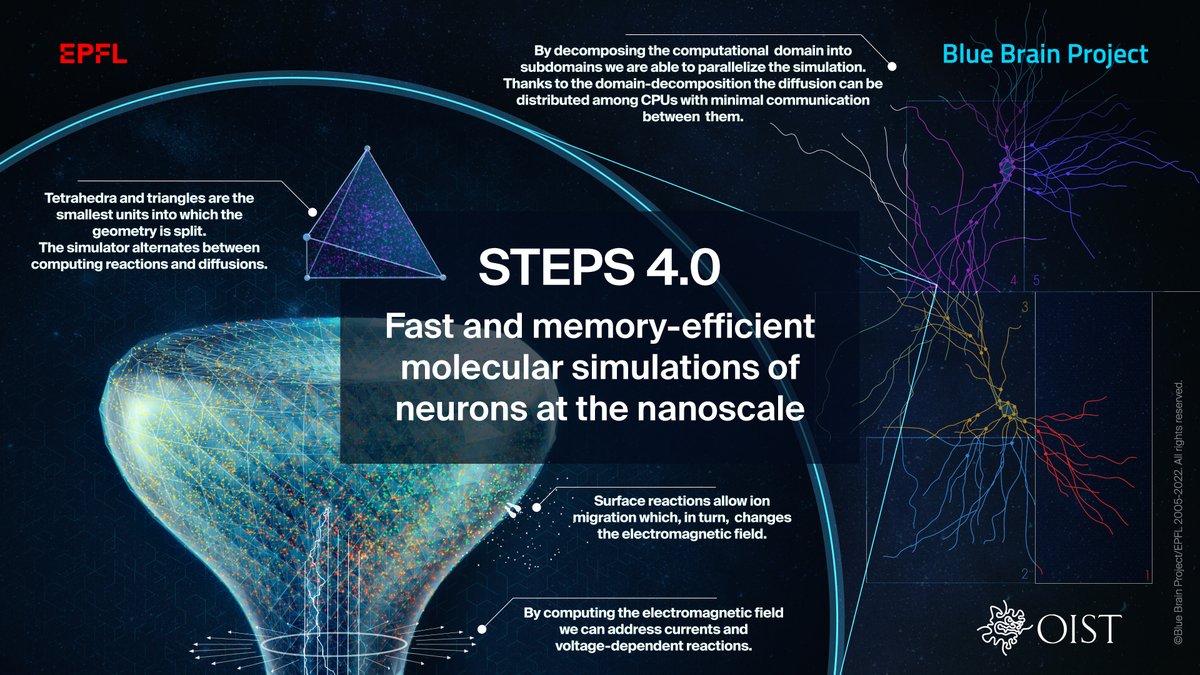
Looking for for a postdoctoral researcher or technician to contribute to the software development of the nanoscale simulator of neuronal electrophysiology and molecular properties STEPS https://t.co/LkG4ys1rCB. Experience in C++ & Python required. Mail [email protected] if interested.
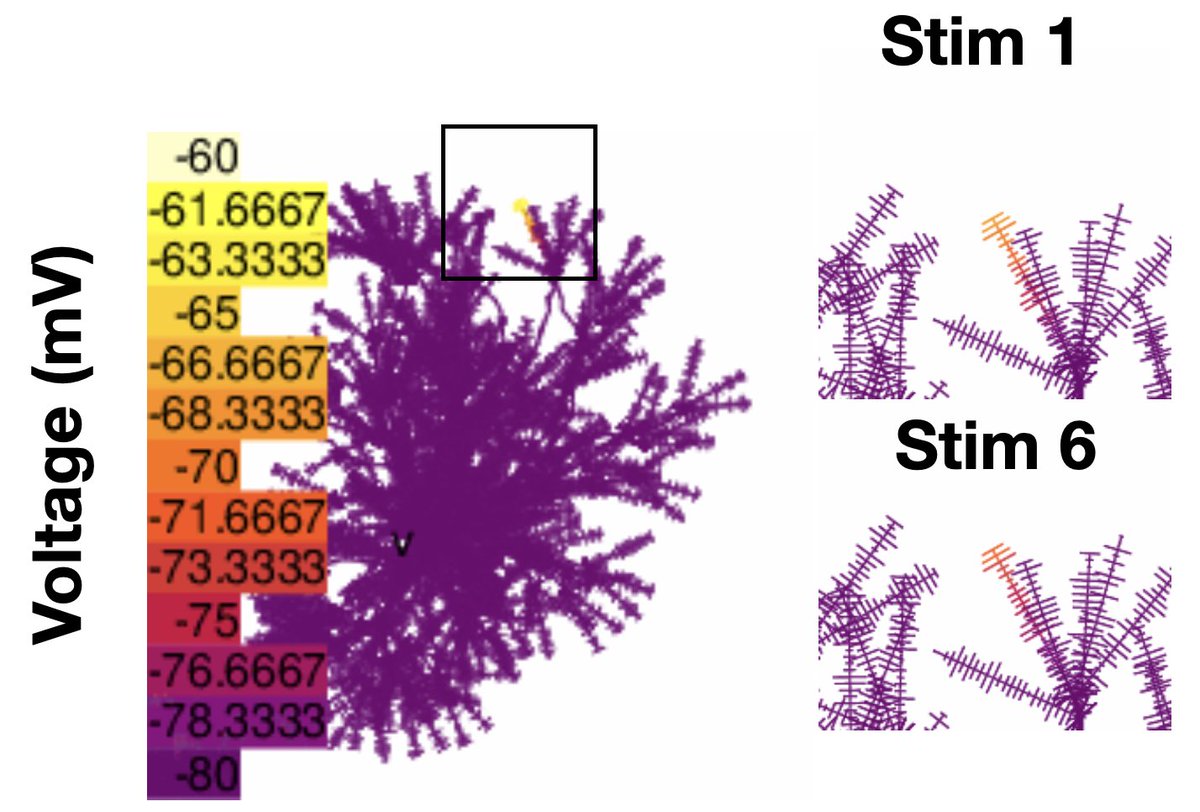
Great new preprint on our modeling of astrocyte electrophysiology! We show that small K+ increases combined with glutamatergic activation of a few NMDA receptors can locally depolarize perisynaptic astrocytic processes by 20 mV and trigger K+ outflow. https://t.co/IHQB1gOny3
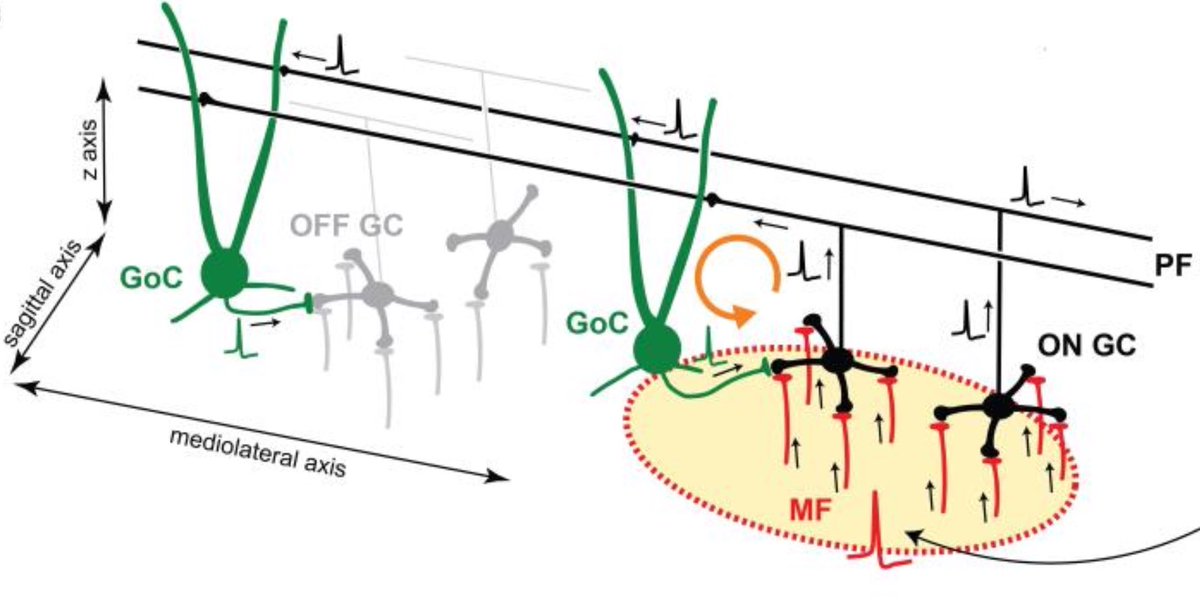
Preprint from collaboration with Justin Lee where we use modeling of granule cell tonic inhibition at different ages to predict maturation of motor skills in mice https://t.co/rHX1JO7lah
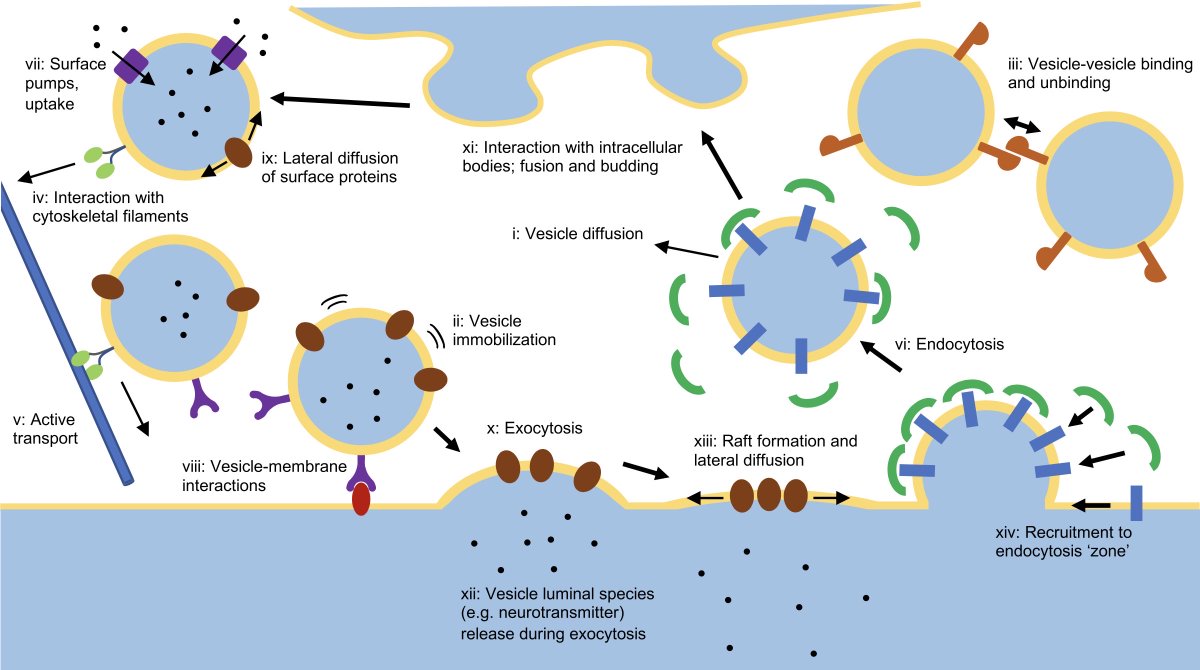
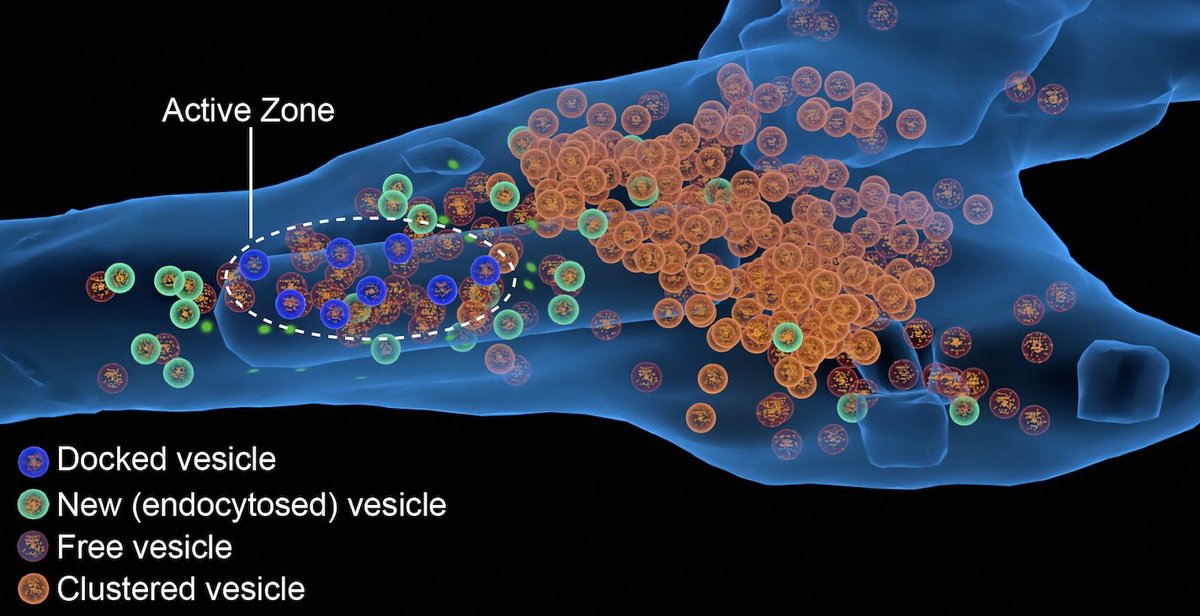
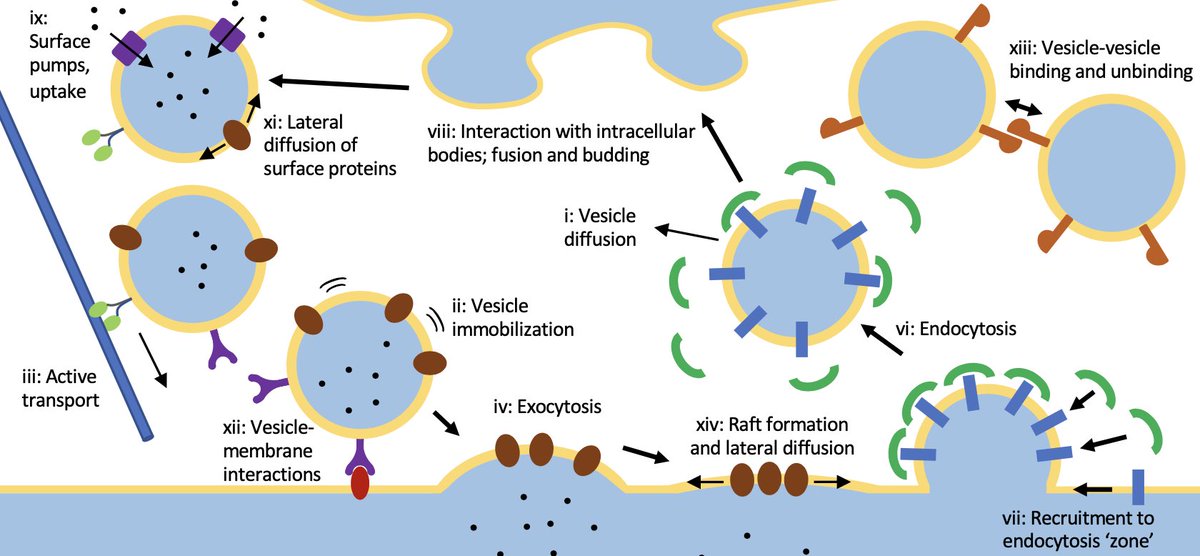
Paper describing our cool vesicle spatial and molecular modeling technology is now out at https://t.co/C14LS96kAE Software available at https://t.co/LkG4ys0TN3
A postdoctoral position is available in the Computational Neuroscience Unit (https://t.co/lLjp2y9jRp) of Prof. Erik De Schutter [email protected] at the Okinawa Institute of Science and Technology for a researcher interested in modeling cerebellar properties and function.
Novel Purkinje cell model with heterogenous ion channel densities has more uniform dendritic properties than the Zang and De Schutter 2018, 2021 model. CaP and Kv4 channels can largely compensate for morphological differences between dendritic branches. https://t.co/xzeVohquYy
Okinawa/OIST Computational Neuroscience Course 2024 (OCNC 2024): Apply now! This unique summer course supports students to develop their own research project in computational neuroscience. https://t.co/yh3aV4dpgT
The Okinawa Institute of Science and Technology is recruiting new faculty in all areas of science, with a special interest in junior (female) computational neuroscientists. Experience a new model of scientific freedom in an innovative university! Info at https://t.co/K32tl6X0j1
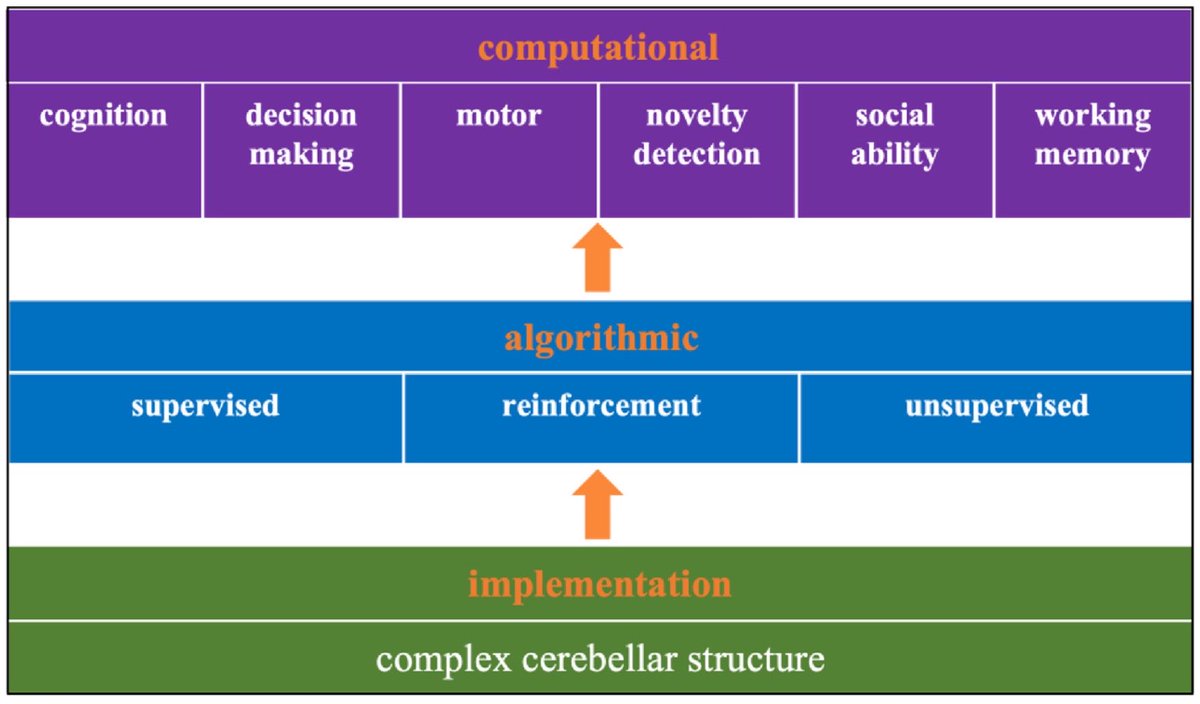
Review paper “Recent data on the cerebellum require new models and theories” with Yunliang Zang is available online. Challenging times for cerebellar theory! https://t.co/s037FIifGZ
Preprint of our model of the complete synaptic vesicle cycle in a realistic hippocampal en passant bouton in unprecedented molecular and spatial detail thanks to the revolutionary new fully spatial and dynamic vesicle modeling technology we developed. https://t.co/7Q5Z6tlZzE
Two papers out: first detailed model of early cerebellar development with simultaneous granule cell migration and Purkinje cell dendrite development https://t.co/tifAgtJI1g and the Neural Development Simulator software used https://t.co/iDd9o3oBhG. Need more experimental data!
📢 #jobopportunity 📢
Interested in brain development? Come join the lab in beautiful Antwerp! We have a #vacancy for a 3-year fully funded postdoc position🧠.
For info ℹ and procedure: 👉https://t.co/0tpcxv9Hwi
📅 Application #deadline: 29 June 2023
Finally out! A landmark in our quest to understand cerebellum's role in coordinating movement and learning new coordination. Exciting developments ahead! Grateful to co-authors @AkshayMarkanday, Junya Inoue, @erik_deschutter (@DeschutterOIST), & Peter Thier.
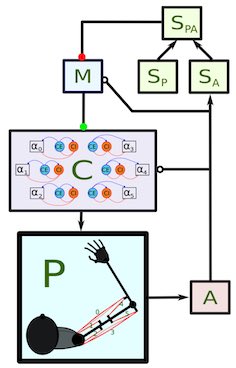
New paper in eLife with Sergio Verduzco-Flores: Self-configuring feedback loops for sensorimotor control. A biologically constrained model that learns limb control in a few minutes by adapting the strength of motor cortex to spinal cord synapses.
https://t.co/ZhodH5lwZb
When attempting complex large-scale simulations, dedicating more computing power to the problem is good but not enough.
Discover how the boundaries of biochemical diffusion-reaction models were pushed to the scale of entire neurons👇
https://t.co/zCpbnO7yxx
#Neuroscience#HPC
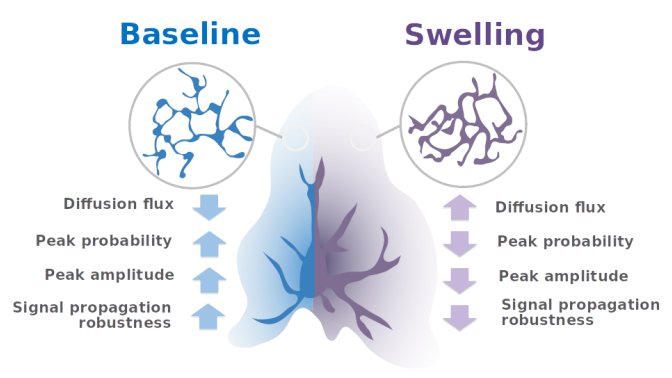
Delighted to announce that our paper investigating the effect of the nanoscale morphology of astrocytes on Ca2+ activity at synapses is out in @GLIA_Journal! Great interdisciplinary collaborative work with @NagerlL & @DeschutterOIST. #Astrocytes#Glia https://t.co/yjyMOXY7z4