Interested in using the WHS Rat Brain Atlas for your research?
Make sure to read our new interview with Heidi Kleven, PhD Student at the University of Oslo!
She discusses the value of having the atlas available on EBRAINS, the biggest challenge in creating the atlas, and how the atlas is being used by the research community.
Read the interview: https://t.co/ejJPRv78kC
📸 Day 2 of #BrainInnovationDays organised by @EU_Brain in Brussels on 18-19 November!
Meet the #EBRAINS team at our booth today and explore our position paper on the European Neurological Health Strategy
Find out more about it: https://t.co/dKyWo9XUbn
Our new position paper explains how #EBRAINS can help researchers manage brain data responsibly and use AI, modelling and simulation to develop new diagnostics and therapies.
We call on the @Europarl_EN, @EU_Commission and Member States to recognise EBRAINS as the digital research infrastructure pillar of a European Neurological Health Strategy.
Read the paper: https://t.co/Jcfa6cvxWn
EBRAINS is pleased to announce that the Swiss Federal Institute of Technology Zurich (@ETH), represented by the Swiss National Supercomputing Centre (@cscsch), has joined the EBRAINS AISBL as a full member.
The full membership of ETH Zurich/CSCS in the EBRAINS AISBL is excellent news for the Swiss Node, as it strengthens Switzerland’s position and enables it to take a more prominent role in the strategic direction and governance of EBRAINS.
The Swiss Node was started in September 2022 by @EPFL and in January 2025, the @CHUVLausanne assumed its coordination. With the new membership of ETH Zurich/CSCS, coordination of the Swiss Node will now be led by CSCS, in close collaboration with the CHUV.
Read more 👇 https://t.co/uwEYikdT2s
Welcome, @EBRAINS_eu & Rewiring Hope Indonesia!
With these additions, the IBRO network now includes 113 organizations. We look forward to supporting each other's missions & working together to advance global #neuroscience
Discover our newest members: https://t.co/AGpOHb7CSp
Join us for the upcoming online technical sessions of the EduBrains Training Series!
· Data Analysis
· EBRAINS Support for EuroHPC Resources
· Simulation-Based Inference
Participants will have the opportunity to learn about data analysis approaches, discover the support provided by EBRAINS for accessing EuroHPC resources, and explore Simulation-Based Inference for The Virtual Brain.
Sessions take place on 18 and 25 November. Register here: https://t.co/E8ZQsLfC1P
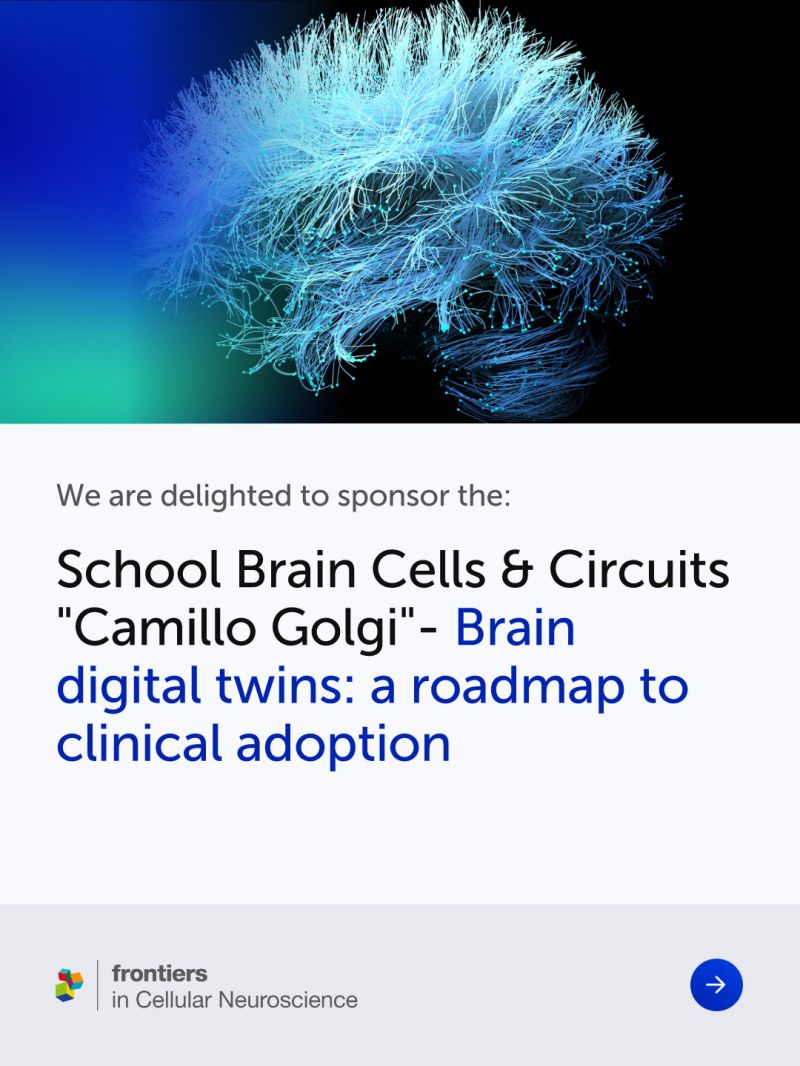
🧠 Brain Digital Twins: A Roadmap to Clinical Adoption
📅 14–18 Dec 2026
📍 Erice, Italy
✍️ Register for the School: https://t.co/HoYFWOGorr
Sponsored by Frontiers in Cellular Neuroscience.
📣 Related Research Topic open until 28 May 2027, with a 25% APC award for registered contributors: https://t.co/pugkQ1ai5M
#BrainDigitalTwins #EBRAINS #FAIRData
We’re excited to share that EBRAINS is now an official Scientific Member of the International Brain Research Organization (@IBROorg).
We look forward to advancing our shared mission of promoting global neuroscience and unlocking each other's potential to drive our organizations forward.
🔗 Learn more about IBRO and its global impact: https://t.co/UgL8fChsET
#IBROMembers #Neuroscience #GlobalScience
🧠 Are you interested in the potential clinical applications of digital brain twins?
Register now for the 'Brain Digital Twins: A Roadmap to Clinical Adoption' course from 13-18 December in Erice!
The programme is centred on real clinical challenges. Clinicians and scientists will present key open questions across neurological and psychiatric disorders, ageing, neuropharmacology, and neuromodulation, followed by focused discussions on how brain digital twins can contribute to their resolution.
Find out more: https://t.co/3cmtJ1az7Q
How can virtual brain twin models best serve patients?
@CWoopen from @UNBonn explores ethics, schizophrenia and the importance of patient voices to develop the Virtual Brain Twin (#VBT) technology.
▶️https://t.co/jzsPgueKFi
#VirtualBrainTwin#Ethics
The future of brain medicine took centre stage at the international EBRAINS Symposium “The Future of Brain Medicine: AI, Digital Brain Twins and Neurotechnology”, hosted by @LSMUNI in Kaunas, Lithuania.
Organised through a close collaboration between the EBRAINS National Nodes of Lithuania, Switzerland and France, the event brought together leading clinicians, neuroscientists, engineers and AI experts to explore how emerging technologies can transform the diagnosis, treatment and prevention of neurological and psychiatric disorders.
Read more 👇 https://t.co/KHjjwZ1cYb
How can #digital#braintwins support clinical research?
Explore personalised brain modelling and simulation with the #free online #course “Digital Brain Twins in Clinical Research”, returning this November.
Learn how to build individualised brain network models from multimodal imaging data and run simulations using TheVirtualBrain and supporting neuroinformatics tools.
Course Details
📅 12–27 November 2026
💻 Online | English | Free
🔧 Basic Python or MATLAB skills required
Discover the programme and how to join: https://t.co/NRH3mnzhHl
We are pleased to announce that new translations of the 'Mind Your Mind' brochure are available!
You can now read about how to protect your brain data in French, German, Italian, Portuguese, and Romanian.
Developed by the EBRAINS Ethics and Society Committee, in collaboration with the International Brain Initiative, the guide aims to empower the public with knowledge about neurodata: what they are, why they matter, and how they can and should be protected.
Click here to discover the new translations: https://t.co/EzXnc7ULic
The EBRAINS Virtual Users’ Week from 12-14 October enabled learners across the globe to join free-of-charge, online, hands-on workshops covering the full range of EBRAINS tools and services.
12 workshops were each delivered twice per day to ensure learners in all time zones could take part in the event. With 344 participants from 35 countries across 5 continents, the event engaged both new and experienced EBRAINS users on an international scale.
Thank you to our brilliant workshop tutors for an inspiring educational event, and to our participants for supporting the international EBRAINS community!
Read more 👇 https://t.co/VvzzCxnMVX
The Receptor group led by Prof. Nicola Palomero-Gallagher at the C. & O. Vogt Institute for Brain Research, @HHU_de, and @fz_juelich has mapped the cellular and neurotransmitter receptor organisation of the macaque cingulate cortex, a brain region involved in emotion, motivation, decision-making and motor control.
Read more 👇 https://t.co/2gU09ggvwC
How can researchers simulate the activity of the whole brain without modelling every neuron in full detail?
A new study, supported in part by EBRAINS 2.0 and published in @eLife, explores one part of the answer: retaining key biological mechanisms while simplifying the mathematics needed to model large neuronal populations.
Read more 👇 https://t.co/CqxEsmpV17
🧠 Shaping the next decade of neuroscience in Europe – together!
The @EBRAINS_eu#Roadmap writing team has been established, building on community contributions to identify scientific priorities, technological opportunities and infrastructure needs.
Thanks to everyone contributing to this shared vision!
🔗 Discover the themes and next steps: https://t.co/piX8OaZwyd
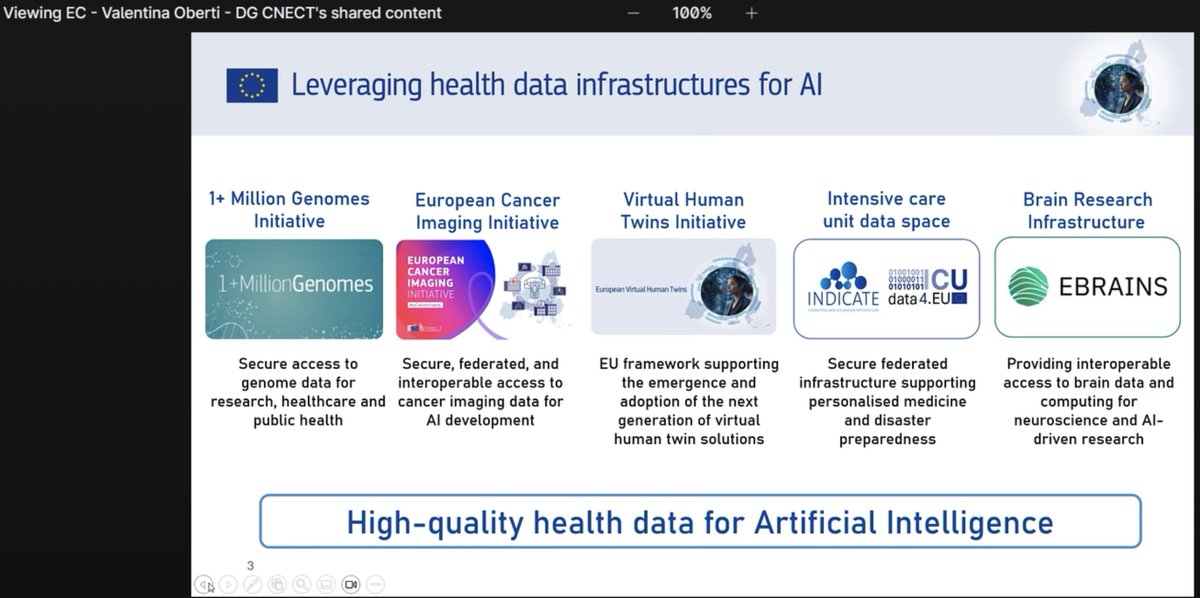
🧠 Shaping the future of #VirtualHumanTwins!
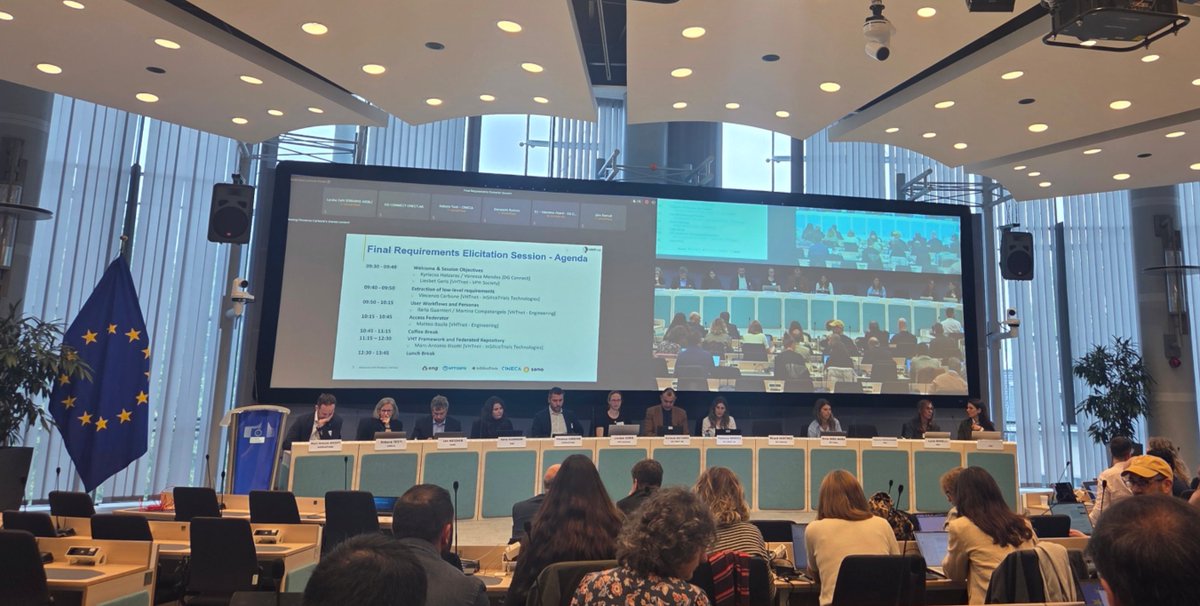
At the VHT Annual Event in Brussels, organised by @DigitalEU, @EBRAINS shared its expertise in data and interoperability, exploring new opportunities for collaboration to advance digital twins in healthcare.
🔗 Read more: https://t.co/E3pXjekKBM
#BrainHealth #DigitalTwins