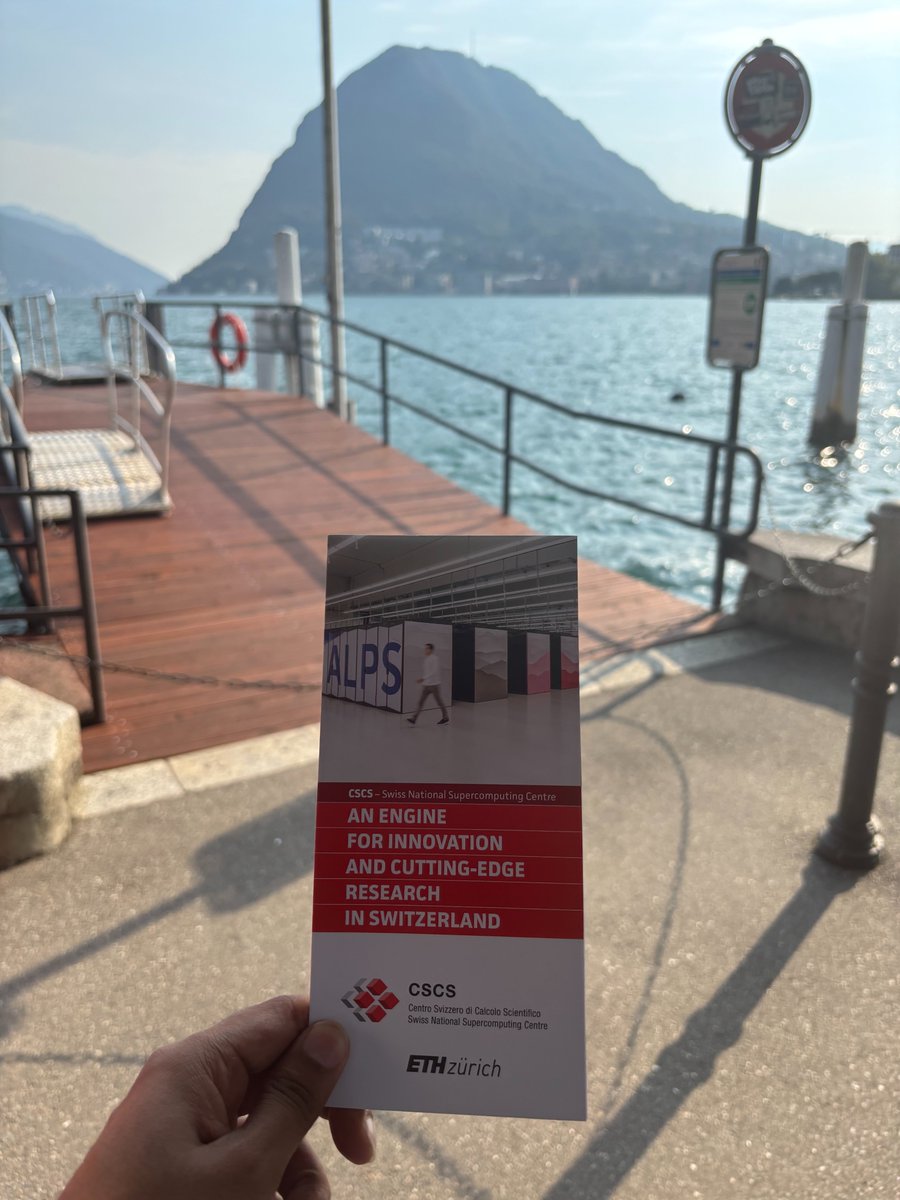
CSCS, the Swiss National Supercomputing Centre, develops and promotes technical and scientific services in the fields of high-performance computing.
#weareAlps
Turbulent flow around a car body, simulated with a solver that also shows how design changes affect the result.
This video presents large-eddy simulations of the Ahmed body, a reference geometry in road-vehicle aerodynamics, at a Reynolds number of 768,000 and rear slant angles of 25° and 35°. It walks through the measured geometry and its representation in the solver, the 94-million-cell grid, and the governing equations and turbulence model. It then explores the transient vortex structures and wake, before comparing the results with laser-Doppler measurements.
What sets the framework apart is the combination of experimental validation, full differentiability and efficient GPU performance.
Reverse-mode differentiation runs through the entire solver, including the pressure projection and the immersed body. The resulting gradients agree with finite differences within the precision those checks can resolve. A single backward pass gives the sensitivity of drag to the slant angle.
The solver is built for GPUs and runs in double precision, from a single GPU to multi-node jobs on the NVIDIA GH200 Grace Hopper nodes of the Alps supercomputer @cscsch. On one GPU, it achieves around half the peak memory bandwidth. In scaling tests, a billion-cell grid advances by one time step in 78 milliseconds on 32 GPUs.
These capabilities matter because foundation and world models for physics are only as good as the data they learn from. They need reference simulations of known accuracy and, increasingly, gradients alongside snapshots to learn how a flow responds to changes in shape or operating conditions. A validated, differentiable solver that runs efficiently on modern GPUs can provide exactly this kind of training and test data.
The analysis also offers a sobering reminder of the challenge: small errors in this flow grow a millionfold within roughly twice the time it takes the flow to travel the length of the body. A learned model of this wake should therefore be judged by its statistics and its response to design changes, rather than by how closely it follows a single trajectory.
More is coming. Stay tuned.
#DifferentiableSimulation #FoundationModels
🚀 PASC27 Minisymposium Proposals: 1 MONTH LEFT!
How is scientific discovery being transformed by AI-HPC convergence? 💡 Bring your ideas!
📅 Deadline: 9 December 2026
🔗 https://t.co/vt0nhBAjgE
#PASC27#ScientificComputing#AI#HPC
As electronics shrink, conventional materials like copper reach their limits. Using #CSCS supercomputing resources, researchers from @EPFL and @Harvard identified promising 1D materials—and discovered two rare, stable metallic wires just a few atoms thick: https://t.co/wInzfNzHhN
🇨🇭 Sovereign Open-Source AI in Action:
Switzerland’s Apertus 1.5 is now integrated into Proton’s Lumo.
Starting today, Apertus 1.5 (the open language model built by EPFL, ETH Zurich, and CSCS) is available as an optional model inside Proton’s privacy first assistant, Lumo.
◾️Truly Open Science:
Trained on the Alps supercomputer under the Swiss AI Initiative, Apertus is released under Apache 2.0 (8B and 70B sizes). Version 1.5 brings vision capabilities, a 262k context window, a thinking mode, and upgraded tool use.
◾️Sovereignty in Practice:
By keeping infrastructure, data, and compute within national borders, Switzerland ensures technological independence from global big tech monopolies.
◾️Privacy by Design:
Lumo users can opt into Apertus while maintaining Proton’s zero access encryption.
Switzerland is quietly building a blueprint for sovereign, open source AI. Apertus isn't trying to replace every closed system overnight, it's establishing a real, privacy respecting pipeline from supercomputer to consumer application.
#SovereignAI #OpenSourceAI #Privacy #SwissAI #ArtificialIntelligence #TechInnovation
@cervisiarius@EPFL@TrustValleyCH@LuizaJarovsky@ImanolSchlag@xavierstuder@haeggee@cscsch@AbtSwitzerland@EPFL_AI_Center@DominiqueCAPaul@BrianRoemmele@clara__meister@effi288 @JulienFrrr @AnneLaureBEAUD2@valentina__py@MLoebekken@alan_frei@ProtonPrivacy@SwissDevJobs@emmanuel_belo@USchuepbach@tagesanzeiger@GH_Wiegand@apertusllm@a_yukh@ETH_AI_Center@ETH@EPFL_AI_Center
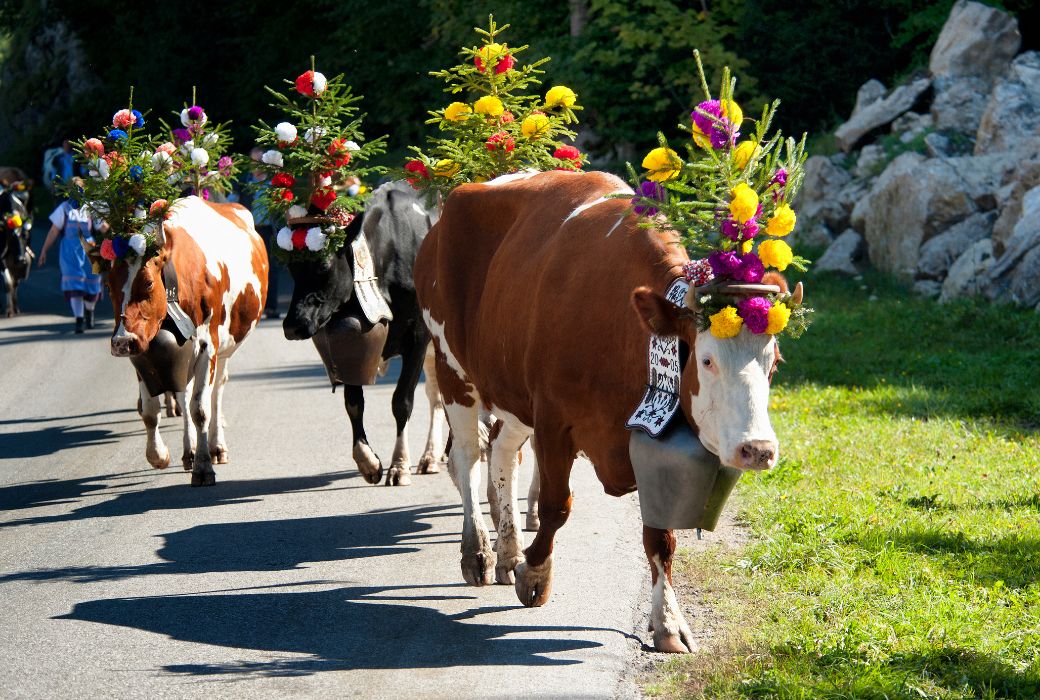
I was late to a supercomputer because of a cow.
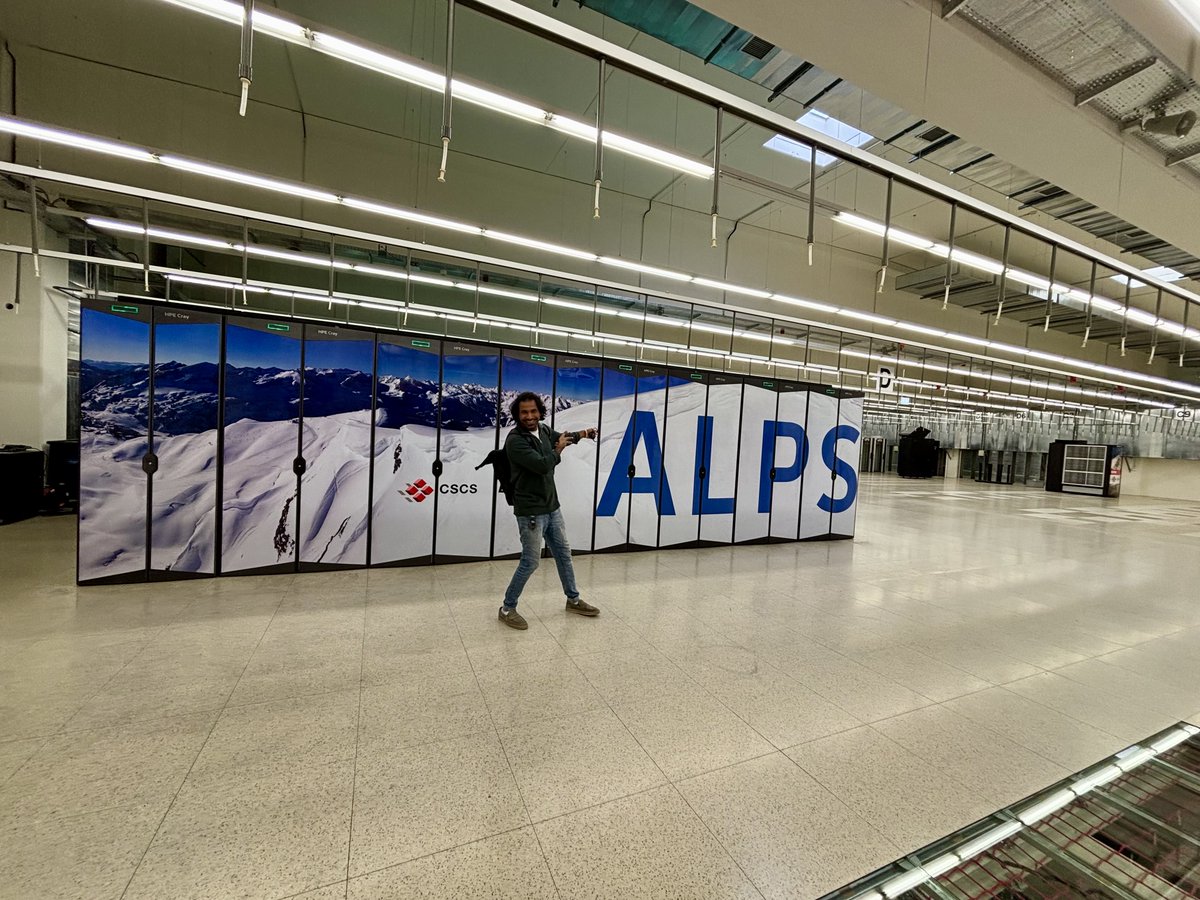
A livestock show on the drive to Lugano, then Alps at @cscsch, cooled by 460 litres of Lake Lugano water every second.
That's Switzerland. Tradition and frontier tech, two hours apart.
Thanks @SwissAIWeeks#SwissAIWeeks
Accurately predicting semiconductor band gaps is key to understanding their properties. Using CSCS’s #Alps supercomputer, @EPFL_en researchers developed a new DFT functional that improves accuracy while remaining far faster than many-body methods. ⚛️💻https://t.co/xaV0uIfA3N
Heatwaves aren't freak events anymore, they're everyday life. Parched forests, failed harvests, wildfires, deadly heat across continents. A new study now puts numbers on responsibility: how much the world's biggest CO₂ emitters have driven these extremes. https://t.co/qZbwmAlocW
A collaboration that began in summer 2025 has already produced a new #AI model that predicts antibody-antigen binding with unusually high data efficiency — fewer experiments are needed. Could speed up both antibody and small-molecule drug discovery. More: https://t.co/dexwXsV7K8
We are pleased to announce that our latest Digital Annual Report is available online. Packed with insightful data, compelling narratives, and interactive features, this report showcases our journey, achievements, and milestones over the past year: https://t.co/vucav8fwSI
Watch the video "CSCS Accelerates Supercomputing with SUSE Virtualization": https://t.co/Lzf97Yvu9S
CSCS Accelerates Supercomputing with SUSE Virtualization
Cloud-native #HPC is gaining momentum. #CSCS developed a hybrid Kubernetes solution for the #Alps supercomputer, enabling faster, more scalable cloud-native HPC deployments and earning the SUSE Virtualization Visionary Award: https://t.co/EQTUxCs61q @SUSE
We will be at the ISC High Performance Conference! Visit #CSCS at booth G-31 to talk HPC, AI, and supercomputing in Switzerland — with Swiss coffee and chocolate included ☕🍫 https://t.co/TewFBGmKvB
#ISC26#HPC#AI#Supercomputing
Even Antarctica is seeing stronger heatwaves due to climate change. Using #CSCS’s #Alps supercomputer, SLF researchers studied one of the continent’s most severe recent heatwaves and its impact on the Antarctic ice sheet. Discover more: https://t.co/vzGvbTLNPa
Big news from Prague! #CSCS has been named a Virtualization Visionary at #SUSECON26. We unified our VM and Kubernetes operations with SUSE, giving scientists faster, more reliable access to research tools and enabling continued innovation: https://t.co/cl7oXm8H7U @SUSE
🌍 Honoring the global innovators shaping the future of open source.
Tonight at SUSECON Prague, we celebrated the 2026 SUSE Customer Award winners:
EGGER Group - Advocate
FETCi - AI Accelerator
Nexi - Cloud Native Champion
Airbus Defence & Space - Digital Sovereignty
DICTU - Digital Sovereignty
CVS Health - Edge Innovator
Carnival - Edge Innovator
Grupo Elektra - Geeko Innovation
Omnicell - Innovation for Good
Mizuho - Open Source Excellence
PepsiCo - Open Source Excellence
CSCS - Virtualization Visionary
💚 Congratulations to all the winners.
👉 Read the full story: https://t.co/TsbKrDyacf
#SUSE #OpenSource #CustomerAwards #Innovation
➡️ Submissions for EuroHack26 are open!
📅 Deadline for team coordinators: 30 April 2026 (AoE)
📍 CSCS – EuroHack26, Lugano, Switzerland
We look forward to welcoming teams for a week of collaboration and innovation!
https://t.co/sZf7UB25HO