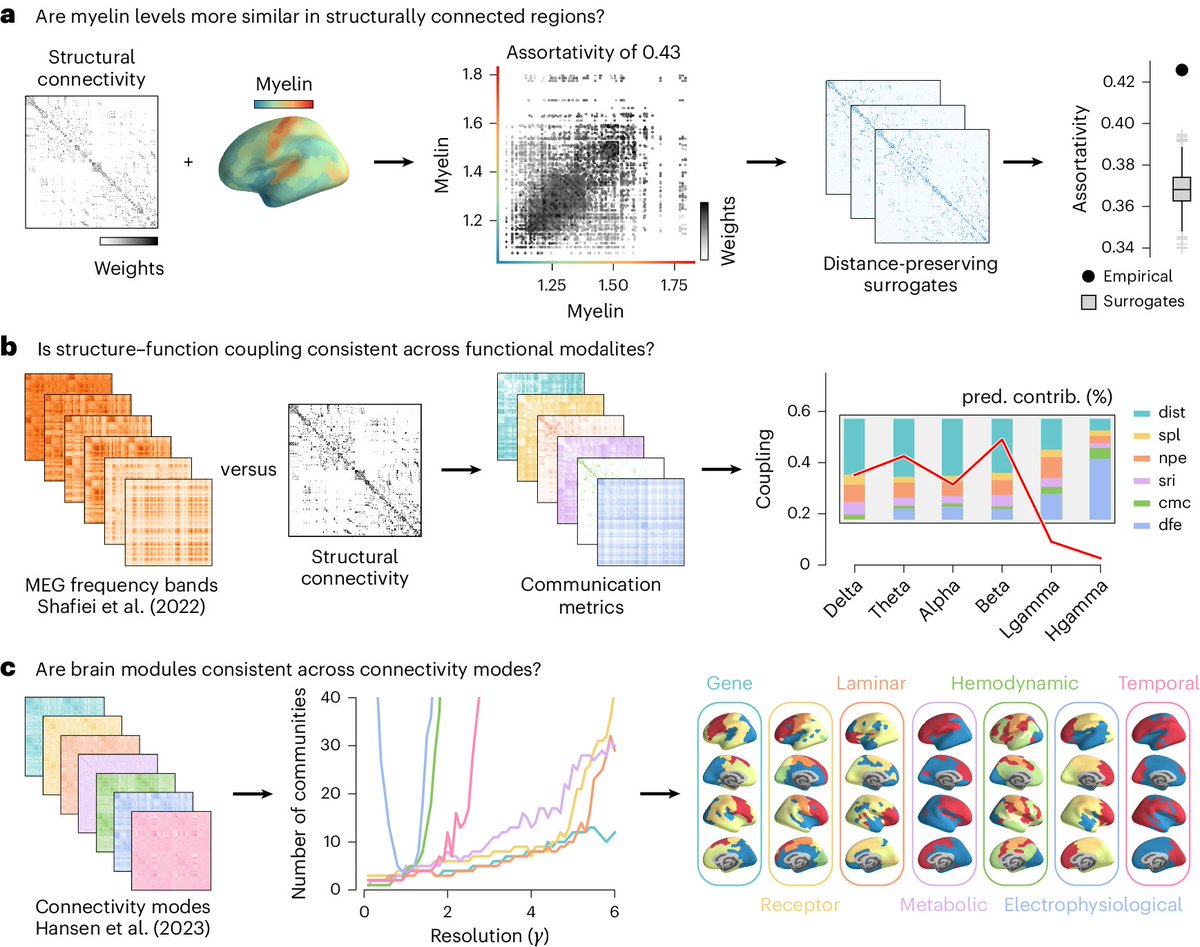
Towards a biologically annotated brain connectome | https://t.co/aH0dSBtKAL
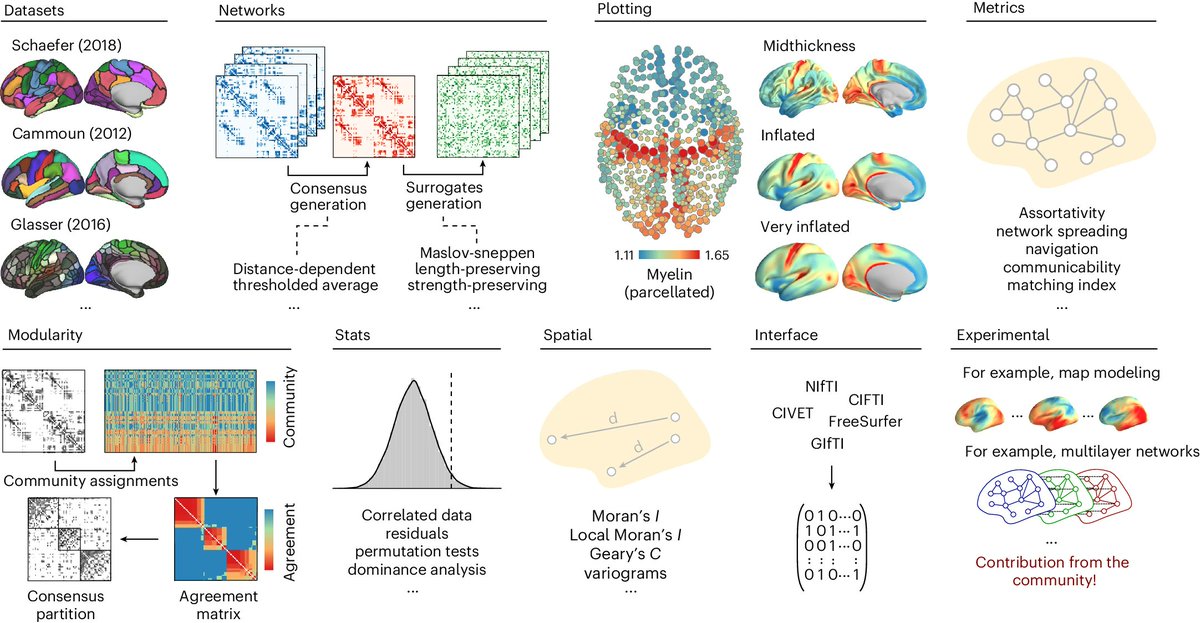
How do we integrate local biological annotations with connectome wiring?
@VinceBazz + @JustineYHansen lay out how to build and analyze annotated connectomes @NatRevNeurosci ⤵️
1/ 🚨 Just out in @NatureNeuro! 🧠
We profiled >6,000 features of brain dynamics across humans + monkeys, mice, fish and worms 🧑🐒🐒🐁🐟🪱 to find a shared neural endpoint of anaesthesia: spatiotemporal isolation of local activity 🧵
🔗 https://t.co/ek0pIFDPqD
i have indexed this tool in https://t.co/NPiVlXTWdM! it includes a short review of the tutorial together with all the links needed to use it - https://t.co/0t6fE0HOf9
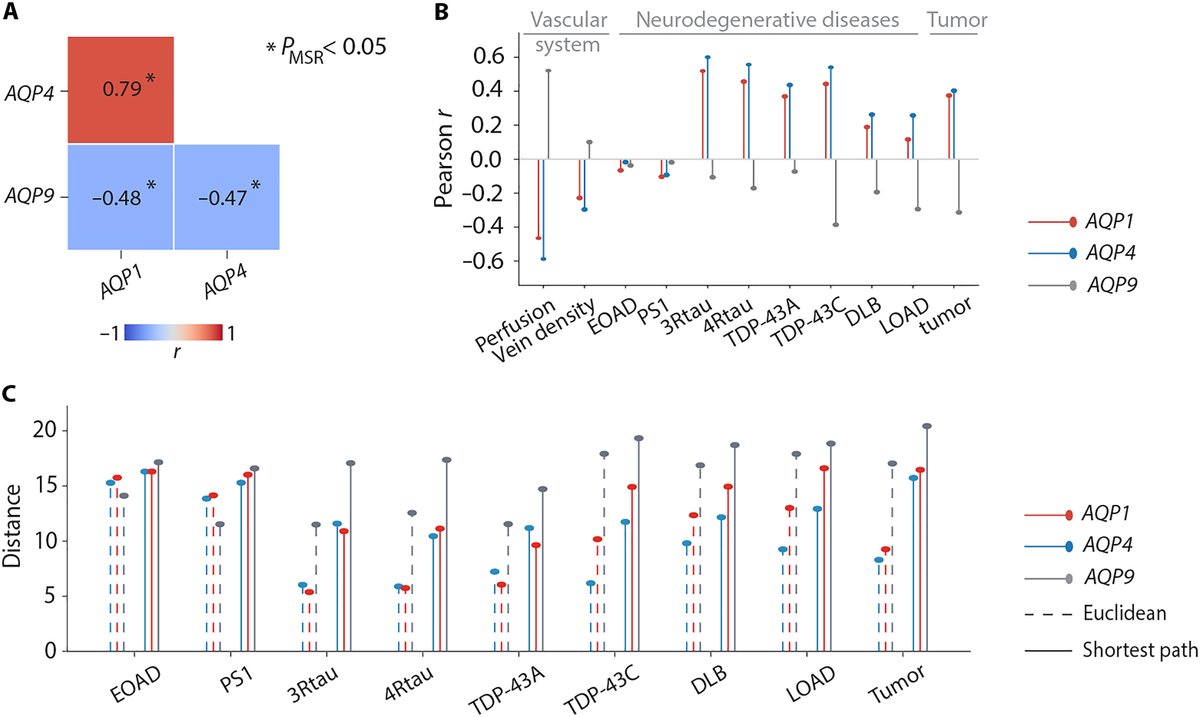
7️⃣ We really like this project because it explores how support systems—in this case whole-brain glymphatic organization—relate to diverse aspects of brain physiology and disease vulnerability.
led by the talented @Tahmine21189829
code + maps: https://t.co/JlJpckZzJX
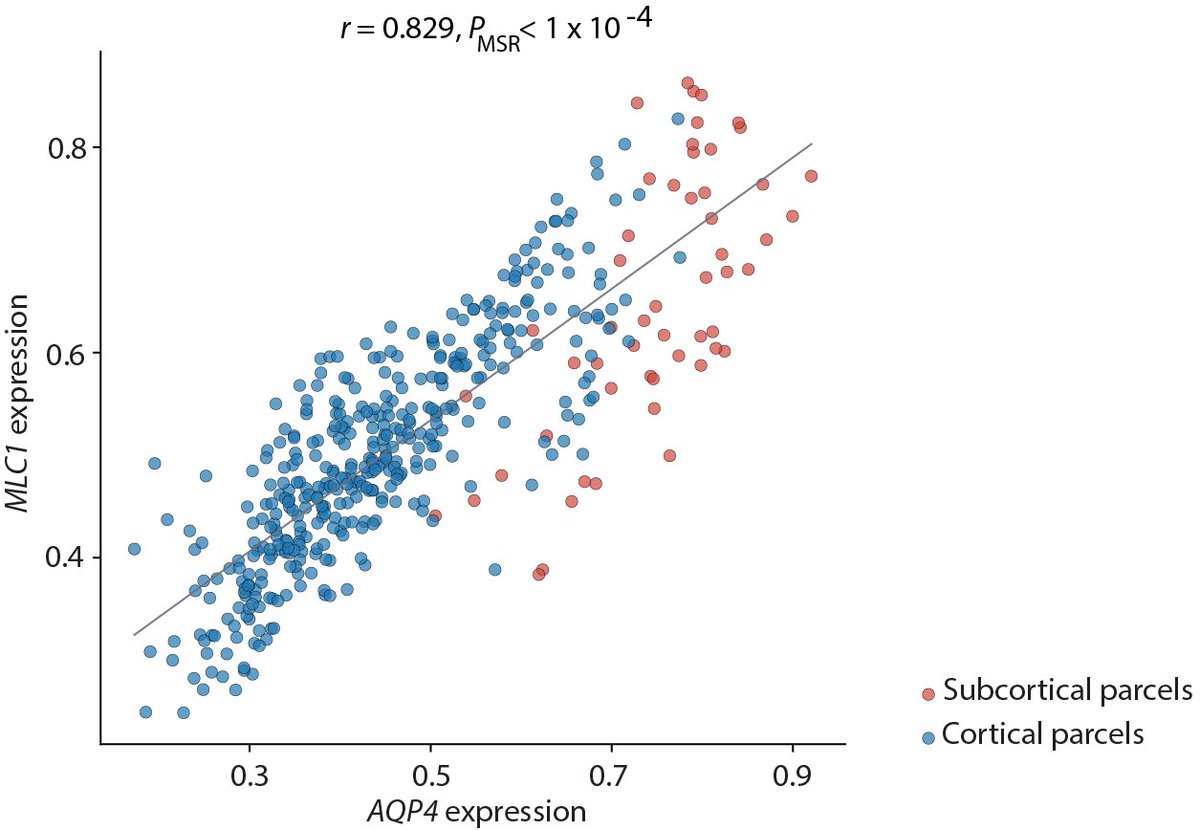
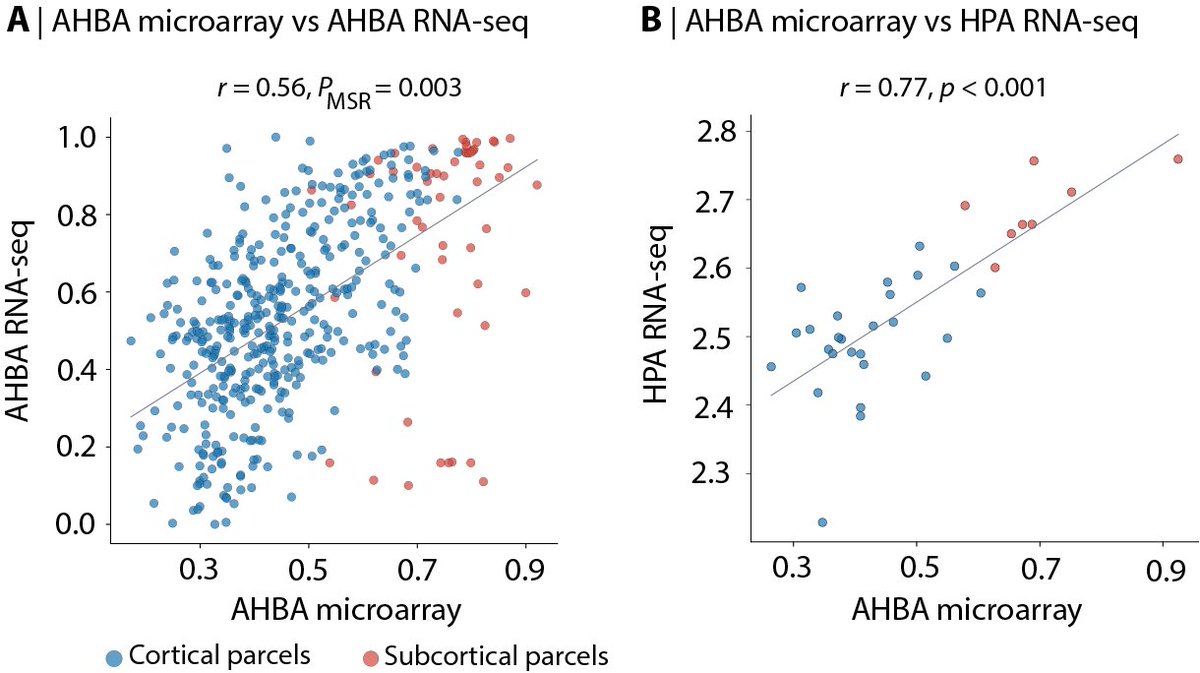
Spatial organization of AQP4 water channel expression in the human brain | https://t.co/P1Z2KwIxtA
Aquaporins are a key component of the glymphatic system. How are they distributed + how do they relate to brain function and dysfunction? @ScienceAdvances ⤵️
6️⃣ There are a few other fun things in the supplement, including the mapping of other aquaporins and comparisons with MRI measurements of the glymphatic system (intrathecal CSF tracer gadobutrol).
3️⃣ We showcase three walkthroughs of biologically-relevant questions that can be answered using netneurotools, related to structure-function coupling, multimodal connectivity, dynamics and gradients.
An incredible feeling, knowing that the European Union believes in our work & and has decided to back my vision for the future of integrative neuroscience 🧠
Grateful beyond words to the collaborators & mentors who made this possible: here's to doing more science together! 🎉
Out now in @PNASNews
We present a new metabolism-weighted brain connectome that incorporates each region’s energy expenditure into the mapping of brain connectivity.
https://t.co/fULHi3QJqG
The Neuroimaging and Brain Networks Lab at Universidad de Sevilla will be at #OHBM2026. We will be presenting our work on normative modeling in schizophrenia, trauma, computational models of structural connectivity, classification analysis and polygenic risk of psychopathology.
Our latest work is now out in @NatureNeuro 🎉
Using brain scans in 🐭mice and humans 👨 we show that variable patterns of brain activity in #autism reflect distinct underlying biological mechanisms!
👉https://t.co/I8SQnOn2kI
🔥Our opinion piece with @DuncanAstle on “why we might be better off accepting and embracing the fact that the brain’s connectivity profile is in no way optimal” is now out on @TrendsCognSci. There, we discuss implications for Neuro-AI and psychopathology.
https://t.co/ysXhg7gT2A