@ProtonMail Your arguments are true for any SSO option. At the end of the day you will have to trust one company or manage hundreds of passwords manually.
Google is a better option imo.
4/ The goal isn't replacing human authority—it's wiping out routine triage drag.
L2s heal in seconds. L3s get fully enriched hypotheses instead of vague alert fatigue.
How is your team implementing deterministic guardrails for SRE agents?
Automate diagnosis unconditionally. Automate deterministic remediation conditionally. Gate destructive changes behind human authority.
The bottleneck in incident recovery isn’t diagnosis—it’s human latency.
Here is our Autonomous SRE pipeline with Splunk & LangGraph 🧵👇
1/ Detection splits into two tracks in Splunk:
• Real-time streams (rt-1m): Sub-second P1 alerts (JVM OOM, socket drops)
• Micro-batch (cron 60s): Sliding windows for anomaly cascades (504s)
Buffered via HMAC-verified FastAPI into Redis to decouple traffic spikes.
33 Days of Unlimited Seedance 2.5
Seedance 2.5 is LIVE on Higgsfield today.
The most capable video model yet, with 30-second scenes in a single pass, 50 references and production-ready editing.
Zero credit cost for 33 days. Limited-time offer.
pov: you spend $20/month on closed APIs only to realize cheaper open models are winning 4 out of 5 coding tests
a live head-to-head build test of GLM 5.2, Kimi K2.7, and Claude Opus 4.8:
> Temple Run runner - GLM 5.2 won with fast, playable code while Claude Opus 4.8 delivered slow, buggy logic
> Apple presentation page - GLM won with scroll-triggered effects while Claude Opus 4.8 lacked dynamic animations
> orbital map simulation - Kimi K2.7 won by building zoomable tracks and orbit speed adjusters
> agent readiness - both GLM and Kimi route directly into your autonomous agents, with GLM 5.2 running a 1 million token window
the premium price tag on closed flagships is no longer buying the premium performance
which setup makes more sense for your stack - paying the premium for closed flagships or running these cheaper open models?
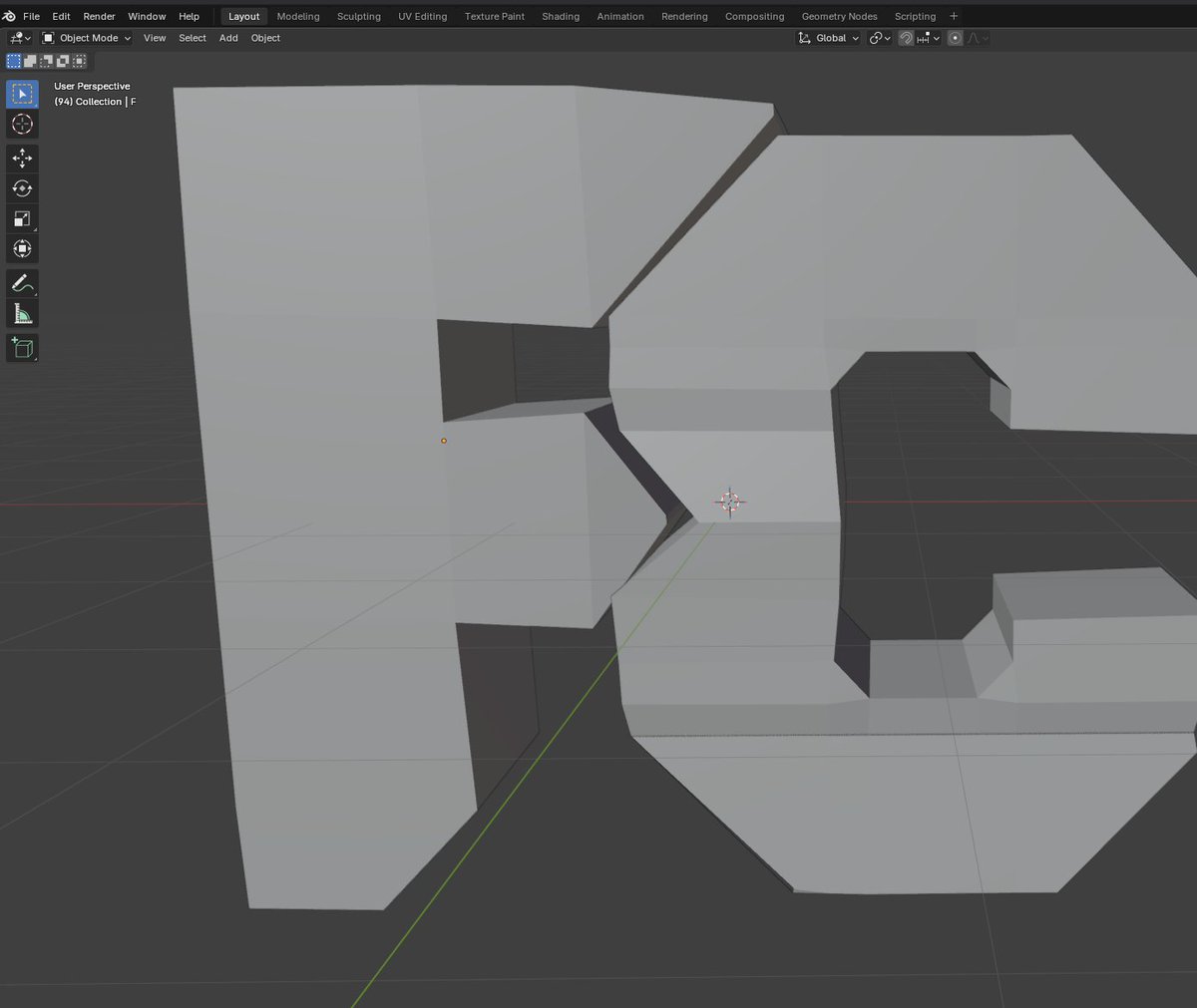
Deep in the vertices this morning.
I’m hand-crafting the geometry for FutureCoded in Blender before it finds its permanent home on our website via Three.js. Can't wait to apply some shaders to it
In an era of instant generation, this process reminds me that no matter how evolved AI becomes, human ingenuity is essential for genuinely unique creation. The craft still matters.
OpenAI spends $3.30 to make $1.00.
Google spends $0.00 in supplier margin.
This single fact explains everything happening in AI right now, and almost nobody sees it.
The math:
OpenAI pays NVIDIA 75% gross margins on GPUs.
Then pays Microsoft markup on Azure.
Then covers its own costs.
Total: $66B spend on $20B revenue.
Google designed its own TPUs.
Owns its own data centers.
Pays only electricity and depreciation.
The gap: 30-44% permanent cost advantage.
Every query OpenAI serves, the disadvantage compounds.
Every query Google serves, the moat deepens.
This is why:
ChatGPT US traffic down 35% in November.
Gemini hit 650M users growing 62% in 5 months.
Marc Benioff publicly defected after 3 years.
This is why OpenAI just added ads to ChatGPT.
This is why Sam Altman declared "Code Red" in December.
This is why all 4 original GPT paper authors have left.
But here's what makes this a 2008-level systemic risk:
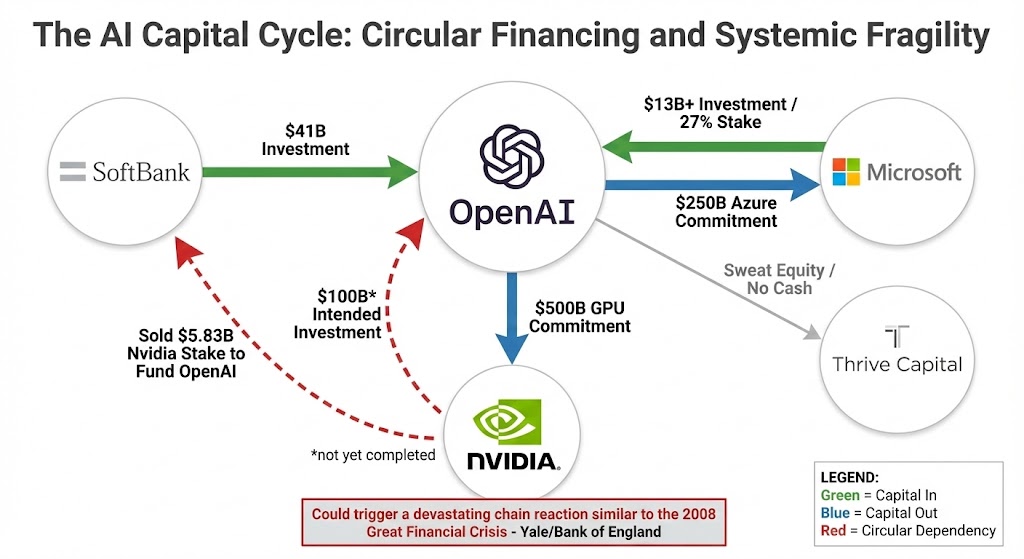
SoftBank sold $5.83B in NVIDIA stock to invest $41B in OpenAI.
NVIDIA intends to invest $100B in OpenAI while OpenAI commits $500B to buy NVIDIA GPUs.
Microsoft's $135B stake depends on OpenAI's $250B Azure commitment.
The customer funds the supplier who funds the customer.
Yale researchers called it: "Could trigger a devastating chain reaction similar to the 2008 Great Financial Crisis."
The catalyst has a date: April 27, 2026.
Musk v. OpenAI goes to jury trial.
Damages sought: $79-134 billion.
OpenAI's cash reserves: $64 billion.
The judge already ruled there's "plenty of evidence" of fraud.
Hedge fund positioning in AI infrastructure: 93rd percentile long.
When this reprices, the exits won't fit the bodies.
Google is to OpenAI what Microsoft was to Netscape.
The capability is comparable. The cost structure is fatal.
Bookmark this.
Both look great! It depends on the button hierarchy. In the left version, it feels like the square cards are widgets while the horizontal have a different functionality . If that's the intention, I prefer the left one. But if they have similar hierarchy, I'd choose the variety on the right.