Nuxt UI v4.13 is out! 🔥
🔘 New Toggle & ToggleGroup components
📎 File attachments & message queue in ChatPrompt
🔔 useToast promise method for loading toasts
🧹 ESLint config to check your @tailwindcss classes against your theme
...and plenty more in the release notes:
https://t.co/tsBl8LYEpd
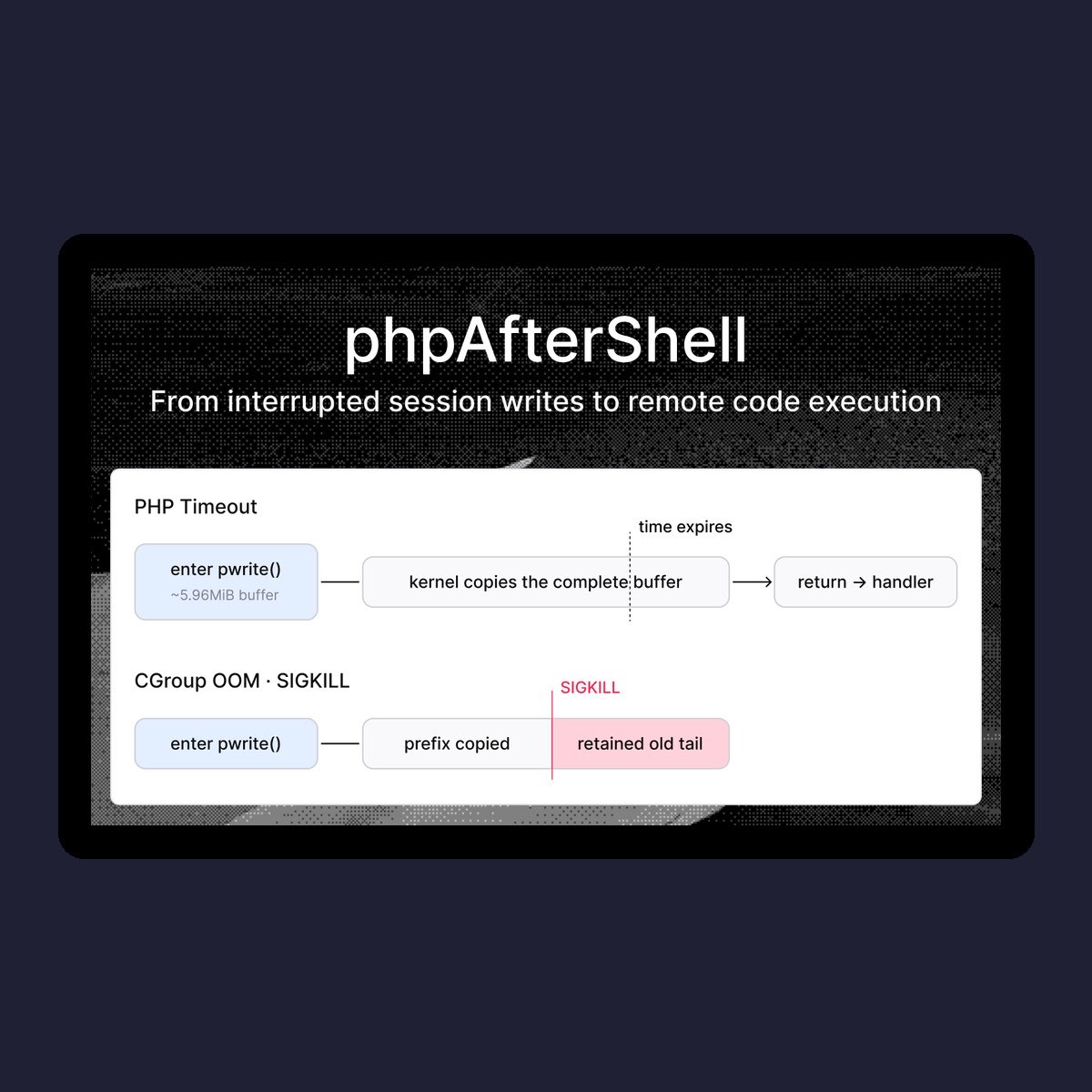
‼️ BREAKING: Researchers broke past PHP's fix for the php2shell flaw and can again run their own code on web servers, no login needed.
Security firm depthfirst says the latest PHP releases are still vulnerable. The bug, CVE-2026-126714, is rated 9.2 out of 10.
https://t.co/EmNk1y4tjf
A new Docker, but a familiar story.
Today we're introducing a new look, a new focus, and a refreshed Moby.
Same Docker you've trusted for over a decade, now built to run on trust in the agentic era. We can't wait to show you.
Read the full story: https://t.co/vGfxtsiVFT
‼️ UPDATE: Microsoft says last week's global Microsoft 365 outage came from a fix it rolled out in July, which hid a bug for over three months.
The bug froze the gateway servers in front of Exchange Online email and other Microsoft 365 services under heavy load. Lab tests on weaker machines missed it.
Hours earlier, Teams had moved its traffic onto those servers, while nearly 14% were already offline.
Microsoft's automatic failover then spread it. In under two hours, more than 80% of the servers stopped responding.
Servers that came back were flooded by waiting traffic and froze again.
I originally came up with the idea of auto imports, which landed as Nuxt default
I can no longer recommend them. With agents, syntax sugars are no longer valuable to trade for explicitness
I would personally suggest disabling it, here is the tool:
https://t.co/BklXMoDsWw
Hackers are now using LLMs to continuously scan software updates, spot newly fixed bugs, and build attacks before teams can apply the fix — all without human involvement. That’s according to the latest report from the Google Threat Intelligence Group.
We're helping defenders counter automated threats with Google AI Threat Defense, which combines Gemini and other frontier models to find and fix flaws before attackers can exploit them.
Got to experience the magic of @uisdk.
Two prompts of fx + Gemini Argon. Pure Web Components. No framework.
The agent reused 14 UI SDK behaviors out of the box 🤯: window resizing, drag, menubar hover-switching, typeahead, roving toolbar focus, 10-band EQ sliders, scoped hotkeys, ARIA, and WebMCP agent control.
https://t.co/1Ol3xqKWJz (source linked)
Music by @suno.
I added WebMCP to my site.
Now an agent asks my site what I've published on MCP and gets the answer in one tool call, about 562 tokens.
Reading the four MCP tag pages as HTML instead: about 99,000 tokens.
Here's how it works in Chrome DevTools 👇
When we started working on the concept of "behavior", we wanted to try and make agents really good at getting a11y right. We put a lot of thought into how the UI SDK behaviors handle and verify accessible interfaces.
So, when you ask your agent to build interfaces with UI SDK, you can expect really good a11y and best practices out of the box.
Every interface in the video below got these scores on the first generation.
We built UI SDK for agents.
This is so genuinely cool. I love how it's been packaged up. So elegant @shadcn and @shuding! I'll be studying this for a while.
1. createAgent is an "agent bridge" which gives a snapshot, act, and query tool. It allows agents to interact with the actual UI components directly
2. Change callbacks know when the agent made the change (details.source === "agent"), and the app can refuse it with `cancel` (I love this)
3. Data attributes handle access and safety: data-agent-confirm (ask a person first), data-agent-secret (fill but never read), data-agent-hidden
4. Primitives declare what agents are allowed to do: `agent: { actions: [...] }`
5. Page-level tracking of every UI change with `observe` and `history`. It can stage changes, seek back, and undo them! -> history.undoSource("agent")
6. Testing primitives: checkPattern (checks against WAI-ARIA patterns), checkServer, checkDirection
7. Now this I really love because we do this for video.js as well (thanks to @darius_cepulis): docs ship inside the npm packages, so agents read the version you installed
There's just so much more, I'd type forever. It wasn't obvious to me on the surface but when I started digging in I was blown away by how cool this all is.
Bravo 👏
Give https://t.co/lboaXsXP1T a read.
In short: UI SDK is the layer underneath known components, letting you compose and build new component.
It’s the difference between “import iconPicker”, vs “import { announce, createPopup, createRovingFocus, spatialMove, ... }” and build an icon picker with these behaviors.
On agentic, here’re some examples: https://t.co/S1OyFb8nRn
This is how agents will ship all code.
→ Agent writes feature-gated code
→ Verification gates on push (proof checking, security audits)
→ Agent monitors metrics
You can live the future today with Vercel CLI: 𝚟𝚎𝚛𝚌𝚎𝚕 𝚏𝚕𝚊𝚐𝚜, 𝚟𝚎𝚛𝚌𝚎𝚕 𝚖𝚎𝚝𝚛𝚒𝚌𝚜, 𝚟𝚎𝚛𝚌𝚎𝚕 𝚍𝚎𝚙𝚕𝚘𝚢.