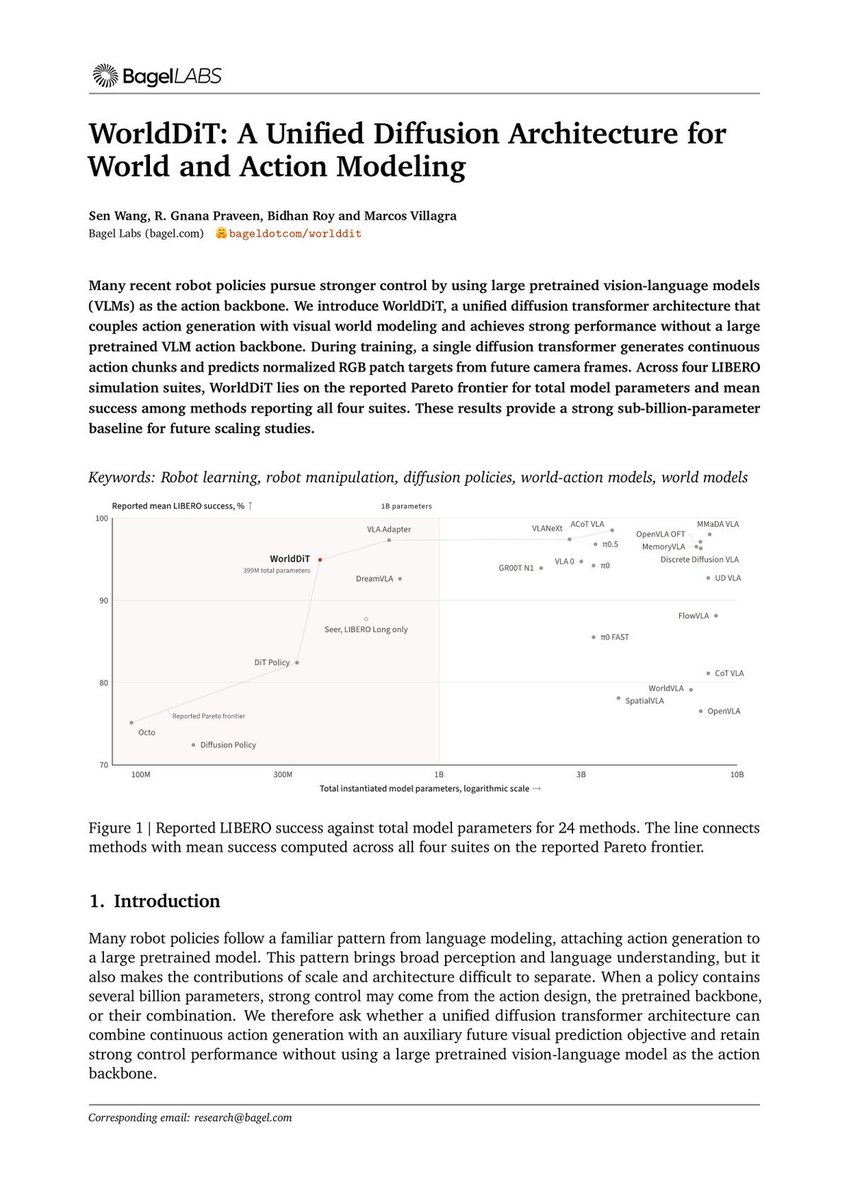
Robotics is entering its "foundation model" era. The winners won't be the robots with the most specialized policies, they'll be the ones with world models that can generalize across environments.
We are releasing WorldDiT, a unified architecture for robotics world modeling and control.
On the LIBERO benchmark, it performs the best among all publicly released methods that do not need a VLM to generate actions. Its size and performance sit on the reported Pareto frontier.
GPU prices are becoming a signal, not just a cost.
They reflect where AI demand is moving, how efficiently compute is allocated, and which infrastructure models can scale sustainably.
Looking forward to diving into this.👇
One of the best AI frameworks I've read this year comes from Andrej Karpathy:AI doesn't replace tasks. It replaces verifiable tasks.
Ask three questions:
• Can it be reset cheaply?
• Can it be repeated quickly?
• Can success be scored automatically?
If the answer is yes to all three, AI will likely master that task over time.
The real opportunity isn't just building better models.
It's building better evaluation systems.
Source: Andrej Karpathy — The Verifiability Test
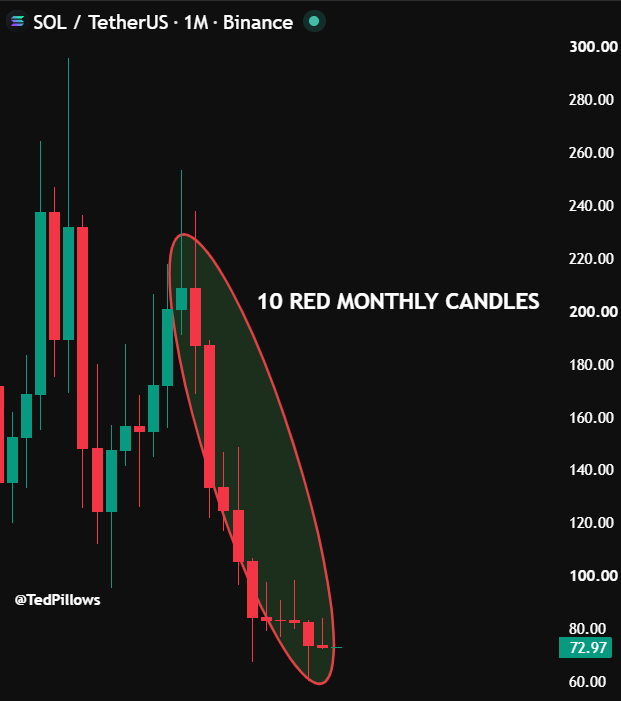
$SOL has now closed 10 consecutive monthly red candles.
Most people see weakness.
I see one of the most hated large-cap charts in crypto.
The biggest moves usually start when sentiment is at its worst.
Are we close to peak pessimism?
AI agents don't just benefit from crypto - they may actually need it.
Humans can use banks, logins, and legal contracts.
Autonomous AI agents can't.
They need:
• Machine-to-machine payments
• On-chain identity
• Reputation
• Trustless settlement
• Autonomous ownership of assets
Blockchain isn't just finance for humans.
It's the operating system for autonomous AI economies.
Source: The Agent Economy: A Blockchain-Based Foundation for Autonomous AI Agents (arXiv, 2026)
solana:7EW5dDD6MYJK4PcZ89MGApJQwWeDEeNgH4NCVU4qpump TA 👀
The chart is finally starting to look constructive.
• +30% over the past 7 days, outperforming both the broader crypto market and Solana ecosystem.
• A strong accumulation range appears to be forming after months of downside.
• Still trading more than 80% below ATH, leaving plenty of room if momentum returns.
• With a market cap of only ~$350K, it wouldn't take much buying pressure to trigger a significant move.
The key level now is the recent local resistance. If bulls can flip it into support with rising volume, I could see solana:7EW5dDD6MYJK4PcZ89MGApJQwWeDEeNgH4NCVU4qpump entering a new leg higher.
Small caps remain high risk, but this is one I'll be keeping on my watchlist. 👀
NFA. DYOR.
Unpopular opinion:
The easiest way to lose money on Solana is chasing the newest narrative.
The easiest way to outperform is owning the infrastructure everyone uses.
That's why I spend more time researching:
• solana:6srAiFVjkwmrktRM4mtJ4r33aV96TY4GGAQgzdR7pump
• solana:jtojtomepa8beP8AuQc6eXt5FriJwfFMwQx2v2f9mCL
• solana:KMNo3nJsBXfcpJTVhZcXLW7RmTwTt4GVFE7suUBo9sS
• solana:HZ1JovNiVvGrGNiiYvEozEVgZ58xaU3RKwX8eACQBCt3
• solana:nosXBVoaCTtYdLvKY6Csb4AC8JCdQKKAaWYtx2ZMoo7
• solana:rndrizKT3MK1iimdxRdWabcF7Zg7AR5T4nud4EkHBof
Every cycle changes.
Infrastructure usually sticks around
Three MCP servers worth adding to your workflow in 2026:
• 🐙 GitHub MCP — search repos, review PRs, and understand codebases with AI.
• 🌐 Brave Search MCP — give your AI real-time web search instead of stale knowledge.
• 🗄️ Postgres MCP — query and analyze databases using natural language.
MCP is becoming the standard layer that connects AI models to the tools developers use every day.If you're building AI apps in 2026, learning MCP is no longer optional. 🚀
#AI #MCP #LLM #Developer #Coding #OpenSource #BuildInPublic
Stock exchanges aren't just experimenting with blockchain anymore. They're moving real-world assets on-chain.
The next financial infrastructure won't replace Wall Street overnight.
It will gradually move on-chain📈
The biggest shift in software engineering isn’t that AI can write code.
It’s that the engineer’s role is moving up a layer.
You’re not typing every line into an editor anymore. You’re defining the outcome, giving agents the right context, setting constraints, and reviewing what they produce.
The scarce skill is no longer syntax. It’s judgment.
That may be the most important change to software engineering in decades.
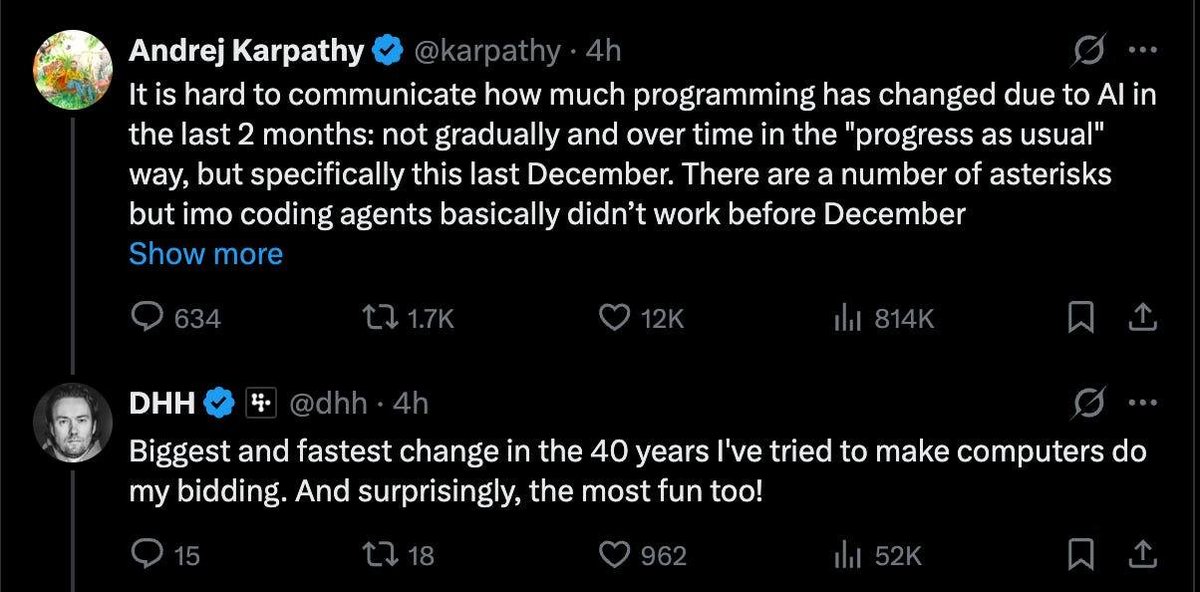
I haven't typed a line of code since December.
The job is shifting from writing code to expressing intent, reviewing outputs, and orchestrating AI agents.
Programming isn't disappearing.
The interface is changing.
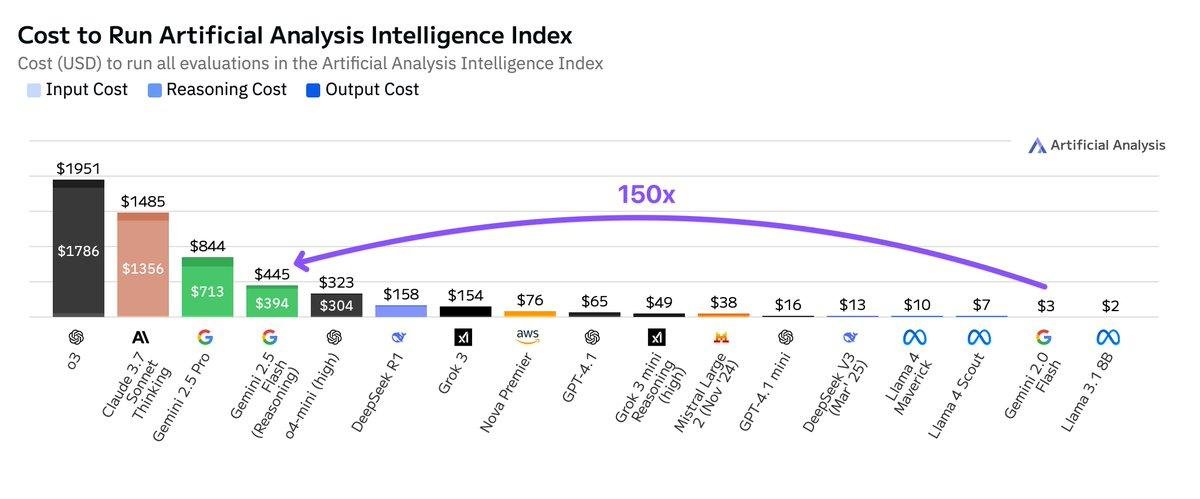
AI is getting dramatically cheaper.
Since GPT-4 launched in 2023, the cost of achieving the same level of model intelligence has fallen by 1000x+.
Better models matter. But lower inference costs are what unlock mass adoption.
Every major wave of software scales when it becomes affordable, not just more capable.
Source: Artificial Analysis – AI Review 2024 Highlights.
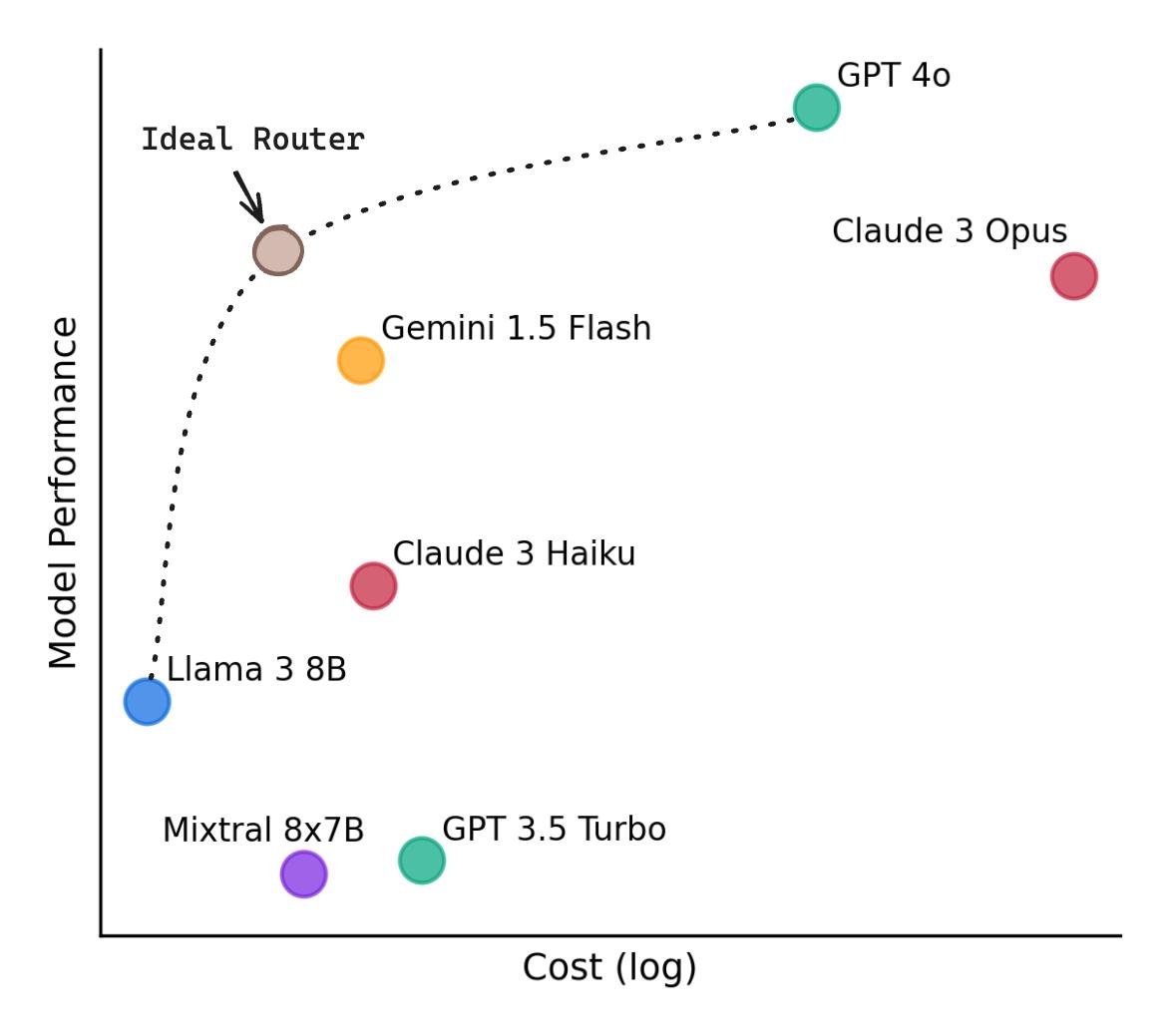
The future of AI won’t be one model handling every request.
Model routers can already select between cheaper and more capable LLMs based on task complexity - optimizing quality without paying frontier-model prices for every query.
The orchestration layer may become more valuable than the model itself.
Source: LMSYS RouteLLM
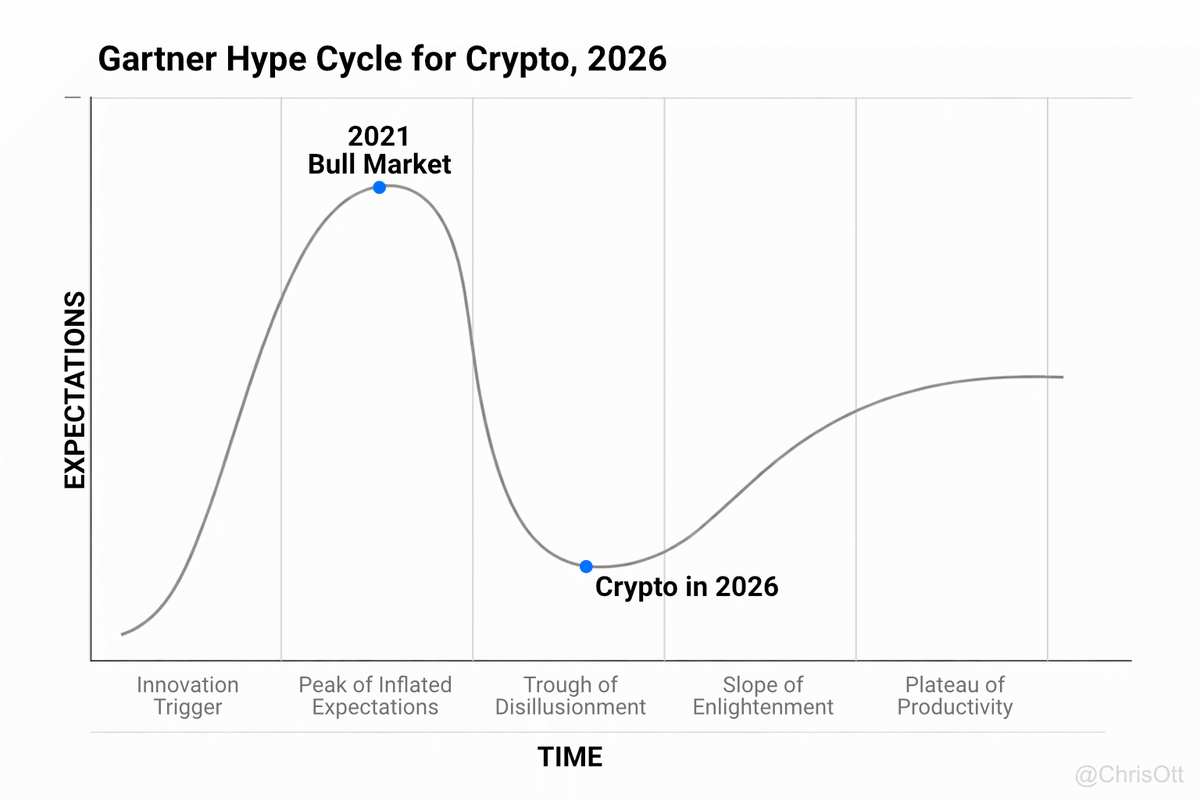
Crypto in 2026 is in its reality-check era. The euphoria of the 2021 cycle has faded, leaving a market that's increasingly focused on fundamentals over hype. The next five years will likely be defined by stronger infrastructure, real-world adoption, and the tokenization of financial assets moving into the mainstream.
The future of compute is not “put every data center in space.”
It is making compute cheaper, more distributed, and easier to access on Earth.
Space compute may serve niche workloads, but launch costs, latency, radiation, repairs, and hardware replacement are not minor details.
Big vision is useful. Ignoring basic economics is not.
The fact that orbital compute is (soon) the most efficient way to build datacenters says a lot about how much excessive regulation has harmed progress on earth.
It’s more efficient to fly to outer space than to try and build on land.
Freedom is always on the frontier.
The U.S. constitution was a breakthrough in that it protected citizens from tyrannical government. What it missed, and what we should try to integrate into the next constitution (on Mars, special economic zones, etc), is restraint against unchecked growth of regulation and government spending.
I’ve been slowly collecting proposals for how that could work. Might do a post on it at some point.
“Trillion times more” is not an argument, it’s a fantasy number.
Space compute still depends on launch capacity, hardware durability, maintenance, latency, radiation protection, and getting data back to Earth. The theoretical space available may be huge, but usable, economical compute is not automatically scalable just because space is big
@brian_armstrong Or maybe it says more about technological progress than regulation.
Space is not more efficient because Earth is “too regulated.” It is becoming possible because launch costs are falling and space technology is improving