💸 How much does a DeFi product cost?
We get asked this every week, and nobody answers it honestly. We will.
The answer depends on 4 factors; here are the actual numbers from real builds, not estimates.
🔗 Which chain are you building on?
This one decision affects your budget more than anything else.
⇒ Ethereum mainnet: highest security, most auditors, highest cost. An audit alone runs $15K–$50K.
⇒ L2s (Base, Arbitrum, Optimism): cheaper to deploy, fast-growing, best starting point for most new DeFi products right now.
⇒ Solana: fast and cost-efficient but fewer experienced devs = longer timelines.
⇒ Cross-chain: plan to spend 3–5× more than single-chain. Every time.
📄 What does your smart contract actually do?
Simple token contract: $8K–$15K
Staking or yield protocol: $22K–$60K
AMM or DEX: $60K–$150K
Cross-chain protocol: $110K–$300K+
One rounding error is real money out of real users' wallets. The math has to be airtight.
💻 Do you need a frontend?
Most founders underestimate this.
A functional DeFi UI, wallet connect, transaction flows, and portfolio view run $18K–$45K.
Users abandon bad interfaces. It doesn't matter how good the contracts are.
🔒 Security audit → non-negotiable
$35K of unaudited contracts protecting $2M of user funds is not a product. It's a liability.
Budget $15K–$50K for a reputable audit. Assume they find issues because they will. That's the point.
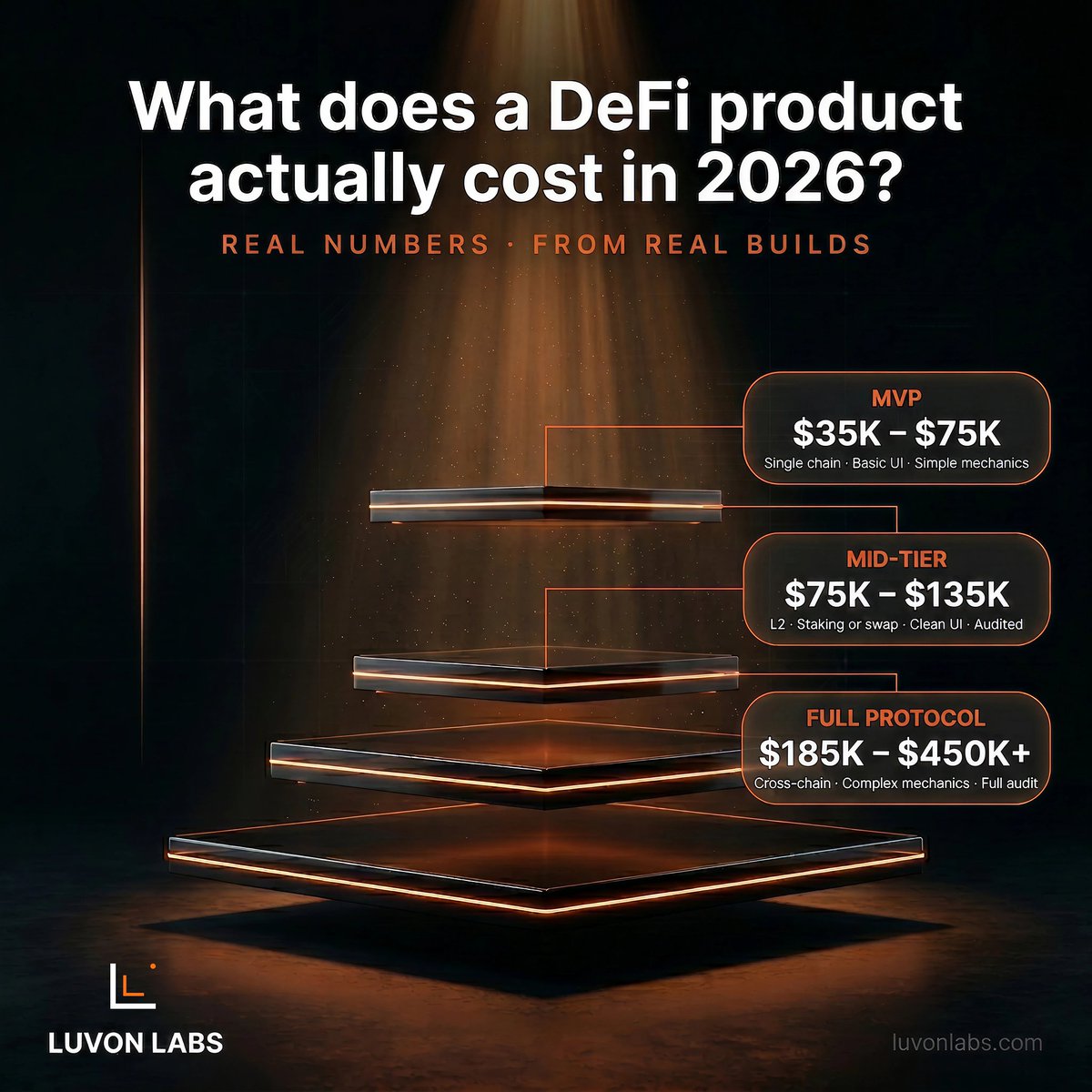
So what does a real DeFi product cost to build?
🟠 MVP → $35K–$75K
Single chain · Simple mechanics · Basic UI
🟠 Mid-Tier → $75K–$135K
L2 · Staking or swap · Clean UI · Audited
🟠 Full Protocol → $185K–$450K+
Cross-chain · Complex mechanics · Fully audited
Two things that blow budgets faster than anything else:
→ Changing scope mid-build. Every "can we just add..." costs 3× what it would upfront.
→ Skipping design before dev. Redesigning built UI burns weeks of runway.
We've built DeFi products across 15 countries. These numbers are from real projects.
If you're planning a build and want a realistic scope, visit https://t.co/mq1aXiFYSq.
if you ever want to understand a complex system:
1. use claude code, cursor or whatever IDE you have, create a flow diagram of the codebase with function names, services etc
2. next, go through the names. dont go for complete explanations yet. just understand how A connects to B, then B to C. what updates does A send to B? what comes back?
3.then read a 1 liner summary of each component and try to connect the dots in your mind
only after that start reading code, if needed.
by that point, you already have the architecture mapped in your head and every file starts making a lot more sense
way better than opening random files and spending hours trying to figure out whats even going on
You shouldn't need 4 different agencies to build one product.
A Web3 team. A mobile team. A design team. A DevOps team.
There's a better way.
Here's exactly what Luvon Labs builds:
🔷 Web3 & Blockchain
Smart contracts. DeFi protocols. NFT platforms. DAOs. Cross-chain infrastructure.
Stack: Solidity, Rust, Move.
🤖 AI Agents
Not chatbots. Autonomous agents that make decisions and execute at scale.
Stack: LangGraph, MCP, Python.
💻 Full-Stack Web
End-to-end web applications. Fast. Scalable. Production-grade from day one.
Stack: React, Next.js, Node.js.
📱 Mobile Apps
iOS and Android. Native performance. Designed for users who've never read a manual.
Stack: React Native, Swift, Kotlin.
🎨 UI/UX Design
Products people understand on first use. Wireframes to pixel-perfect handoff.
⚙️ DevOps & Infrastructure
Deployments that don't break at 3am. CI/CD, cloud infra, monitoring.
Stack: AWS, GCP, Vercel, Docker, Kubernetes.
50+ clients. 40+ products. 15+ countries.
If you're building something ambitious → https://t.co/mq1aXiFYSq
smart traders don’t just watch price
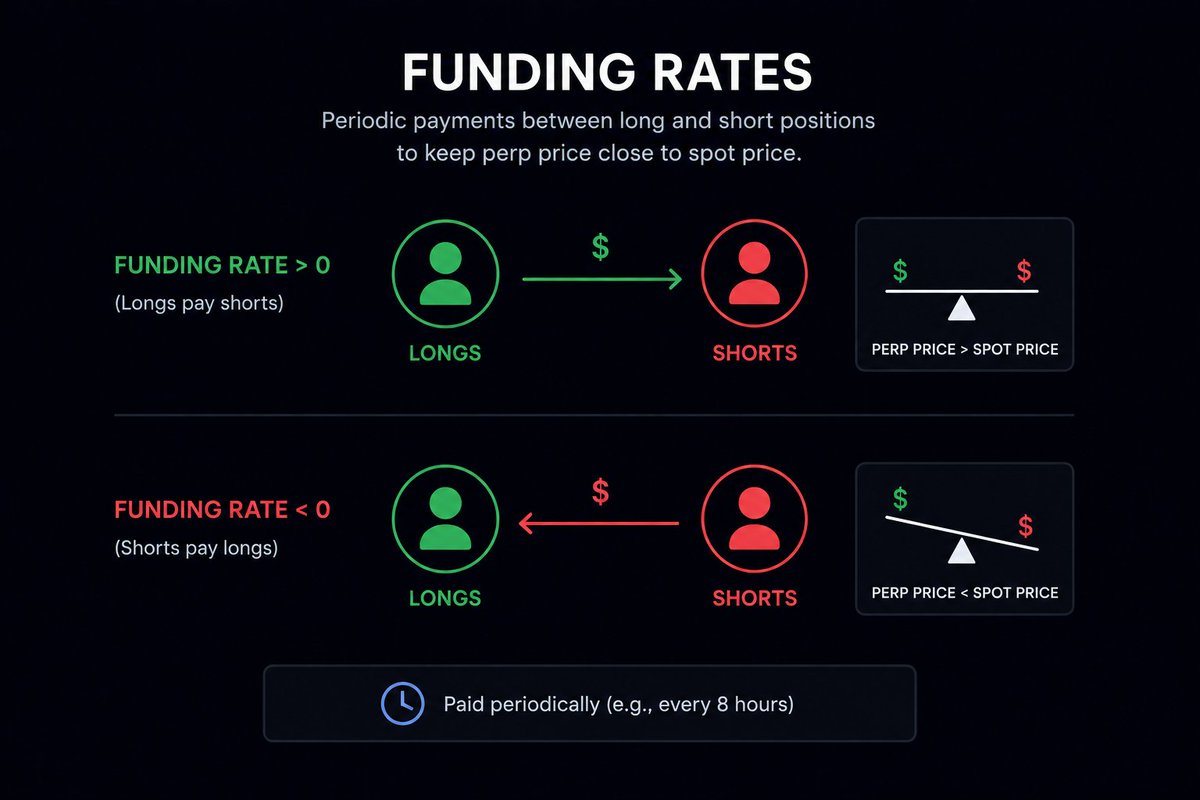
they watch positioning too because funding rates help reveal the market sentiment, leverage pressure and the potential volatility before it happens.
funding rates are one of the most important signals in futures trading
#LearnKaroCryptoKaro@CoinDCX
but most beginners ignore them
they show the balance between the long positions and short positions inside perpetual futures markets
extreme funding rates can become important signals because crowded positioning creates imbalance and markets often move against overcrowded trades
especially in the crypto
the bigger shift isn’t just smarter AI. Actually it’s AI becoming economically active where agents don’t just process information
they participate in markets , services and on-chain economies autonomously
one of the most interesting ideas in AI × crypto right now is
Autonomous AI agents
#LearnKaroCryptoKaro@CoinDCX
AI systems that can act on their own, they can make decisions, interact with protocols and execute tasks automatically
blockchain becomes important here because it gives AI agents
payments
ownership
identity
and transparent execution
allowing them to operate inside open economic systems
the important part is that the institutions aren’t always smarter
they’re usually more disciplined because in markets survival often matters more than prediction.
retail and institutions both participate in markets
#LearnKaroCryptoKaro@CoinDCX
but they don’t play the game the same way
retail usually reacts to price
institutions usually position before the move happens
institutions also move differently
they can’t enter massive positions instantly so they accumulate slowly which is why markets often spend time ranging
before large directional moves happen
consensus mechanisms are more than technical systems they shape the security, decentralization
speed and the energy usage
which is why the design choice of a blockchain changes how the entire ecosystem behaves
blockchains don’t work without one important thing i.e
consensus
#LearnKaroCryptoKaro
because thousands of nodes need to agree on what transactions are valid without relying on a central authority
the two most common models are
Proof of Work (PoW)
and Proof of Stake (PoS)
PoW uses computational power while PoS uses staked capital
both aim to secure the network but in different ways