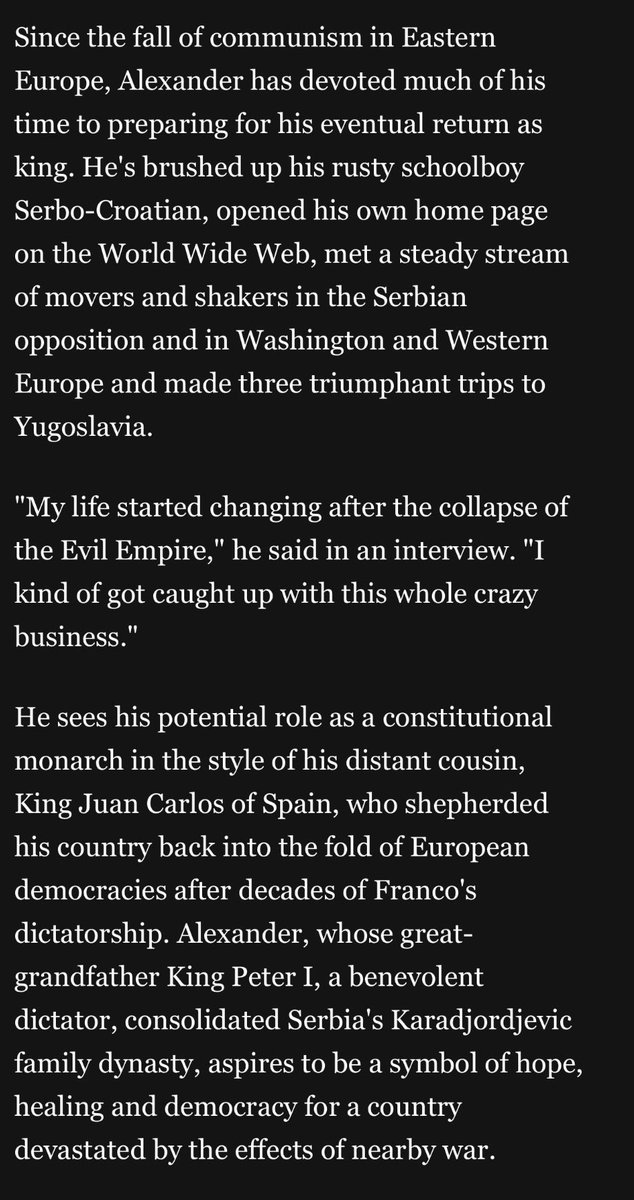
ПС: Савремени љубитељи Карађорђевића су невероватан спој рогоња и имбецила.
Доказ у прилогу, из интервјуа невероватне дегенеричне британске дебилчине која нас отворено презире и сматра једнакима Хрвате и Србе, ни језик није се удостојио да научи.
Свака средина, укључујући и сеоску, мора имати бар један акредитован клуб.
Odlično. Sadašnja vlast ulaže za nagrade sportskim savezima koji osvajaju medalje, a to sve je dovelo do toga da se u sportovima sa potencijalom za medalje "uvoze" sportisti. Domaći sportisti gube.
ЗИЦЕРИ У КЛАДИОНИЦИ
Уплатио сам 20.000 динара на то да ће Српска напредна странка освојити мање од 47,1% гласова. Да, добро сте прочитали: Меридијанбет сматра да је 47% за СНС клацкалица, па чак нуди и бољу квоту (1,95) на мање. Дакле, можете практично да дуплирате улог.
Делује нереално. Слично је и са Студентском листом, која се процењује на 39,05%.
Када су пре скоро месец дана отворили клађење, СНС се процењивао на 44%. Остали параметри, укључујући излазност коју су сада повећали на 65,5%, мање-више су добро погођени.
Препоручујем да и ви искористите ове зицере.
IZDAJA LORDANA ZAFRANOVIĆA
Ceo svoj život, uz ostalo, pokušavam da objasnim Srbima da je za njih, u periodu od 1945. na ovamo, opasnija bila ( i danas je) tzv. hrvatska levica nego hrvatska desnica.
I da li mi uspeva? Pa, ne baš.
Ogromna većina Srba, onih koje politika, bolje rečeno život, interesuje, u hrvatskim levičarima vide mostove između dva naroda, vide divne ljude, humaniste koji poštuju srpski narod, brane ga kad zatreba, cene njegovu prošlost...
Ništa od ovoga nije tačno. U odnosu prema Srbima i Srbiji, razlika između hrvatske levice i hrvatske desnice, ustaša, samo je u tome što levičari nisu za to da Srbe treba ubijati. Ovaj naizgled fenomen, davno sam objasnio tekstom, "Unuci Steve Krajačića, u srpskim Novostima" tekstom o paradigmatičnom, splitskom "Feral tribjunu".. pa ako nekoga zanima...ukucajte, ima ga u beskraju interneta.
Ukratko, hrvatski levičari jesu antifašisti ali su i antisrbi. Kontradikcija? Ne, paradoksalno izgleda samo onima koji ovaj deo srpsko-hrvatske priče poznaju s nivoa enciklopedijskih definicija i frizirane istorije uglavljene između korica knjiga autora čiji su mozgovi na frekvencijama postavljenim u Drezdenu 1928. godine.
Da ne spominjem onu, "Svaki nacionalizam je opasan ali je srpski najopasniji", koja je takođe ( i ovde će se mnogi začuditi ) samo mlaka voda, blagi odraz dubinske postavke a ona glasi, "Svaki nacionalizam je dobar i poželjan, samo je srpski opasan i protiv njega se treba boriti svim sredstvima a najefikasnije je nacionalizmom drugih naroda". Ljuta trava na ljutu ranu, kako davno reče Ante Pavelić. Sve je dozvoljeno u borbi protiv "srpskog hegemonizma".
I kakve sve ovo ima veze s Lordanom Zafranovićem i njegovim filmom, "Zlatni rez 42-Djeca Kozare".
Evo kakve veze ima.
Lordanov film u Hrvatskoj najžešće su napali tzv. hrvatski levičari, hrvatski antifašisti. Pre svih novinari i publicisti. Šta im tamo smeta? Sve, ali nemaju hrabrosti za iskrenost do kraja pa tamburaju kako je Zafranović sebi dozvolio da bude instrumentalizovan od strane Aleksandra Vučića, države Srbije, Dodika, Srpske pravoslavne crkve, srpskog društva golubova visokoletača...Ukratko, Zafranović je materijalista, trebaju mu pare, za novac će uraditi sve šta od njega traže, pa je tako, kažu ideološki potomci Hebranga i Steve Krajačića, pristao da bude glasnogovornik Vučićevog režima, dobošar srpske mitomanije...tra la la.
Znaju oni vrlo dobro da Zafranović ovaj film pokušava da snimi još u vreme kada za Aleksandra Vučića nisu znali ni u bloku 45 na Novom Beogradu (tamo je rođen), ali..kada je to hrvatske levičare interesovala istina, posebnu u priči gde ima Srba i srpske istorije. Na put koji ga je vodio do završnog kadra filma Djeca Kozare, Zafranović je stupio pre 40 godina, 1986. Ruku pod ruku sa scenaristom, Arsenom Diklićem. Gde sve nije bio, koga sve nije molio za novac, ali...bez uspeha. Odbijali su ga, na raznim adresama, i u Beogradu i u Zagrebu, plašeći se, tu nemam nikakvu dilemu, kadrova kakvi su oni u autobusu, iz Lordanovog filma, "Okupacija u 26 slika".
Znači, estetika je u pitanju, jezive su im, nepodnošljive za gledanje slike kotrljajućih glava, krv koja kaplje sa noža, oči čoveka koji vidi smrt...Ne, ne, ne..pa to vide svakoga dana u američkim filmovima.
Njima je jeziva, nepodnošljiva, svaka priča o stradanjima Srba. To ruši kompoziciju njihovog političkog vitraža.
Da ne bude nešto nedorečeno; Lordan je u Beogradu, sa scenarijem "Djeca Kozare", tri puta odbijen na konkursu Filmskog centra Srbije, ali to ne ruši gore iznete tvrdnje i postavke. Naprotiv, osnažuje ih. Protivnici realizacije Lordanove ideje bili su oni koji ovde u Beogradu padaju na kolena, orgazmiraju pred svakim pomenom Jugoslavije, zajedničkog života, letovanja u Splitu, Istri, Dubrovniku, slikom punog meseca iznad mirnog mora oko Korčule i Brača.
Da ne dužim, hrvatski levičari odavno Lordana Zafranovića vide kao izdajnika hrvatskog naroda i hrvatstva ali su nekako uspevali da se kontrolišu i to ne izgovore. U slučaju o kojem je reč, te kontrole više nema, Zafranović se prodao Srbima, Zafranović je izdajnik.
Nikome se Zafranović nije prodao a da li je nekoga izdao?
Jeste, izdao je, i to davno, ideologiju hrvatske levice, političku postavku po kojoj su za sve loše na prostoru bivše Jugoslavije krivi Srbi, koja kaže da su Srbi lažovi, mitomani, imperijalisti, sirovi bizantinci, da je njihova crkva zločinačka, da su oni, Srbi, najveći zločinci nad malim i jadnim narodima Balkana...
Zafranović u to ne veruje i sve ovo odbacuje kao paklenu laž, odraz mržnje prema Srbima kao narodu.
Njegov stav o međusobnom odnosu Srba i Hrvata, preciznije; o odnosu Hrvata prema Srbima, živi pod nezaboravnom, večnom slikom Vilija Branta, koji u Varšavi kleči na hladnom, mokrom granitu, spomenika "Varšavskom getu" 1970. godine.
Niko od Hrvata nikada nije kleknuo u Jasenovcu. Lordan je neki dan rekao da je film "Zlatni rez 42-Djeca Kozare" njegovo klečanje, kao Hrvata, pred zločinom počinjenim nad Srbima.
A hrvatski levičari, u ovom slučaju izdvajam hrvatske novinare kao posebno aktivne, nisu Lordanu Zafranoviću, unatoč želji, naneli ni jednu, ni najmanju modricu. Samo su se dodatno razobličili. Do gole kože.
I dobili su Vilija Branta...ali za razliku od Nemaca, oni se svoga stide.
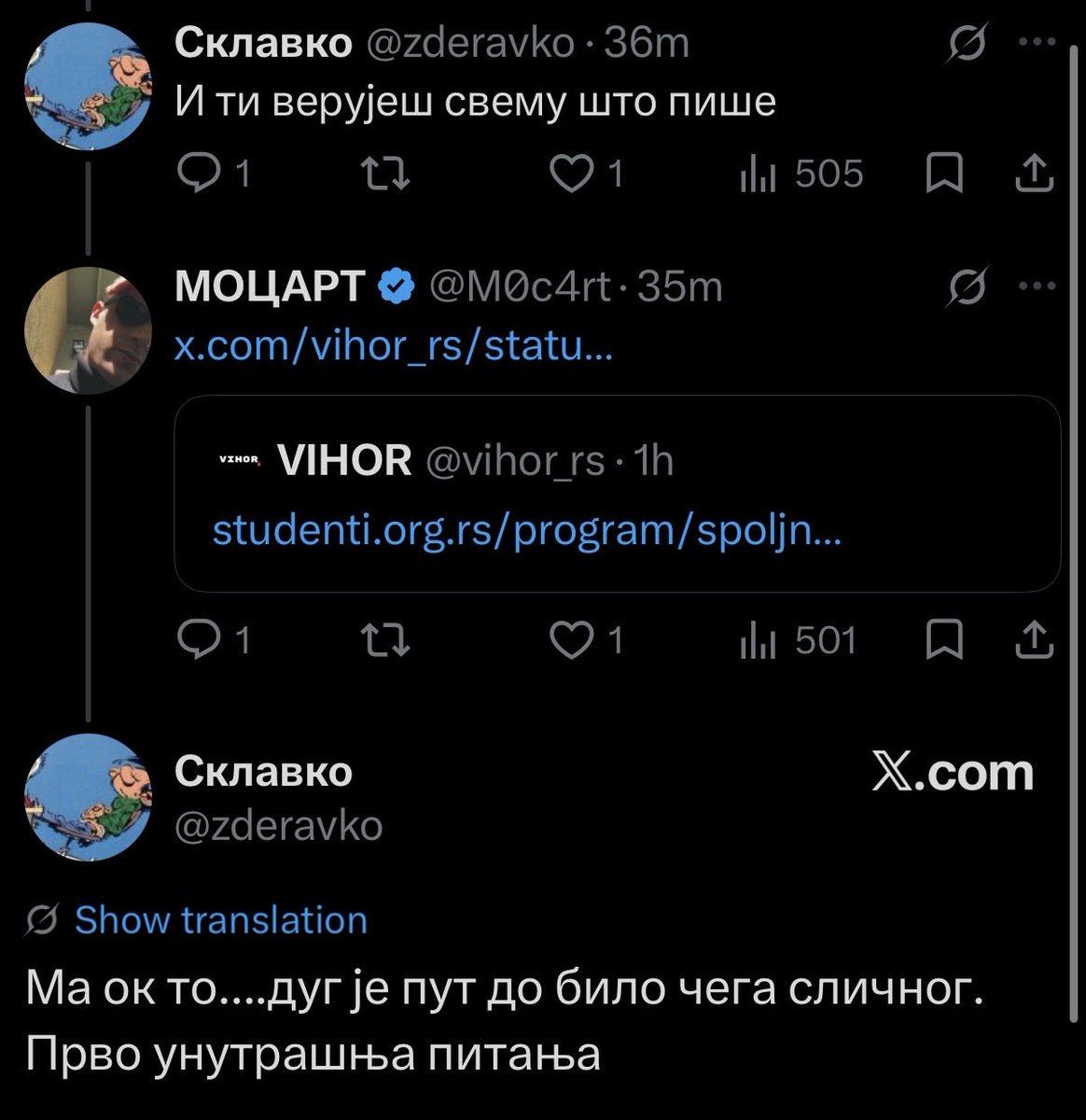
što ih podržavaš, svejedno ko će tamo biti na vlasti...".
Prvo, nije svejedno jer trenutno ne mogu da uđem u Srbiju, a tamo imam neke ljude.
Drugo, vi ste glupi kao sto kurčeva ako i dalje ne vidite veze između Vučića i kamarile mu i ovoga što izjeda CG. Treće, da bi se čitav
I'm noticing the growing possibility that Europe becomes very poor in the course of the next 10-20 years. You have the following factors:
- Heavy industry totally uncompetitive against China, automakers etc. rapidly losing ground
- Services industry totally uncompetitive against AI
- No natural resources, or regulatory hurdles making their extraction impossible
- No access to the new economy (no AI, no data centers, uncompetitive energy sector)
- Client states caught in one-way welfare ratchets, spend reallocation + investment well-nigh impossible
This seems under-contemplated. And we're talking really, seriously dirt poor: taken to its logical conclusion, many countries will have much, much smaller services and manufacturing industries -- economies may become much more heavily skewed toward natural resources and energy markets, where Europe has made it impossible for itself to compete.
And I'm not saying that this is likely to happen, it's an extreme case. But the probability is greater than zero and appears to be growing. The EV of that is so negative that it's surprising to me that it's not coming up more.
@sinisavulic Кога ја егзалтирано славим, рецесивни јазавче?
Јесам можда ја подржао или гласао икада за партије које су имале у програму евроатлантске интеграције?
А да смањиш пројекције и писање идиотарија?
@sinisavulic Уколико "рендом" људи промовишу усташке историографске, (гео)политичке, културно-цивилизацијске, расно-генетичке идеје и/или наративе - да.
Усташа се може бити и без моћи/позиције да се убија Србе, и док се припрема терен и праве услови за то у будућности.
France is entering a period of momentous political decisions that will shape its future while also raising fundamental questions about the relationship between national sovereignty, the democratic will of the people, and European institutions.
Ahead of the 2027 presidential election, France faces profound upheaval, economic pressures, a crisis of confidence in its institutions, and serious threats to public safety.
The violence we have witnessed on French streets in recent days demands unequivocal condemnation. The right to peaceful protest is a cornerstone of democracy, but arson, looting, hooliganism, destruction of property, and attacks on police officers are not political protest.
They are violence. The media have a responsibility to call these acts what they are and describe those responsible accurately: violent offenders and hooligans, not protesters.
It is precisely in these circumstances that the issues Marine Le Pen @MLP_officiel has been raising in French politics for years take on added significance. National sovereignty, the right of peoples to determine their own future democratically, public safety, the authority of national institutions, and government accountability are central to her political agenda.
The debate about Europe's future cannot be reduced to economics and the division of powers between Brussels and nation-states. It is also a debate about the cultural and historical identities of Europe's peoples, the place of our Christian heritage in European civilization, and the right of peoples to preserve their own traditions.
I reject a vision of Europe in which national identity, Christian heritage, and the right of peoples to determine their own future are treated as obstacles to progress. I oppose globalist political agendas that push for ever greater centralization of power and the erosion of national distinctiveness. Europe owes its historical strength precisely to the diversity of its peoples, cultures, and traditions.
Marine Le Pen advocates a Europe of sovereign nations, stronger border controls, restrictions on illegal immigration, and the preservation of national identities. Her opposition to further centralization of the European Union, her insistence on the right of nations to shape their own policies, and her calls for a different approach to immigration and security are positions that resonate with my own publicly stated sovereignist views.
On these issues, we share a common political outlook: protecting national identity, preserving autonomy and political authority, and opposing the transfer of key decisions to distant international centers of power, or to any authority that has not been chosen by the people.
The Serbian and French peoples share a long history of friendship, one that transcends changing international circumstances and deserves a place in Europe’s future.
I share Marine Le Pen's conviction that Europe's future should be built on respect for national sovereignty, the preservation of the identities and cultural heritage of Europe's peoples, the security of its citizens, and the right of nations to decide independently on the fundamental questions that will shapetheir future.
In her vision of a Europe of sovereign nations, I see the verypolitical principles I stand for. It is on this foundation that I wish to continue building dialogue, mutual understanding, and friendly relations.
I sincerely wish Marine Le Pen for success in the upcoming presidential race, and I wish the French people peace, security, and the freedom to decide their country's future democratically.
@drago_ek@AngloVarangian I don’t communicate with “Balkaners”/“people from Balkans”.
You are either a Serb, a Montenegrin, a Bosniak, Croat, Macedonian or Albanian.
Serbia will survive, just as it survived under DOS and SNS.
PS: Milorad Dodik called Srebrenica “a genocide”.
Today in Bulgaria, journalist Sonya Koltuklieva was violently pushed to the ground by a state security officer while trying to question Parliament Speaker Dotsova.
She was left lying on the ground without help and later taken to hospital with injuries.
Radev's Bulgaria...
>Serbian regime
>we Balkan people
>purely regional hatreds and conflicts
>There is only us, our squabbles, and then the big, wide world we don't give a damn about
>Danke Deutschland
>Aggressive secessionism and Euro-Atlanticist integration
>Montenegrin nationalist
I'm baffled as to why the Serbian regime hired these right-wing e-girls and who exactly they are supposed to influence. Tbh I usually despise Balkan parochialism, but this is the moment when it shines. These bimbo rent-a-bots are not seen as crusaders for White Christianity, but as dumb, meddling outsiders. See, Balkan people care a great deal about their nation and religion, but all our conflicts and hatreds are purely regional. There is only us, our squabbles, and then the big, wide world we don't give a damn about. This is the Balkan way.