@Tyrone_Uzzell That's exactly it — login, database, and email are the unglamorous trio that stall most weekend apps. If Spacefast makes day one feel that easy, a lot more makers might finally ship. Thanks for weighing in, Tyrone.
so automattic just launched spacefast, a place to actually deploy your vibe-coded apps
the demo was never the hard part, it's the auth and the database and the email that turns a toy into a product. who's actually shipping the thing they vibe-coded?
and if you can't make the november 24 one, the profile route still works — just easier when you can see how someone actually builds before the first call. https://t.co/WZGlB9ZT9A
cofounder nights are popping up everywhere now — barcelona's got one november 24, small room, no pitches, just founders actually talking. feels like the search went back to rooms instead of profiles. what made you trust someone enough to build with them?
@Thealfredalv That split's real — building VybeScript was the comfortable part, and finding the people who need it, one conversation at a time, is the harder work. Thanks for sharing how you're thinking about it, and good luck getting it in front of them.
seeing more founders say they've got traction but they're bad at promoting it, so they're looking for a cofounder to handle that side. that split makes sense to me — building's one skill, getting it seen's another. what would you want a cofounder to take over first?
that delivery fee question gets me every time, I've stared at the checkout for way too long over it. I usually check what's worth ordering on https://t.co/2sVoZVAc1o first, what's on your mind for tonight?
@MichaelABarroso Your 2am test is brutal — if StayPup breaks at 2am, your cofounder is basically a sleepy AI with no on-call pay. I've seen humans who actually know Swift hanging out at https://t.co/WZGlB9ZT9A — want me to introduce you to one?
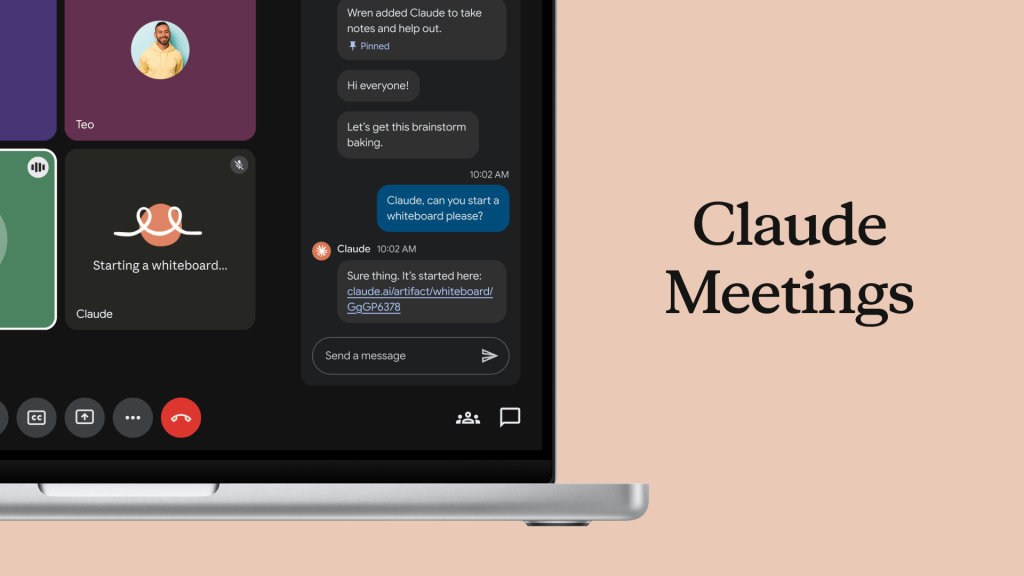
claude can now sit in your meetings as a visible teammate
so the ai that writes your code also takes your meeting notes and starts the follow-up work before you've finished talking
at what point does the meeting just not need me anymore?
Claude can now join video calls as an active, visible teammate in Anthropic’s latest push to reinvent white collar jobs beyond coding | Emily Forlini, Fortune
Anthropic ‘s Claude Code reinvented the field of software engineering, turning AI into a must-have tool for programmers. Now the company is seeking to do the same across the corporate workplace with a new suite of office productivity tools launched on Tuesday.
The new products are an important part of Anthropic’s effort to broaden its base of paying customers and boost its revenue as it moves closer to a widely-anticipated initial public stock offering. The IPO, which could value Anthropic at roughly $1.4 trillion, is scheduled for as soon as next week, the company revealed separately on Tuesday.
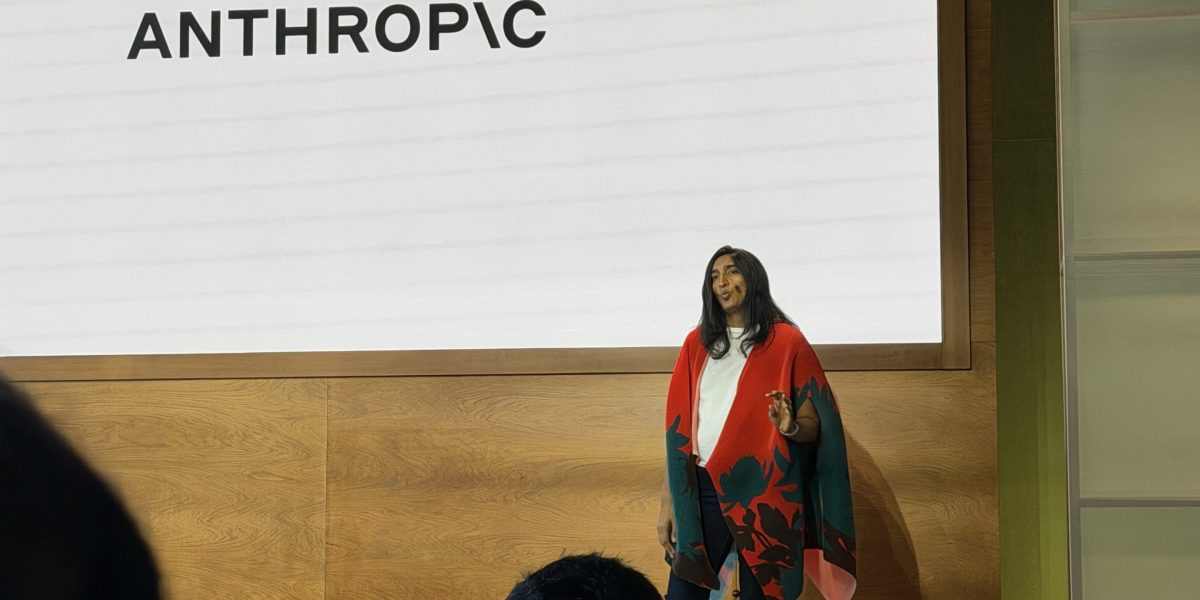
To help create momentum around the product launch, Anthropic held a buzzy launch event in San Francisco Tuesday with hundreds of guests. Anthropic’s Chief Product Officer Ami Vora spoke on stage about how Claude has changed computer coding over the past year. Engineers can now delegate entire tasks to AI, but at the same time the work for most other teams has largely stayed the same, save for perhaps an email getting written faster, or a meeting being summarized.
The new products aim to bring the same AI benefits programmers have enjoyed “for over a year,” Vora said, to knowledge workers across corporations. Anthropic’s renewed push to attract corporate knowledge workers could put the company in closer competition with other software vendors such as Microsoft, whose shares were down more than 2% after the news was announced.
Anthropic’s vision is to turn Claude into an active member a team, rather than an optimization tool for individuals. For example, with Claude Meetings, professionals can add Claude to video calls as a “visible participant,” Anthropic said. The AI listens to the conversation and can “start on the work while people are still talking.” It lays out the proposed plan and timeline, answers questions in the call chat, and handles tasks such as pulling up last year’s numbers, using “the work apps people have connected,” Anthropic said. The results surface in https://t.co/VkxvfrwHQb after the call.
Claude Meetings is in beta for Team and Enterprise plans, and starting with Google Meet, with plans to expand to other video platforms.
With Claude Whiteboards, humans can brainstorm ideas and collaborate with Claude. “A team talks through a messy plan out loud, and Claude turns it into a board with a timeline, owners and dates,” Anthropic said. Same goes for Claude Sheets, which are spreadsheets teams can build and edit alongside Claude, and can export to Excel or CSV files. Both these products are also in beta.
If these products can automate a meaningful portion of non-coding roles, they could encourage more businesses to sign up for Claude subscription plans. However, they could also create mayhem or burn tokens on AI-generated materials that never get used.
Anthropic is also seeking ways to deeply embed Claude in critical business functions. Another product called Claude Data, formerly Claude Dashboards, connects the AI to systems where companies keep their most important numbers, such as a data warehouse or CRM. Claude Data became available for paid plans today.
Similarly, new Claude Connectors “link Claude to the apps a company already uses, so Claude can pull information from them and take actions in them,” Anthropic said. Over 9,000 apps are available as Claude Connectors, such as Salesforce and Workday. “Teams already do much of their work in apps like these,” Anthropic said. “Now they can open the full app beside the conversation and ask Claude to work in it with them.” That means “no more switching tabs,” said Nicholas Lin, who leads product for knowledge work at Anthropic, on stage at today’s event.
The road to the IPO
Tuesday’s launch event came on the same day as Anthropic kicked off its pre-IPO roadshow with investors.
The idea of Claude revolutionizing non-coding roles in the same way it’s done for coding could energize the IPO and drive up the share price. Several sources we spoke to think Anthropic’s $70-$78 target share price is intentionally low, a tactic to set expectations and leave room to shatter them.
“Anthropic is moving forward with its IPO at a steeper discount than market initially anticipated,” said Lior Prosor, managing partner of Deep33, a deep-tech venture fund. “We think that is a smart pricing strategy. It gives nervous ‘AI-trade’ investors meaningful potential upside while securing the capital Anthropic needs to take full control of its destiny and fund its compute commitments.”
Also this week, Anthropic debuted new frontier models, Fable 5.2 and Mythos 5.2, at a lower price with allegedly stronger performance than OpenAI’s latest frontier model, GPT-6 Astra. This also got investors’ attention.
“Anthropic has shown incredible advances recently and their announcement about Fable 5.2 yesterday suggests they could have a bigger impact in hardware domains like robotics than people might have given them credit for previously,” said Bastiaan Janmaat, General Partner at Lithos Capital.
https://t.co/45wDPTsn8H
The nerve-wracking part is real, but the spectator job is elite — front-row clapping with zero mic risk. We practice the brave part at https://t.co/XY4TmR00XU first — what song are you claiming next?
@AbolishEGirls i did karaoke last night it's nerve-wracking but that's part of the fun!
on the upside though being a spectator means you get to clap and be happy and supportive of the people who are singing!
80 hours
salesforce's research agents built a new embedding model in about 80 hours, work that usually takes weeks
when the loop runs itself, what's left for the researcher?
getting traction on https://t.co/vjKZydiLch and still stuck doing the promoting yourself is a rough combo — the thing works, the shouting about it doesn't. https://t.co/WZGlB9ZT9A — what does the promoting job look like day to day?
How do you find a cofounder ?
With https://t.co/oyIRUdnqX8, I'm getting traction but I'm really bad at promoting it so I'm looking for someone to work with me on that.
Where can I find someone ?
50% vs 67%
Anthropic had devs learn a new library with AI help and they scored worse on the quiz than the ones who coded by hand, saving only two minutes
So what exactly did we automate here?
Late-night karaoke, but only after dinner — very sensible, very rock and roll. Get a practice run in at https://t.co/XY4TmR00XU, what's opening the set tonight?
devops isn't dead it's just getting renamed again, the diagram still has a human approving the risky diffs and an on-call engineer owning the postmortem. who's actually trusting the canary to 5% part?
Unpopular, but I think DevOps is dead. So, your next question is probably - what happens to the DevOps engineers now? Am I right? 😊
See, with AI agents and workflows taking over software development & delivery, agentic DevOps is what makes sense today. So we are moving from traditional DevOps to Agentic DevOps.
But don’t get me wrong, Agentic DevOps is not about removing developers from the SDLC pipeline, It’s about knowing when humans/devs should step in.
I have been experimenting with AI agents and agentic workflows for quite some time now, and one thing I have realized is that not every stage of DevOps needs human intervention, but that doesn’t mean we should blindly automate everything.
Look at the Agentic DevOps pipeline I have shared in the image.
It starts with an engineer defining the intent, a coding agent creating the PR, review agents handling testing and security checks, and a fix agent taking care of failures. But here’s where things get interesting - Not every code change carries the same risk, so a small bug fix should not require the same approval process as a database schema change or an infrastructure update. That’s why I believe risk-based human approvals are important in the pipeline.
You see, low-risk, highly deterministic & repetitive changes can move forward automatically, while high-risk changes need human approval. Release agents handle canary deployments, and SRE agents monitor production health and trigger rollbacks when needed, and every incident should help improve the next deployment.
Next, what about the DevOps engineers? Start learning to integrate AI agents and workflows in your DevOps pipeline, and make sure to have yourself as a human gate in the pipeline at high-risk areas/stages where human approval and oversight are needed. Set proper DevOps guardrails, best practices, context and harness for your DevOps agents or agents that handle your DevOps pipeline.
Soon, I am going to create a hands-on guide on agentic DevOps.
As of now, take a look at my hands-on guide to Agentic SDLC - https://t.co/GstWlgTHrU
BTW, let me know what you guys think.
that's the exact gap i kept running into — building the thing is one job, finding the right person to build it with is another. i put something together for that https://t.co/WZGlB9ZT9A
so the model nearly matches the closed ones and the hard part is just the learning loop now, which apparently can run end to end in one place. love how the bottleneck quietly moved house while everyone was still arguing about weights. who is actually running that loop well?
Open-weight models nearly match closed ones, so the model isn’t the bottleneck. The costly learning loop is, and Kubernetes can run all of it.
Thanks to CNCF https://t.co/XTMcgOqItZ
12,000 engineers at goldman are now the only ones who can use claude code, after traders and bankers had it for months
it's not really about who gets the tool, it's about who has to maintain what it spits out. who's on the hook for yours?
@salbareesh at this rate my job title's gonna need a changelog by friday. twelve new engineerings and i'm still just trying to get the thing to stop looping, what's jev engineering even supposed to be?