Brutal market today, feels like the bears are back in control. But we saw how quickly that changed a short time ago. So what do we do? #stacksats baby!
0.007816 bitcoin:native distro this week. Little extra satoshis for you this week degens ⛏️🫡
Exit scam or hack?
Wagyu saga timeline:
1. October: “No-KYC bridge” Wagyu hacked; order database leaked online.
2. Nov 16: Safe drainer uses Wagyu to buy XMR1, washing $4M+ into Monero.
3. Today: Official deployer key dumps 5.2M XMR1, draining $13.5M from Hyperliquid market makers. XMR1 crashes 99.8% ($490 → $1).
Founder’s response: “Hi. Not sure what happened yet. MMs got hit. Whoever did this, I’m open to negotiations.”
Perfect timing for whatever this is.
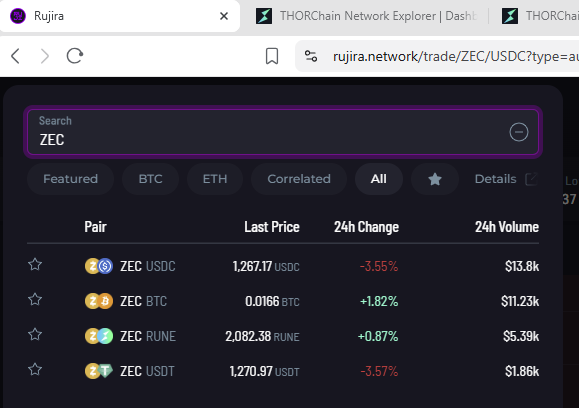
New decentralized $ZEC markets need liquidity, and our community is already stepping up 🔥
Since ZEC trading arrived on Rujira, some users are already market making and earning from trades.
Choose a strategy and put your assets to work.
https://t.co/KayfGBKim1
This is tech and economy mastecraft from DKPR, and nobody will and blame @NEARProtocol , althought they can halt their protocol and stop the "laundering".
Creating a @Vultisig account on Rujira is only the beginning.
The same account can help you deposit and withdraw native assets across supported networks, including Bitcoin, Ethereum, TRON, XRP Ledger and many more.
Here is how 👇🧵
Having the freedom to move your money without handing control of it to another institution.
THORChain gives us that breathing space. You can swap assets across chains while keeping custody of your funds and control of your keys.
We don't need to recreate the traditional banking system in crypto by making centralised exchanges the gatekeepers of our money.
We need infrastructure that lets people transact freely, without asking anyone for permission. That's the beauty of THORChain. ⚡️
Why pool ZEC with BTC?
$ZEC = insurance against BTC
$BTC = insurance against USD
Earn from volatility with automated trading, only on @RujiraNetwork
Fair by Design. Owned by You.
You can't claim to believe in financial freedom while depending on permission-based infrastructure to move your money.
If the money is permissionless, shouldn't the means of exchanging it be too?
This is something I think the crypto industry needs to think about more seriously.
Crypto was never supposed to be another version of the financial system we already had. The whole point was to create an alternative. One where people could own their money, move their assets freely and participate in a financial system without needing permission from a bank, government or corporation.
Bitcoin introduced that idea to the world. Not because humans suddenly became trustworthy, but because we could build systems that didn't require us to trust them in the first place.
And that's an important distinction.
Don't blame the technology for what humans choose to do with it. People will always find ways to manipulate systems, protect their interests and exercise control over others. That's human nature. But the technology itself can be designed to minimise the power any individual or institution has over everyone else.
That's what decentralisation is supposed to achieve.
Where I come from, this isn't some abstract conversation about financial sovereignty. I'm Nigerian. I've watched a reckless government preside over an economy where the local currency has lost so much of its value that simply preserving what you earn has become a challenge for ordinary people.
For many Nigerians, crypto became more than an investment opportunity. It became a way to access a global financial system, protect value, move money and participate in an economy that wasn't restricted by the limitations of our local financial infrastructure.
When your currency is constantly losing purchasing power and access to your own money can come with unnecessary restrictions, the ability to hold and move an asset without asking anyone for permission means something entirely different.
But here's something I think we sometimes overlook.
What good is having permissionless money if the avenue through which you exchange it is permissioned?
What good is self-custody if you eventually have to surrender your assets to an intermediary before you can swap them?
What good is financial freedom if a company can decide that you're no longer allowed to participate?
We cannot claim to have built an alternative financial system while recreating the same gatekeepers, restrictions and dependencies we set out to escape.
This is why @THORChain matters.
You don't need to create an account, submit your passport, take a selfie or provide your home address before using the protocol. You don't need to deposit your assets into a centralised exchange and trust someone else to hold them for you.
You interact directly with the protocol from your own wallet and swap native assets across different blockchains. No central exchange needs to approve your participation. No company needs to take custody of your funds.
Behind it is a decentralised network of node operators facilitating and securing the swaps, with transactions settled on-chain and independently verifiable.
And this is the part I find particularly important: THORChain isn't trying to become another institution that people have to trust. It's building infrastructure that allows people to exchange value without having to place that trust in a central intermediary.
Of course, decentralisation doesn't mean every human interaction becomes fair or that every problem disappears. But it changes where power sits. Instead of concentrating it in the hands of a company, it distributes the responsibility across an open network.
That's the direction crypto was supposed to take.
Not recreating the traditional financial system with blockchain branding. Not building more sophisticated gatekeepers. Not making financial participation conditional on somebody else's approval.
We wanted money that could move freely, that belonged to its owners and that wasn't controlled by a single authority.
And if the money is supposed to be permissionless, the infrastructure through which we trade it should be permissionless too.
That's why I have so much respect for what THORChain is building.
Financial freedom cannot be built on permission-based infrastructure.
$32K volume over @thorchain base layer $56K deep
The volume ZEC pairs are getting on @RujiraNetwork is excellent - liquidity providers are eating well
the Virtual Scheduler isn't even online yet! Vol is purely arbitrage bots using Rujira's Custom Concentrated Liquidity pools
The attack on @THORChain for staying permissionless is TradFi logic in crypto clothing.
Blacklists and selective censorship are the opposite of what this space was built for.
Anyone who still values neutrality and sovereignty: speak up.
#Permissionless
Creating your first CCL strategy can bring up plenty of questions.
Which pair should you choose? How wide should your range be? What spread and fee should you set?
Pragmatic Monkey covered these choices in Part 2 of his CCL series. We summarized the main lessons below 👇🧵
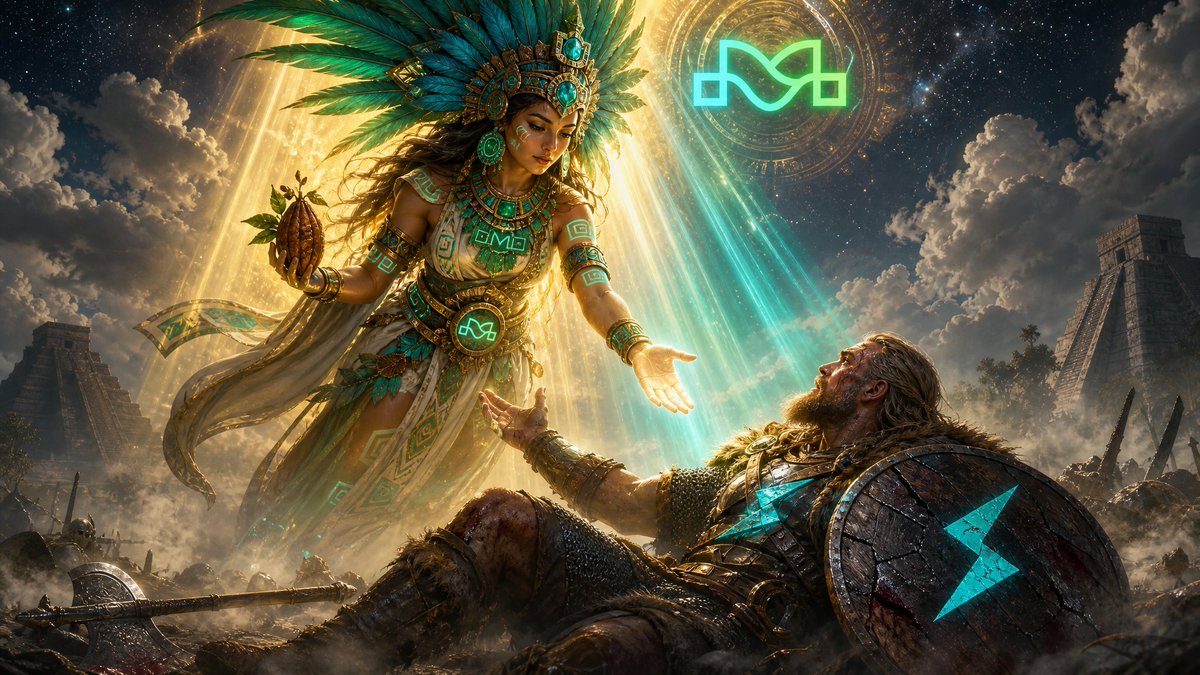
People forget that the main reason that THORChain is around today and standing firm against censorship is the Maya Protocol, its friendly fork and sister project.
THORChain faced an existential solvency crisis due to some bad decisions, and @AaluxxMyth came with the recovery plan that made investors whole and kept the project going.
Many of the developers and node operators left when pressure mounted to shut down and prevent hacked funds from being swapped. The Mayans stepped in and filled in the gaps. Now the two teams are intermingled.
THORChain might be the forefront of permissionless exchanges, but Maya is its heart and soul.
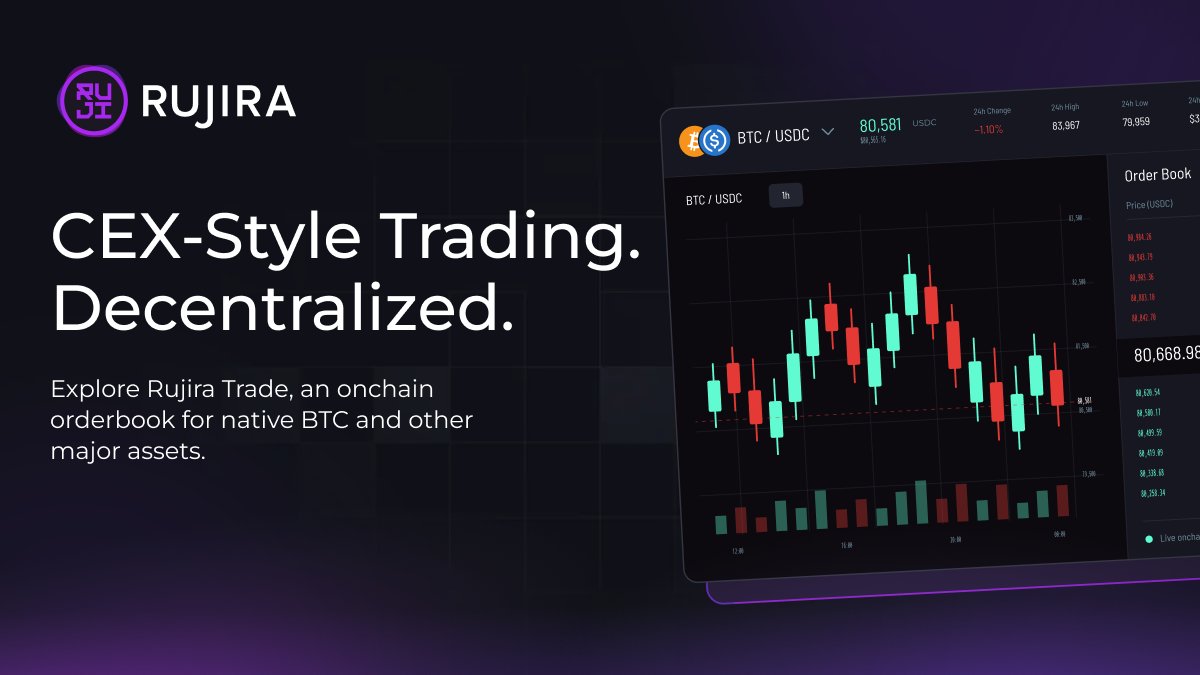
Decentralized finance starts with equal access for everyone.
Trade native BTC and more digital assets through our transparent onchain orderbook. Place market, limit and recurring orders without relying on a centralized exchange.
Explore Rujira Trade.
https://t.co/0pv9scsdOz