Hormuz is a weapon that can only be fired once
No one should expect a quick resolution to the current crisis, but across the next decade, even the next 3-5 years, the choke point of Hormuz will be massively substituted for
The Gulf Arab states are all very rich, with high per capita GDP - the best single measure of relative state capacity - easy access to global markets, especially financial, and have the favorable backing of the US
Everyone has known about the Hormuz vulnerability for decades. The Iranians have continually hinted around closing it, but never did. Now they have, but Hormuz is a gun that cannot be reloaded.
Deterrents work only up to the point of use. Once used, they have failed. The purpose of a deterrent is to *not* be used
Many analysts have made this basic mistake. They think that Iran is now in a position of strength, having exercised its Hormuz option. But the opposite is true. A state is weakest after it has used its deterrent. The cost of that deterrence is now priced in. The worst having been done, the targets of the deterrent are now free to make other arrangements. Before, they were reluctant to do so because of the switching costs. Now, they have no choice; they will not allow themselves to be controlled in this way again
Hormuz may never reopen. But the importance of this is a depreciating asset.
Don't believe what politicians and the media tell you.
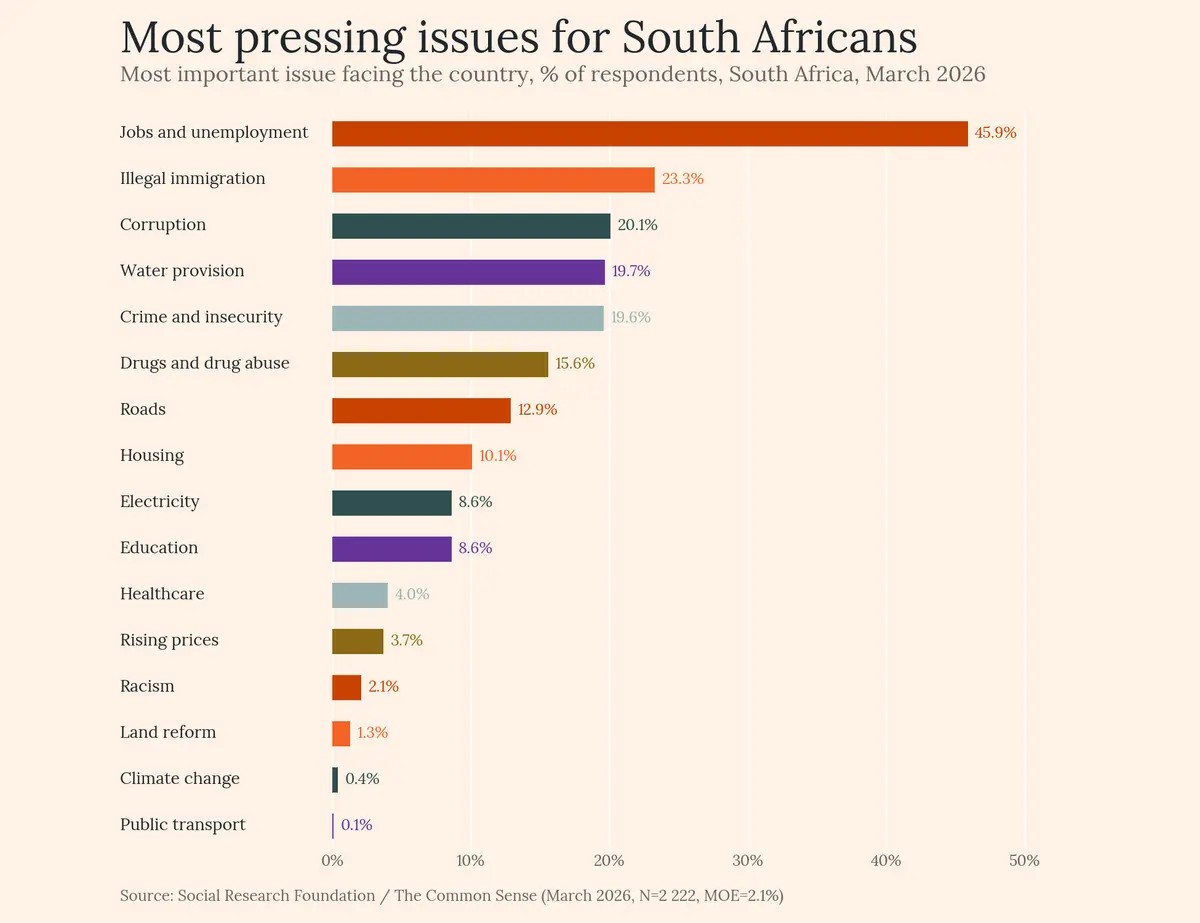
These are the most pressing issues for South Africans (unsurprisingly):
1. Jobs
2. Illegal immigration
3. Corruption
4. Water
5. Crime
@CommonSense_ZA
Refreshing perspective from a public servant.
"In our view, the proper role of the government is not to own everything. It is to stop standing in the way of investment and growth, and to help unlock it."
Four separate applications to the High Court were made to interdict this land auction this week. All 4 were dismissed, with costs.
Today the auction went ahead. Hundreds of millions were raised, all of which will be spent on essential infrastructure in Cape Town, much of it in lower income communities. Many new homes will be built on that land, providing much needed new housing supply and easing prices.
The attempts to stop this are all political of course (including, sadly, the SAHRC) - we do these land auctions often, they’ve never tried to stop them before. But we’re in silly season now, so we expect much silliness.
But there is a more important point at play here. Their opposition is rooted in a refusal to accept that we have a different understanding to them of the proper job of government.
In their view, everything must be owned by the state. Every failing state company, every derelict building, every fallow asset - it must stay just that way forever, and none of it can be sold, no matter how derelict, loss-making or under-utilised it is.
In our view, the proper role of the government is not to own everything. It is to stop standing in the way of investment and growth, and to help unlock it. By freeing up under-utilised land, we allow these dead assets to be brought to life - with new housing supply, new investment, and new jobs. That in turn helps spur other investment, and so the economy grows, and delivers more people out of poverty.
Cape Town is not run by the ANC. We have a mandate to do things differently here. We do not subscribe to the ANC’s view of the state as the solver of every problem. How has that worked in reality?
The DA sees the state as a facilitator of a growing economy that lifts more people out of poverty and into work. That is the only way we will build a successful, working South Africa.
Beware of those claiming to speak for the poor, but wanting to keep people poor and keep everything in the hands of the state.
Also, capable municipalities will still receive direct funding, those with "serious capacity or governance failures" will be shifted to an indirect model where capable district municipalities or accredited agencies will manage the delivery
A significant local government reform announced in the budget: Ring-fencing utility revenue.
This prevents municipalities from diverting utility revenue to unrelated functions (read salaries)
R27.7 billion has been allocated to a performance-linked reform for metro trading services (electricity, water, sanitation, and solid waste). Revenue collected for these services must now be reinvested into them, and failure to meet operational targets will result in budget reductions
If it's going viral or making the news, then by definition it's not 'normal'.
Consuming too much traditional media or social media can cause brain rot because you're constantly seeing exceptions and extremes.
Real life is a more accurate gauge of society.
Real Luxuries in Life
1. Living 10 minutes from work
2. Living 5 minutes from the gym
3. Having quiet neighbors
4. Having money left at the end of the month and investing it
5. Peace at home
6. Drinking coffee without rushing
7. Sleeping with a clear conscience
8. Laughing with people who truly get you
9. Traveling every year
10. Waking up naturally without an alarm
11. Enjoying a home-cooked meal with loved ones
12. Having time to read a book in one sitting
13. Finding joy in simple daily routines
14. Having a pet that greets you happily at the door
These are the things that actually feel rich.
If you actually care about poor people, you should care about the system that’s lifted more of them out of poverty than any other in human history.
That system is the free market.
Everything else is just feeling good about yourself while people stay poor.
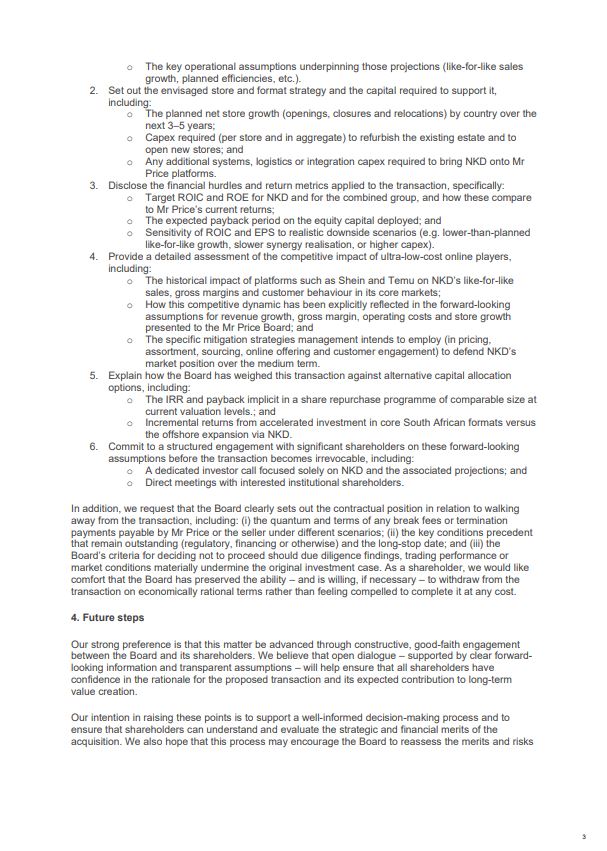
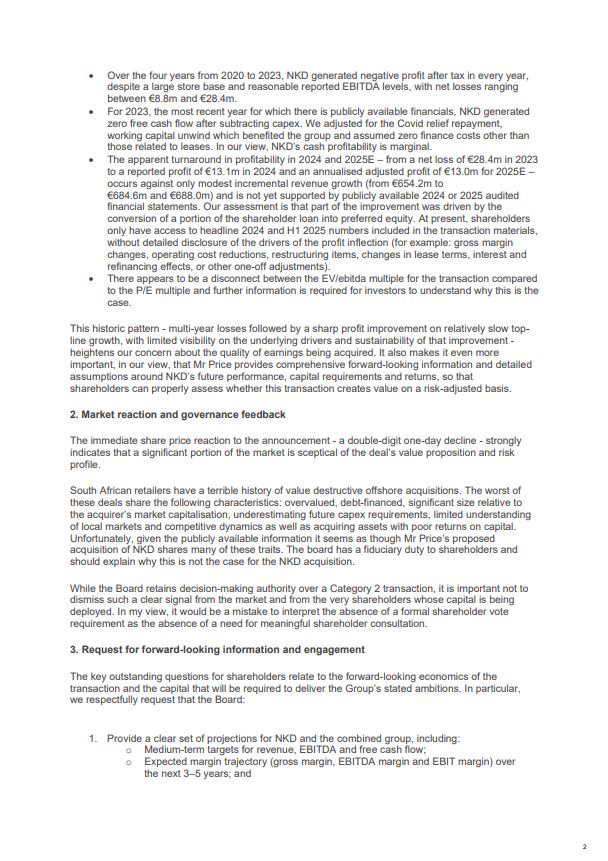
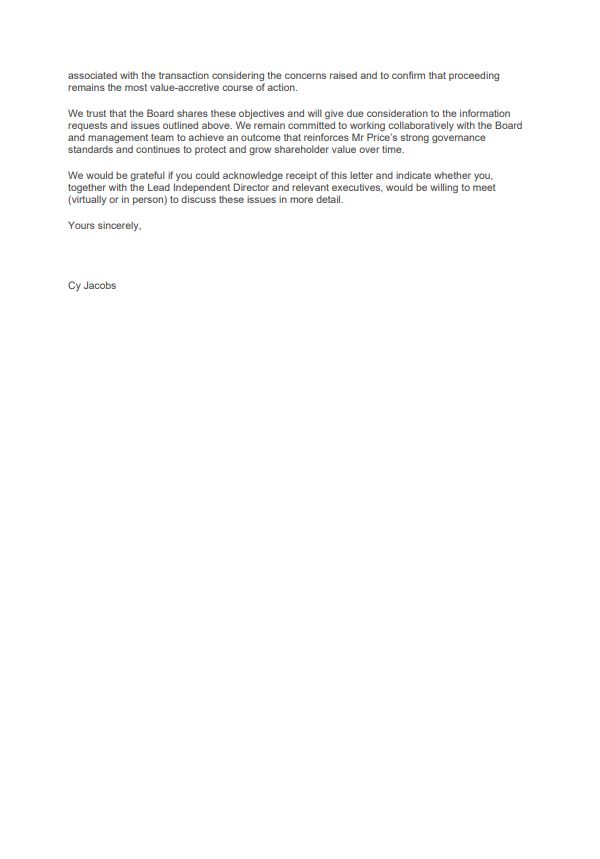
South African Retailers have failed countless times overseas and given the financial history of this acquisition target, Mr Price at least owes its shareholders a detailed explanation before proceeding with the transaction. Our letter to the board: