It was during my interview with two ASML managers in early 2022, while I was still a Master’s student in Germany 🇩🇪.
One of them looked at my CV and asked:
“You graduated with your Bachelor’s degree in 2017. Why did it take you until 2020 to start your Master’s?”
I loved that question because it gave me the opportunity to tell them my story and show them what it took for me to get to where I was at that moment.
I told them I graduated in 2017, completed the compulsory one-year national service in Nigeria, and initially hoped to start an academic career. I tried to get retained as a lecturer, but it didn’t work out. I eventually returned to my local town and started teaching Physics and Mathematics.
But I knew I wanted more.
I wanted postgraduate education abroad, particularly somewhere I could get exposure to advanced scientific facilities and technology. The problem was simple: my family couldn’t afford to sponsor an international education for me.
So scholarships became my only realistic route.
I applied to different countries and different programs. I got rejected multiple times. But I kept searching, sending applications, contacting people, and improving my profile.
Eventually, in 2020, Germany came through for me. I got the opportunity to move to Germany 🇩🇪 for my Master’s in Photonics.
By the time I finished telling the story, I could see it in their faces — they really felt for me 😭😭😭
Dem go dey think, “This guy don suffer!” 😭😭😭😂😂
By the end of that interview, I told my girlfriend (now my wife) that “I’m getting this job.” 😂
I even started putting extra effort into my Master’s thesis experiments in the lab because I was already imagining myself joining the company after graduation.
The next email I received was an invitation to another interview with some team members, and that one was very casual.
Then I got the job 🎉🥰
They sent a moving truck to pack my belongings from Germany, booked my flight to the Netherlands 🇳🇱, and lodged me in a five-star hotel for about two months while I settled in.
That question has stayed with me ever since because it reminded me that a gap on your CV isn’t necessarily an empty period. Sometimes, it contains one of the most important parts of your story. 💯
Image frame: First week at the job 🤩🤩🤩
Irks so much the commodification of African childhood for internet virality, masked as “talent.” Children should not have to perform their way into relevance or survival. They should be in school, period.
The ADHD dream career is being a highly paid consultant who swoops in, solves a complex crisis with a chaotic stroke of genius, and immediately exits before having to fill out the timesheets.
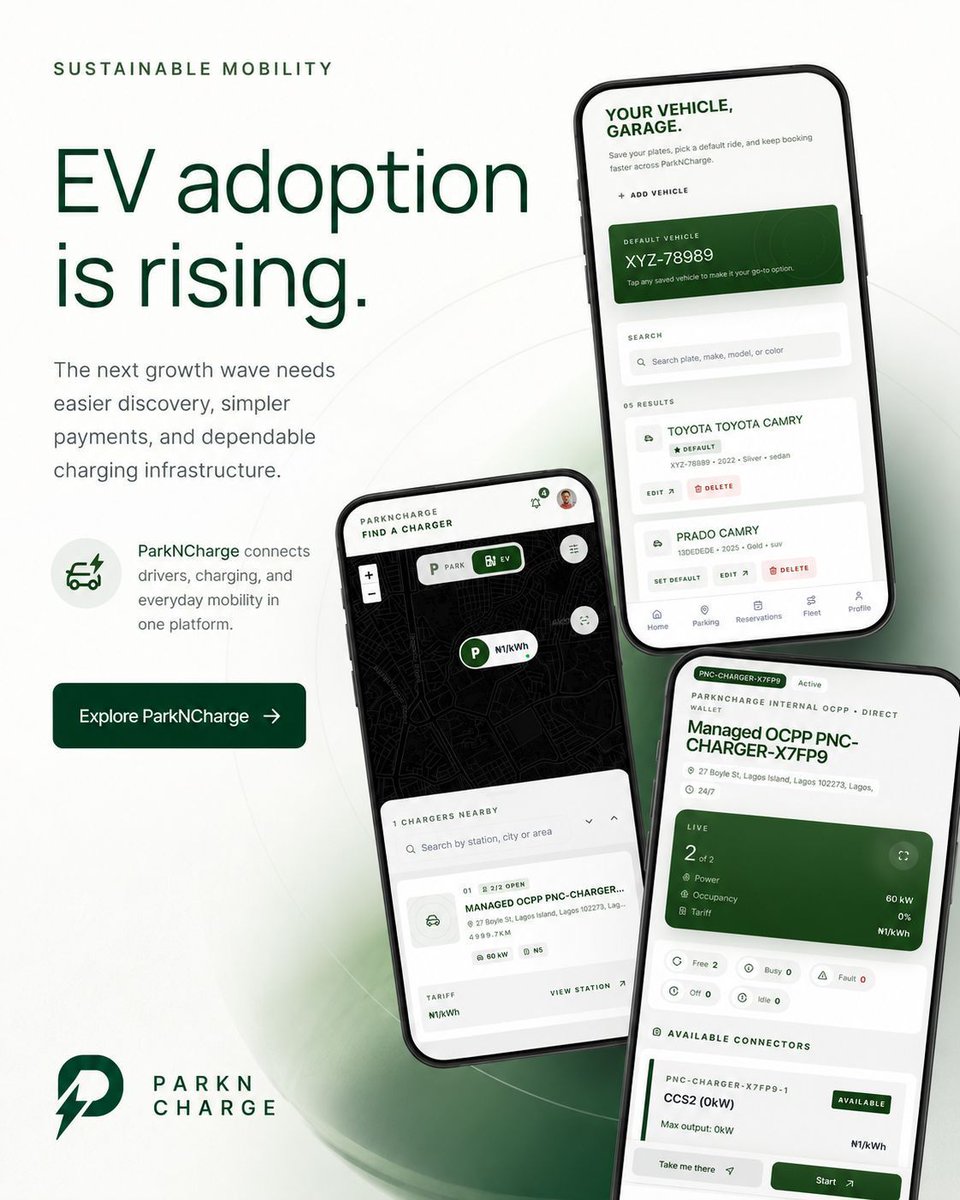
EV adoption is rising. The next growth wave needs easier discovery, simpler payments, and dependable charging infrastructure.
ParkNCharge connects drivers, fleets, and charge point operators in one platform. #EVCharging#Mobility
New Anthropic research: A global workspace in language models.
Of everything happening in your brain right now, only a tiny fraction is consciously accessible—thoughts you can describe, hold in mind, and reason with.
We found a strikingly similar divide inside Claude.
Find parking. Save your vehicle. Reserve ahead. Check live charging availability. Pay from one connected wallet.
One app for a smoother EV journey. #EVCharging#Mobility
In early 2024, Microsoft engineer Andres Freundaccidentally thwarted one of the most sophisticated cyberattacks in history.
While testing an unstable version of Debian, he noticed a tiny 500ms delay in his SSH logins, a blip most people would ignore.
Curiosity led him to find a massive backdoor hidden in XZ Utils, a standard data compression tool used by almost every Linux server on the planet.
The deal here was :
The backdoor targeted the SSH protocol, which is the primary way admins securely log into remote servers.
If Freund hadn't spotted it, attackers would have gained a "master key" to bypass authentication and execute code with root privileges on billions of devices.
The culprit (under the name "Jia Tan") spent two years building trust in the open-source community, slowly gaining enough "cred" to become a project maintainer and plant the malicious code.
How It Was Resolved
Once Freund confirmed the malicious code, he emailed the Debian security team and went public on the Openwall mailing liston March 29, 2024.
Major Linux vendors like Red Hat, Fedora, and Debian immediately reverted to older, safe versions of the software.
GitHub quickly suspended the compromised accounts and disabled the affected repository to stop the spread.
A clean version (XZ Utils 5.6.2) was released in May 2024, effectively closing the vulnerability tracked as CVE-2024-3094.
Essentially, the internet was saved from a "digital apocalypse" because one guy was annoyed that his computer felt half a second too slow.