@irentdumpsters Boring is right, but I would argue the list is incomplete now. Nothing on it checks whether the page actually states what the business does and where, in plain text. In the sites I check that is the most common miss by far, and no amount of internal links fixes it.
@jakezward Agree, and the useful part is that it is not an either or. What makes a page readable to an assistant is mostly what Google has wanted for years. Plain text, say what you do and where, real structure. The AI part is a small extra on top, not a separate strategy.
@irentdumpsters Restaurant people come in already understanding being findable. Seven restaurants means years of living with reviews, Maps and people picking him off a phone. Most home service sites I check have never had to think about any of that until the calls stop.
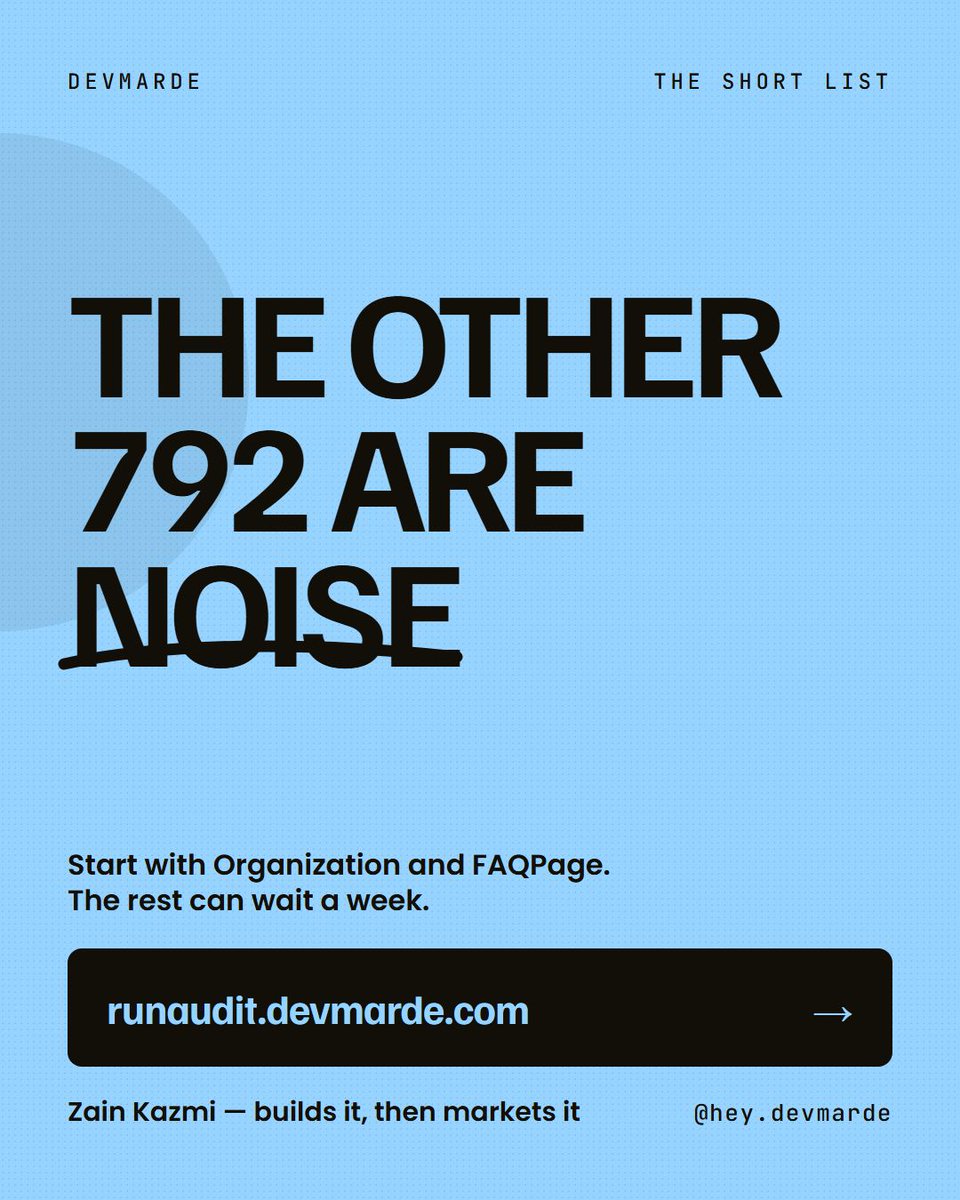
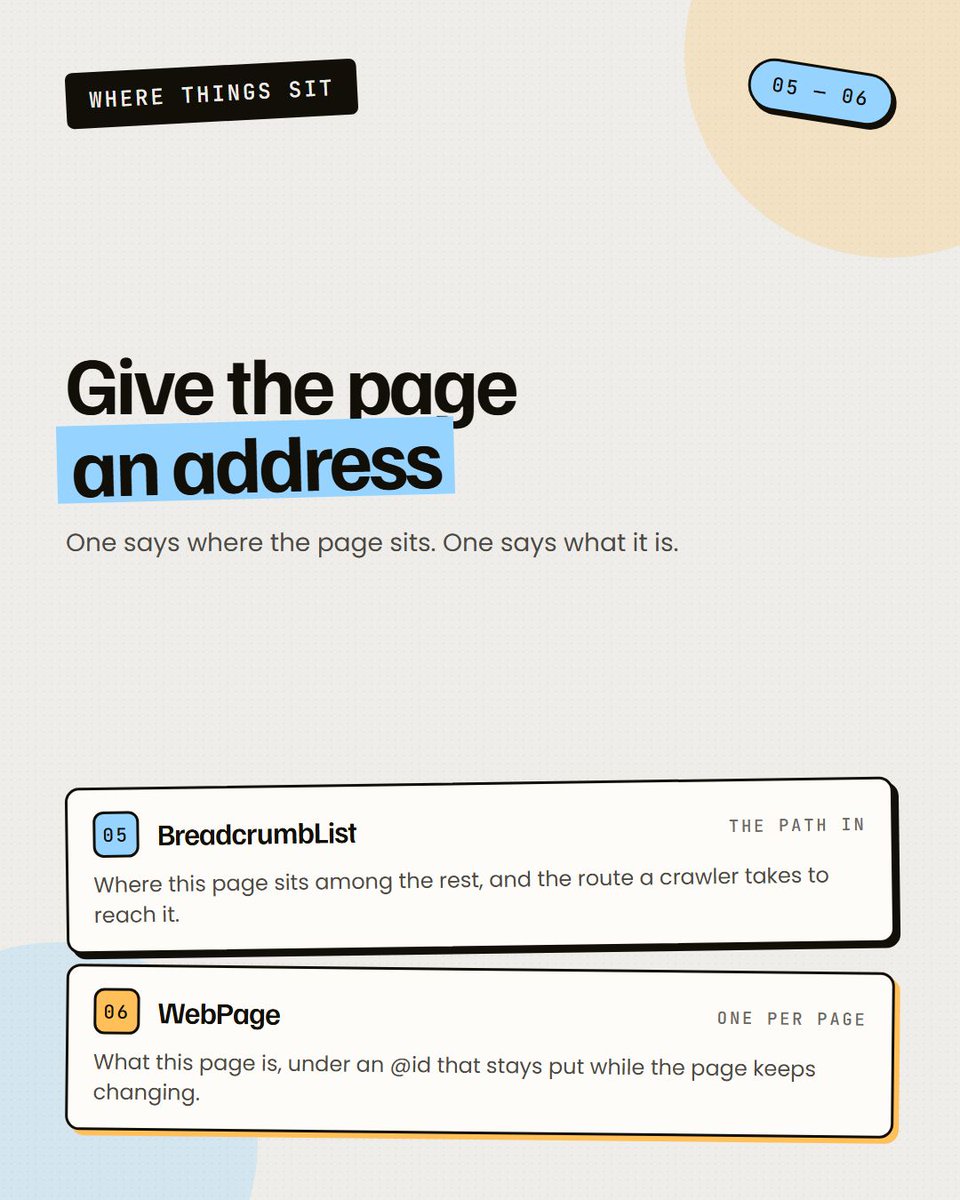
https://t.co/ZrIKOYZBCO has 800+ types.
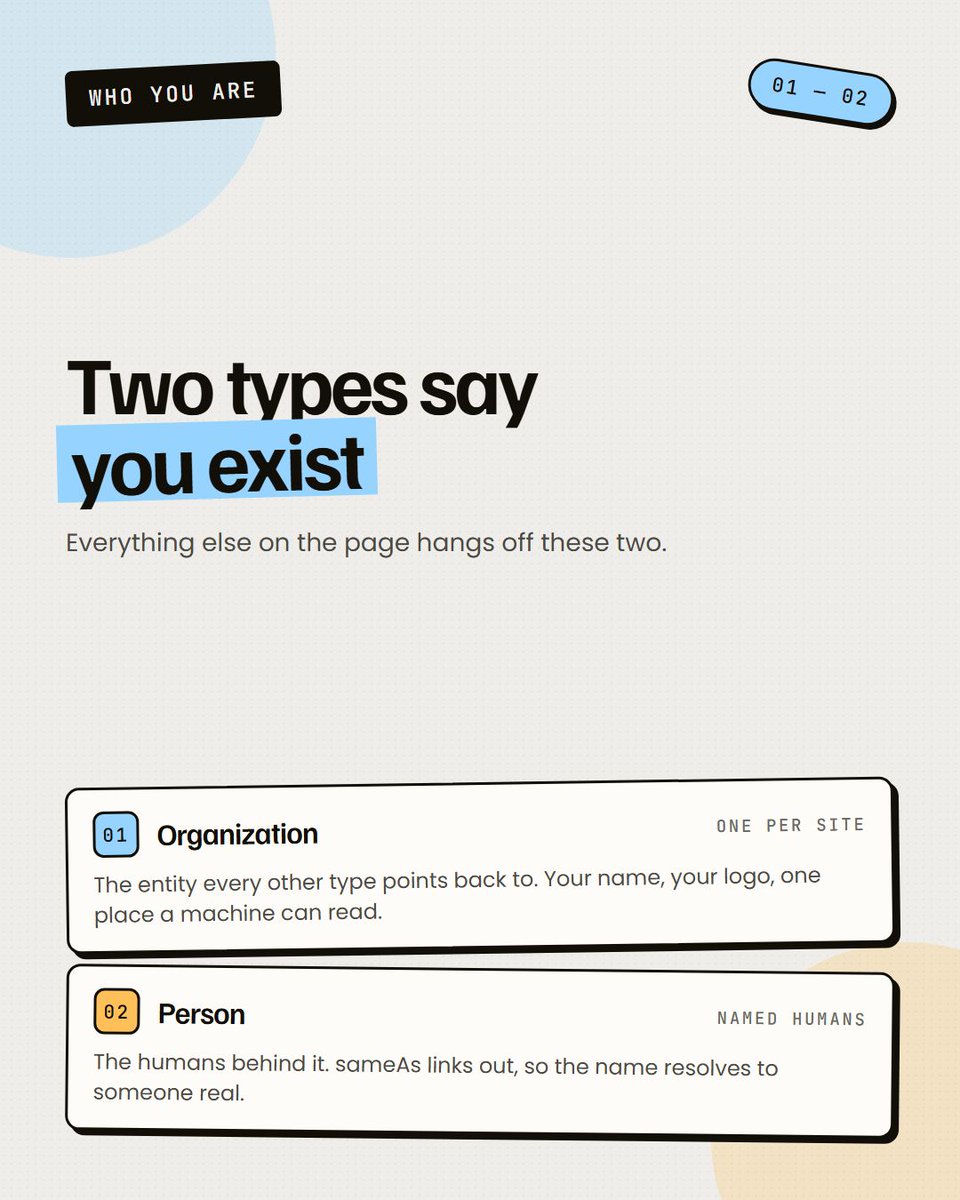
Eight of them decide whether AI can cite you. The other 792 are noise.
Here's the eight, and what each one is actually for:
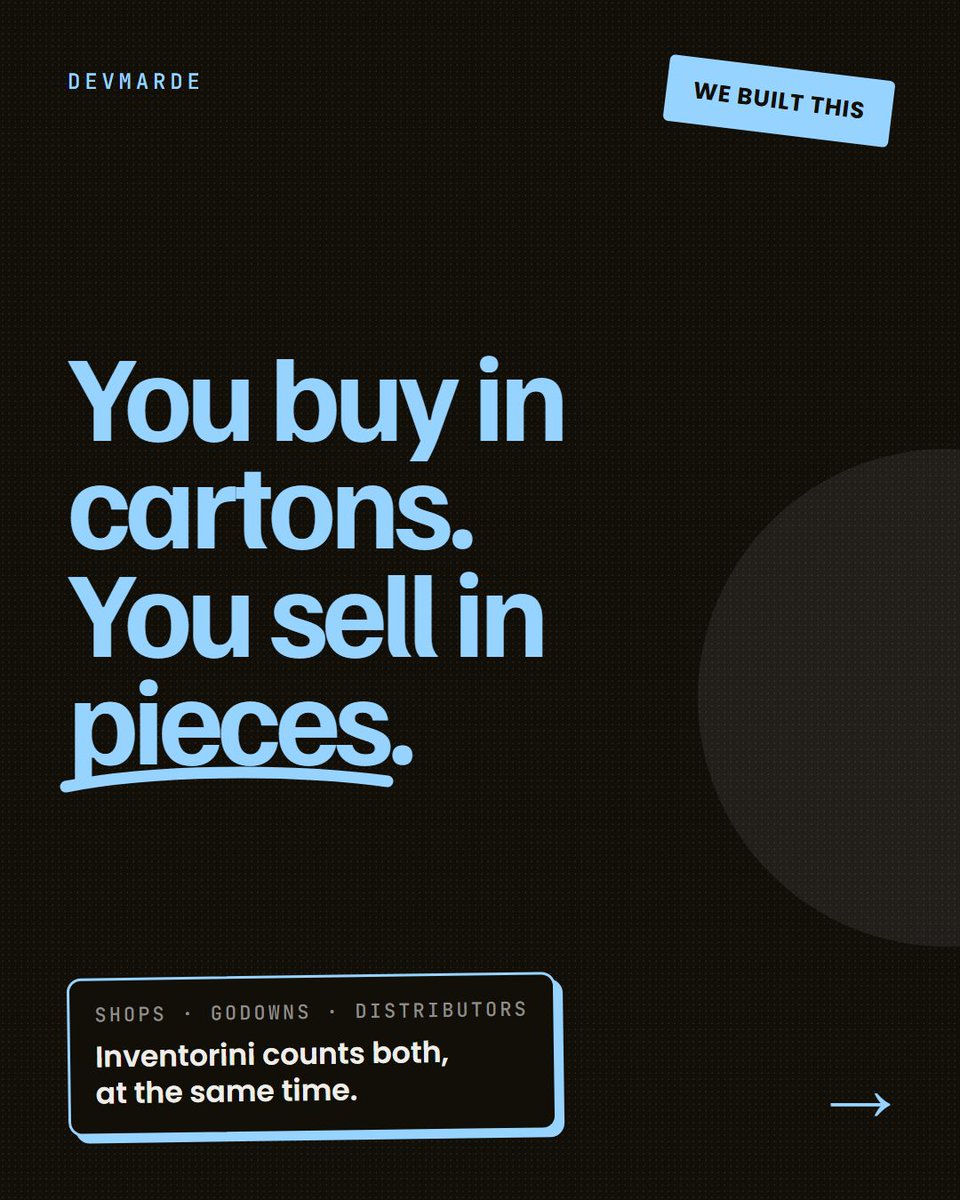
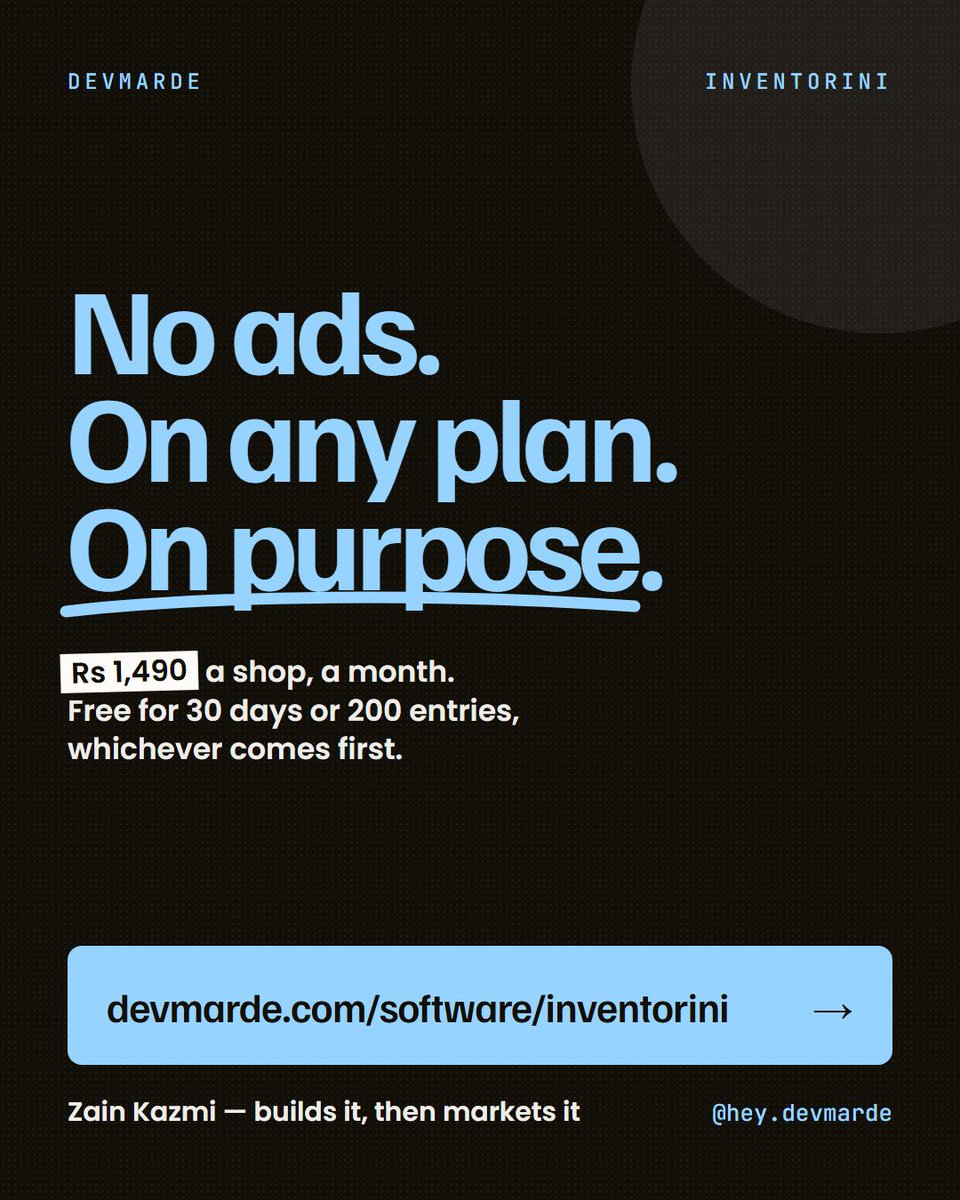
Inventorini.
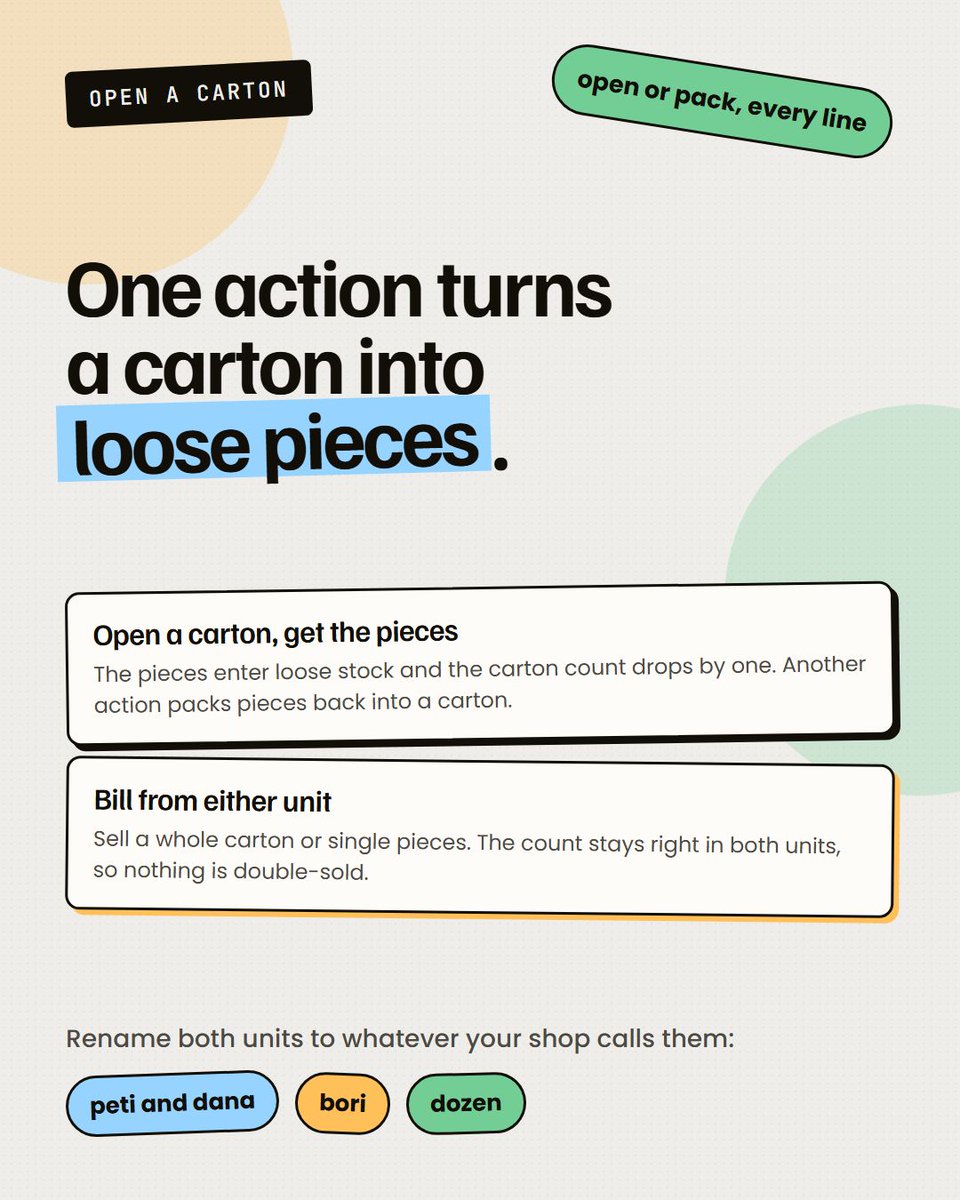
You buy in cartons. You sell in pieces. It counts both at once: open a carton and the pieces appear.
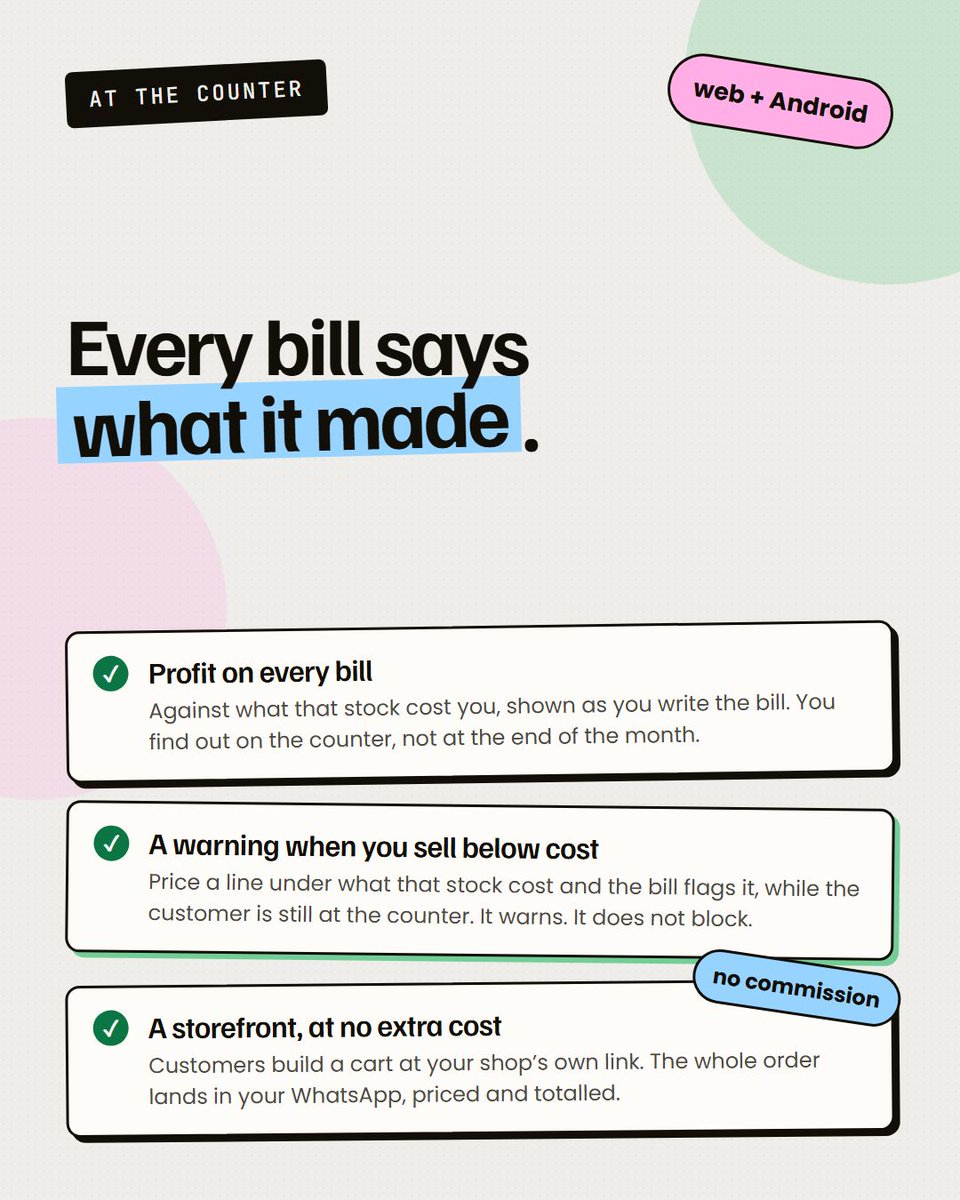
Profit on every bill. A warning before you sell below cost. No ads, on any plan.
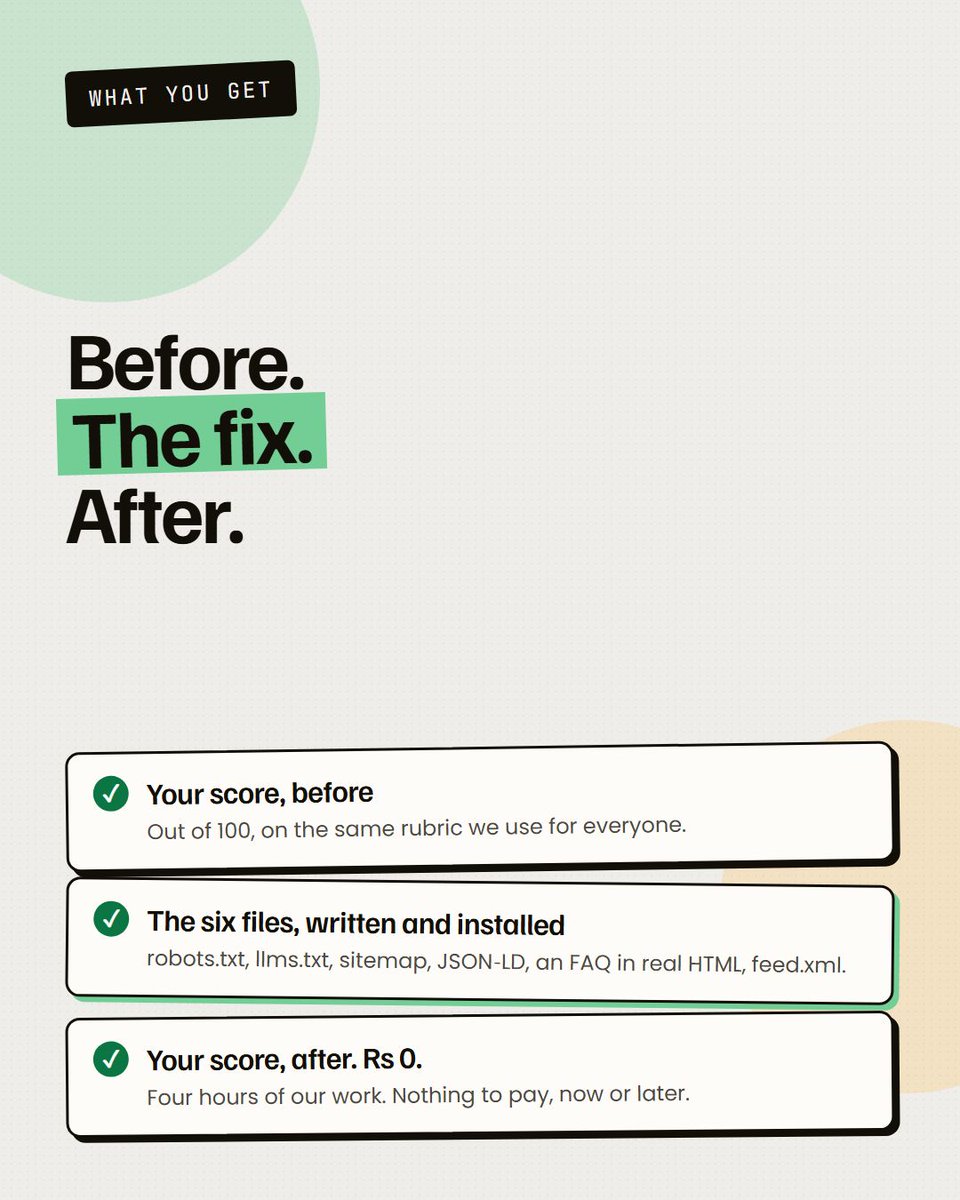
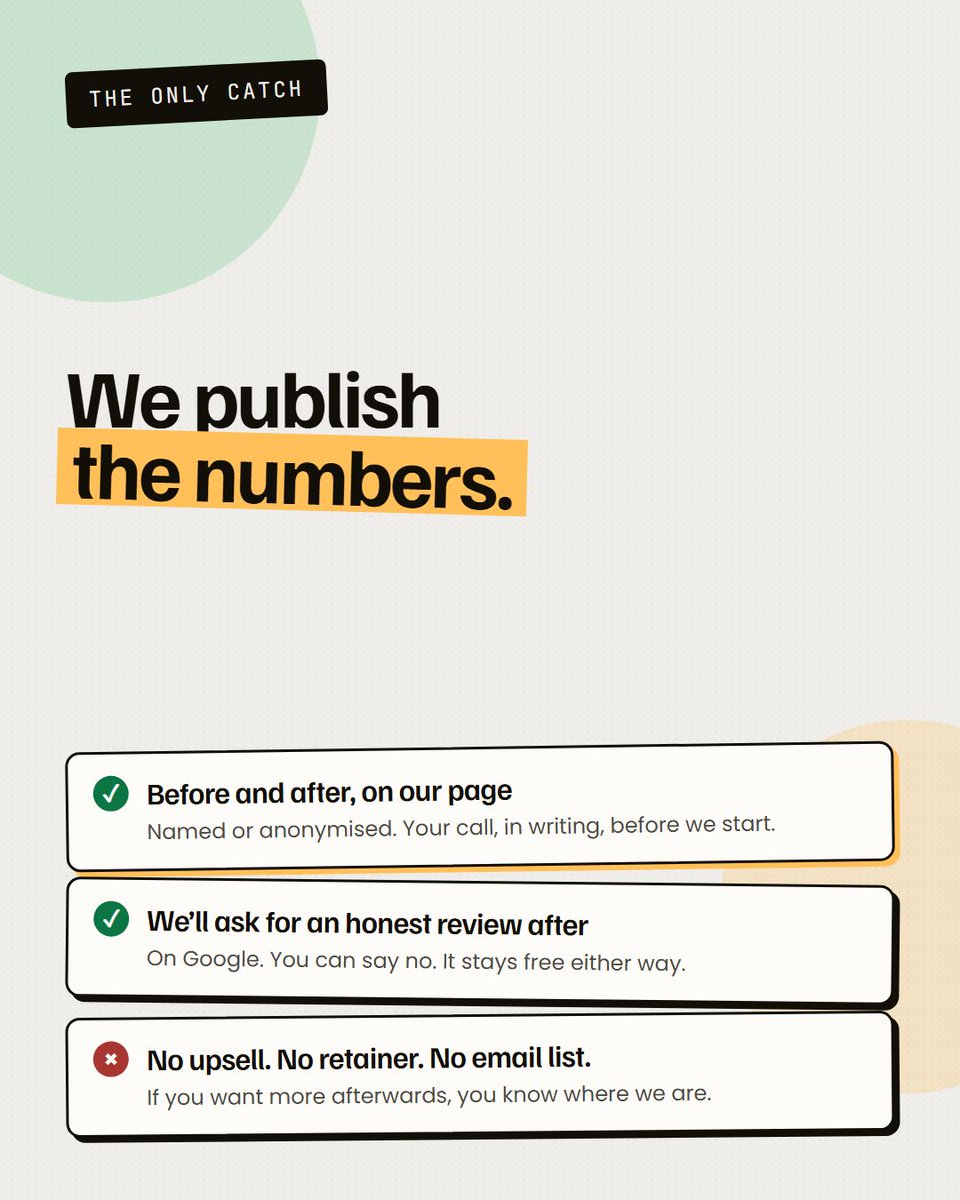
We'll fix ten websites for free.
Before score. The fix. After score. Rs 0.
Only catch: we publish the numbers. No upsell, no retainer. We'll ask for a review after and you can say no.
Reply with your URL. First ten.
@KaushtubhAgraw1 Rule 3 is the one most people quietly skip. We publish a visibility score out of 100 and the only reason anyone trusts it is that it can come back worse after a redesign. A number that only goes up stops being read.
@SmalIBizCoaches "Before they ever booked a call" is the part that's changed shape. A chunk of that reading now happens inside an AI assistant, and it only repeats what your pages actually say. Reputation stuck in a PDF or a testimonial image never makes the summary.
@AI_Acq That gap shows up much lower down too. The small sites we check get cited because they rank, but the page never states what a buyer actually picks on: price, turnaround, who it's for. Whoever writes those in plain text gets the shortlist.
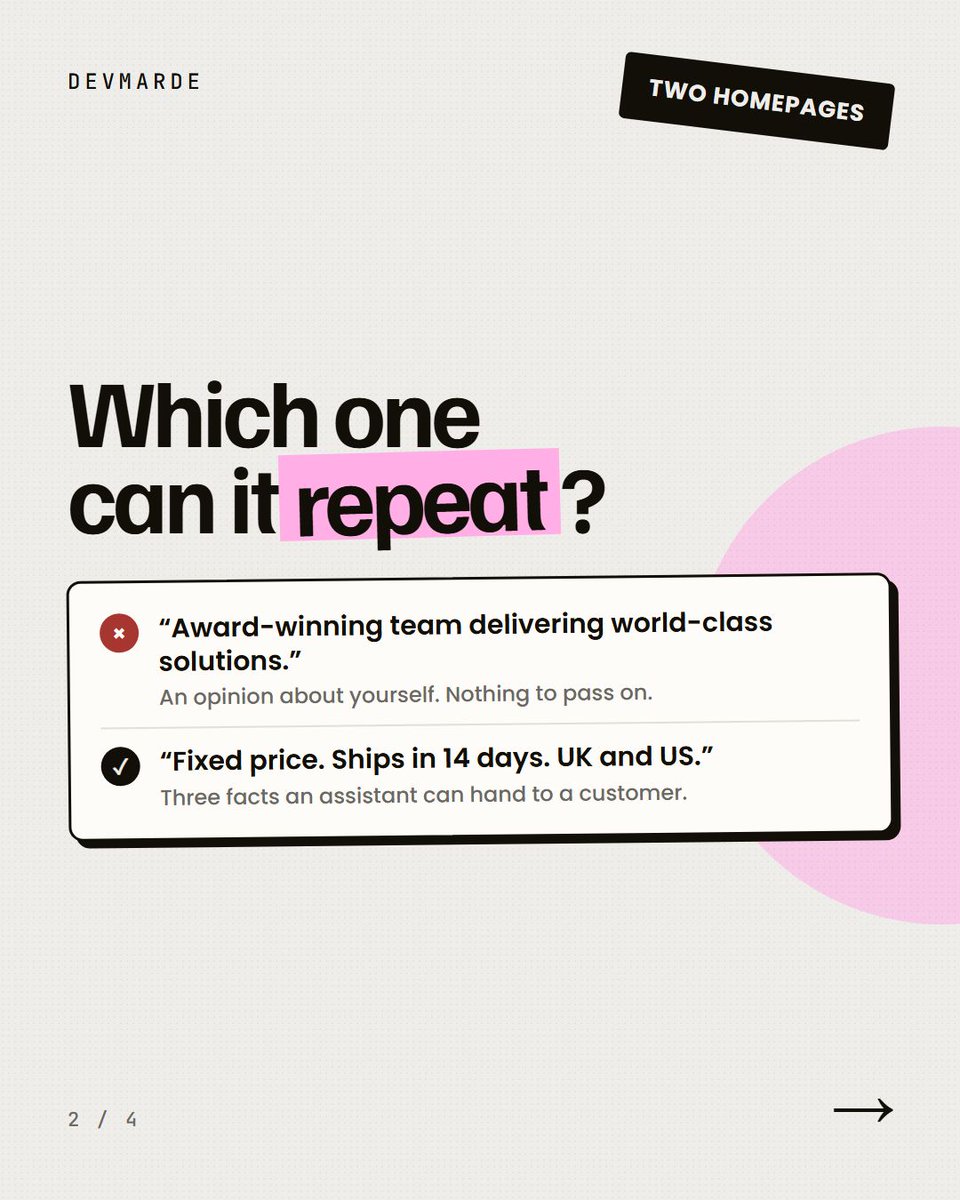
@AnsleyMaivia Second reason to do this now: those six are also unquotable to an AI assistant. When someone asks it to recommend a tool, there's nothing to lift. "Fixed price, ships in 14 days" gets repeated back. "Work smarter" never does.
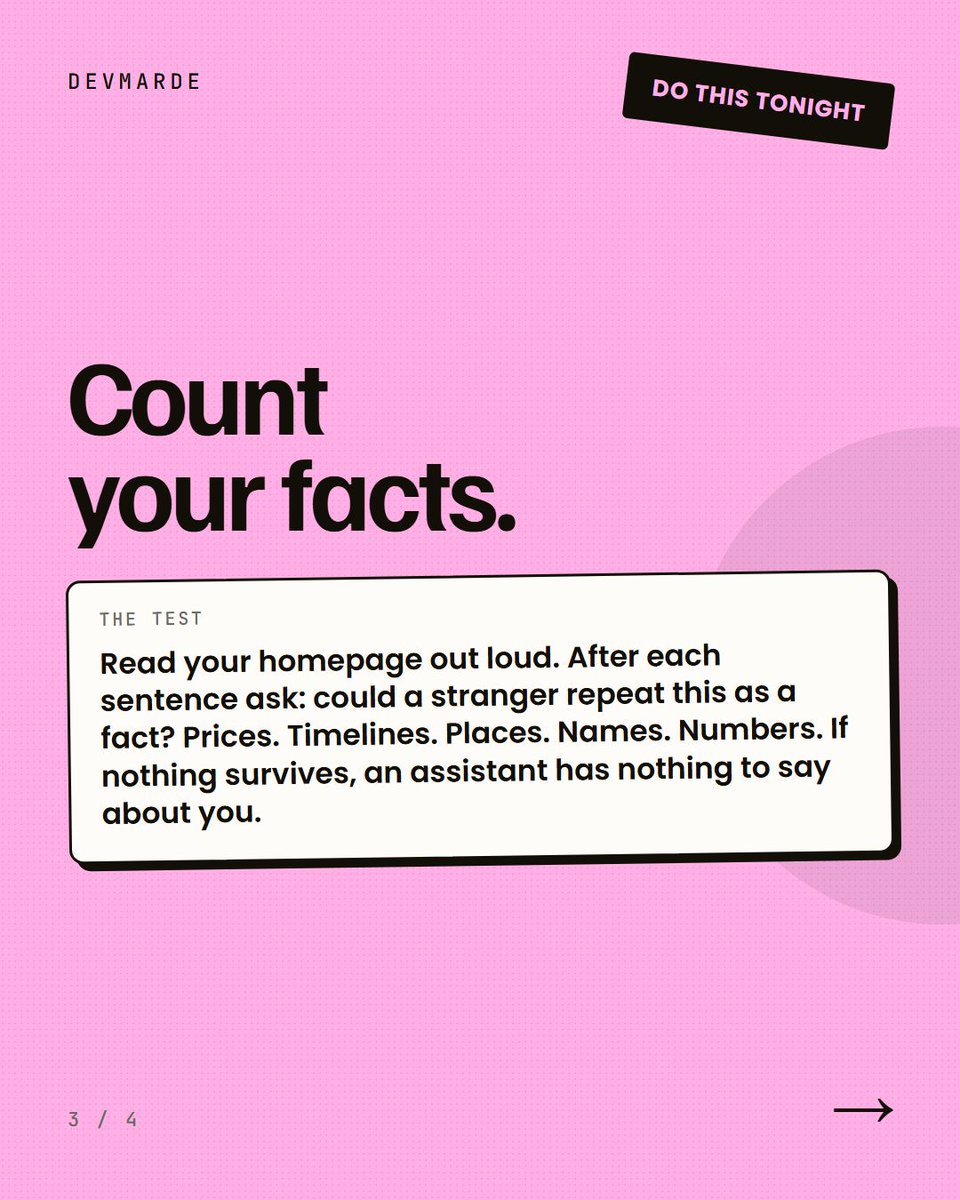
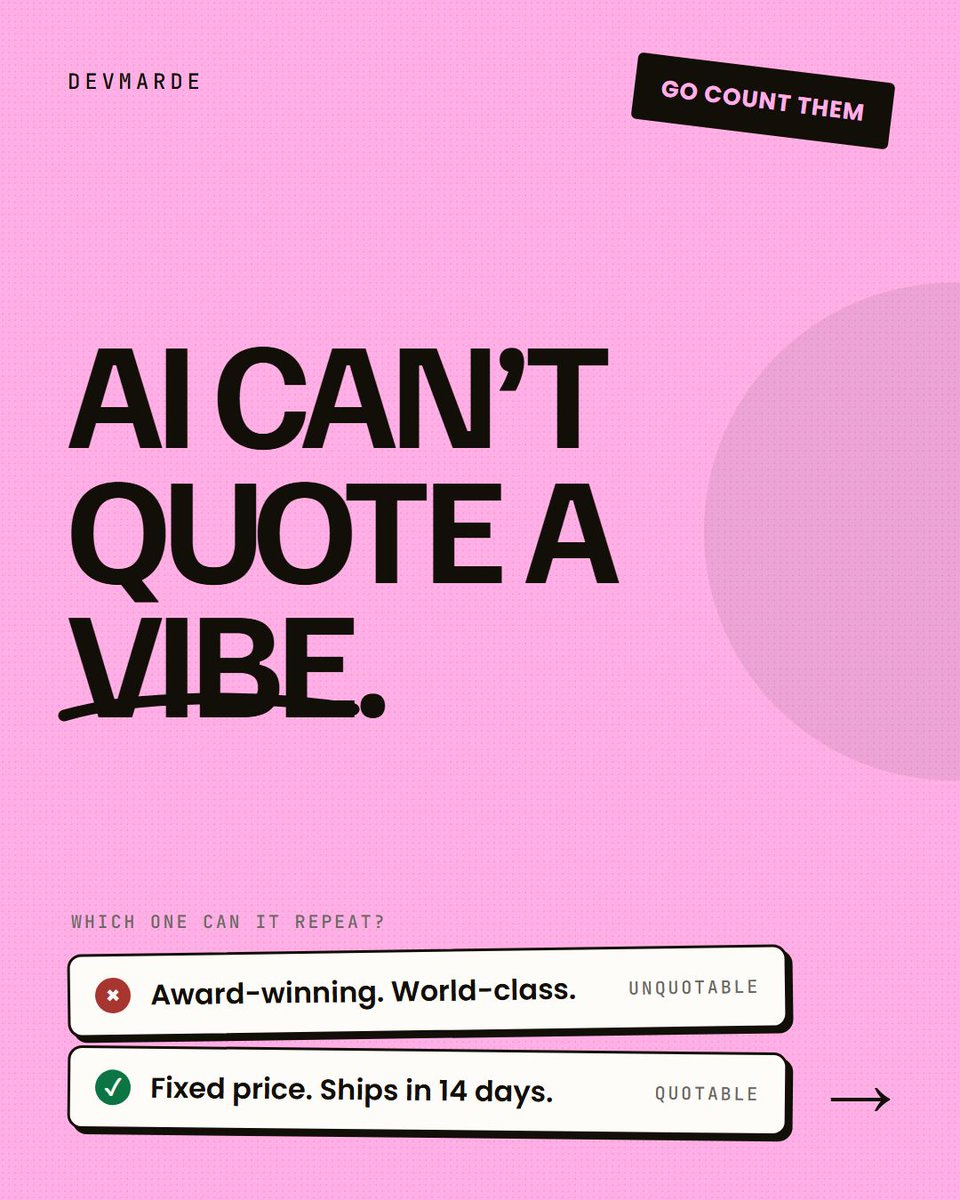
AI can't quote a vibe.
"Award-winning team delivering world-class solutions" — unquotable.
"Fixed price, ships in 14 days" — quotable.
Go read your homepage and count the actual facts on it.
@designsbypoppy Taking your own advice is always the hardest sell. Ours sat on a half-finished homepage for months while client work went out the door. Looking forward to seeing it.
@ddefimagnum The tell for me is when they can't say what "better" would look like. If nobody can name the number that should move, every piece of work turns into an argument about taste.
@_toddanderson The last one's the sleeper. When we check small sites for how AI tools read them, the ones that win just say what they do and where in plain text. The rest bury it in a hero image or a slider, so there's nothing for anything to copy.
@craigburgess@felixrieseberg Looks fun. Did the actual content stay in the HTML, or is it all rendered by the game layer? That's the bit AI crawlers usually miss on sites like this.
@theroborourke Same idea as our free site check. Someone who runs it has basically told you they care about the problem, that's a much warmer start than any cold message.
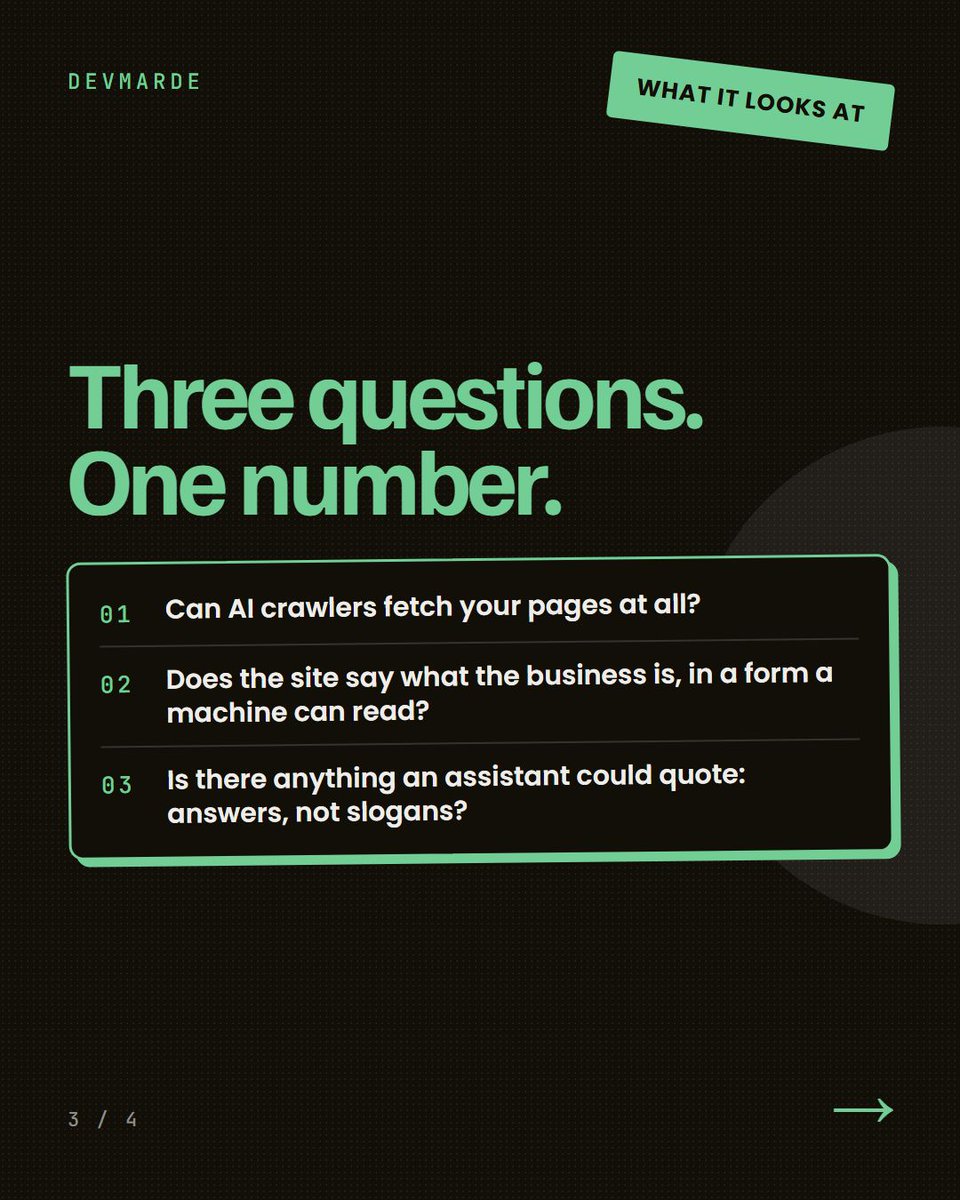
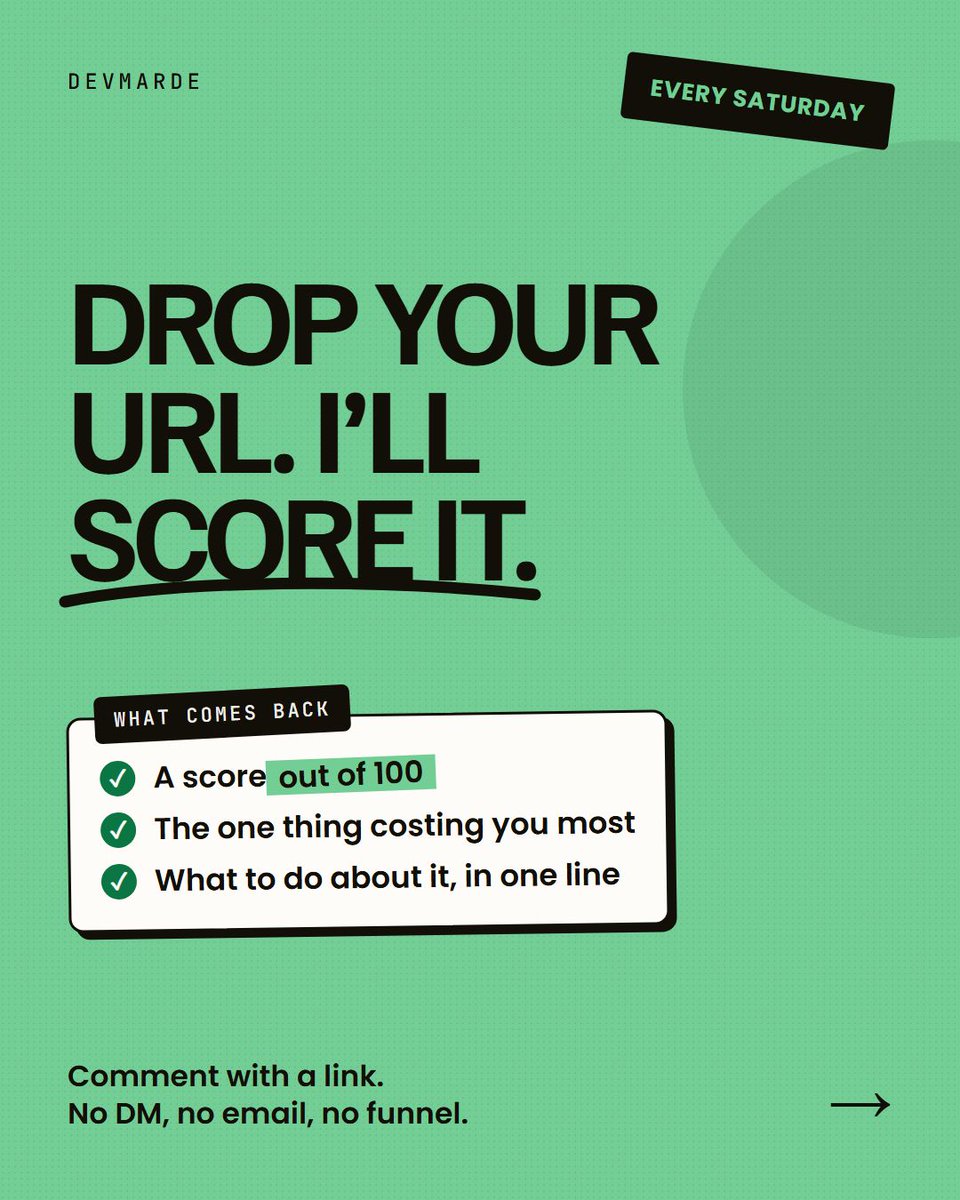
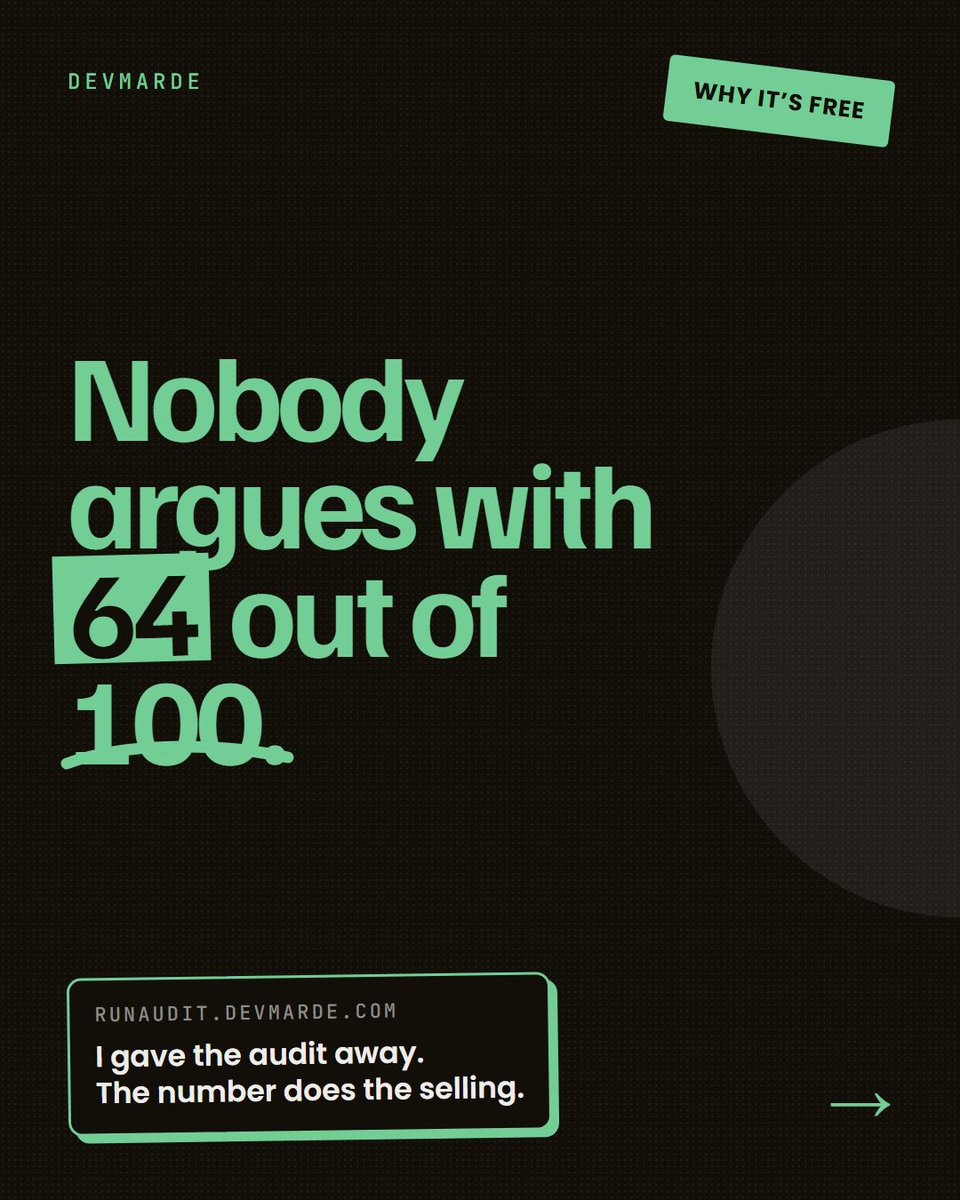
I built a free tool that scores how visible your site is to AI.
People keep asking why I'd give it away.
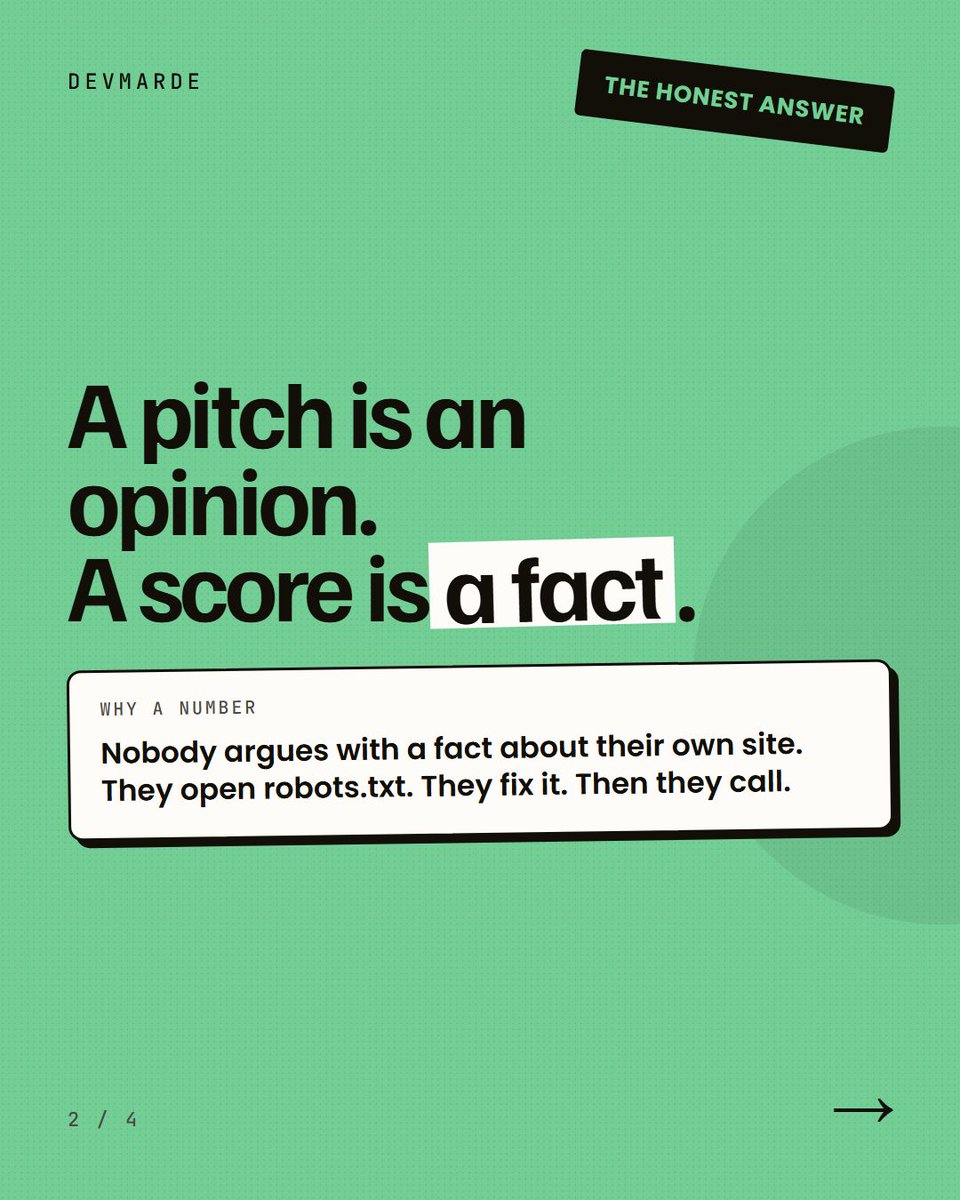
Because the number does the selling. Nobody argues with 64/100.
@samigrows Agree. When anyone can publish a thousand pages, what stands out is a page that clearly comes from a real business, with a real address and real jobs on it.